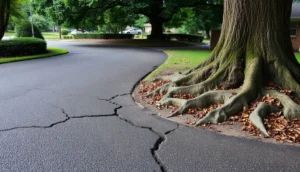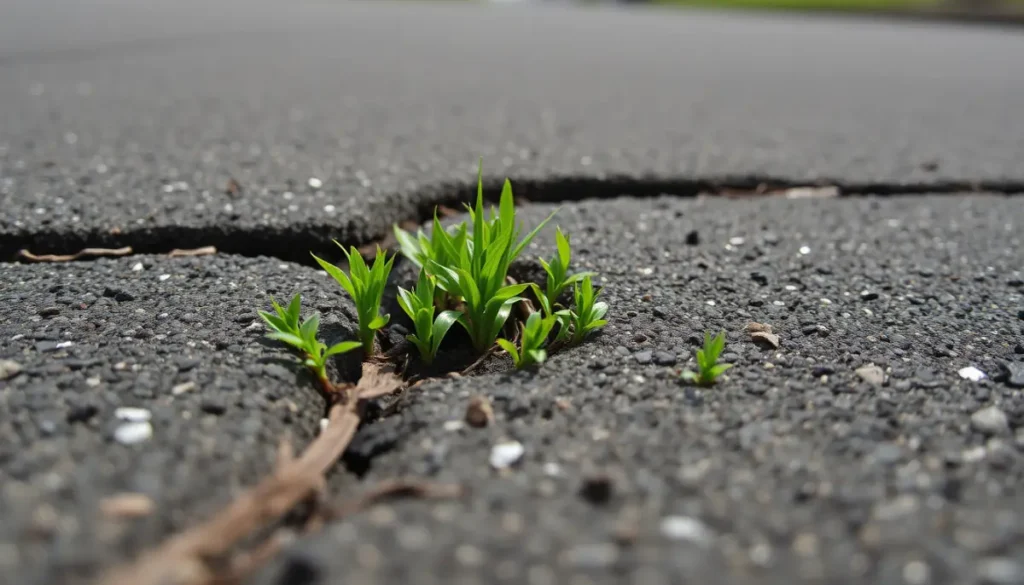
Weeds in a driveway are a sign that something has opened up. Asphalt is a solid surface. A plant needs a crack, some soil, and some water. If weeds are growing through yours, there is a gap to fix.
This guide explains why it happens, how to remove weeds, and how to keep them from coming back.
Why Do Weeds Grow Through Asphalt?
Weeds do not grow through solid asphalt. They grow through openings. Over time, a few things happen:
- Small cracks open from sun, weather, and traffic.
- Dust, dirt, and seeds blow into those cracks.
- Rain adds water.
- Sun warms the crack, and a seed sprouts.
Once a weed takes root, it keeps pushing. Its roots widen the crack. Then more water and dirt get in. The crack gets bigger, and the next weed has more room.
Why Should You Care?
A few weeds look like a small problem. But they point to a bigger one. The crack that lets a weed in also lets water in. Water freezes in winter and breaks the asphalt from below.
Weeds also grow along edges and in joints. That can loosen the asphalt over time. Our guide on why asphalt cracks explains how small openings turn into larger ones.
How Do You Remove Weeds From Asphalt?
Start with the roots. If you cut only the top, the weed grows back. Here is a simple method:
- Pull weeds when the soil is damp. The roots come out easier.
- Use a flat tool to dig out roots along the crack.
- Sweep or vacuum out loose dirt and seeds.
- Rinse the crack and let it dry.
Check the label before you use any product on your driveway. Some can stain the surface, and some can run onto your lawn. If you are curious about home fixes, see does vinegar damage asphalt driveways.
What Should You Do After the Weeds Are Gone?
This is the step many people skip. If you leave the crack open, the next weed will find it. Fill the crack after you clean it.
Use a crack filler made for asphalt. Follow the directions and let it set. Our guides on how to fill driveway cracks and steps for residential driveway crack repair show the steps.
Can Sealcoating Help Stop Weeds?
A fresh coat can help. It covers small surface gaps and slows water from soaking in. But sealcoat does not fill open cracks. You still need to clean and fill them first.
See our driveway sealcoating guide for how the process works.
How Do You Keep Weeds From Coming Back?
A few habits do most of the work:
- Fill new cracks as soon as you see them.
- Trim grass and plants back from the edges.
- Sweep the driveway now and then to clear dirt and seeds.
- Keep water from pooling on the surface.
- Check the driveway each spring.
Small, steady care is easier than a big fix later.
When Should You Call a Pro?
Call for help when:
- Weeds are growing along a long crack.
- The cracks are wide or have broken edges.
- The surface looks like a net of linked cracks.
- Weeds keep returning after you fill the cracks.
- The asphalt is sinking near the plants.
Those signs may mean the driveway needs more than a filler. We can look at it and tell you what to do.
Where Do Weeds Show Up First?
Weeds start in the spots that gather soil and water. Check these places:
- Cracks, even thin ones.
- Along the edges where the lawn meets the driveway.
- Low spots where water sits.
- Joints where the driveway meets a walk or a garage slab.
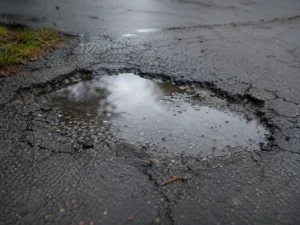
- Areas with potholes or broken pieces.
If weeds keep coming back in the same place, that spot has an opening.
Should You Worry About Moss and Algae?
Green or black growth on shaded asphalt is common. It grows where the surface stays damp. It can make the driveway slick. Sweep it off and improve drainage and sun if you can.
Moss on asphalt is a clue that water lingers. Fixing the water problem helps more than scrubbing.
Should You Fill Cracks Yourself or Hire a Pro?
Small cracks are a fair DIY job. You need a clean, dry crack, a filler made for asphalt, and a dry day. Follow the label.
Call a pro when cracks are wide, deep, or linked in a net. Those point to a weak base. A filler will not hold in that case. A crew can look at the cause and fix it.
What Does a Yearly Care Plan Look Like?
A short routine keeps weeds away:
- Spring: Walk the driveway. Pull weeds. Fill new cracks.
- Summer: Sweep off dirt and seeds. Trim plants near the edge.
- Fall: Clear leaves so they do not hold moisture. Fill any cracks that opened.
- Winter: Keep water moving off the surface. Use salt with care.
A few minutes each season is easier than a big repair later.
What Tools Do You Need?
You do not need much. A simple kit looks like this:
- A flat weeding tool or a sturdy screwdriver.
- A stiff brush or broom.
- A shop vacuum or a blower to clear dirt from cracks.
- Gloves and safety glasses.
- Crack filler made for asphalt, and the tool the label calls for.
Work on a dry, mild day. Wet cracks do not hold filler well. Give the filler the time it needs to set before cars drive over it.
How Does Shade or Sun Change Weed Growth?
Weeds grow in sun and in shade. In sunny spots, the crack warms and seeds sprout fast. In shaded spots, the surface stays damp, and moss or algae can move in.
Both point to the same cause. Moisture and soil are getting into the surface. Keep the surface clean and the cracks filled, and the pattern slows down.
Frequently Asked Questions
Can weeds damage asphalt?
Yes, over time. Roots widen cracks and let water in.
Is it okay to pour boiling water on weeds?
It may kill the top of the plant. But it does not fix the crack, and the weed can return.
Will new asphalt stop weeds?
A solid surface helps. But cracks can open again later, so check it each year.
More Paving Guides
Get a Free Estimate
Nathan’s Paving & Seal Coating has worked in Central PA for over 20 years. We handle driveway patching, repairs, seal coating, and new asphalt paving for homes across the area.
Estimates are free, and we offer senior citizen discounts. Call (717) 648-5030 or email nathanpaving@gmail.com. We will look at your driveway and tell you what it needs.