
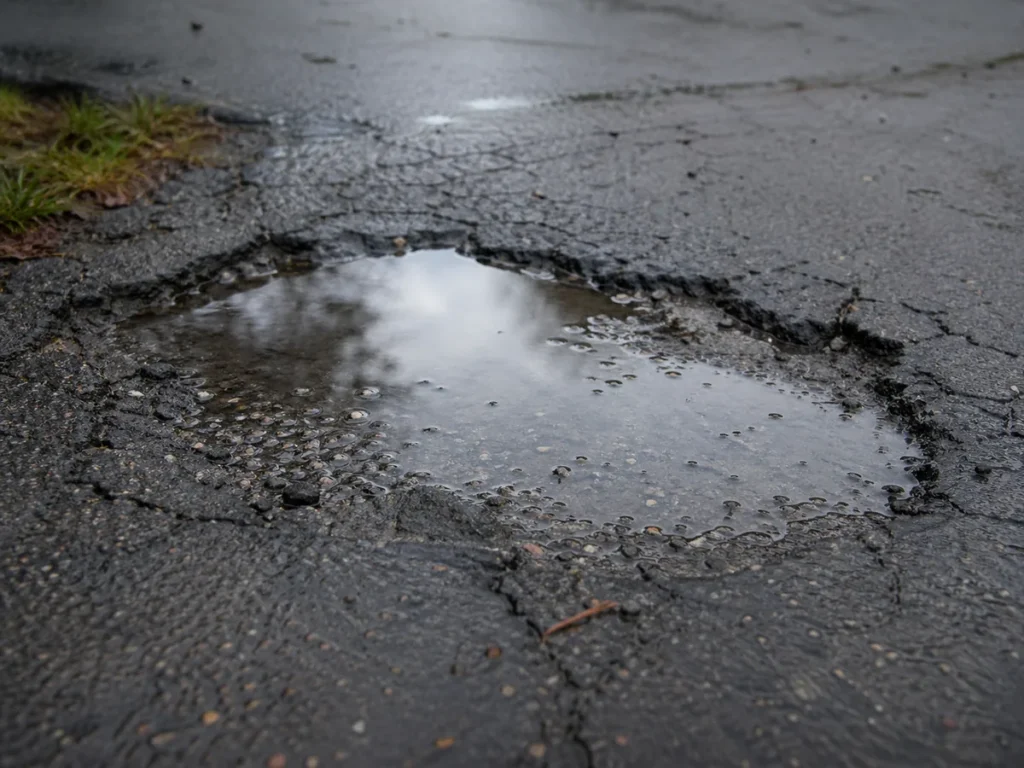
Standing water destroys driveways fast. Your pavement shrinks from 15–20 years to just 5–10 years when water pools. Here’s why you can’t wait: freeze-thaw cycles crack asphalt. Roots lift pavers. Foundation damage costs $5,000–$25,000. Quick fixes work: regrade to 1–2% slope ($300–$500), install catch basins, or add French drains ($1,500–$9,500). Small $200–$1,000 repairs now prevent $9,500 replacements later. Act during dry weather. Professional drainage saves your wallet and your home’s foundation.
Key Takeaways
- Standing water on driveways accelerates pavement deterioration from 15–20 years lifespan to just 5–10 years.
- Proper grading at 1–2% slope away from structures prevents pooling and protects foundations from water damage.
- French drains, trench drains, and catch basins are professional solutions for managing surface and subsurface water.
- Immediate interventions like regrading, gravel drainage, and downspout extensions cost under $1,000 and prevent costly repairs.
- Early drainage work during dry weather prevents $5,000–$25,000 foundation damage and $1,000–$5,000 edge collapse repair costs.
Why Standing Water on Your Driveway Demands Immediate Attention
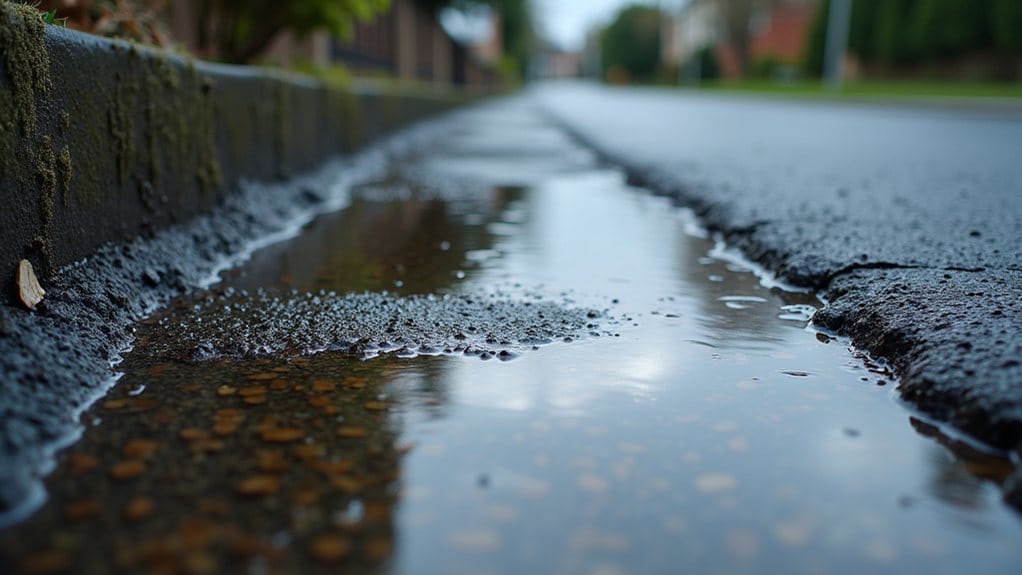
Standing water seeps into tiny cracks. Freeze-thaw cycles expand damage exponentially. Your driveway deteriorates years ahead of schedule!
Foundation Risk Is Real
Pooled water near your home? That’s serious. Prolonged moisture erodes soil underneath. Hydrostatic pressure builds up dangerously. You’re inviting foundation cracks and basement leaks into your future.
Safety Hazards You Can’t Ignore
Slippery surfaces breed slip-and-fall accidents. Winter ice converts puddles into liability nightmares. Your insurance premiums could skyrocket.
Act Now, Not Later
Simple regrading costs $300–$500. French drains or trench drain systems run $1,500–$9,500. Full driveway replacement? Ten times more expensive!
Early intervention saves thousands. Address driveway drainage today. Your wallet and foundation will thank you tomorrow. Nathan’s Paving offers free consultations to help choose the best drainage solution.
Why Your Driveway Pools: Grading, Materials, and Installation Failures
Most pooling happens because your driveway lacks proper grading. You need at least 1/8 inch of slope per foot away from your house. Without it, water collects in low spots and sits there.
Material Matters Big Time
Concrete and asphalt are impermeable. They trap water on top. Gravel and permeable pavers let water drain through instead.
Installation Mistakes Cause Settling
Skipping a proper sub-base or failing to compact the foundation creates depressions. These dips trap standing water fast.
Drainage Systems You’re Missing
Surface intercepts like catch basins and French drains redirect concentrated flows. Without them, storms overwhelm your driveway. Standing water wins every time. Nathan’s Paving offers free estimates to help determine the right solution for your driveway.
Why Standing Water Destroys Your Driveway (and Fast)
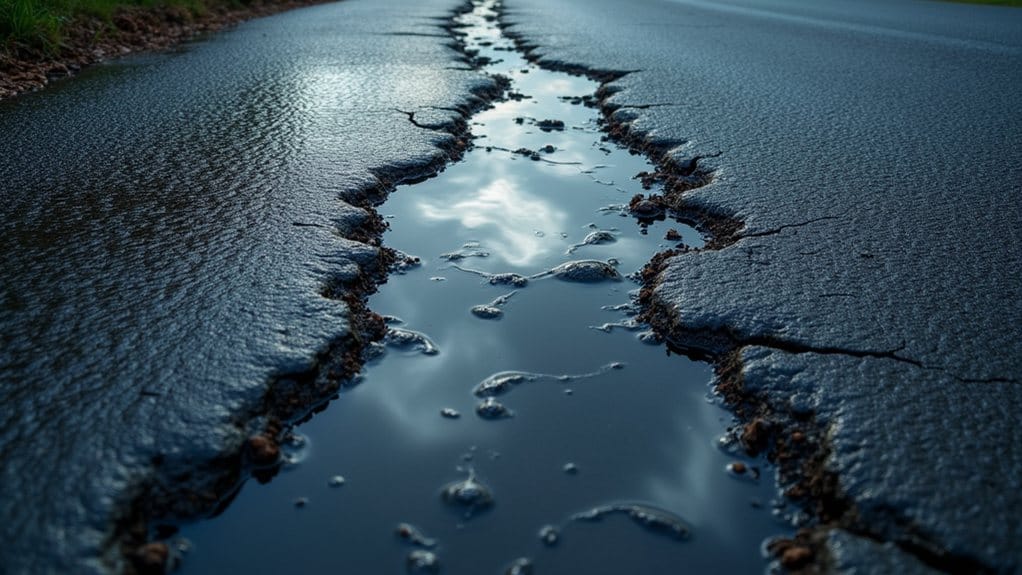
Because water sits on your driveway instead of draining away, it becomes your pavement’s worst enemy. Standing water doesn’t just sit there harmlessly. It attacks your driveway surface unremittingly!
Here’s what’s happening beneath the surface:
- Asphalt oxidation accelerates dramatically — cracks and potholes form months to years faster than well-drained pavement
- Concrete suffers freeze-thaw damage — just a few cold cycles cause spalling and edge heaving in winter climates
- Your aggregate base erodes quickly — water runoff washes away support, creating soft spots and rutting
- Foundation settling becomes real — saturated soil loses bearing capacity near your house foundation
Organic debris trapped in standing water promotes vegetation growth. Roots lift pavers and crack joints. Your driveway drainage problems snowball fast when you ignore water pooling.
Act now before erosion demands expensive full-depth repairs! Proper maintenance and timely repairs, including sealcoating and patching, significantly extend driveway life.
Five Drainage Solutions That Stop Pooling for Good
You’ve seen what pooling water does. Now let’s fix it!
Solution 1: French Drain
Install perforated pipe wrapped in fabric and gravel. It needs a 6-inch fall every 50 feet. This intercepts sneaky subsurface water before it destroys anything.
Solution 2: Trench Drain
Cut a channel across your driveway surface. Connect it to PVC piping or a catch basin. It handles massive runoff volumes fast!
Solution 3: Catch Basin
Place these at persistent low spots. They collect pooling water and route it away. Size yours to match your peak runoff.
Solution 4: Regrade Your Driveway
Achieve a safe slope under 12%. Water naturally flows toward the street. Simple. Effective. Game-changing.
Solution 5: Permeable Paving
Replace impermeable surfaces with permeable alternatives. Water infiltrates instead of pooling. Problem solved!
Nathan’s Paving brings over 20 years of experience to ensure proper groundwork and drainage for lasting results with quality materials.
Driveway Drains: Channel vs. French-Which Fits Your Property?
- Pooling location: Single spot? Channel drain wins. Spread along the driveway? French drain works better.
- Soil saturation: Soggy ground everywhere? French drain reduces your water table effectively.
- Installation hassle: Channel drains need concrete repair. French drains require serious excavation.
- Water volume: Massive surface runoff? Channel drains handle rapid flows better.
Think strategically about your specific driveway drainage challenge before deciding!
Driveway sealing and proper preparation also help protect against water damage and prolong pavement life, so consider professional seal coating as part of your solution.
Should You Regrade Your Driveway? Cost and Timing Explained
When water pools on your driveway instead of flowing away, regrading might be your answer.
What’s the Real Cost?
Regrading runs $1,500–$9,500 depending on your surface type.
- Gravel: Cheapest option; often a DIY weekend project
- Asphalt/concrete/pavers: Pricier; requires professionals and heavy equipment
The Slope Sweet Spot
You’ll want at least 1%–2% slope away from your house. That’s just 1–2 inches of drop per 8–16 feet.
Keep total slope under 12%.
Timing Matters
Schedule regrading during dry weather when ground’s workable.
Bundle it with drainage installation. French drains, swales, or trench drains avoid repeating work later.
Before You Start
Get a professional assessment.
Check runoff sources, outlets, and permits.
Grab multiple quotes.
Proper water flow protects your foundation!
We also offer free estimates for Carlisle asphalt paving and can assess your driveway on-site for the best long-term solution, including driveway install options.
DIY Drainage Fixes You Can Handle Yourself
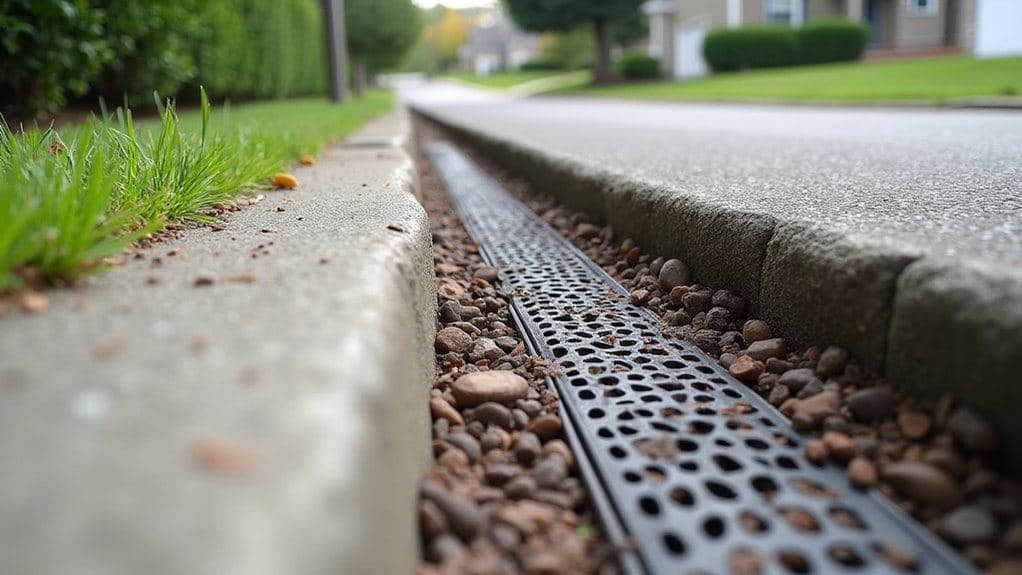
Not every drainage problem needs a contractor’s truck rolling up your driveway. You’ve got solid options!
Start Simple and Smart
Tackle these fixes yourself and save big money:
- Regrade your surface with a 1–2% slope away from your house. This creates natural sheet flow preventing pooling.
- Build a DIY French drain by digging a 6–12 inch trench. Line it with fabric, add gravel, install perforated pipe, then cover it up.
- Install permeable surfaces using crushed stone or open-grid pavers. They replace impermeable rock and reduce standing water dramatically.
- Extend your downspouts at least 6 feet from your foundation. Pair this with gravel-filled swales for concentrated flow diversion.
The Real Win
These temporary and semi-permanent fixes work!
You’ll plunge problem areas into functioning drainage zones without expensive professional help. For longer-lasting results consider professional groundwork and grading that ensure durability and optimal drainage like many local projects in Carlisle, PA.
Vet a Driveway Drainage Contractor: Questions About Experience and Expertise
Once you’ve decided a pro’s the right move, you’ll want to dig deep into their track record. Ask for references and photos of at least three completed projects. Request proof of insurance and valid licensing. Verify contactable client names and addresses.
| What to Request | Why It Matters |
|---|---|
| Project photos (French drains, trench drains) | Proves capability with similar driveway drainage issues |
| Written scope with pipe diameter and slope | Guarantees proper drainage system sizing |
| Insurance documentation | Protects you from liability |
| Itemized cost estimate | Prevents surprise expenses |
Demand a written scope detailing excavation, disposal, and surface restoration. Get warranties in writing. Compare at least three bids before deciding. Don’t skip this step. It’s your protection! A reputable company should also be able to show years of experience and a strong local reputation in the Central PA region, with commercial asphalt paving experience.
The Real Cost of Delaying Drainage Repairs: Timeline and Damage Projections
You’ve vetted your contractor and reviewed those bids. Smart move!
Now here’s the tough truth: delaying drainage fixes costs you big. Poor drainage doesn’t sit idle. It actively destroys your property.
Year 1–2: The Sneaky Phase
Standing water accelerates asphalt breakdown. Your 15–20 year driveway becomes a 5–10 year liability.
Soil erosion washes away subbase material. Edge collapse repairs run $1,000–$5,000.
Year 3–5: Foundation Trouble
Water directed toward your house raises hydrostatic pressure. Foundation cracks develop.
Interior water damage remediation costs $5,000–$25,000.
The Clogging Cascade
Vegetation and sediment reduce system capacity by 30–70%.
A cheap $200–$1,000 repair becomes a $1,500–$9,500 replacement.
Smart Move: Act Now
- Regrading your yard
- Adding gravel drainage
- Installing a catch basin
- Routing water away from your driveway
Early interventions cost under $1,000. They prevent catastrophic damages escalating tenfold within 3–7 years. We recommend scheduling routine maintenance and timely repairs to preserve pavement life and avoid costly replacements. Our team focuses on sealcoating and patching to extend driveway lifespan.
Frequently Asked Questions
How to Fix Standing Water in a Driveway?
Quick Wins:
- Regrade your driveway to slope water away from your house
- Install permeable pavers or porous concrete for better drainage
- Add French drains along edges to capture sneaky subsurface water
- Use edge trenching across low points to redirect runoff
Go Big:
Consider resurface options with proper grading adjustments and driveway sloping.
Pro tip: Get contractor quotes. Sometimes you need the heavy artillery!
How to Fix Standing Water in an Outside Drain?
Still pooling? Add perforated pipe with proper surface grading and perimeter drains to redirect water away successfully.
How Much Does It Cost to Fix Yard Drainage Issues?
You’re standing in your soggy yard. Water pools everywhere. Sound familiar?
Budget breakdown:
- DIY fixes: $50–$1,000 (gravel, rain barrels, swales)
- French drainage: $1,200–$4,000
- Yard grading: $1,500–$9,500
- Major work: $5,000–$10,000+
Smart moves:
Get multiple quotes. Check drainage permits first. Consider soil aeration and permeable paving. Terrain recontouring? Professional help rocks here.
Your wallet’ll thank you!
What Soaks up Standing Water in a Yard?
Natural Solutions:
- Rain gardens capture runoff and filter it down
- Bioswale planting with native grasses drinks moisture quickly
- Absorbent soil amended with sand or organic matter converts clay
- Water-tolerant plants and sponge lawns act like living sponges
- Mulch basins around plants enhance water retention and infiltration
Your best bet? Combine methods for maximum absorption and drainage!
Conclusion
You’ve got the knowledge. You’ve got the solutions. Don’t let standing water damage your investment. Fix it today or pay triple tomorrow. Channel drains or French systems. Pick one and act. Your driveway won’t wait. Your wallet won’t forgive delay. You’re the boss here. Take control. Dry pavement beats wet regrets every single time. Go get ’em!