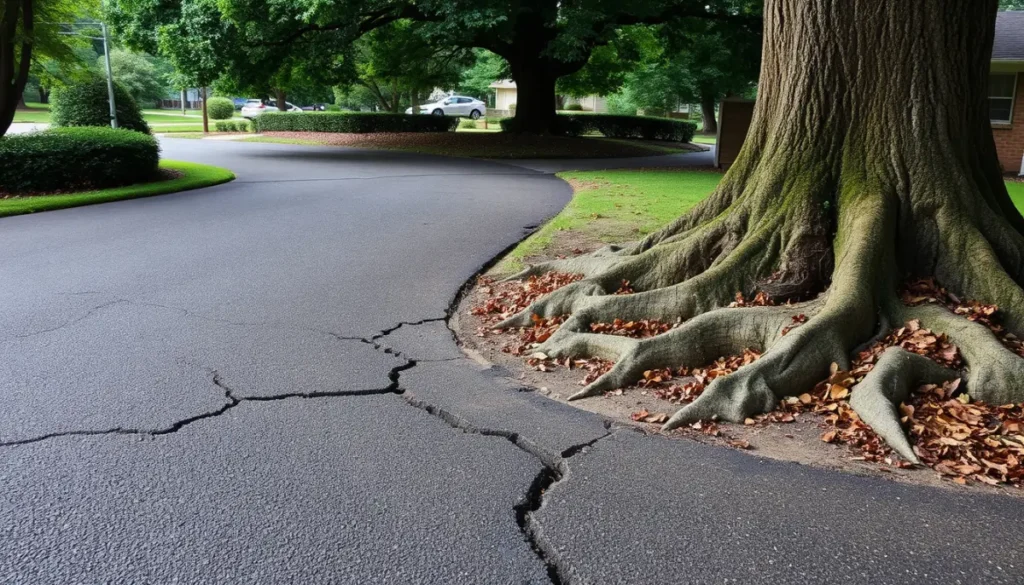
A bump in your driveway near a tree is a warning sign. Tree roots grow slowly, but they are strong. Over time, they can lift and crack asphalt.
This guide explains how roots damage a driveway, what to do first, and how the repair works.
How Do Tree Roots Damage Asphalt?
Roots grow toward water and loose soil. Under a driveway, they find both. The soil under asphalt stays damp and often has gaps.
As a root grows thicker, it pushes up on the asphalt. Asphalt is flexible, so it may form a hump at first. Then the surface stretches and cracks along the bump.
Roots can also dry out the soil under the driveway. When the soil shrinks, the asphalt can sink in spots. The result is an uneven surface.
What Are the Signs of Root Damage?
Look for these clues:
- A bump or ridge that runs toward a tree.
- Cracks that start near the tree and fan out.
- One area that sits higher than the rest.
- Cracks that keep coming back after you fill them.
- A driveway that tilts or feels uneven under your feet.
A tripping hazard is the main safety issue. Uneven spots can also trap water.
What Should You Do First?
Do not cut the roots in a hurry. Large roots help hold a tree up. Cutting them can hurt the tree or make it unstable.
The safe first step is to ask a tree professional. An arborist can tell you which roots can be trimmed and which should stay. They can also tell you if the tree is a risk.
We repair the asphalt. We do not remove trees. Your tree expert and your paving crew work in two steps. The tree plan comes first.
How Do Pros Repair the Driveway?
The repair depends on the damage. A crew may:
- Patch small cracks. For minor damage, filling cracks may be enough. See how to fill driveway cracks.
- Level a small hump. If the root is trimmed, the crew may cut out the lifted area and patch it.
- Replace a section. For larger damage, they remove the broken asphalt, fix the base, and lay new asphalt.
- Resurface or replace. If the damage is wide, a full plan may be the right call. See overlay vs full replacement.
A patch over a growing root will fail. The crew needs to know the root plan before they repave.
What About Alligator Cracks?
Roots can start a pattern of linked cracks that looks like alligator skin. That points to a weak base. A surface patch will not hold. You can read more in our guides on how to fix alligator cracking and steps for residential driveway crack repair.
How Can You Prevent Root Damage?
Prevention starts before the tree grows. Here are some ideas:
- Plant new trees far from the driveway. Ask a nursery how far for that kind of tree.
- Pick trees with smaller root spread near paved areas.
- Keep the soil beside the driveway healthy so roots stay there.
- Fill cracks early so water does not feed roots under the surface.
- Watch the driveway each spring for new bumps.
When Should You Call a Paving Pro?
Call when:
- A bump is growing or has cracks around it.
- The driveway has an uneven spot that could trip someone.
- You have already had a tree expert look at the roots.
- Cracks keep coming back in the same place.
We can look at the area and tell you if it needs a patch, a section repair, or more.
Which Trees Cause the Most Trouble?
Large trees with wide, shallow roots are the biggest problem. Their roots spread well past the reach of the branches. Many trees send roots toward the damp soil under a driveway.
Young trees may look harmless. But roots grow thicker every year. A tree that is fine today can lift the asphalt in a few years. If you plan to plant, ask a nursery about root spread.
Should You Keep the Tree?
That is a choice for you and a tree expert. Some trees are worth keeping and some are not. A tree professional can tell you if roots can be managed or if the tree is a risk.
We cannot decide that for you. We can tell you what the driveway needs once the tree plan is set.
What Does a Section Repair Look Like?
When roots lift one area, the crew may replace just that section. The steps look like this:
- Mark and cut out the lifted asphalt.
- Remove the broken pieces.
- Check the base and fix any soft or empty spots.
- Place new asphalt and roll it flat.
- Seal the seams so water stays out.
This works well when the root plan is already settled. Otherwise, the root can lift the new patch.
Can You Reroute the Driveway?
Sometimes a small shift in the path keeps the asphalt away from a major root. This can be an option for a new driveway or a big replacement. We look at the site and talk through what makes sense.
It is not for every yard. Slope, drainage, and house access all matter.
What Should You Tell Us When You Call?
A few details help us plan the visit. Have these ready:
- Photos of the bump, the cracks, and the tree.
- How long the bump has been there and whether it is growing.
- Whether anyone has tripped on it.
- Whether a tree expert has looked at the roots.
- Where the driveway meets the garage, walk, or street.
If you can, send a photo taken from low to the ground. It shows the height of a bump better than a photo from above.
What Happens to Roots in Winter?
Roots rest in the cold, but the damage does not. Water in the cracks freezes and thaws, and a lifted spot can break up faster. A small bump in fall can look worse by spring.
That is why early attention pays off. A small repair now is easier than a big one later.
Frequently Asked Questions
Can I just pave over the bump?
A new layer over a growing root will lift again. The root plan needs to come first.
Can I cut the roots myself?
Ask a tree pro first. Cutting the wrong root can harm the tree.
Will the damage come back?
It can, if the root keeps growing under the repair. A good plan deals with the cause.
More Paving Guides
Get a Free Estimate
Nathan’s Paving & Seal Coating has worked in Central PA for over 20 years. We handle driveway patching, repairs, resurfacing, and new asphalt paving for homes across the area.
Estimates are free, and we offer senior citizen discounts. Call (717) 648-5030 or email nathanpaving@gmail.com. We will look at the damage and tell you the next step.