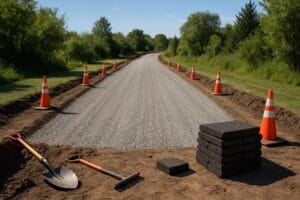
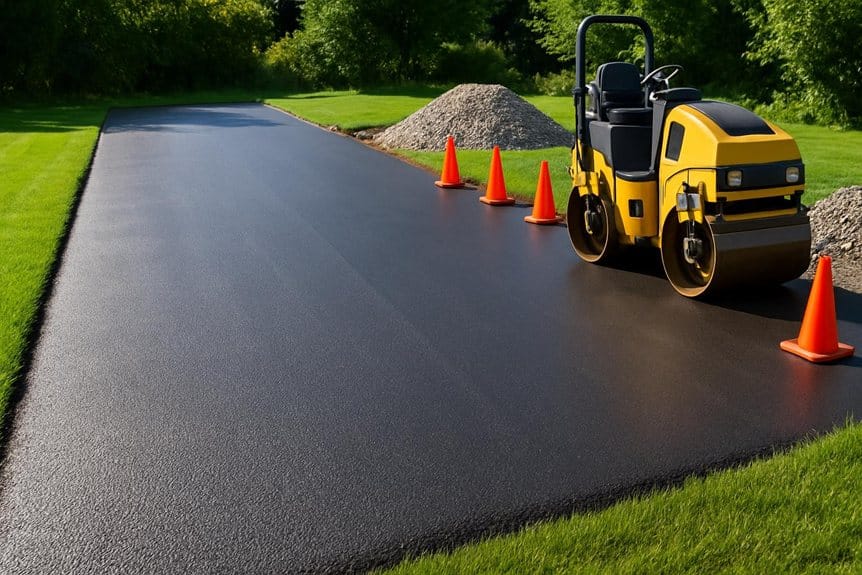
A driveway paving project moves through several critical phases, and each one affects your final result. Once your quote gets approved, scheduling begins within a week. Base preparation takes 3 to 14 days before any asphalt touches the ground. Paving day itself moves fast, wrapping up in roughly an hour. Then curing takes weeks. Knowing what’s happening at every stage puts you firmly in the driver’s seat. Keep going to conquer every phase.
Key Takeaways
- After quote approval, expect scheduling 3 to 6 weeks out, with weather, materials, and base preparation timing influencing your exact start date.
- Before crew arrival, clear vehicles, move portable items back 15 feet, and mark any underground utilities or sprinkler lines.
- Base preparation involves excavation, grading, and compacted aggregate layers, followed by a stabilization wait of 3 to 14 days before paving begins.
- Actual paving day moves quickly, with hot mix asphalt placed, compacted, and finished in roughly one hour.
- After paving, allow 24 to 48 hours for foot traffic, 7 full days for vehicles, and 90 or more days before applying sealcoat.
How the Planning and Scheduling Process Works
Once you approve the quote, the clock starts ticking.
Your office manager contacts you within one week to confirm availability and lock in your timeline.
Here’s what drives your scheduling:
- Weather conditions
- Material availability
- Base preparation timing (3 to 14 days)
- Your preferred dates
Site evaluation comes first. The contractor confirms layout, slopes, and drainage needs before anything moves forward.
Most projects schedule 3 to 6 weeks out, longer during peak season.
Pro tip: Book early. The paving season typically runs from spring through late fall in Central Pennsylvania.
Rain or poor soil moisture? They’ll reschedule.
No shortcuts on base preparation.
Expect all schedule details and prep instructions delivered straight to your inbox.
We provide fast, free quotes to help with financial planning and project decisions.
How to Prepare Your Property Before the Crew Arrives
Before the crew pulls up, your job is simple. Get out of their way.
Remove vehicles and clear access areas completely. That means garages, side yards, and gates all open.
Move portable items at least 10 to 15 feet back:
- Basketball hoops
- Planters and furniture
- Decorations
This creates staging space and helps prevent damage.
Simple.
Mark underground utilities and sprinkler lines before anyone digs. Tell the crew exactly what’s buried. Avoid costly surprises.
Notify neighbors early. Paving day means temporary closures and heavy equipment movement. Give them time to plan alternative parking.
Finally, watch that weather forecast closely. Be ready to reschedule if rain appears. Wet conditions can affect proper bonding and curing.
Preparation wins projects. Get ready.
Nathan’s Paving brings over 20 years of industry experience to help deliver a durable, professional result.
What Happens During Driveway Site Prep and Base Work
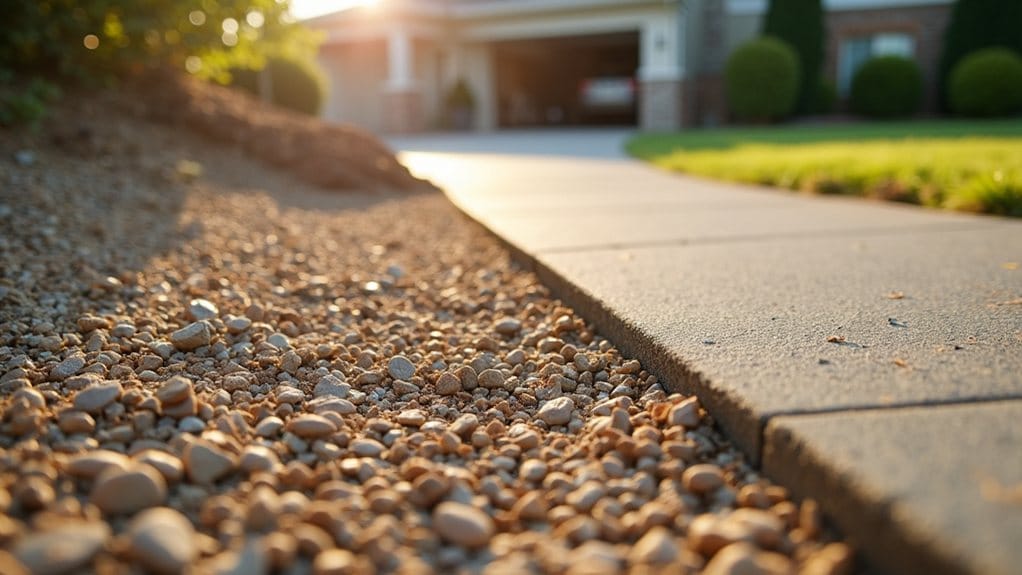
This isn’t cosmetic work. It’s structural engineering for your property.
Here’s what happens during site prep and base work:
- Removal. Heavy equipment strips the existing surface completely
- Excavation and grading. Crews dig and slope for proper drainage away from structures
- Sub-base installation. Crushed rock or recycled aggregate base gets laid in compacted layers
- Compaction. Rollers help eliminate voids and build real stabilization
- Settling period. You’ll wait 3 to 14 days before paving begins
That aggregate base matters a lot. A quality sub-base can support long-term durability. A weak one often leads to early repaving.
Crews evaluate soil moisture on-site. Good contractors don’t rush compaction. Neither should yours.
We provide free estimates for Carlisle asphalt driveway projects and can answer any questions about the process.
Why the Base Needs Time Before Driveway Paving Begins
That compacted aggregate needs time to stabilize under real moisture conditions. Rushing this step can be a costly mistake.
Here’s what’s at stake:
- Poor stabilization can cause settling and cracking
- A wet subgrade can create rutting problems
- Bad drainage can damage your base from underneath
Your contractor checks site-specific factors before paving:
- Moisture content readings
- Compaction test results
- Visual stability signs
Skipping proper wait time can significantly shorten your driveway’s lifespan. That makes a big difference over time.
The typical wait is 3 to 14 days, adjusted for your soil conditions and drainage situation.
Bottom line: Base quality matters just as much as asphalt thickness. Let the subgrade breathe. Patience here helps protect your investment. We also recommend choosing a contractor with proven local experience and strong customer reviews to help ensure quality work and reliable timelines, like those highlighted by our clients in Central PA customer reviews.
What to Expect on Driveway Paving Day
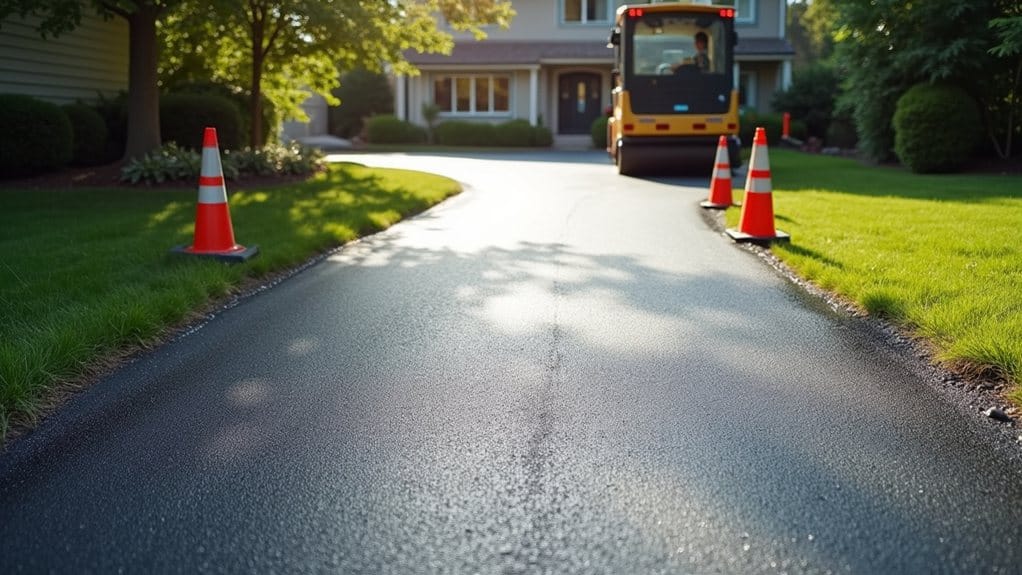
Paving day finally arrives, and it moves fast.
After crew arrival, things happen quickly. Your team brings hot mix asphalt and hits the ground running. Here’s what unfolds:
- Clear vehicles and obstacles before they arrive
- Crew performs final base checks immediately
- Hot mix asphalt gets placed and compacted while hot
- Final compaction and finishing take roughly one hour
- Stay available by phone for on-the-spot decisions
Compaction timing is everything. The asphalt paving window is tight. Delays can cost quality.
Once your driveway is finished, the curing period begins. Foot traffic waits 24 to 48 hours.
Vehicle traffic waits 7 full days.
Protect your investment. Respect the cure.
Nathan’s Paving serves customers across Central Pennsylvania, with experienced crews handling your new driveway installation.
What to Do and Avoid After Your Driveway Is Paved
You’ve got a brand-new driveway. Now protect it.
Your driveway requires smart curing habits. Here’s what matters:
Allow foot traffic after 24 hours, but no dragging sharp objects.
Wait roughly 7 days before driving on new asphalt.
Avoid parking any vehicle for at least 2 weeks.
Keep heavy vehicles off entirely for one week. They can cause serious damage and prevent indentations from healing.
Protect edges. Skip edging or digging nearby for several weeks.
No sealcoat yet. Wait a minimum of 90 days. Ideally, wait 6 to 12 months.
Curing takes patience, but patience pays off.
Protect your investment now and enjoy a durable driveway for years. Nathan’s Paving & Seal Coating has over 20 years of experience in the industry and uses quality materials for lasting results.
What Driveway Paving Costs and What Affects the Price
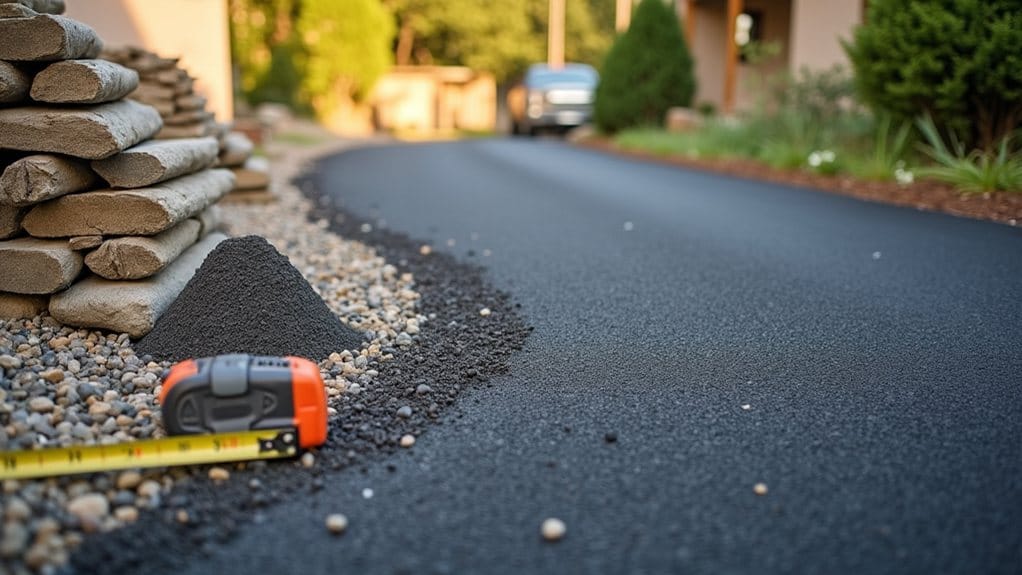
Most residential asphalt driveways run $3 to $7 per square foot. Simple jobs hit the low end. Complex projects push higher, fast.
Your final price depends on these key factors:
- Driveway area. More square footage means higher material costs
- Tear-out and sub-base work. Full reconstruction adds to the total
- Drainage and grading. Slopes and corrections increase labor time
- Asphalt thickness. Thicker layers cost more but can last longer
- Seasonal demand. Peak season tightens schedules and can raise prices
Don’t forget warranties and included services. They can seriously affect your value.
Get multiple quotes. Understand what’s included. Know your numbers before signing anything. Smart planning helps protect your investment. Nathan’s Paving is a local, fully licensed company with over 20 years of industry experience serving Carlisle and surrounding areas, making them a solid choice for residential paving.
Frequently Asked Questions
How Much Does It Cost to Pave a 20X20 Driveway?
Your final price depends on:
- Asphalt thickness (2″ to 3″)
- Grading prep and drainage slope
- Curb changes and edge restraint
- Sealcoating timing after installation
Get a free site inspection. Load capacity and joint spacing matter.
What Are Common Driveway Design Mistakes?
- Poor drainage and improper slope. Water can damage asphalt fast
- Insufficient base and ignoring subgrade. Expect cracking within a few years
- Uneven grading and bad shifts. Creates dangerous trip hazards
- Narrow access and inadequate edging. Limits usability immediately
- Wrong material and overlooking permits. Forces costly rework
Fix it right the first time.
What Is the Process for Paving a Driveway?
Finally, respect those curing times. Wait 7 days minimum before driving.
Why Can’t You Pave in the Winter?
Think of hot asphalt like fresh bread. It must stay warm to set right.
Cold temperatures and frozen ground can affect your results. Here’s why:
- Material viscosity drops. Asphalt can harden before compaction finishes
- Moisture entrapment and frost heave can crack your surface early
- Sealant failure becomes more likely
- Equipment performance suffers below 40 degrees F
- Asphalt curing and compaction issues can mean premature failure
Wait for warmth. Protect your investment.
Conclusion
You’ve got the full picture now. You know the process. You know the costs. You know what’s coming.
Don’t overthink it.
Find a trusted contractor. Ask smart questions. Protect your investment after installation.
Your driveway paving experience starts with being prepared, and now you are.
Ready to get started? Nathan’s Paving handles new driveway installation in Carlisle, PA and will walk you through every step covered above.