A commercial lot has to keep working. Customers, staff, and deliveries all need a way in. That is why planning matters more than the paving itself.
This guide is for owners and managers of offices, shops, churches, and HOAs in Mechanicsburg. It shows how to scope the work, keep the lot open, and pick the right fix.
What Is Commercial Paving?
Commercial paving covers the lots and drives that serve a business or a group of people. It can mean a new lot, a fresh layer on an old one, or targeted repairs.
It also includes the details around the surface. Drainage, edges, and painted lines all affect how the lot works day to day.
How Do You Scope the Job?
Start with a walk of the whole property. Look at the lot the way a customer sees it.
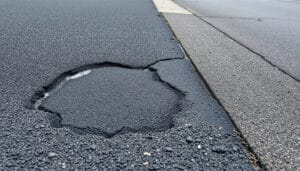
- Where are the cracks, potholes, and sunken spots?
- Where does water collect after rain?
- Which areas get the most traffic and the heaviest vehicles?
- Are the edges breaking down?
- Are the painted lines and marked spaces still easy to see?
Take notes and photos. They help a contractor give you a clear plan. A good crew will also walk the lot with you and point out what they find.
Should You Repair, Resurface, or Replace?
This is the question most owners ask first. The answer depends on how deep the damage goes.
- Repair. Fits a lot in fair shape with a few problem spots. Cracks are filled and low areas are patched.
- Resurface. Fits a lot that is worn but still solid underneath. A new layer goes over the old one.
- Replace. Needed when the base has failed. Wide cracking, large sunken areas, and repeated potholes point this way.
Our guide on asphalt overlay vs full replacement walks through how to tell them apart. A contractor should explain why they suggest one choice over another.
How Do You Keep the Lot Open?
Most businesses cannot close the whole lot. The fix is to work in sections.
- Split the lot into zones and finish one at a time.
- Keep the main entrance and accessible spaces open as long as possible.
- Plan the busiest areas for the quietest days.
- Use cones, tape, and signs so people know where to go.
- Share the schedule early with staff and tenants.
Churches can plan around services and events. HOAs can post notices for residents. Offices can ask tenants which days are busiest. Our guide on retail parking lot resurfacing has more ideas that carry over to other kinds of lots.
Why Does Drainage Matter?
Water is the main reason pavement fails. It seeps into cracks, softens the base, and freezes in winter. That cycle breaks asphalt apart.
During the walk, look for places where water stands. A contractor can often change the grade or fix low spots as part of the job. Fixing the surface without fixing the water often means the problem comes back.
Our post on how drainage problems destroy asphalt explains what to look for.
What About Striping and Marked Spaces?
New paving needs new lines. Fresh striping makes a lot easier to use and easier to read.
Plan the layout before the work starts. Think about:
- The number of spaces you need.
- Accessible spaces and the path to the door.
- Loading zones and fire lanes.
- Arrows, stop bars, and crosswalks.
Rules for accessible spaces can be strict. Ask your contractor to go over the layout with you. We handle parking lot striping in Mechanicsburg after the surface is ready.
What Does Timing Look Like in Central PA?
Asphalt work needs the right weather. Cold and wet days make paving harder, and seal coating needs warm, dry days too.
Plan ahead and pick a main date and a backup date. Late spring through early fall gives the most room. If you wait for a problem to get worse, you may have fewer choices.
What Should a Bid Include?
A clear bid makes it easy to compare. Look for:
- A map or description of the areas covered.
- The prep work, such as cleaning, crack filling, and patching.
- The type of work for each area.
- The schedule and how the lot stays open.
- Striping, if it is part of the job.
- Cure time before cars return.
For help comparing bids, see how to choose a paving contractor in Central PA.
What Mistakes Do Owners Make?
A few come up again and again:
- Waiting until damage spreads.
- Skipping the drainage check.
- Picking a date with no backup.
- Giving late notice to tenants or members.
- Forgetting the lines until the end.
A short plan up front avoids most of these.
How Long Does a Commercial Project Take?
It depends on the size of the lot and the type of work. A repair job may take a day or two. A full resurfacing or new lot takes longer, and weather can move the dates.
Ask the contractor to give you a schedule by section. Also ask what happens if rain moves a day. A good plan includes a backup date and a way to tell people about the change.
Who Needs to Know About the Work?
Plenty of people use a shared lot. Make a short list and tell each group early.
- Staff and tenants who park every day.
- Customers and visitors.
- Delivery drivers and vendors.
- Church members and volunteers.
- HOA residents and the board.
Send a note early and a reminder a few days before. Post signs at each entrance on the day. Give people a name and a phone number for questions. Most complaints come from people who were not told in time.
What Care Comes After the Work?
New pavement lasts longer when you take care of it. Plan a few simple steps after the job:
- Walk the lot once or twice a year and look for new cracks.
- Fill small cracks before water gets in.
- Keep drains and gutters clear of leaves and trash.
- Plan seal coating when the surface is ready for it.
- Touch up lines as they fade.
A short routine keeps small problems small. Our guide to year-round parking lot maintenance lays out a full list you can follow.
How Should You Plan Around Winter?
Winter is hard on pavement. Water gets into cracks, freezes, and pushes the asphalt apart. Fixing cracks and soft spots in the fall helps the lot get through the cold months.
If you are thinking about a project for next season, now is a good time to plan. You can get an estimate, set a budget, and pick a date for spring. Planning early gives your board, your owner, or your tenants time to agree on the work.
What Should You Do First?
If you are not sure where to start, take three small steps:
- Walk the lot and take photos of the problem spots.
- Write down when the lot is busiest and quietest.
- Call a contractor for a free estimate and a walk-through.
That is enough to get a clear plan on paper. From there, you can decide how big the job needs to be.
How Do You Pick the Right Contractor?
Look for a crew that walks the lot, listens, and writes a clear plan. Ask how they handle phasing, drainage, and striping. Ask how they keep the work on schedule when the weather changes.
Good communication matters as much as good paving. You want a contractor who returns calls and tells you about changes early.
Frequently Asked Questions
Can my lot stay partly open during the work?
Often, yes. Working in sections lets people keep parking in the open part.
How do I know if I need a new layer or a full replacement?
It depends on the base. If the base is solid, a new layer may work. If it has failed, replacement is the better path. A contractor can check this on site.
Do you handle striping too?
Yes. We restripe the lot once the surface is ready.
More Paving Guides
- warning signs your parking lot needs maintenance
- HOA asphalt paving guide
- apartment complex paving for property managers
Get a Free Estimate
Nathan’s Paving & Seal Coating has worked in Central PA for over 20 years. We handle commercial paving in Mechanicsburg, PA across our Mechanicsburg service area and keep the work on a schedule that fits your property. See our page on parking lot maintenance in Mechanicsburg for more.
Estimates are free. Call (717) 648-5030 or email nathanpaving@gmail.com. We will walk your lot and help you build a plan.