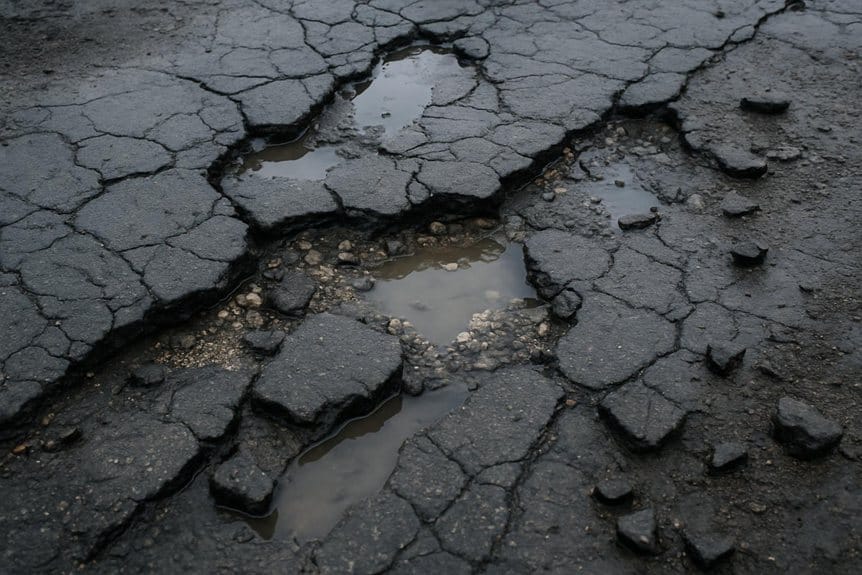
Poor drainage destroys asphalt faster than heavy traffic ever will. Water seeps into hairline cracks, saturates your base layer, and triggers freeze-thaw cycles that expand damage by 10-20% every winter. Standing water pooling for 48+ hours drops base compaction from 95% to under 80%, and potholes return in the exact same spots. Fix drainage first, then resurface. Keep scrolling and you’ll uncover exactly how to stop the cycle for good.
Key Takeaways
- Standing water seeps into asphalt cracks, saturates the base layer, and destroys structural support faster than vehicle traffic ever could.
- Freeze-thaw cycles expand existing cracks by 10-20% each winter, accelerating progression from hairline crack to pothole within weeks.
- Warning signs include alligator cracking, recurring potholes in identical spots, and puddles lasting 48+ hours after rainfall.
- Poor grading and clogged catch basins concentrate runoff in low spots, causing repeated base saturation and near-certain pavement failure.
- Always fix drainage first, regrading, catch basins, or French drains, before patching or repaving to prevent the same damage from returning.
Why Poor Drainage Destroys Asphalt Faster Than Traffic
While traffic gets all the blame, water is asphalt’s real enemy.
Standing water silently attacks your pavement 24/7. It seeps into cracks and saturates your base layer, destroying structural support beneath your feet.
Here’s what makes it devastating:
- Freeze-thaw cycles expand cracks violently, faster than any truck
- Poor grading concentrates runoff in low spots repeatedly
- Clogged drains cause the same areas to fail again and again
Water doesn’t just damage your surface. It *collapses the foundation entirely*.
Think about this: vehicles wear asphalt gradually. Water destroys it structurally.
The result? Potholes and alligator cracking appear faster than normal traffic ever produces.
Fix your drainage first. Everything else is temporary.
Nathans Paving offers professional driveway drain solutions and free estimates to prevent these issues, backed by over 20 years of experience and catch basin drains.
How Water Turns a Small Crack Into a Parking Lot Sinkhole
That hairline crack in your asphalt? It’s a ticking clock.
Here’s the brutal progression:
- A 1/8-inch hairline crack lets rainwater sneak into your base
- Freeze-thaw cycles expand that crack by 10-20% every winter
- Water pooling for 48+ hours multiplies deterioration dramatically
- Base failure follows fast, compaction drops from 95% to under 80%
Once your base weakens? Vehicle loads concentrate stress into one spot.
Crack → pothole → sinkhole. Sometimes within weeks.
Your 2-4 inch asphalt layer literally has nothing supporting it anymore.
The fix is straightforward:
Prioritize crack sealing immediately and address drainage at the source, regrade surfaces or install French drains.
Stop the water. Save the pavement.
Also consider regular maintenance and professional inspections to extend lifespan and prevent costly repairs, especially given the value of preventative maintenance.
6 Warning Signs Your Lot Has a Drainage Problem
Your lot is sending signals right now. Don’t ignore them!
Watch for these 4 critical red flags:
- Standing water pools in low spots hours after rainfall, that’s base saturation beginning.
- Alligator cracking near drainage low spots means water’s already attacking your foundation.
- Recurring potholes in identical locations signal washed-out base materials underneath.
- Clogged catch basins create dark spongy patches, even during dry weather.
Edge crumbling near curbs? That’s uncontrolled runoff undermining your pavement structure.
Soft spots underfoot during sunshine? Subsurface moisture is winning.
Every warning sign represents money leaving your pocket. Catch these problems early, your repair bill depends on it! Our team offers routine maintenance and free quotes to address these issues before they worsen.
What Causes Drainage Failures in Central PA Parking Lots?
Five specific culprits destroy parking lots here.
Poor drainage starts with bad grading. Water finds low spots and stays.
Ponding water after storms can last *days*, soaking your asphalt’s foundation completely.
Next: clogged storm drains. Blocked catch basins cause overflow that repeatedly saturates your base material.
Then come freeze-thaw cycles. Central PA winters are brutal. Water enters cracks, freezes, expands, and *wrecks* your pavement fast.
Roof runoff and misdirected irrigation concentrate sheets of water near curbs. Edges erode quickly.
Finally: saturated base material. Persistent pooling destroys subgrade compaction underneath. You’ll see the same potholes returning repeatedly.
Sound familiar? These aren’t random failures. They’re predictable, and completely fixable. For reliable solutions and preventative maintenance, check our pothole repair services to protect your pavement long-term.
How Standing Water Accelerates Asphalt Deterioration
When water sits on your parking lot for hours, it’s actively destroying your pavement.
Ponding water triggers a brutal chain reaction:
- Surface breakdown – Standing water penetrates cracks and weakens the binder causing raveling and surface loss.
- Base failure – Water infiltrates your base washing away fines and destroying bearing capacity.
- Freeze-thaw damage – Trapped water freezes and expands widening cracks into dangerous alligator patterns.
- Soft spots – Waterlogged base materials lose stiffness creating spongy sections that collapse under vehicles.
The result? Recurring potholes in the same locations.
Your pavement life drops dramatically compared to well-drained surfaces.
Standing water isn’t a minor inconvenience. It’s a silent, unrelenting destroyer working against you every single day.
Regular seal coating and maintenance from experienced professionals can significantly extend pavement life.
How Bad Grading Sends Water to the Wrong Places
Bad grading is quietly sabotaging your pavement right now.
Improper contouring below the recommended 1-2% slope creates pooling water fast. That standing water finds every crack and destroys your base.
Watch for these costly problems:
- Low spots trap water and accelerate pothole formation
- Roof and landscape runoff directed toward pavement speeds raveling
- Slopes toward curbs without functioning drainage systems cause brutal edge erosion
Even small grade deviations concentrate flow into recurring damage zones.
Here’s the hard truth:
Your pavement doesn’t fail randomly. Bad grading *sends water exactly where it hurts most.*
Fix your drainage systems now. Regrade problem areas. Install catch basins where needed.
Don’t let bad math destroy expensive asphalt!
Resurfacing and timely maintenance, including regular sealcoating, can extend a parking lot’s lifespan and prevent such drainage-related damage.
How a Clogged Drain Can Quietly Collapse Your Pavement Base
Here’s what base saturation actually does to your pavement:
- Weakens the base, bearing capacity drops from 8-12% CBR down to under 4%
- Erodes fine materials, water carries particles away creating dangerous voids
- Destroys your edges, shoulder erosion causes crumbling within one to two seasons
- Freeze-thaw cycles finish the job, trapped water expands and splits everything open
The fix? Clean your catch basins. Flush your grates. Add French drains if needed.
Don’t wait. Clogged drains cost you a full reconstruction. A timely inspection and maintenance plan can prevent this damage and protect neighborhoods across Central PA, including Hanover and Gettysburg.
French Drains, Catch Basins, or Regrading: Which Do You Need?
Not every drainage problem needs the same fix, and choosing wrong costs you big.
Match the solution to the symptom:
- Subsurface seepage along foundations? You need French drains, perforated pipe redirects hidden groundwater before it destroys your base
- Surface pooling at specific low spots? Install catch basins, they capture concentrated runoff fast and route it out safely
- Widespread ponding across the lot? Regrading restores proper 1-2% slope and stops repeated water intrusion
Seeing BOTH pooling AND sinking areas? Use all three together.
Before deciding anything, measure puddle depth after rain and inspect for alligator cracking. That cracking signals base saturation.
Get a professional evaluation. Subsurface failure means excavation. Don’t guess.
Nathan’s Paving & Seal Coating brings over 20 years of experience and a commitment to durable, top-grade materials to ensure lasting drainage repairs.
Why Patching Fails Without Fixing Drainage First
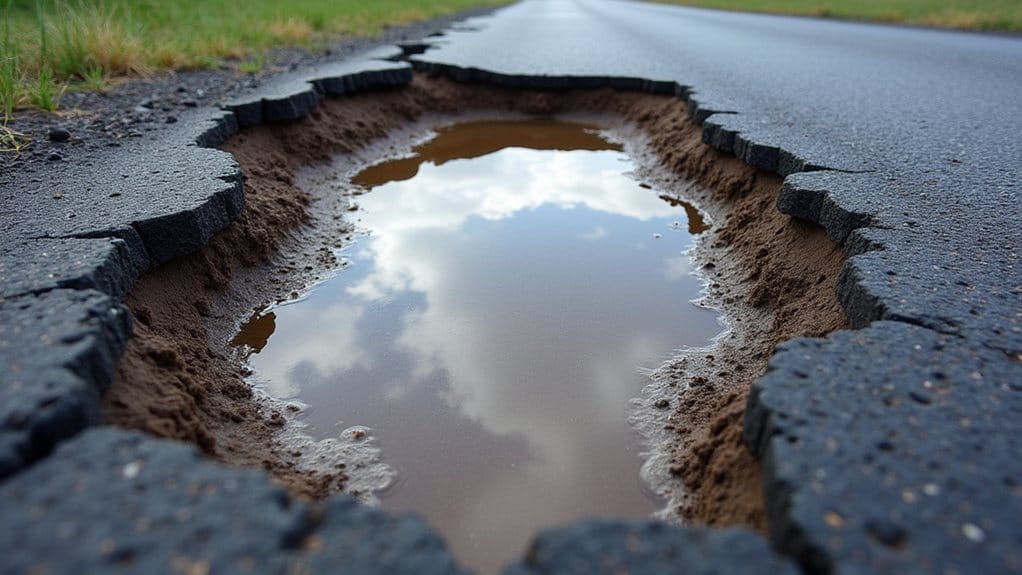
That’s backwards. Most people patch first and ask questions later. But without fixing drainage, you’re wasting money.
Here’s exactly what happens:
- Standing water saturates your pavement’s foundation
- Saturated soil destroys your aggregate base, it loses all strength
- Your new patch sinks, cracks, and crumbles within months
- Potholes return in the same spot, every single time
Sound familiar? That’s pooling doing its damage underground where you can’t see it.
The surface isn’t your problem. The water beneath it is.
Patch without fixing drainage first and you’ll repeat this cycle forever. Fix the drainage first, then rebuild the surface. That’s the only order that actually works.
We recommend assessing drainage as part of a comprehensive ground preparation plan before repaving to ensure long-term performance.
How Often Should Central PA Properties Inspect Asphalt Drainage?
Spring inspection catches damage from snowmelt and freeze-thaw cycles.
Fall inspection catches damage after leaf drop clogs drains.
That’s your baseline, twice yearly, minimum.
But here’s where Central PA gets tricky.
After every major storm, do a quick check.
Look for:
- New standing water
- Fresh ruts or edge erosion
- Clogged catch basins
Measure persistent puddles immediately.
Standing water deeper than 1/4 inch lasting 48+ hours? That’s a confirmed drainage problem, not a “wait and see” situation.
For commercial properties, inspect asphalt drainage monthly during wet seasons (March-June and September-November).
Finally, schedule a professional pavement drainage evaluation every 3-5 years.
Don’t skip it.
Your asphalt’s survival depends on it.
Nathan’s Paving & Seal Coating serves communities and has over 20 years of paving experience, so professional help is available locally.
Frequently Asked Questions
Can Crumbling Asphalt Be Repaired?
Here’s what determines your fix:
- Surface-only damage? Remove loose material and patch it
- Freeze-thaw cycles + edge erosion? Mill edges and overlay
- Poor compaction or root intrusion? Excavate and rebuild the base
- Oil contamination? Clean thoroughly before patching
⚠ Warning: Skipping drainage fixes means you’re just delaying the problem.
Act fast, small repairs stay small!
Can You Put Another Layer of Asphalt Over Old Asphalt?
Here’s what you need to know:
- Surface bonding requires a clean solid base
- Thickness limits: 1.5-4 inches depending on use
- Grading correction makes certain water drains properly
- Adhesive compatibility locks layers together
⚠ But watch out! Soft spots or alligator cracking? Fix those first or your new layer fails fast!
What Hardens Asphalt Millings?
Heavy rollers crush millings together, creating a rock-solid bond.
Here’s what boosts the process:
- Moisture control, proper water content activates fines
- Aggregate selection, quality RAP material matters enormously
- Grading importance, even surfaces compact better
- Sealants effectiveness, locks everything permanently
Run 3-5 roller passes minimum. You’ll convert loose millings into a durable surface fast!
What Does Asphalt Look Like When It Starts to Deteriorate?
Think of asphalt like skin, it ages fast without protection!
You’ll first notice surface raveling, that gritty sandpaper texture. Then binder oxidation causes fading and hairline cracks.
Next comes edge alligatoring, those spiderweb patterns screaming “base failure!”
Pothole formation follows quickly. Finally? Subgrade washout hollows everything underneath.
Water’s winning that battle. Act immediately!
Conclusion
Water is a patient destroyer. It doesn’t rush, it waits.
Every pooled puddle is a countdown clock on your pavement’s life.
But you’re not powerless here. Fix drainage first. Protect the foundation. Stop reactive spending before it starts.
Your parking lot is the first handshake your business makes. Don’t let it crack under pressure.
Act now, before water writes the ending for you.