For a retail business, the lot is not a maintenance item. It is the front door. Which is exactly why owners put off resurfacing it: the work seems to threaten the thing it is supposed to improve.
You almost certainly do not have to close. Here is how these projects actually get run.
Why Waiting Costs More Than the Work
Two reasons, and the second one is the expensive one.
Customers judge you by the lot. A cracked, potholed lot with faded lines reads as a business that is not doing well. It is the first thing a customer experiences and the last thing they see leaving.
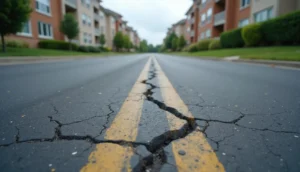
Small damage becomes structural damage fast. Every crack lets water into the base, the crushed stone layer that carries the weight. Once water gets into the base and freezes, the damage stops being a surface problem. Resurfacing is affordable. Full replacement, after the base has failed, is not.
There is also liability. A pothole or a badly faded crosswalk in a customer parking lot is a claim waiting to happen.
Phasing: How You Stay Open
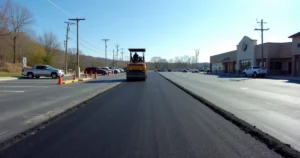
The core idea is simple. Split the lot into sections, work one at a time, keep the rest open. What varies is the schedule.
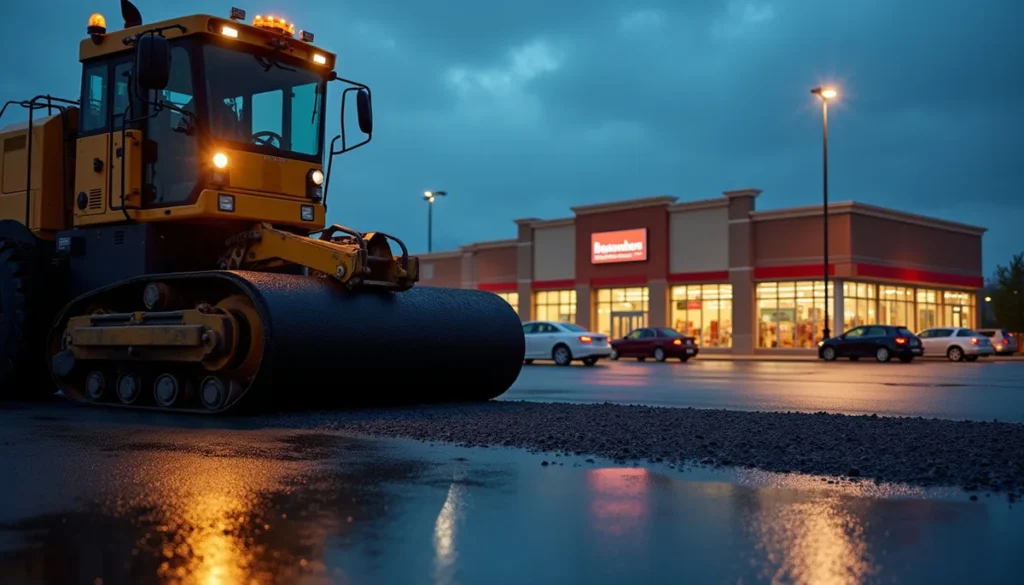
Overnight. Best fit for most retail. Crew starts after close, works through the night. You open in the morning with that section barricaded for curing. Costs more per hour, but the alternative is lost sales.
Weekends. Works if your Saturday and Sunday are quieter than weekdays, which is true for some retail and most office-adjacent businesses.
Section by section during the day. Cheapest option. Works when you have enough spaces that losing a quarter of them does not turn customers away.
By entrance. For lots with multiple access points, keep one entrance and the main drive lane open throughout.
The right choice depends on your traffic pattern, not on a general rule. Walk the lot with your contractor and tell them honestly when you are busy and which spaces actually get used.
The Part Everyone Underestimates: Cure Time
Fresh asphalt needs to stay clear of traffic for a few days. Not hours.
This is where retail projects go wrong. The section looks finished at 7am. Customers drive on it. Now you have tire marks in soft asphalt and a section that needs rework.
What actually prevents it:
- Real barricades, not cones. Cones get moved.
- Signage that says when it opens, not just that it is closed. “Opens Thursday” stops people from testing it.
- Brief your staff. They are the ones who will get asked, and they are also the ones who might park there.
- Tell delivery drivers. A delivery truck on fresh asphalt is a bigger problem than a car.
Ask your contractor for a specific cure window per section, and build your signage around that number.
Keep Customers Finding the Door
Sales get lost during lot work when people cannot figure out where to go, not because there are fewer spaces.
- Sign the entrance you want them to use, from the road
- Sign the walking route from temporary parking to your door, especially if the usual path is closed
- Keep the accessible route intact. This is not optional. Accessible spaces and the path from them to your entrance must remain usable in every phase.
- Post it on your website, hours listing, and social for the duration. “We’re open during parking lot work, enter from Main Street” prevents a lot of assumed-closed traffic loss.
- Tell neighboring businesses if you share access or overflow.
ADA: Fix It Now, Not Twice
Resurfacing means restriping, and restriping means your accessible parking has to meet current standards. Doing it now costs nothing extra. Doing it later means striping the lot twice.
Under the 2010 ADA Standards:
| Total spaces | Accessible required | Van-accessible |
|---|---|---|
| 1 to 25 | 1 | 1 |
| 26 to 50 | 2 | 1 |
| 51 to 75 | 3 | 1 |
| 201 to 300 | 7 | 2 |
| 301 to 400 | 8 | 2 |
One in six accessible spaces must be van-accessible. Regular accessible spaces are at least 8 feet wide, van-accessible at least 11 feet wide, with access aisles of 60 inches or 96 inches for van spaces. Signage and slope requirements also apply.
Lots striped before 2010 are commonly short on van-accessible spaces specifically. Count yours.
Resurface or Replace?
Resurfacing is only the right answer if your base is sound. Know which situation you are in before you buy.
Resurfacing works when the surface is worn, faded, or has ordinary cracking, but the lot is still structurally flat and stable. A new layer goes over the existing one.
Replacement is needed when the base has failed. The signs:
- Cracking in a pattern that looks like alligator skin
- Areas that sink and come back after every patch
- Standing water that has been there for years
- Potholes that reopen in the same spot
Resurfacing over a failed base buys a year or two, then the same problems come up through the new asphalt. Any contractor who will not discuss this distinction is not worth hiring.
Most retail lots need resurfacing across the parking areas plus targeted repair where trucks and traffic concentrate. Delivery bays, dumpster approaches, and main drive lanes fail first.
Timing
Asphalt needs air and ground temperatures of 50°F and rising. In Central PA that gives a season from spring through roughly early November.
For retail specifically, think about your own calendar too. Doing lot work in your busiest month is a false economy even with good phasing. If you have a slower stretch, that is your window, and booking it early gets you the schedule you want.
Protecting the Investment
- Fill cracks as they appear, not annually
- Sealcoat on a rhythm to keep water and sun off the surface
- Restripe when lines fade, before customers notice
- Watch delivery and dumpster areas, which fail first
- Correct standing water rather than repeatedly patching what it damages
Frequently Asked Questions
Do I have to close my store? Almost never. Overnight and section-by-section phasing keep retail lots open through the work.
How long will part of my lot be unusable? Each section needs a few days clear for curing after paving. Your contractor should give you a specific window per section so you can sign it accurately.
Is overnight work worth the extra cost? For most retail, yes. The premium is usually less than the sales you would lose to reduced access during business hours.
Can I just patch and restripe instead? Sometimes, and it is worth asking. If the surface is structurally fine and just looks tired, sealcoating and fresh striping can transform the appearance for a fraction of resurfacing.
How do I know if I need replacement instead of resurfacing? Look for alligator-pattern cracking, spots that sink back after patching, and long-standing puddles. Those indicate base failure, which resurfacing will not solve.
Does new striping have to meet current ADA rules? Yes. Restriping means current standards apply, which is why it is better to correct accessible parking during this project rather than after.
Get a Free Lot Assessment
Nathan’s Paving & Seal Coating has worked in Central PA for over 20 years. We handle retail and commercial lots, including parking lot resurfacing and commercial asphalt paving.
We hold a 4.8 star rating across 55 Google reviews. Estimates are free.
Call (717) 648-5030 or email nathanpaving@gmail.com. We will walk the lot, tell you whether you need resurfacing or replacement, and build a phasing plan that keeps your doors open.