Yes, you can put asphalt over concrete. But it only works when the slab underneath is in good shape. A weak slab will damage the new layer from below.
If you have an old concrete driveway or lot, an overlay can look like an easy fix. It can save the time and mess of a full tear-out. This guide explains when it works, when it does not, and what prep it needs.
What Is an Asphalt Overlay on Concrete?
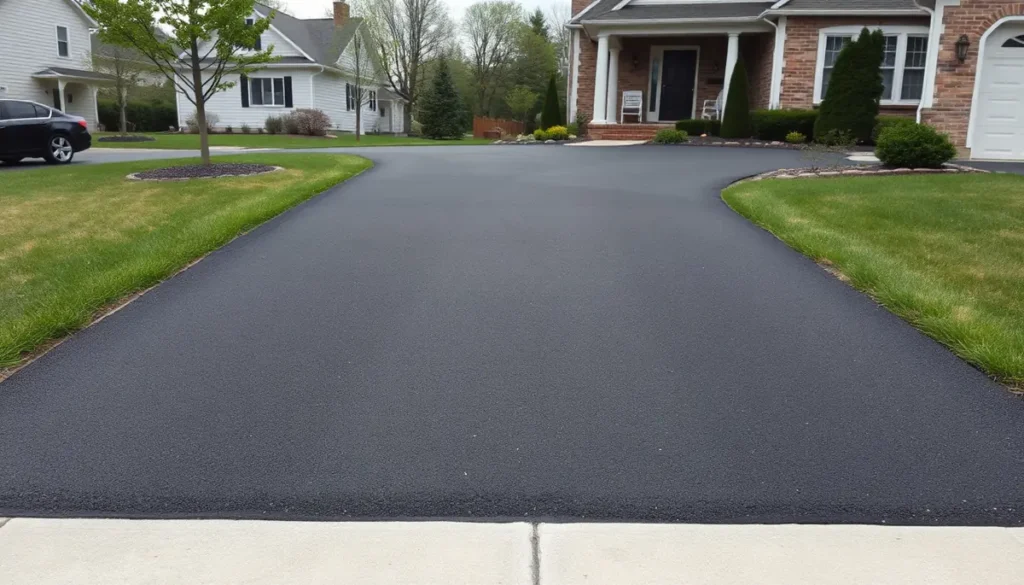
An overlay is a new layer of asphalt placed on top of an old surface. The crew does not remove the old slab. They pave right over it.
That means the slab becomes the base. A base has to be strong and steady. If the base moves, the new layer moves with it.
When Does Asphalt Over Concrete Work?
An overlay tends to work when the slab is in solid shape. Look for these signs:
- The slab is firm and does not rock or sink when a car drives on it.
- The cracks are small and tight.
- The slab has not settled or heaved in big sections.
- Water runs off the surface and does not pool.
- The edges are intact and not crumbling.
If your slab fits that list, an overlay may be a good fit. A pro should still check it in person before you decide.
When Does Asphalt Over Concrete Fail?
The most common problem is reflective cracking. That is when old cracks and joints show through the new asphalt.
Here is why it happens. Concrete moves with the weather. It grows a little in heat and shrinks in the cold. The joints and cracks in the slab open and close each season. That movement can push up through the asphalt. The new layer then cracks in the same lines as the old slab.
A thin layer shows this faster than a thick one. An overlay is a poor choice when:
- The slab has broken pieces or wide gaps.
- Sections have sunk or tilted.
- The surface is flaking badly. Pros call this spalling.
- Water has washed out the soil under the slab.
Asphalt cannot fix a problem under the slab. If the base is bad, the trouble will come back. In that case, removing the slab is often the better plan.
How Does Pennsylvania Weather Affect an Overlay?
Central PA has a hard freeze-thaw cycle. Water gets into joints and cracks. It freezes and expands. Then it thaws and leaves a little more room for the next round.
A concrete slab with open joints lets in a lot of water. That is one more reason to check joints and drainage before any paving starts. You can read more about how weather hurts pavement in our guide on why asphalt cracks.
What Prep Does the Slab Need?
Good prep is what makes an overlay last. Here is what a careful crew does:
- Cleans the slab so the new layer can bond to it.
- Checks every joint and crack.
- Repairs big cracks, chips, and loose pieces.
- Fixes low spots so water does not pool.
- Cuts out and replaces any broken sections.
- Applies a tack coat. That is a thin sticky layer that helps the asphalt bond to the slab.
Then comes the asphalt. A thin skim coat will not hold up. The right depth depends on the slab and how you use the surface. We look at it in person and give you a plain answer.
How Does an Overlay Compare to a Full Tear-Out?
An overlay is often faster. It makes less debris. It also keeps your project simple when the slab is in good shape.
A tear-out gives you a fresh base. It lets the crew fix drainage and soil problems that an overlay would hide. It costs more time and mess up front, but it removes the guesswork.
One more thing to plan for is height. An overlay raises the surface. That can leave a lip at your garage door, your sidewalk, or the street edge. Ask your crew how they will handle those transitions.
Our guides on asphalt overlay versus full replacement and whether an asphalt overlay is right for you go deeper on this choice.
What About Concrete Over Asphalt?
That is the reverse question, and the answer is different. We cover it in our post on pouring concrete over existing asphalt. If you are choosing between the two materials, see asphalt vs concrete driveways in Pennsylvania.
How Can You Test Your Slab Yourself?
You can learn a lot with a slow walk. You do not need tools. Try this:
- Walk the full surface and watch for any spot that rocks or clicks under your foot.
- Look along the edge of the slab from a low angle. Dips and humps show up better that way.
- Check each joint. A joint with a wide gap or crumbled edges can let a lot of water in.
- Look for flaking on the top layer. If it crumbles when you scrape it, the surface is breaking down.
- After a rain, note where water stands. Puddles point to low spots that need fixing first.
Take photos as you go. They help a contractor understand your slab before the visit.
What Should You Ask a Contractor About an Overlay?
A good contractor will explain the plan in plain words. Ask these questions:
- How will you handle the joints and cracks in the slab?
- How thick will the new asphalt be, and why?
- How will you deal with low spots and drainage?
- What will happen where the new surface meets my garage, walk, or street?
- What would make you suggest a tear-out instead?
If the answers are vague, keep asking. You want a plan that fits your slab, not a one-size job.
What Does the Work Look Like Step by Step?
Here is a simple picture of a sound overlay job:
- The crew cleans the slab and checks it over.
- Cracks, chips, and joints get repaired.
- Low spots are built up so water drains.
- A tack coat goes on to help the layers bond.
- The asphalt is laid and rolled flat.
- The edges are finished, and the crew checks the grade at the doors and walks.
Then the surface needs time to cure before heavy use. Your crew will tell you how long to wait.
Frequently Asked Questions
Can you pave asphalt over a cracked concrete driveway?
Small, tight cracks can often be handled with prep. Wide cracks, shifting sections, or broken pieces usually mean the slab needs repair or removal first.
Do I have to remove the concrete first?
Sometimes. If the slab is sound, a proper overlay can work. If it is not, removing it is the safer path.
How do I know if my slab is sound?
Walk the surface. Look for rocking, sinking, wide gaps, and flaking. A pro can check it during a free estimate.
When can I seal new asphalt?
New asphalt needs time to cure first. See our guide on when to seal a new asphalt driveway.
More Paving Guides
- new asphalt driveways
- asphalt overlay vs full replacement
- asphalt vs concrete driveways in Pennsylvania
Get a Free Estimate
Nathan’s Paving & Seal Coating has worked in Central PA for over 20 years. We handle asphalt paving and resurfacing for homes and businesses, and we also do concrete paving for commercial jobs.
Estimates are free, and we offer senior citizen discounts. Call (717) 648-5030 or email nathanpaving@gmail.com. We will look at your slab and tell you what it really needs. You can also request a free quote online.