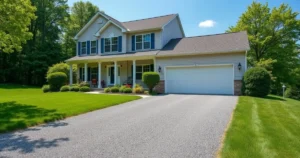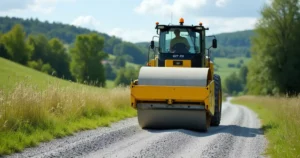
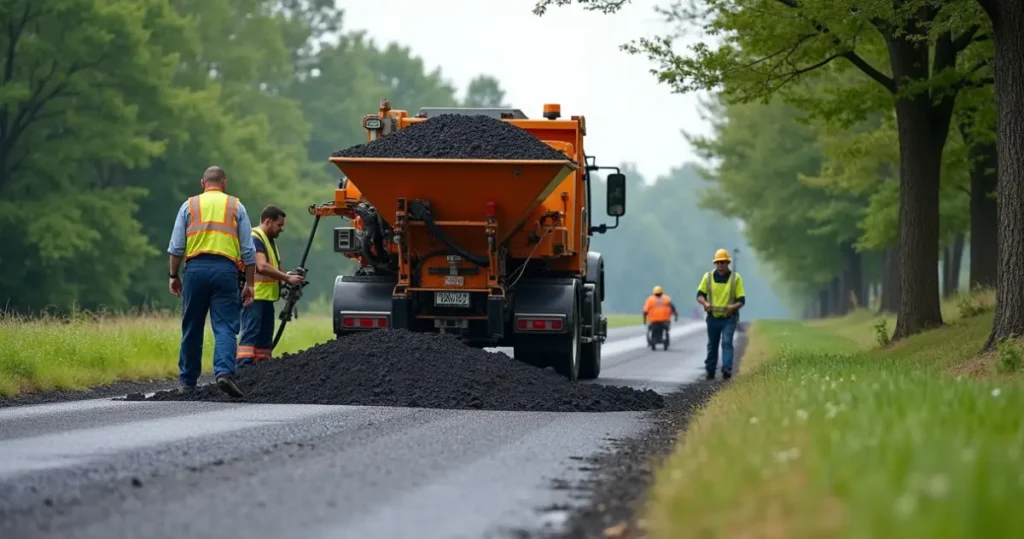
A tar and chip driveway is built by spraying hot liquid asphalt binder onto a prepared base, then setting small stone chips into it while the binder is still hot. A roller presses the stone into place so it locks in.
It goes by a few names: tar and chip, chip seal, or seal and chip. Same driveway, different name depending on who is describing it.
How It Is Different From Asphalt
Asphalt is a mixed material, hot mix asphalt is poured and rolled flat as a single uniform surface. Tar and chip is applied in layers: binder first, then stone pressed into it. That is why the finished surface looks and feels different.
Asphalt is smooth and dark. Tar and chip has visible texture from the stone and tends to run lighter in color.
Why Homeowners Choose It
The most common reason is cost. Tar and chip runs $1.50 to $3.50 per square foot, well below asphalt’s $3.00 to $7.00. On a long driveway, that difference is significant.
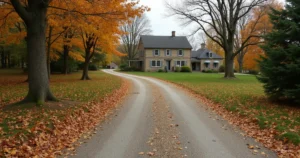
Some homeowners also just prefer the look. It has a more natural, textured appearance than a smooth asphalt surface, which fits certain properties better, especially longer rural driveways.
A Proven Method, Not a New Product
Tar and chip is not a new or experimental surface. It has been used on rural roads and driveways for a long time because it is a simple, durable way to build a road surface: stone locked into a binder over a compacted base. Central PA has plenty of roads built this same way. As a driveway option, it brings that same proven process to a residential property.
Tar and Chip vs Gravel
Homeowners comparing driveway materials on a budget often land between two options: gravel and tar and chip.
Gravel runs $0.50 to $2.00 per square foot, the cheapest option available. It is loose stone with no binder holding it in place, which means it needs regular regrading and top-offs, and it does not hold a clean edge the way a bound surface does.
Tar and chip runs $1.50 to $3.50 per square foot, more than gravel but still well under asphalt. What you get for the difference is a locked-in surface. The stone does not scatter and migrate the way loose gravel does, and the edges hold their shape.
If your budget starts at gravel, tar and chip is often worth the step up. It costs more upfront but needs less regular attention over time.
What to Expect During Installation
The base gets graded and compacted first. A weak base causes problems no matter what surface goes on top of it.
Binder is sprayed evenly, then stone is spread and rolled in while everything is still workable. The surface needs time to cure and set before it takes regular traffic. Some loose stone in the first days is normal and settles in as the driveway cures.
A few things about your specific property change how the job actually goes:
- Existing base condition. A driveway with a solid, compacted base already in place goes faster than one that needs to be rebuilt from the ground up.
- Site access. Tight driveways, slopes, or obstacles can add time to the job.
- Drainage. If water does not currently drain away from the driveway, that needs to be addressed before the surface goes down, not after.
- Size and shape. A long, simple rectangle installs differently than a driveway with curves, a turnaround, or multiple sections.
We look at all of this during your estimate so the timeline and plan are realistic for your property, not a generic guess.
Keeping It Looking Good Over Time
Tar and chip does not need the same seal coat cycle an asphalt driveway does, since the binder is doing that protective job from installation. What it can use over time is occasional attention to loose stone and worn edges. For the full breakdown of when that makes sense, see sealing a chip seal driveway.
A Note on Color
New tar and chip driveways often use a stone color chosen to complement the house or the surrounding landscape. Stone options can vary by supplier and availability, so if color matters to you, mention it when you get your estimate.
Working With What You Already Have
If you already have a gravel driveway and are considering the upgrade to tar and chip, the existing gravel and sub-base often reduce the prep work needed, which can make the project move faster than starting from bare ground.
Is a Tar and Chip Driveway Right for You?
It tends to be a good fit if you want a lower-cost alternative to asphalt, you like a textured, natural surface, or you have a long driveway where asphalt’s cost per square foot adds up fast.
It may not be the best fit if you want the smoothest possible surface or you plow snow by machine regularly.
For the full comparison against asphalt specifically, cost, look, and upkeep, see chip seal vs asphalt driveway. For everything else, from installation to how long it lasts, see our complete chip seal and tar and chip guide.
Frequently Asked Questions
Is tar and chip the same as chip seal? Yes. Different names for the same driveway material and process.
Is tar and chip cheaper than asphalt? Yes. It runs $1.50 to $3.50 per square foot compared to $3.00 to $7.00 for asphalt.
How long does installation take? It depends on the size of the driveway and site conditions. We will give you a real timeline when we look at your property.
Does tar and chip need to be paved over eventually? No. It is a complete driveway surface on its own, not a base layer for something else.
Is tar and chip a good fit for a long or rural driveway? Often, yes. The cost gap with asphalt grows with square footage, which is exactly where longer driveways benefit the most.
What does tar and chip feel like to walk or drive on? It has more texture underfoot than asphalt, with visible stone rather than a smooth surface. Most people adjust to it quickly. It is a different feel, not a rough or uncomfortable one.
Get a Free Look at Your Property
Nathan’s Paving & Seal Coating installs tar and chip driveways across Central PA and has for over 20 years. We will look at your driveway, answer your questions honestly, and give you a real number.
We hold 4.8 stars across 55 Google reviews. Estimates are free, with a discount for senior citizens.
Call (717) 648-5030 or email nathanpaving@gmail.com.