The edge of a driveway is its weak spot. It is the first place to break down. If the sides of your asphalt are crumbling, there is a reason, and it can often be fixed.
This guide explains why edges fail, what you can do about it, and when to call a pro.
Why Do Driveway Edges Crumble?
Asphalt needs support from underneath and from the sides. In the middle, the driveway has asphalt all around. At the edge, one side is open. There is nothing to hold it in place.
That makes edges easier to break. A few common causes:
- No side support. If the soil or stone beside the driveway washes away, the edge loses its backing.
- Cars driving on the edge. Tires push on the edge and break off small pieces.
- Water. Water runs off the driveway and soaks the edge. It freezes, expands, and cracks the surface.
- Thin edges. Many driveways are laid thinner at the sides. A thin edge breaks sooner.
- Roots and plants. Roots and grass push into the edge and loosen it.
- Plows and salt. Snow plows can catch the edge. Salt adds to the freeze-thaw damage.
What Does Edge Damage Look Like?
Edge damage often starts small. Look for:
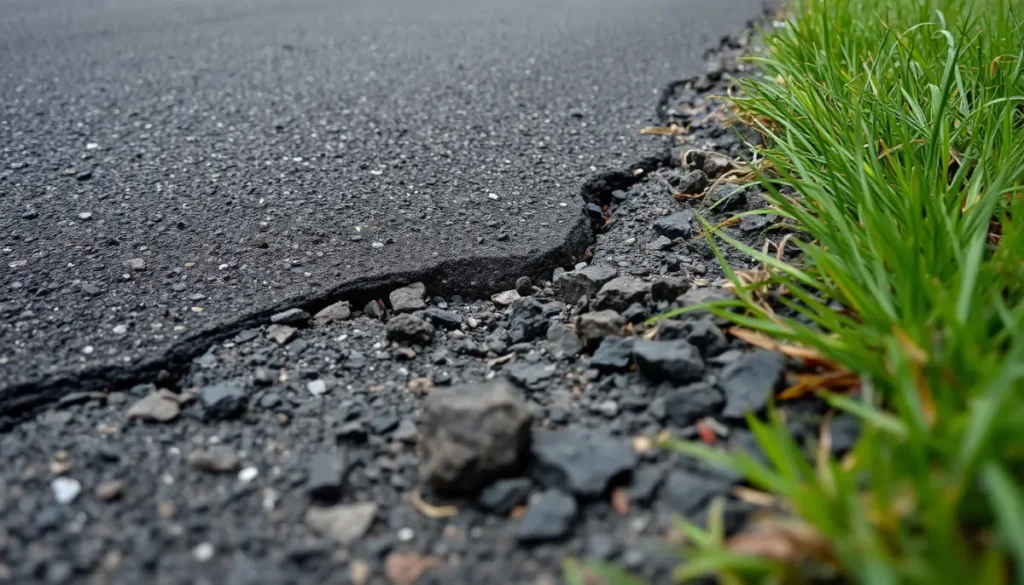
- Small chunks missing along the side.
- A crumbly, sandy look at the edge.
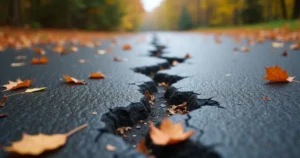
- Cracks that run parallel to the edge.
- A ragged line instead of a clean one.
- Grass or weeds growing into the broken part.
Left alone, it spreads inward. Our guide on why asphalt cracks shows how small damage grows.
How Does Water Make It Worse?
Water is a big part of edge damage. If water runs off the driveway and pools at the edge, the soil gets soft. The edge loses its support.
In Central PA, freeze-thaw makes it worse. Water gets into small openings, freezes, and breaks the surface a bit more each time. Our guides on driveway drainage in winter and proper drainage for pavement health go deeper.
Can You Fix a Crumbling Edge Yourself?
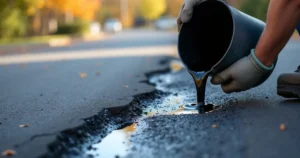
Small spots can be handled with care. For minor chips, you can clean out loose bits and use a patch product made for asphalt. Read the label and follow it.
But patching does not fix the cause. If the edge has no support, a patch will break off again. For bigger damage, a pro should look at it.
How Do Pros Repair a Crumbling Edge?
A good repair deals with the cause, not just the damage. A crew may:
- Cut back the broken edge to solid asphalt.
- Remove loose material and clean the area.
- Rebuild the side support with stone or soil.
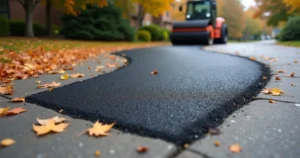
- Patch the edge with new asphalt and compact it.
- Fill nearby cracks so water cannot get in.
In some cases, the better fix is a full replacement or an overlay. We look at the whole driveway before we suggest a plan.
How Can You Protect the Edges?
A few habits help:
- Keep tires off the edge. Mark it with stakes or flags if needed.
- Avoid heavy vehicles near the sides. See heavy vehicle effects on asphalt driveways.
- Keep soil and stone built up along the sides.
- Direct water away from the edge.
- Trim grass and roots back from the asphalt.
- Fill cracks early. See how to fill driveway cracks.
- Rinse off salt and use it sparingly. See driveway salt damage prevention.
When Should You Call a Pro?
Call for help when:
- The damage runs along a long stretch of the edge.
- Pieces are breaking off every time it rains.
- The edge has dropped lower than the middle.
- Cracks are spreading toward the center.
An early repair is usually smaller and simpler than a late one.
What Is the Difference Between Edge Raveling and Edge Cracking?
The two look alike, but they mean different things.
Raveling is when small stones come loose and the surface turns rough and sandy. It often points to old, dry asphalt.
Edge cracking is when long cracks form near the side. It often points to a weak base or poor support. Water gets in and the edge breaks off in pieces.
A pro can tell which one you have by looking at it. The repair is different for each.
How Do Plows and Mowers Damage Edges?
Snow plows can catch the edge and tear off pieces. A plow blade set too low scrapes and chips the surface. Ask your plow driver to keep the blade up near the sides.
Mowers and string trimmers can also chip a worn edge. They loosen small bits. Use care along the edge and avoid hitting hard.
Does the Slope Beside the Driveway Matter?
Yes. If the soil beside the driveway slopes away, it can wash out. That leaves the edge hanging with no support. Rain makes it worse.
A gentle slope that carries water away from the driveway helps. Adding stone or soil along the edge can rebuild the support. Our guide on driveway drainage solutions has more ideas.
What Does a Repair Look Like Step by Step?
A basic edge repair follows an order:
- The crew marks the damaged area.
- Loose and broken asphalt is cut out.
- The base along the edge is checked and built back up.
- New asphalt is placed and rolled flat.
- The seam between old and new is sealed.
Skipping the base step is the most common mistake. A patch with no support will break again.
Frequently Asked Questions
Is a crumbling edge a sign the driveway needs replacing?
Sometimes. If the middle is sound, an edge repair may be enough. A pro can check the whole driveway.
Will sealcoating fix a crumbling edge?
No. Sealcoat is a thin coat. It does not rebuild broken asphalt.
Why does it happen on only one side?
The side may get more water, more tire traffic, or less support. Those clues help find the cause.
More Paving Guides
Get a Free Estimate
Nathan’s Paving & Seal Coating has worked in Central PA for over 20 years. We handle driveway patching, repairs, resurfacing, and new asphalt paving for homes across the area.
Estimates are free, and we offer senior citizen discounts. Call (717) 648-5030 or email nathanpaving@gmail.com. We will look at your edges and tell you what they need.