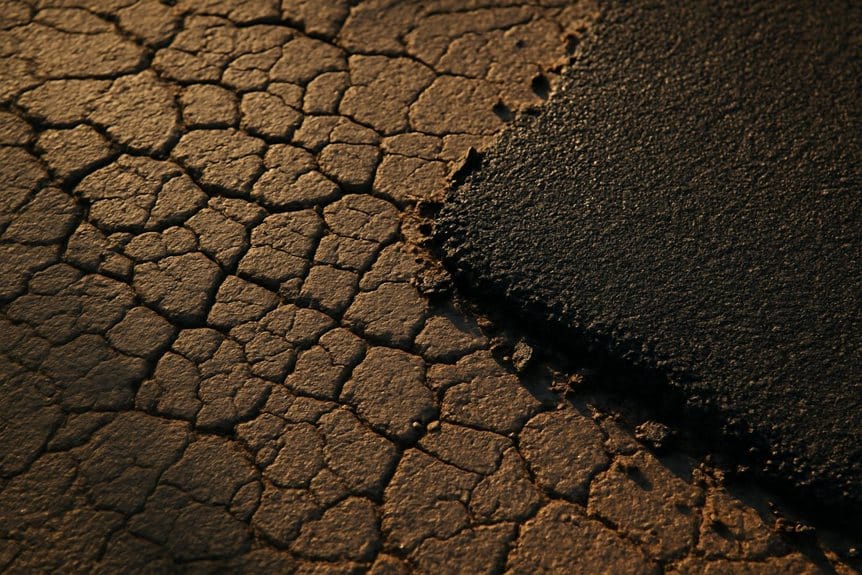
Alligator cracking means your asphalt’s foundation is failing, not just the surface. You’ll need to assess the damage depth first. Shallow cracks under 1 to 2 sq ft can be filled with a cold-pour patch kit. Deeper cracks signal sub-base failure requiring full-depth repair. Clean the area thoroughly, apply your patch in 2-inch lifts, and sealcoat once cured. Get this right and your driveway’s life can be extended significantly.
Key Takeaways
- Probe cracks with a screwdriver to assess depth. Damage deeper than 1 to 2 inches often signals sub-base failure requiring full-depth patching.
- Clean the area thoroughly using a stiff broom or pressure washer, and degrease oil stains before applying any repair material.
- Mix the cold-pour patch components per kit instructions, fill voids completely, and feather edges to match surrounding asphalt.
- Apply patch in layers no deeper than 2 inches per lift, then compact and allow roughly 45 minutes cure time at 75°F.
- Sealcoat the repaired area, improve drainage, and schedule sealcoating every 2 to 3 years to help prevent alligator cracking from recurring.
What Causes Alligator Cracking in Asphalt Driveways
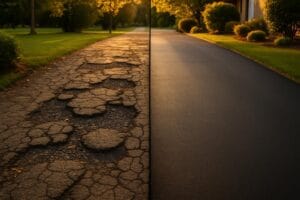
When your driveway starts looking like reptile skin, something’s gone seriously wrong beneath the surface.
The real culprits? Here they are:
- Weak sub-base. Poor compaction or wrong materials can fail fast
- Water intrusion. Drainage problems silently destroy your asphalt pavement from below
- Freeze and thaw cycles. Cold climates flood and shatter your substructure repeatedly
- Heavy loads. Cargo trailers concentrate enormous pressure onto vulnerable ground
Here’s what you must understand. Alligator cracking isn’t surface wear. It’s fatigue failure.
Repeated traffic loads exceed your pavement’s structural limits. Water sneaks into existing cracks. Winter freezes everything. Then thaws wreck it further.
Result? That signature interconnected fish-scale pattern spreading across your driveway.
Fix the cause, not just the surface. A professional paving company with over 20 years of experience can evaluate the problem and recommend the right repair approach, including options for sealcoating to help protect and extend the life of your pavement.
How to Gauge Damage and Choose the Right Repair Depth
Grab a screwdriver. Probe every crack carefully.
Here’s what you’re diagnosing:
- Shallow alligatoring under 1 to 2 sq ft? You can typically fill it
- Deep cracks beyond 1 to 2 inches? That often points to sub-base failure
- Soft base underneath? Full-depth patching is usually the right option
Check your numbers before buying materials:
A single 5-gallon pail covers roughly 20 to 32 sq ft at ¼” depth. Know your coverage rates before purchasing.
Choosing your repair depth matters:
Pour layers no deeper than 2 inches each lift. Multiple lifts handle deeper damage well.
Bottom line: Surface patches won’t fix structural failure. Match your repair depth to actual damage.
Regular maintenance can help extend driveway lifespan and reduce the risk of larger repairs, so consider regular maintenance as part of your plan.
Clean and Prep the Cracked Area Before You Start
Skip this step and you’re essentially throwing money into a hole.
Remove any dirt, debris, and loose material first. Use a stiff broom or pressure washer on every alligator crack. Let it dry completely.
Degrease oil stains thoroughly.
- Apply commercial asphalt cleaner
- Scrub thoroughly
- Rinse with hot water
Your alligator patch won’t stick well to contaminated surfaces. Period.
Cut out severely damaged edges down to solid pavement. No shortcuts here.
Fill and compact any potholes first. Use a hand tamper or plate compactor. Compacting creates the stable base your repair needs.
Final dust removal matters. Blow out every crack before applying anything.
Clean surface equals lasting repair. Dirty surface equals wasted effort. Nathan’s Paving & Seal Coating brings over 20 years of industry experience to projects across Central Pennsylvania, with seal coating services available to help protect your driveway.
How to Fill Alligator Cracks With a Cold-Pour Kit
Cold-pour kits can make this job manageable for many homeowners.
Grab your kit and get mixing:
- Combine Pail A and Pail B using an eggbeater-style drill mixer
- Follow the kit’s instructions precisely
Now pour and spread:
- Fill all voids completely
- Use a stiff squeegee or trowel
- Feather edges to match surrounding asphalt
- Apply up to 2″ deep per layer
One 5-gallon cold-pour kit covers roughly 32 sq ft at ¼” depth.
Wait for cure time:
- Around 45 minutes at 75°F
- Around 90 minutes at 40°F
Don’t rush it. Patience beats redoing the work later.
Regular maintenance like seal coating and crack filling can help reduce the chance of alligator cracking returning.
Compact and Seal the Patch So It Actually Holds
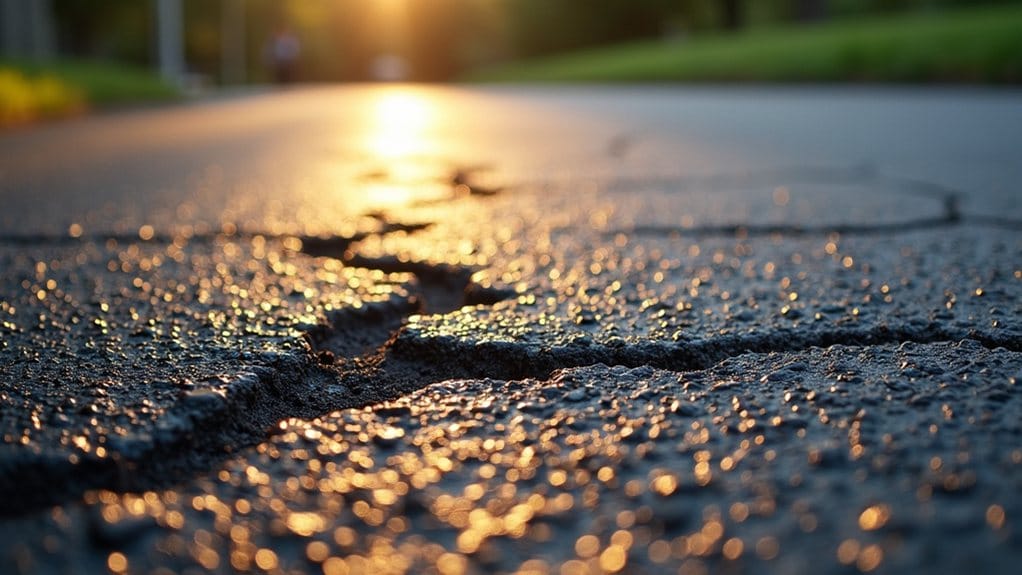
Wait before reopening:
- Around 45 minutes at 75°F
- Around 90 minutes at 40°F
Let it fully cure. No shortcuts.
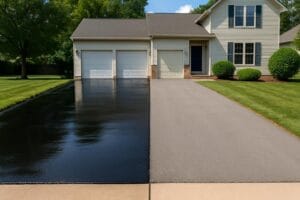
Finally, sealcoat it. This step helps protect your repair from moisture and blends everything visually. Sealcoating can help extend the life of your patch.
Do it right once and you’ll reduce the chance of callbacks.
Nathan’s Paving offers free consultations and regular maintenance to help reduce the chance of future alligator cracking.
How to Keep Alligator Cracks From Returning to Your Driveway
After your repair cures, the real work begins.
Fix the root causes, or the cracks may return.
Protect your sub-base:
- Rebuild drainage so water evacuates quickly
- Poor drainage can damage your sub-base over time
Manage your drainage:
- Create positive slope away from your driveway
- Install edge drains where water pools persistently
Sealcoat. Don’t skip this:
Apply sealcoat once your asphalt paving patch fully cures. Reseal every 2 to 3 years.
Design for your actual loads:
Heavy trailers may require thicker asphalt lifts. Match your pavement design to real-world weight.
Cold climates need extra attention:
Freeze and thaw cycles can trigger alligator cracking. Address drainage before winter arrives.
Prevent it now, or rebuild it later.
Nathan’s Paving & Seal Coating recommends regular maintenance and professional inspections to help prolong pavement life and support customer satisfaction, including sealcoating frequency.
Frequently Asked Questions
How to Repair Asphalt Alligator Cracking?
Start with crack routing to clean edges. Apply an asphalt rejuvenator to help restore flexibility. Use edge reinforcement to stabilize borders.
Fill damaged areas and perform patch compaction for a solid finish. Add surface sealing to lock everything in.
Finally, and this is important, address drainage correction to help stop water from damaging your base again.
What Is the Best Asphalt Alligator Crack Repair?
- Localized damage? Use a 2-part polymer sealant kit (5-gallon). Many cure in 45 to 90 minutes
- Add edge reinforcement to stabilize borders
- Manage traffic by reducing heavy loads on the repair
Large areas? Porous overlays and infrared repair shortcuts may not hold up. Full-depth removal is often the more reliable approach.
Is Alligator Cracking in Asphalt a Serious Condition?
Here’s what you’re facing:
- Moisture intrusion can weaken your base over time
- Load tolerance drops, and heavy vehicles can accelerate damage
- Progressive deterioration can turn cracks into potholes over time
This kind of damage should be treated as a high-priority repair.
The safety risks are real. Uneven surfaces can cause trips and vehicle damage.
Don’t wait to address it.
Will New Asphalt Stick to Old Asphalt?
Here’s your quick checklist:
- Clean the surface. Cleaning protocols matter
- Apply adhesive primers for overlay compatibility
- Check for moisture barriers. Water can weaken bonds
- Account for thermal expansion gaps
Old asphalt that’s stable and dry gives you the best foundation for a successful overlay.
Skip these steps and you may need to redo the job sooner than expected.
Conclusion
Ignoring alligator cracks can feel like fighting a losing battle. But you now have the playbook.
Clean it. Fill it. Compact it. Seal it.
That’s your 4-step plan.
Act soon and your driveway has a better chance of lasting for years to come. Wait, and you may be looking at a full replacement. The choice is yours.