Pothole repair makes sense when damage covers less than 25% of your driveway and the subbase is solid. A single repair runs $50 to $300, but recurring patches on a failing base can quietly cost more than a full $2,000 to $10,000 replacement. If you’re seeing alligator cracking, spongy pavement, or standing water after rain, repair money is wasted money. Keep scrolling to find out exactly which situation you’re dealing with.
Key Takeaways
- Repair potholes when damage covers less than 25% of the driveway and the subbase remains stable beneath the asphalt.
- Replace the driveway when alligator cracking covers 25 to 30% of the surface or potholes keep reopening after repairs.
- Spongy pavement, waves sinking over 1 to 2 inches, or standing water hours after rain signal base failure that often requires full replacement.
- Single pothole repairs cost $50 to $300, while recurring repairs can quickly exceed the $2,000 to $10,000+ cost of full replacement.
- A professional evaluation measuring damage percentage and subbase stability helps you make the smartest financial decision.
When Pothole Repair Is the Right Call
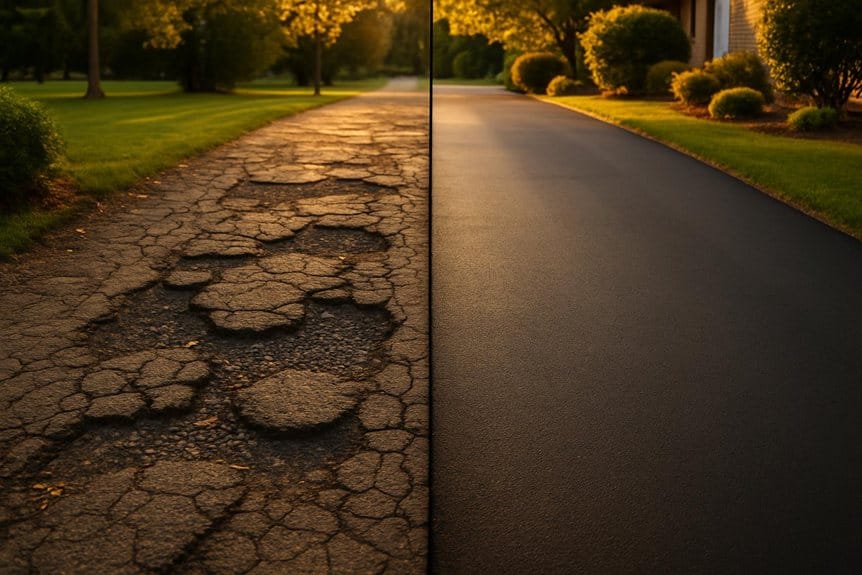
If potholes affect less than ~25% of your driveway, you’re likely a good candidate for repair.
Look for these green lights:
- Localized damage with no widespread alligator cracking
- A stable subbase beneath the asphalt
- No standing water or drainage issues
Smart patching with proper cleaning and compaction can be a durable fix, unlike a cold-patch temp fix.
Here’s the truth:
Repairs are cost-effective and can extend your driveway’s life by *years*.
But get a professional inspection first!
If standing water or base shifting appears, simple pothole repair won’t hold.
Subbase failure often means you’re likely heading toward full replacement. No patch will change that reality.
Our team uses advanced paving technology to help repairs meet industry standards and last.
Clear Signs Your Driveway Base Has Already Failed
But patching only works when your base is solid.
Watch for these red flags:
- Alligator cracking covering 25 to 30% of your surface often indicates replacement is needed
- Recurring potholes reopening after repairs, a classic sign of subbase failure
- Spongy pavement that depresses under vehicle weight, suggesting your base is eroding
- Settlement or waves sinking more than 1 to 2 inches, a sign surface collapse is happening
- Standing water pooling hours after rain, which signals chronic drainage damaging your base
These aren’t surface problems. They’re structural warnings.
Ignoring them can mean throwing money into repairs that *won’t last*.
When multiple signs appear together, your driveway likely isn’t sick. It’s done.
Full replacement is often your only real solution. A professional assessment using top-grade materials and experienced technicians can help confirm the extent of base failure and the best corrective action.
How Central PA Freeze-Thaw Cycles Turn Small Potholes Into Driveway Failures
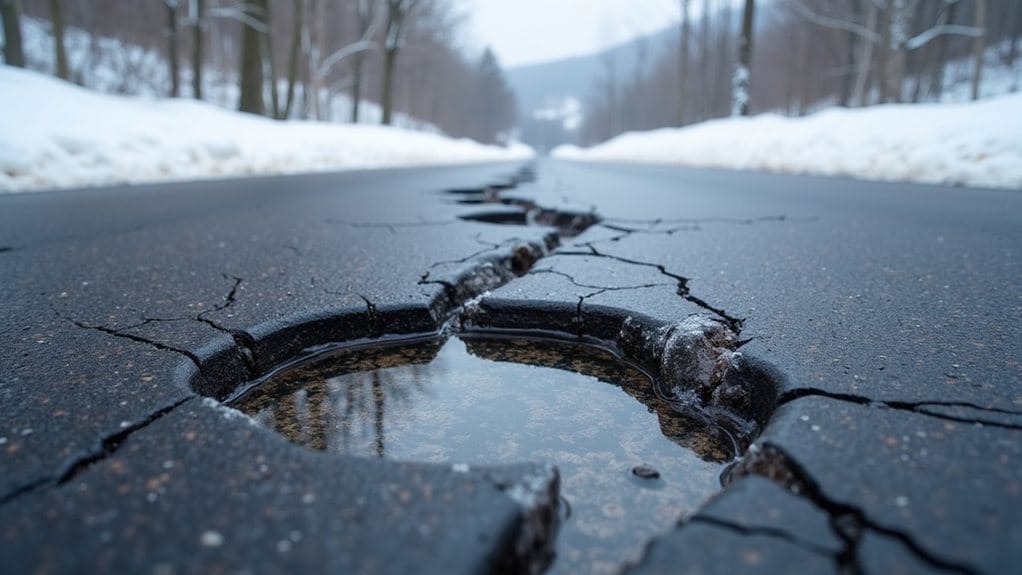
Here’s what happens without early maintenance:
- Freeze-thaw cycles repeat dozens of times each season, turning hairline cracks into full voids within just a few cycles
- Pooling water accelerates base undercutting. Frozen standing water can lift and displace your pavement
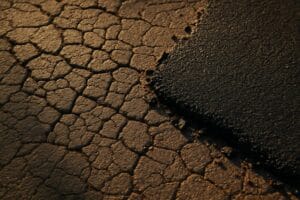
- Weakened asphalt binder causes alligator cracking, spreading structural damage across 2 to 3 winters
The damage compounds *quickly* during freeze-thaw season.
But here’s the good news. Crack sealing, pothole patching, and sealcoating every 2 to 3 years can stop small problems cold.
Skip early maintenance and you may be facing structural failure, and a full replacement bill.
Regular maintenance also reduces long-term costs and can prevent costly repairs down the road.
Alligator Cracking, Sinking, and Drainage Problems That Demand Replacement
Early maintenance buys you time, but sometimes the damage wins anyway.
Watch for these replacement red flags:
- Alligator cracking covering several square feet often indicates subbase failure, not a surface problem
- Sinking or waves deeper than 1 to 2 inches signal a compromised structural foundation
- Drainage problems leaving standing water for hours, suggesting your base is weakening fast
- Repeated repairs failing in the same spots. Stop patching, as it may be costing you more
Here’s the hard truth:
When alligator cracking, sinking, and drainage problems combine across 25 to 50% of your driveway, replacement is often the right call.
Surface patches typically cannot fix structural damage underneath.
Full driveway replacement rebuilds proper base thickness, corrects grade, and restores durable drainage.
Don’t keep throwing money at a failing foundation.
Nathan’s Paving offers experienced crews and commercial and residential expertise to help replacements be done right.
Pothole Repair vs. Full Replacement: True Cost Comparison
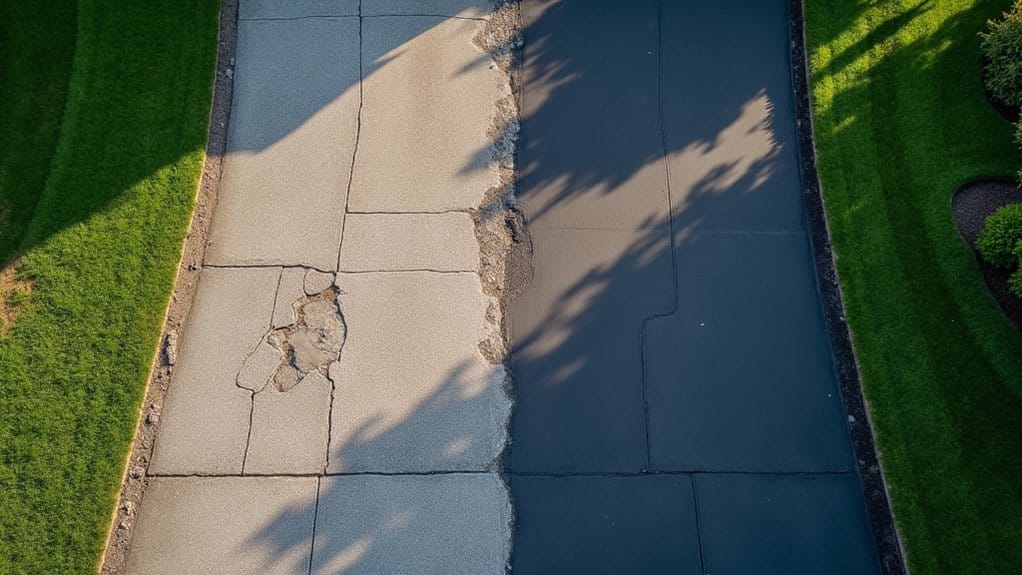
When the bill arrives, the difference is stark. A single pothole repair runs $50 to $300. Full driveway replacement costs $2,000 to $10,000+. That gap feels huge, until recurring repairs stack up!
Subbase failure often means patches won’t hold. You may keep spending without fixing the real problem.
Consider your true cost comparison:
- Patching vs replacement: Three repairs yearly at $200 each equals $600 annually
- Structural integrity: Replacement rebuilds the base and can deliver many years of service life
- Long-term value: Recurring repair costs often exceed replacement within just a few years
Don’t chase short-term savings into a money pit. When damage is widespread, full driveway replacement is often the smarter choice. Invest smart. Spend once. A trusted local provider like Nathan’s Paving is an experienced local provider that offers free estimates to help determine the best course of action.
At What Age Does Patching a Driveway Stop Making Financial Sense?
When recurring repairs keep failing seasonally, your lifecycle cost can climb fast. You’re often funding a losing battle.
Watch these red flags:
- Alligator cracking covering 25 to 50%+ of surface area
- Potholes returning within one season
- Same spots needing repeated fixes
The life of pavement depends on its foundation. Once that foundation fails, driveway replacement often beats endless patching financially.
Stop patching. Start planning. A professional assessment often reveals whether replacement is the better option, and Nathan’s Paving & Seal Coating has the experience and track record to provide reliable evaluations.
Why Repeated Pothole Repairs Eventually Cost More Than Replacement
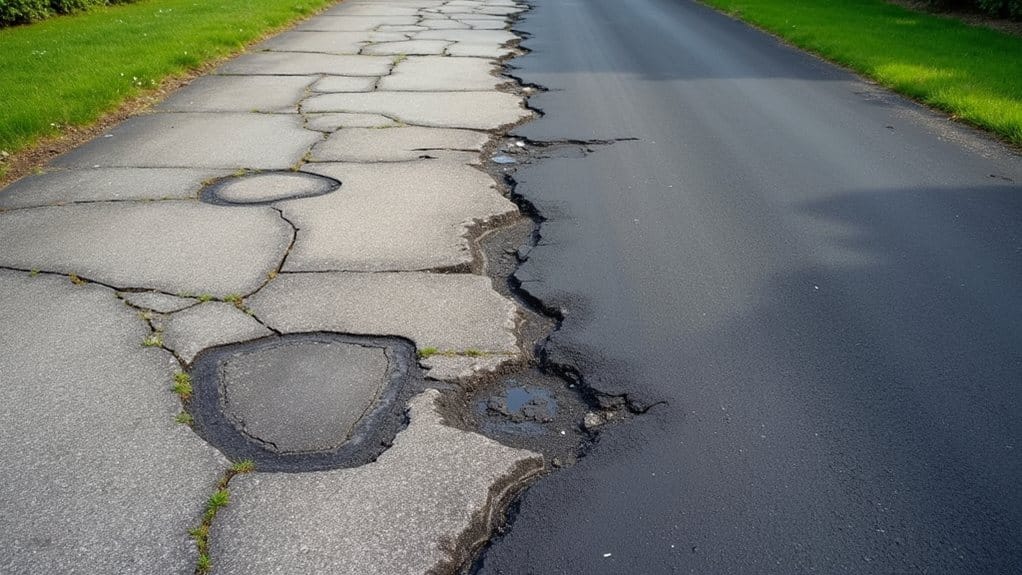
Patching the same pothole twice already signals trouble. Repeated pothole patching often points to subbase failure, and your wallet feels every hit. Cumulative repair costs quietly stack up fast.
Here’s what’s silently draining your budget:
- Recurring potholes mean each repair may last only months before crumbling again
- Alligator cracking signals deep base damage that patching often never fixes
- Annual repair bills can hit 30 to 50% of full replacement costs yearly
Do the math. Within 2 to 5 years those repair versus replacement numbers can flip completely. Driveway reconstruction can deliver many years of strong long-term performance. Patching often delivers frustration.
When damage covers 25 to 50% of your surface, stop patching. Choose full replacement instead. Your lifecycle cost often drops dramatically, and your driveway actually survives. Nathan’s Paving & Seal Coating is experienced in delivering durable results with top-grade materials and tailored service.
What Inspectors Check Before Recommending Repair or Replacement
Before any contractor recommends repair or replacement, a real inspection happens first.
They’re checking five critical things:
- Crack width. Cracks under ¼ inch are often repairable. *Alligator cracking* tends to be replacement territory.
- Extent of damage. Once the percentage of pavement damaged exceeds 25 to 50%, spot repairs vs replacement math shifts fast.
- Standing water. Water pooling hours after rain signals serious drainage issues and subbase weakening.
- Subbase stability. Sinking, waves, or recurring potholes can mean *structural failure*, not a surface fix.
- Age of driveway. Past 20 to 25 years? Factor in your recurring repairs history too.
Smart inspectors don’t guess. They *measure*, *probe*, and *calculate* before telling you anything.
Nathan’s Paving serves Central Pennsylvania with thorough, professional assessments.
Sealcoating, Drainage, and Maintenance Steps That Extend Driveway Life

Most homeowners ignore their driveway, until it’s too late.
Don’t be that homeowner!
Preventative maintenance can save you thousands. Here’s what actually works:
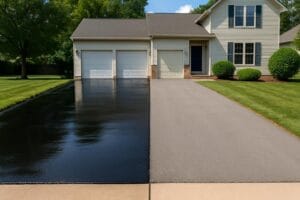
- Sealcoat your asphalt every 2 to 3 years to help block UV damage and restore lost oils
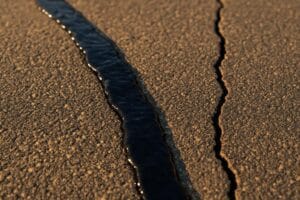
- Fix crack repair issues quickly. Water infiltration causes base failure fast
- Ensure proper drainage so water runs off within minutes. Freeze-thaw damage is brutal
Standing water is your enemy. Poor drainage can destroy your subbase completely.
Never sealcoat over soft spots. That traps moisture and accelerates failure.
Schedule a professional evaluation when cracks keep returning. Catching problems early helps prevent full replacement.
Protect your edges. Remove debris regularly. Stay proactive. Your driveway depends on it!
We offer free consultations to evaluate your driveway and recommend the right maintenance plan.
Frequently Asked Questions
Should I Repair or Replace My Driveway?
- Structural cracks or alligator patterns? Replace!
- Drainage solutions needed due to pooling? Replace!
- Freeze thaw damage under 25% surface? Repair!
Your driveway lifespan depends on subbase health.
A maintenance schedule with sealcoat benefits can extend life years longer!
Get a professional inspection. Know your resurfacing timing NOW!
How Much Should a Repair and Replacement Asphalt Driveway Cost 1200 Sq Ft?
Spot repairs? $200 to $800 total.
Asphalt resurfacing? $3,000 to $6,000.
Full replacement? $7,200 to $12,000.
Add base stabilization for grading issues. Budget $1,000 to $4,000 extra.
Smart upgrades worth considering:
- Sealcoating benefits can extend life noticeably
- Edge reinforcement helps prevent crumbling
- Drainage solutions help stop future damage
Stick to a maintenance schedule and you may avoid costly replacements!
What Is the Average Cost to Fix a Pothole?
- DIY methods (cold patch materials): $10 to $50
- Pro single repair: $75 to $200
- Commercial crews: $100 to $400
- Deep potholes (1 to 2+ sq ft): $500+
Pro tip: Always schedule a proper inspection before choosing repair materials.
Ignoring drainage solutions and seasonal effects can accelerate pothole causes, costing YOU more long-term!
What Is the Cheapest Way to Upgrade a Driveway?
Here’s your winning combo:
- Recycled asphalt saves serious money
- Drainage improvement helps prevent future damage
- Weed prevention helps stop costly cracks early
- Gravel resurfacing runs cheaper than concrete overlays
Skip decorative stamping and permeable pavers for now.
Add edge reinforcement last.
Smart sequencing saves you hundreds!
Conclusion
Small isolated pothole? Patch it fast and protect it.
Cracked base, sinking edges, or a driveway pushing 20+ years? Stop throwing money at a lost cause.
Every dollar you save on cheap repairs today can cost you three tomorrow.
Get an honest inspection. Know your numbers. Then act decisively.
Your driveway won’t fix itself, but you can.
Not sure which side of that line your driveway falls on? Nathan’s Paving provides asphalt repair in Harrisburg, PA and will tell you straight whether patching still makes sense.