Your parking lot is sending distress signals. Ignoring them costs you big. Watch for hairline cracks allowing water intrusion, alligator cracking covering 25%+ of your surface, recurring potholes, and standing water pooling beyond 48 hours. Faded striping and missing ADA markings create legal exposure fast. A gray, brittle surface means your asphalt is failing structurally. Every warning sign you spot early saves thousands in repairs, and what’s ahead will sharpen your eye considerably.
Key Takeaways
- Hairline cracks spreading across the surface allow water intrusion into the base layer, signaling early distress requiring prompt attention.
- Alligator cracking covering 25% or more of your lot indicates structural failure beyond what sealcoating alone can fix.
- Standing water pooling beyond 24 to 48 hours softens the subbase, accelerates deterioration, and creates dangerous slip hazards.
- Faded or missing ADA markings and striping trigger regulatory fines, liability exposure, and serious safety risks.
- Recurring potholes returning twice or more per season indicate base destruction requiring full-depth patching or reconstruction.
What Early Parking Lot Damage Reveals About Structural Health
Your asphalt speaks. You just need to listen.
What the damage is actually saying:
- Hairline cracks: water sneaks in and attacks your base layer
- Alligator cracking: sub-surface support is already failing
- Surface raveling: the binder is oxidizing and losing its grip
Here’s the hard truth:
Watch for these red flags:
- Spongy or soft spots underfoot
- Drainage that pools beyond 48 hours
- Brittle gray coloring across large sections
When 25% of your lot shows distress, sealcoating won’t cut it anymore. You need real rehabilitation. Act early. Save big.
Commercial properties across Central PA often rely on routine inspections to catch these issues before they require major repairs.
Cracks Spreading Across Your Parking Lot Surface
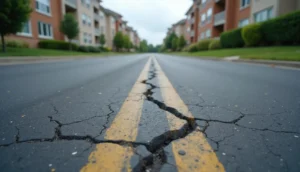
Of all the warning signs your lot throws at you, cracks are the loudest.
Here’s what they’re telling you:
- Hairline cracks spreading or multiplying = early surface distress. Moisture gets in fast.
- Alligator cracking (that scaly, web-like pattern) = serious sub-base compromise. Sealcoating won’t fix this.
- Cracks near joints or lanes = edge stress plus poor drainage. Freeze-thaw cycles will damage these areas quickly.
Critical threshold: Once cracks cover 25% or more of your asphalt surface, you’re past maintenance mode.
Cracks reappearing after sealing? That signals structural failure underneath.
Your move:
Stop patching symptoms. Diagnose the real problem before small cracks become a full replacement bill. A professional assessment can determine the extent of damage and recommend routine maintenance or more extensive repair.
Potholes Forming or Recurring in the Same Parking Lot Areas
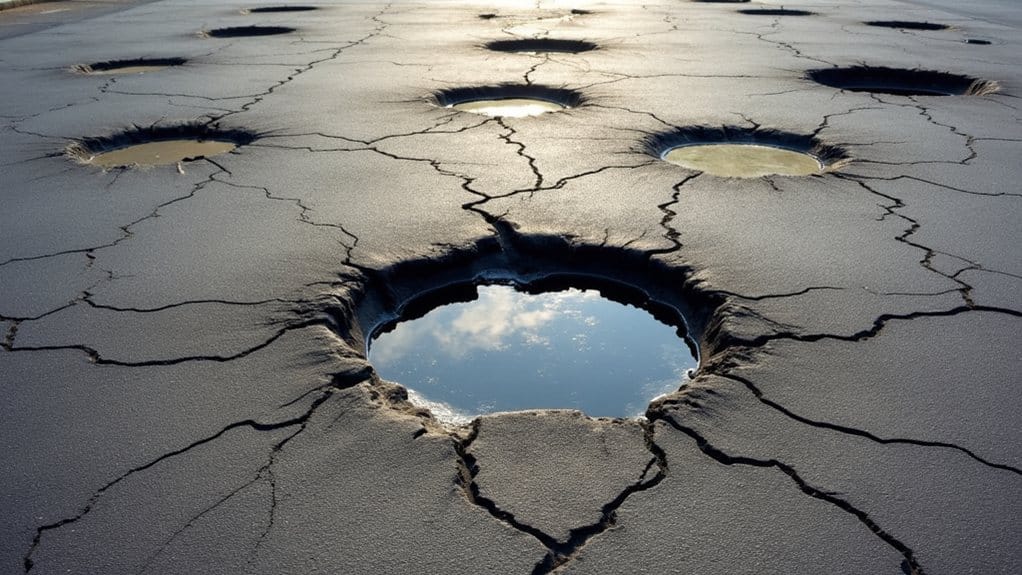
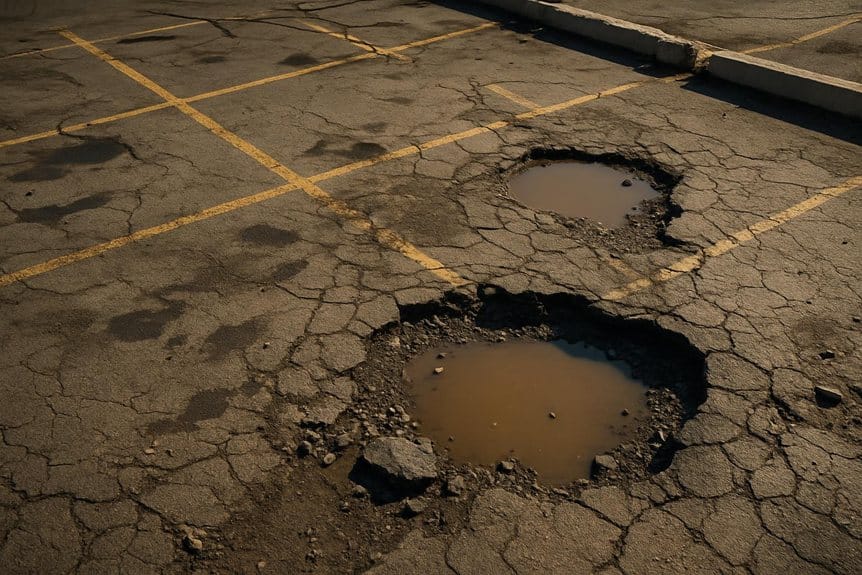
Potholes keep coming back for a reason, and it’s never just bad luck.
Recurring potholes signal serious pavement failure underneath.
When the same spots crumble repeatedly after every freeze-thaw cycle or heavy rain, water is winning. It’s infiltrating your base and damaging it from below.
Watch for these red flags:
- Potholes returning 2+ times per season
- Jagged edges with exposed sub-base
- Clusters forming along drive lanes
Temporary cold patches won’t fix a structural problem. You need base repair or full-depth patching, which are real solutions.
Here’s what’s at stake:
Every ignored pothole raises your liability risk. Vehicles get damaged. People trip and fall. Lawsuits happen.
Get a professional assessment now, before one pothole becomes many.
Our team serves Central PA and can provide a free estimate to evaluate your lot.
Standing Water That Won’t Drain After Rain
Watching puddles linger in your parking lot isn’t just annoying. It’s a warning.
Poor drainage damages your pavement fast. Here’s what ponding actually costs you:
| Problem | Consequence |
|---|---|
| Water sits 24 to 48+ hours | Subbase softens and fails |
| Ponding near curbs | Edge cracking accelerates |
| Winter standing water | Freeze-thaw cycles expand cracks |
| Sealcoat meets pooling water | New seal peels within months |
Drainage issues aren’t a surface problem. They’re a structural emergency.
Erosion around drains and catch basins signals bigger trouble. You’ll need regrading or underdrains, not just patching.
Act fast. Standing water turns small cracks into expensive potholes quickly. Don’t wait!
Nathan’s Paving installs effective driveway drains to help prevent such damage, including catch basin drains and French drains designed for long-term performance.
Faded or Missing Parking Lot Striping and Pavement Markings
When striping fades, your parking lot stops communicating, and chaos follows.
Faded parking stall lines confuse drivers instantly. Restripe every 1 to 2 years to maintain visibility and order.
Don’t ignore ADA markings. Missing accessible parking indicators mean:
- Regulatory violations
- Serious fines
- Real liability exposure
Act fast. Repaint those markings now.
Poor visibility creates dangerous situations, especially at night or in bad weather.
Fire lanes and crosswalks must stay bold and unmistakable.
Lives depend on it!
Here’s the good news:
Routine striping costs far less than accident lawsuits or regulatory penalties.
Faded lot = lost revenue + legal risk. Repaint proactively. Protect your business. Keep everyone safe.
Nathan’s Paving serves Central PA and can help schedule routine maintenance to keep markings compliant and visible.
A Gray, Brittle Surface Means Your Parking Lot Asphalt Is Breaking Down
Here’s the hard truth. When your pavement reaches this stage, sealcoating won’t stick. You’ll need structural repairs first, such as milling or overlay.
Don’t wait! Freeze-thaw cycles will accelerate damage fast. Protect your investment before brittleness wins. Early sealcoating every 2 to 3 years helps prevent this.
Act now. Save thousands later. Nathan’s Paving & Seal Coating can provide a free quote to get your lot assessed.
How to Choose Between Parking Lot Resurfacing and Full Replacement
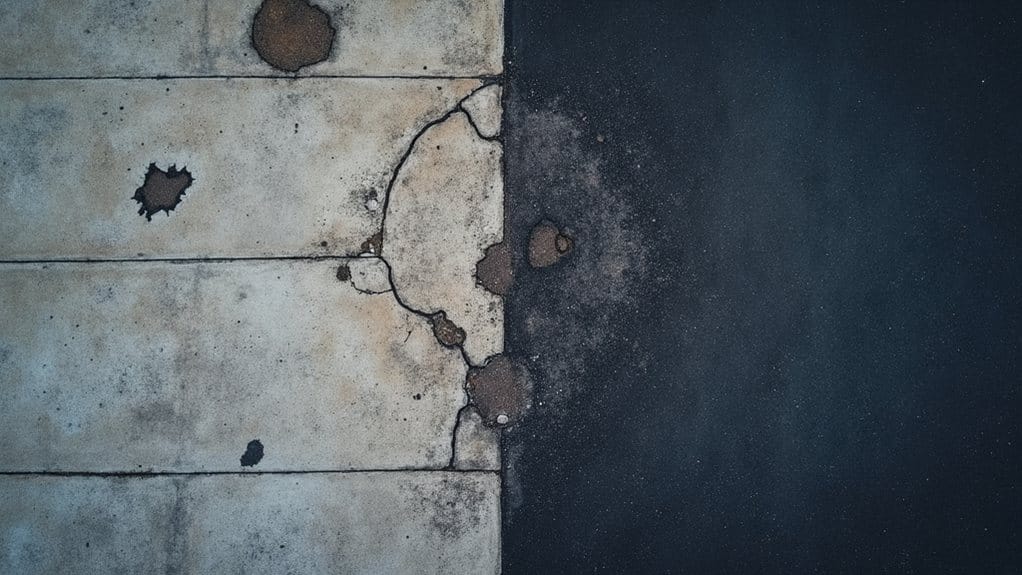
Your pavement is sending signals. You just need to read them right.
Read the damage. Make the call.
| Choose Resurfacing When… | Choose Full Replacement When… |
|---|---|
| Less than 25% shows distress | Alligator cracking covers large areas |
| Subbase remains solid | Soft or spongy pavement exists |
| Surface cracks are widespread | Recurring potholes keep returning |
| Drainage problems are correctable | Base failure causes standing water |
| Phased resurfacing fits your budget | Foundation has completely failed |
Don’t guess. Get professional pavement assessments.
Inspections reveal whether you’re fixing the surface or masking a deeper failure.
Act strategically. Resurfacing typically costs less than full replacement.
Know your numbers. Protect your investment!
Nathan’s Paving performs free, no-obligation inspections across Central PA to help you decide.
Why Repeated Repairs Signal It’s Time to Stop Patching
Watch for these four critical red flags:
- Potholes reopen within weeks after repair, a classic sign of subbase failure
- Alligator cracking clusters signal widespread base deterioration underneath
- 25%+ lot distress means mill-and-overlay beats endless spot repairs
- Drainage issues cause soft spots, requiring regrading or full reconstruction
Here’s the brutal truth: emergency patches consuming your maintenance budget aren’t saving money.
They’re delaying an inevitable, and costlier, reconstruction.
Stop patching symptoms. Fix the actual problem.
Recurring patches mean your lot is telling you something important.
Listen to it.
Regular maintenance extends driveway lifespan and helps prevent costly future repairs.
How Pavement Damage Creates Safety Hazards and Legal Exposure
Here’s what puts you at legal risk:
- Cracks and potholes cause trips and vehicle damage
- Standing water lingering 24 to 48 hours accelerates deterioration and creates slip hazards
- Faded ADA markings trigger regulatory fines and noncompliance penalties
- Uneven surfaces compromise wheelchair access and document your negligence
- Alligator cracking covering 25%+ of your lot signals structural failure
Here’s the brutal truth:
When you know about hazards and ignore them, courts notice.
Documented maintenance attempts that keep failing actually strengthen liability claims against you.
Fix potholes promptly. Restore ADA markings immediately. Address standing water fast.
Ignoring warning signs doesn’t save money. It costs everything. Additionally, routine seal coating and professional maintenance can help prevent many of these issues before they become liabilities.
Frequently Asked Questions
What Is the Life Expectancy of a Parking Lot?
Here’s what controls it:
- Sealcoat cycles every 2 to 3 years help protect your investment
- Traffic load accelerates wear fast
- Drainage impact damages substrate prep quickly
- Climate effects crack and oxidize binders
Skip maintenance? You may see significantly reduced lifespan.
Stay consistent and you’ll get more from every single year!
What Is a Parking Warning Notice?
A parking warning notice alerts you to a specific violation, fast.
It covers:
- Parking citation details
- Notice timeline and penalty fees
- Appeal process steps
You must act quickly! Deadlines protect owner liability and support proper record retention.
Think of it as your lot’s accountability tool: documented, timestamped, and seriously enforceable!
How Often Does a Parking Lot Need to Be Resealed?
But here’s what changes that:
- Traffic volume: heavy use? Reseal annually
- Weather effects: harsh climates demand faster turnaround
- Crack prep: ALWAYS repair first before applying sealant types
Application timing matters too. Pick warm dry months!
Skip resealing if 25%+ damage exists.
You’ll need repaving instead. Don’t waste money sealing a failing lot!
What Is the Checklist for Parking Cleaning?
Here’s what you need to tackle:
- Surface sweeping: clear debris weekly
- Litter pickup: remove trash every visit
- Oil removal: degrease stains immediately
- Weed extraction: pull growth from cracks fast
- Drain clearing: unclog catch basins every season
- Sign cleaning: wipe down markers regularly
Stay consistent and you’ll help prevent costly damage before it starts!
Conclusion
Every crack tells a story. Every pothole signals danger.
Ignore the warning signs and you’re practically inviting lawsuits, accidents, and lost customers through your front door.
Your parking lot is the first impression. Make it count.
Act now. Schedule that inspection. Get ahead of the damage before it costs you far more to fix.
Your pavement won’t wait forever. Neither will your customers. Call Nathan’s Paving at (717) 648-5030 or email nathanpaving@gmail.com to schedule your free assessment.
Nathan’s Paving provides commercial paving services in Carlisle, PA and throughout Central Pennsylvania, from crack sealing through full resurfacing.