Your Pennsylvania lot needs specific ADA spaces—calculate them right or face lawsuits. For 51–75 spaces, you need 3 accessible spots. For 76–100, that’s 4. Standard accessible parking? 8 feet wide plus 5-foot aisles. Van-accessible requires 11 feet or 8 feet with 8-foot aisles. Paint wheelchair symbols in white on blue using durable thermoplastic. Repaint when markings fade. The ADA requires visible markings. Repainting every 1–2 years is the recommended best practice for Pennsylvania weather conditions. Noncompliance means civil lawsuits, code citations, and stop-work orders. Get this wrong and you’re looking at serious operational headaches.
Key Takeaways
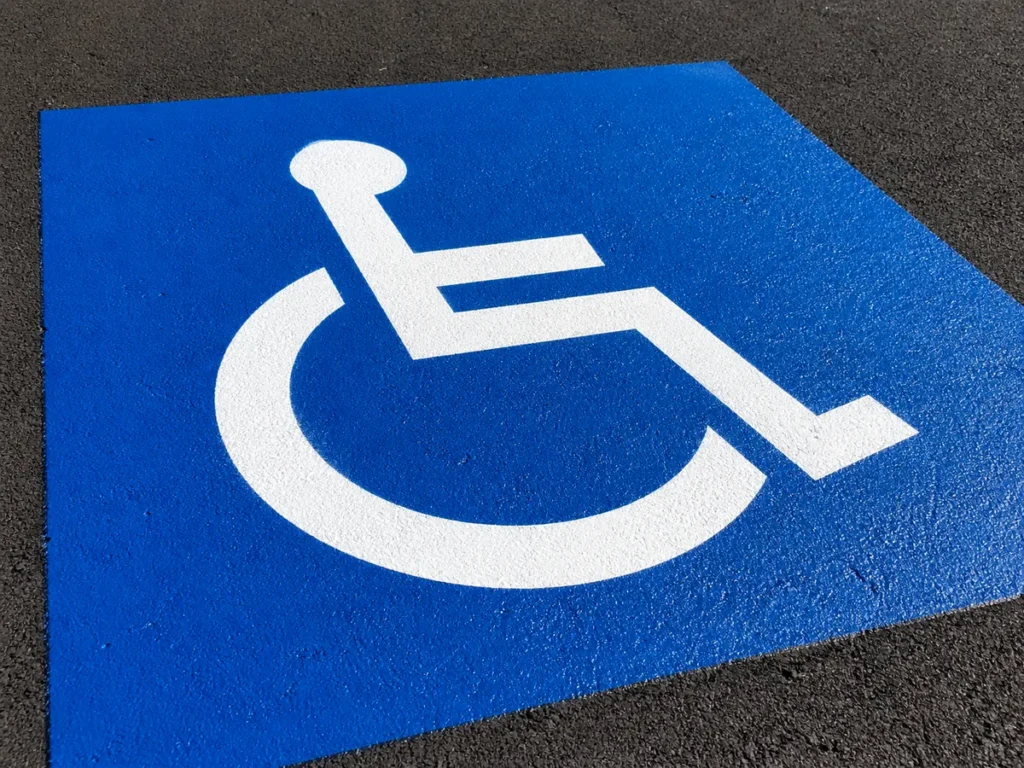
- Use thermoplastic or high-build paint for wheelchair symbols in white on blue fields. The federal ADA minimum is 28 inches; 36–40 inches is the recommended best practice for parking lot visibility.
- We recommend repainting accessible markings every 1–2 years, or immediately when faded, flaking, or losing contrast. The ADA requires markings to stay clearly visible but sets no fixed repainting interval.
- Access aisles require 5-foot minimum width for standard spaces; van-accessible aisles need 8-foot width minimum.
- Install vertical International Symbol of Accessibility signs at least 60 inches high with reflective, high-contrast materials.
- Noncompliance risks include civil lawsuits, code citations, stop-work orders, and significant remediation expenses under ADA law.
How Many ADA Parking Spaces Does Your Lot Need?
The pattern’s simple: add one more accessible parking space for every 25 spaces beyond that first 25.
Here’s the breakdown:
- 51–75 spaces = 3 accessible spots
- 76–100 spaces = 4 accessible spots
- Keep climbing? Keep adding!
For massive lots (501–1,000 spaces), calculate 2 percent of your total.
Over 1,000? You’re looking at 20 spaces plus one additional space per 100 spaces.
Don’t forget van-accessible requirements. At least 1 out of every 6 accessible spaces must be van-accessible. If the number does not divide evenly, round up. A lot with 7 accessible spaces needs 2 van-accessible spaces, not 1.
Pennsylvania ADA Standards demand you calculate parking lot requirements separately for each lot.
No combining numbers across multiple locations!
We also recommend regular maintenance like seal coating and restriping to ensure markings remain visible and compliant with ADA compliance standards.
Required Dimensions: Standard vs. Van-Accessible Spaces
Getting dimensions right? You’ll need two different accessible parking space types.
Standard Accessible Parking Spaces
Your standard accessible parking spaces require specific measurements:
- 8-foot vehicle width plus a 5-foot access aisle (13 feet total)
- Access aisles extend the full length of each space
- Aisles must be level with zero slope issues
- Clear markings discourage unauthorized parking in aisles
Van-Accessible Spaces
Van-accessible spaces give wheelchair users more room:
- 11-foot vehicle width with a 5-foot access aisle, OR
- 8-foot vehicle width with an 8-foot access aisle
- Minimum 98-inch (8’2″) vertical clearance for the parking space, aisle, and vehicle route. This is critical for covered garages and parking structures.
- Required: at least 1 van-accessible space per 6 accessible spots, rounding up on fractions
Location Matters
Place all accessible parking dimensions on your shortest accessible route to building entrances.
ADA Pennsylvania requirements demand precision here.
Your business gets this right, customers stay safe and satisfied!
We also recommend consulting a paving professional to ensure striping and surfacing meet both ADA and local standards.
Access Aisles: Giving Wheelchairs Room to Maneuver
Beyond just parking spaces, you’ve got to nail your access aisles! These aren’t optional extras. They’re wheelchair users’ critical pathways for safe entry and exit.
Width Requirements That Matter
| Space Type | Access Aisle Width |
|---|---|
| Car-Accessible | 5 ft minimum |
| Van-Accessible | 8 ft minimum |
| Shared Alternative | 5 ft + 11 ft space |
Your access aisles must run the full parking space length—typically 18–20 feet. Keep surfaces firm, stable, and slip-resistant with zero level changes. The slope can’t exceed 1:48.
Mark aisles clearly on pavement to prevent unauthorized parking. Connect them directly to your route leading toward building entrances via curb ramps. This seamless connection helps reduce barriers for wheelchair users.
You’re creating dignity and independence here. That’s powerful stuff!
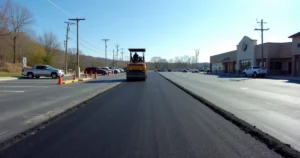
A recent project in Mechanicsburg demonstrates our commitment to quality and efficiency with commercial paving completed on time and to customer satisfaction.
Striping Standards for ADA Signs and Pavement Markings
Once you’ve got your access aisles mapped out, it’s time to make them visible and unmistakable.
Your ADA-compliant parking lot needs both painted markings and vertical signage working together. Here’s what you must do:
- Paint wheelchair symbols in white on blue fields using thermoplastic or high-build paint for durability. The federal ADA minimum symbol height is 28 inches; 36–40 inches is recommended best practice for parking lot visibility.
- Install vertical signs at least 60 inches high displaying the International Symbol of Accessibility
- Mark van-accessible spaces with additional “Van Accessible” designations on signage
- Use reflective materials for high-traffic Pennsylvania locations to meet striping standards
Thermoplastic striping outlasts regular paint and handles weather better.
Your pavement markings must contrast sharply with the surface.
Pennsylvania ADA requirements demand you restripe after resurfacing—this keeps your accessible parking spaces compliant and visible year-round!
Nathan’s Paving & Seal Coating recommends regular maintenance and high-grade materials to ensure longevity and visibility, backed by over 20 years of experience.
When to Repaint Your Lines (And When You Absolutely Must)
Your accessible parking markings won’t stay perfect forever—and that’s exactly why you need a repainting schedule!
The Standard Timeline
We recommend repainting every 1–2 years based on Pennsylvania weather and traffic conditions.
The ADA requires markings to remain clearly visible and maintained. It does not set a specific repainting interval, but waiting until markings are visibly faded puts you at risk of noncompliance.
If your lines look faded, flaking, or losing contrast? Repaint immediately.
You Must Repaint Right Now If:
- Asphalt resurfacing or sealcoating happened—covered markings aren’t ADA compliant
- Access aisle markings or International Symbol of Accessibility stencils become hard to read
- Fire lane markings fade (enforcement and emergency access depend on this!)
- Code changes require different van-accessible space layouts or colors
Don’t skip these.
Noncompliant striping triggers failed inspections and costly fines.
Your Pennsylvania compliance depends on staying proactive!
We recommend scheduling routine maintenance with experienced contractors to ensure longevity and compliance with local standards, including sealcoating services that can affect markings.
Non-Compliance Costs: Fines, Lawsuits, and Operational Shutdowns
Skipping ADA parking compliance doesn’t save you money—it costs you big time. You’re risking fines, lawsuits, and forced shutdowns that drain your budget fast.
What you’ll actually face:
- Civil lawsuits under the ADA and Pennsylvania Human Relations Act with court-ordered remedial actions and substantial monetary damages
- Code enforcement citations and stop-work orders from local inspectors or PennDOT after resurfacing without proper restriping
- Remediation expenses exceeding initial striping costs due to paint removal, grinding, and thermoplastic material installation
- Operational disruptions forcing customer access closures until your accessible parking spaces, van-accessible requirements, ADA signage, and access aisles meet standards
Small businesses face the hardest hit. Your noncompliance fines plus remediation costs spiral quickly.
The silver lining? Tax credits up to $5,000 or $15,000 deductions help offset retrofit expenses. Compliance now beats catastrophic costs later.
Many commercial property owners mitigate these risks by scheduling regular pavement maintenance and repairs, including pothole repair and sealcoating, to preserve accessibility and avoid larger compliance expenses.
Frequently Asked Questions
What Do I Need to Start a Parking Lot Striping Business?
Insurance requirements? General liability plus workers’ comp—non-negotiable.
Pricing strategy covers surface prep, materials, and labor rates.
Connect with supplier contacts for reliable paint vendors.
Develop customer contracts protecting both parties.
Run bookkeeping systems from day one.
You’ve got this!
What Is the ADA Law in PA?
Here’s the deal: Pennsylvania follows the 2010 ADA Standards for Accessible Design. You must provide accessible parking spaces based on your lot size. One space for 1–25 spots. Then add one more for every additional 25 spaces. Van-accessible spaces? You need one per six accessible spots. Every space needs proper signage at 60 inches high. Local ordinances may add extra requirements. State enforcement is real. You’re responsible for facility compliance and access audits. Don’t skip this!
What Is the Most Common ADA Violation?
You’re likely not providing enough spots. Here’s what trips you up:
- Lots under 25 spaces need at least one accessible spot
- You’re undercounting van accessible requirements (one per six spaces minimum)
- Signage placement sits too low or lacks proper wording
- Aisle width violations (5 ft standard, 8 ft for vans)
- Surface slope exceeds safe limits
Bottom line: Get your ADA compliance checked today. Enforcement actions aren’t worth the hassle!
Does ADA Striping Have to Be Blue?
The ADA itself doesn’t require blue. However, Pennsylvania and most states DO. Your jurisdiction likely mandates it for visibility contrast and compliance.
What You’ll Need:
- White wheelchair symbol on blue field
- Durable thermoplastic or high-build paint
- Upright signage at 60+ inches
- Regular maintenance schedules
- Non-slip coatings for safety
Check your local codes first. Don’t guess—get it right!
Sources
- 2010 ADA Standards for Accessible Design (U.S. Department of Justice)
- Accessible Parking Spaces (ADA.gov)
- ADA Compliance Brief: Restriping Parking Spaces (ADA.gov)
- Chapter 5: Parking Spaces Guide (U.S. Access Board)
Conclusion
You’ve got this! Proper striping protects your business and welcomes everyone. Get those spaces measured, marked, and maintained right now. You’ll dodge costly fines and lawsuits that could’ve been prevented with a little proactive effort. Your customers will notice your commitment. Stay compliant, stay confident, and keep those lines fresh. You’re building accessibility—that’s genuinely awesome!