Spring paving offers major advantages for your asphalt project! You’ll benefit from 15-20% lower material costs and better moisture control with 85-95% ground saturation. The moderate temperatures (50-70°F) create ideal conditions for stronger bonding and superior compaction. While spring projects may take 20% longer due to rain delays, the results deliver enhanced durability and crack resistance. Summer brings intense heat and higher costs – but each season has unique factors worth exploring for your specific needs.
Key Takeaways
- Spring paving offers better compaction and durability due to moderate temperatures, resulting in stronger pavement that handles freeze-thaw cycles effectively.
- Material costs are typically 15-20% lower in spring compared to summer peak prices, allowing for better budget management.
- Summer projects complete faster with fewer weather delays, while spring projects may take 20% longer due to rain delays.
- Spring has lighter traffic patterns and better equipment availability, but summer offers larger workforce pools and extended daylight hours.
- Ground moisture levels are higher in spring (85-95%), requiring careful monitoring, while summer’s drier conditions (40-60%) allow easier soil management.
Temperature Effects on Asphalt Quality
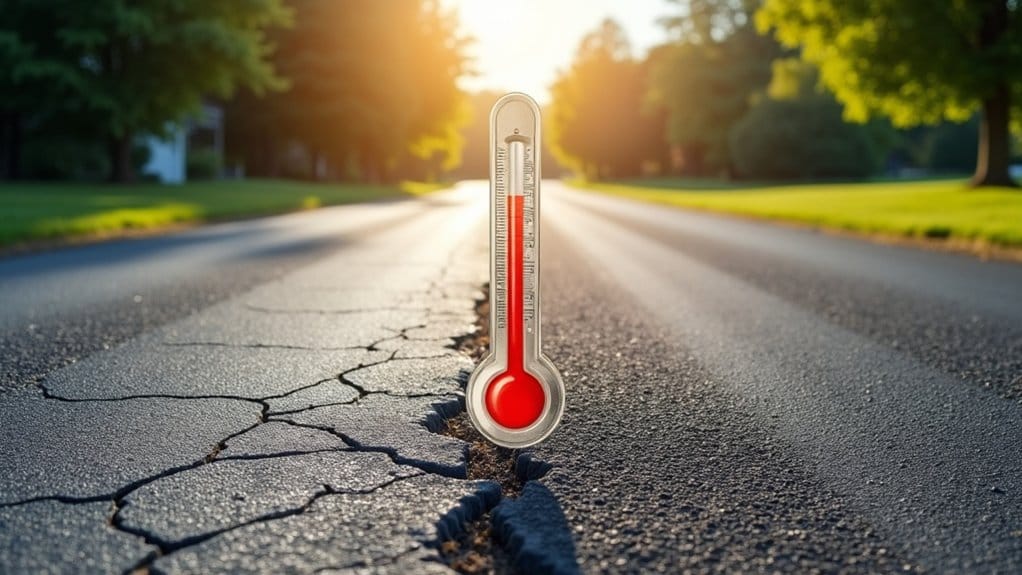
Temperature makes or breaks your asphalt paving project! You’ll want to understand how heat impacts your pavement’s long-term performance and durability.
During spring, temperature fluctuations can affect your asphalt composition dramatically. When it’s too cold, your asphalt mix won’t spread evenly. But when it’s too hot, you’ll face different challenges.
Perfect Temperature Range:
- Base temperature: 50°F to 70°F
- Surface temperature: 70°F to 90°F
- Mix temperature: 275°F to 300°F
Spring’s moderate temperatures give you more control over the paving process. You’ll achieve better compaction and stronger bonding between layers. Additionally, timely project completion ensures that the quality of your asphalt is not compromised.
Temperature swings are less extreme than summer, which means your asphalt won’t cool too quickly.
Watch out for those early morning frost warnings! They can delay your project and affect the final results.
Ground Moisture Conditions by Season
While spring brings warmer days, ground moisture becomes your biggest paving challenge! Seasonal fluctuations in ground saturation can make or break your paving project’s success.
You’ll want to take into account these vital moisture factors during different seasons:
- Spring ground moisture levels typically reach 85-95% saturation due to melting snow and rainfall.
- Summer soil moisture averages just 40-60% saturation, creating ideal conditions for stable paving.
- Ground saturation directly impacts your pavement’s foundation strength and long-term durability.
Don’t let excess moisture ruin your investment! Your best strategy is monitoring soil conditions before starting. A simple soil probe test can tell you if moisture levels are right. Additionally, working with a trusted provider like Nathans Paving can ensure you receive expert advice on the best timing for your project.
Summer’s drier conditions often provide better results for most paving projects. You’ll get stronger, longer-lasting pavement when the ground isn’t waterlogged.
Traffic and Project Scheduling Differences
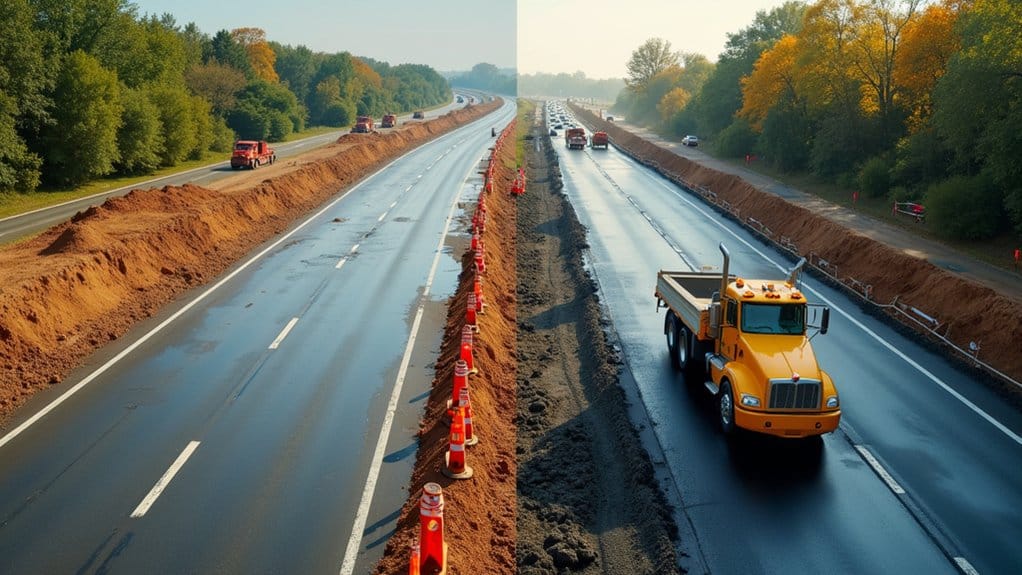
Scheduling your paving project at the right time makes a huge difference in traffic disruption!
Spring vs. Summer Traffic Considerations:
- Spring brings lighter traffic patterns due to fewer vacation travelers.
- Summer roads see 25-40% more vehicles during peak tourism months.
- School buses aren’t a factor during summer months.
You’ll find notable timing differences between seasons.
Spring projects might take 20% longer due to:
- More frequent rain delays.
- Slower material curing times.
- Additional moisture testing requirements.
Summer Scheduling Benefits:
- Faster completion times in warm weather.
- Extended daylight hours for work crews.
- More predictable project timelines.
Additionally, many paving contractors may have specific service areas that influence project scheduling.
Pro Tip: Book your paving contractor early!
Spring slots fill up by February, while summer availability often closes by April.
Choose your timing wisely. It’ll affect both your timeline and traffic management strategy.
Labor and Equipment Availability
Contractors typically face opposing labor scenarios during spring and summer construction seasons.
You’ll find unique challenges and opportunities in each season when it comes to securing workers and equipment rental availability.
Let’s break down what you need to know about seasonal workforce patterns:
- Spring often brings labor shortages as crews gradually return from winter breaks, but you’ll get first pick of equipment rental inventory.
- Summer delivers peak workforce availability with students and seasonal workers joining crews, though equipment rental costs typically surge.
- Your scheduling flexibility increases during summer months since more workers means multiple shift options.
The key is planning ahead!
Book your equipment rental early for spring projects to lock in better rates. During summer, you’ll have an easier time finding workers but expect to compete more for machinery. Additionally, obtaining a fast, free quote can help you assess your project’s needs and budget effectively.
Material Costs and Seasonal Pricing
Material Price Fluctuations:
Asphalt prices typically peak during summer months when demand is highest. Spring costs are often 15-20% lower, letting you maximize your paving budget. Watch those early-season deals! Free estimates can also help you gauge costs accurately.
Seasonal Demand Trends:
Summer brings intense competition for materials. You’ll face higher prices as contractors rush to complete projects. Spring offers better negotiating power with suppliers who want to secure early-season business.
Pro Tips for Savings:
- Lock in spring rates with advance contracts
- Bundle material orders for bulk discounts
- Consider mid-spring timing (April-May) for ideal pricing
- Ask about early-payment incentives from suppliers
- Compare quotes from multiple vendors. Prices can vary by 25%!
Don’t let seasonal pricing catch you off guard. Plan ahead and save big!
Weather-Related Work Delays
Weather can wreak havoc on your paving timeline! When planning your paving project, you’ll need to reflect on how different seasons impact work delays. Weather forecasts play a vital role in determining whether your crew can complete the job efficiently.
Let’s look at how weather affects spring and summer paving schedules:
- Spring often brings unpredictable rain showers that can halt work for days.
- Summer’s intense heat waves might force crews to adjust their working hours.
- Project flexibility becomes essential during both seasons to accommodate sudden weather changes.
You’ll find that summer typically offers more consistent working conditions. Spring’s wet weather patterns can stretch your timeline considerably! To ensure a successful project, it’s crucial to consider the importance of a strong foundation for your paving needs, as proper groundwork can mitigate the impact of weather delays.
That’s why it’s smart to build extra buffer days into your spring paving schedule. Keep your project timeline realistic by planning for these seasonal challenges.
Curing Time Variations
Beyond scheduling challenges, curing times can vary dramatically between spring and summer paving projects.
You’ll need different curing methods based on the season. In spring temperatures (45-65°F), your asphalt will take 2-3 days to fully cure. Summer heat (75-95°F) speeds this up to just 24-48 hours! That’s a huge difference for your project timeline.
Making seasonal adjustments is vital for success. In spring, you’ll want to use slower-setting materials and plan for extended curing periods.
Summer projects benefit from quick-set formulas, but watch out! Extreme heat can sometimes cure the surface too fast.
Pro tip: Add an extra day to your spring curing estimates. The temperature fluctuations between day and night can affect how your pavement sets. Your patience will pay off with quality results! Additionally, understanding the benefits of sealcoating services can help prolong the life of your asphalt and ensure better performance throughout the seasons.
Impact on Long-Term Durability
While both seasons can deliver quality results, the timing of your paving project impacts its lifespan.
Your durability analysis should focus on seasonal wear patterns that emerge over time. Let’s investigate how your timing choice affects long-term performance!
When it comes to lasting pavement strength, here’s what you’ll notice:
- Spring paving often results in better compaction due to moderate temperatures. Your surface will better resist cracking and damage over time.
- Summer heat can lead to faster curing but may create brittleness issues. You’ll need to watch for early signs of stress.
- Temperature fluctuations during installation directly affect your pavement’s flexibility. Spring projects typically handle freeze-thaw cycles better.
Additionally, high-quality materials used during spring paving can further enhance the durability of your asphalt surface.
Choose wisely! Your decision today shapes how your pavement performs.
Spring generally offers more predictable long-term durability outcomes.
Seasonal Permit Requirements
Before starting your paving project, you’ll need to understand local permit requirements. Many municipalities have specific seasonal regulations that affect when you can pave.
Spring Permit Tips:
- Expect longer processing times due to high demand
- You’ll need detailed drainage plans
- Most cities require frost-thaw documentation
Summer Permit Guidelines:
- Standard processing times apply
- Temperature impact studies may be required
- Extra safety protocols for heat conditions
Your permit applications will vary based on your location and project scope. Some areas restrict paving during spring thaw periods. Others have summer heat limitations.
Don’t get caught off guard!
Pro Tip: Submit your paperwork at least 30 days before your planned start date. This gives you plenty of time to address any concerns from local authorities.
Project Timeline Considerations
Once you’ve secured your permits, let’s talk about timing your paving project effectively! Your timeline planning can make or break your project’s success. Smart resource allocation helps you stay on schedule and within budget.
Consider these key timeline factors for your paving project:
- Project complexity affects duration. A simple driveway takes 2-3 days while a large parking lot needs 1-2 weeks.
- Equipment and crew availability varies by season. You’ll have better access to resources during spring’s slower period.
- Weather delays impact completion dates. Summer’s predictable weather means fewer interruptions.
Planning ahead is your secret weapon! You’ll want to book contractors at least 8-12 weeks in advance. Additionally, understanding the importance of qualified contractors can significantly influence the outcome of your project.
Spring projects often need extra flexibility due to rain delays. Summer projects move faster but require careful scheduling around peak demand periods.
Conclusion
While spring offers cooler temps and better moisture conditions, summer brings reliable weather and peak contractor availability. You’ll save money in spring but face more scheduling delays. Summer projects move faster but cost more. Choose spring paving for budget-friendly results with extra planning time. Pick summer when you need quick completion and don’t mind premium pricing. Your perfect paving season depends on your priorities and timeline!