
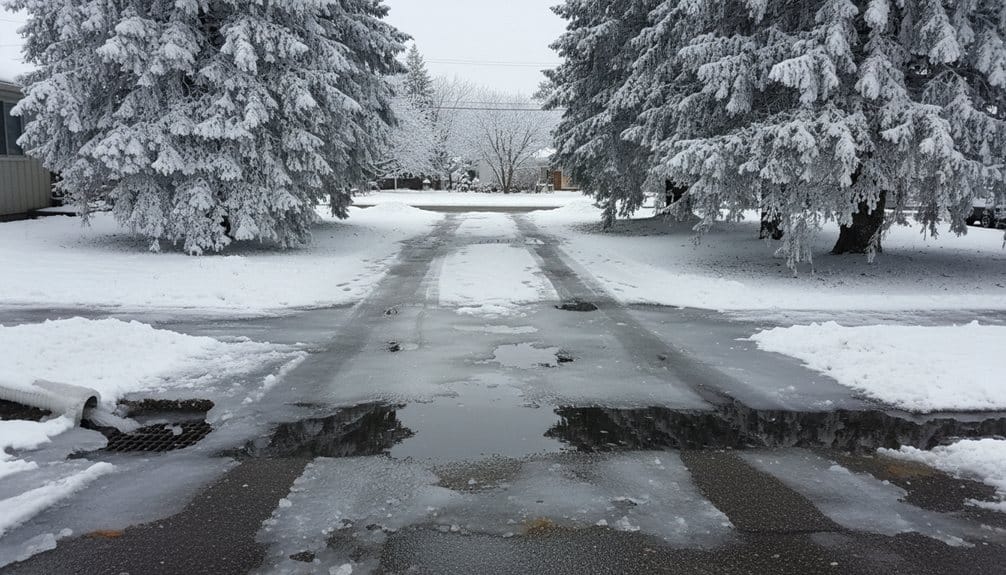
Your driveway’s winter drainage problems create a destructive freeze-thaw cycle. Melting snow clogs gutters and catch basins with debris, trapping water that expands when frozen—cracking pavement and causing frost heave. Poor grading (you need at least 1% slope!) lets water pool near foundations. Ice dams block downspouts, forcing meltwater to pool everywhere. De-icing salts accelerate damage by increasing pavement permeability. Channel drains, proper grading, and crack sealing stop this destruction before it starts. Keep reading to learn exactly how professionals fix these issues.
Key Takeaways
- Debris and ice dams block drainage systems, forcing meltwater to pool near foundations and driveways.
- Freeze-thaw cycles expand water in cracks by ~9%, rapidly accelerating pothole formation and pavement failure.
- Frost heave lifts driveways by expanding moisture-laden clay and silt soils through repeated freezing cycles.
- Install channel drains at low points with minimum 1% slope to prevent water pooling and ice buildup.
- Seal cracks promptly, apply seal coat every 2–3 years, and ensure proper grading to minimize freeze-thaw damage.
How Melting Snow and Ice Compromise Drainage Systems
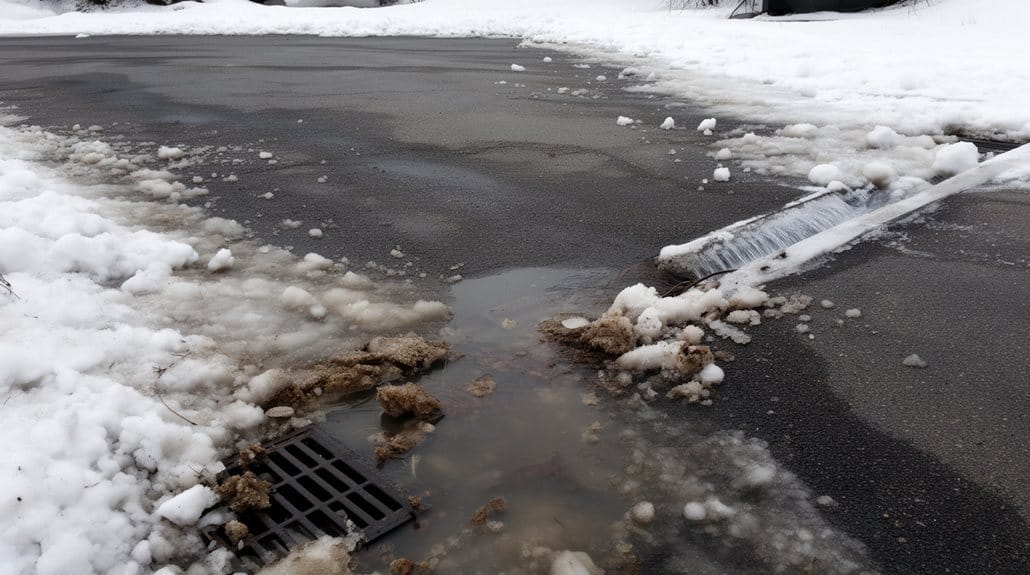
Leaves, grit, and sand ride the meltwater into your catch basins and outdoor drains. This accumulated junk clogs everything up fast.
Freeze–Thaw Cycles Wreck Pipes
Here’s where it gets serious. Water seeps into tiny cracks in your drain pipes. Then it freezes. That expansion pushes outward with incredible force—cracking concrete and bursting plastic conduits.
Ice Dams Block Flow
Gutters and downspouts get choked with ice buildup. Meltwater can’t flow downward anymore. Instead, it pools dangerously near your foundation and driveway.
Your Action Plan
Clear debris regularly. Inspect gutters weekly. Address blockages immediately before another freeze hits. Additionally, consider professional driveway drain installation to enhance water management and prevent future issues.
Ground Expansion and Frost Heave Damage
Here’s what triggers it:
- Moisture trapped in clay and silt soils
- Freeze-thaw cycles repeating all winter
- Poor drainage system design allowing water buildup
When temperatures drop, that moisture freezes and expands—sometimes lifting your driveway several inches!
You’ll notice bumps, ruts, and cracks that worsen each season.
The real problem? Uneven heaving.
Some spots settle back in spring while others stay permanently raised.
Your car scrapes. Your driveway cracks further.
The fix: Improve your drainage system by replacing moisture-holding soils with well-compacted, free-draining road base. Additionally, consider utilizing advanced paving technology to enhance the longevity and durability of your driveway.
In cold climates, add extra pavement depth to reduce frost penetration.
Stop frost heave before it starts!
Water Infiltration and Freeze-Thaw Cycles
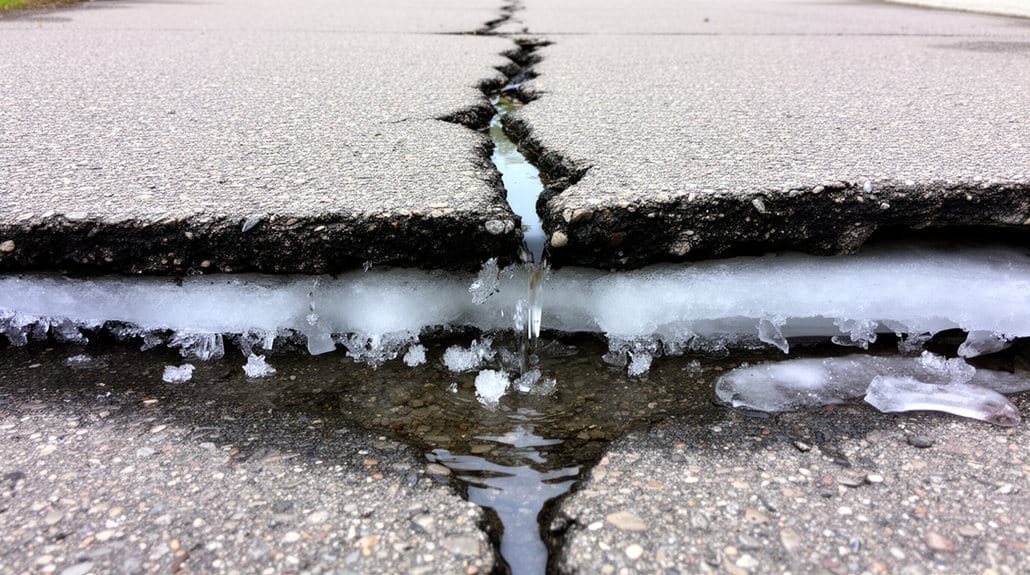
Here’s what happens when temperatures drop:
- Water seeps into small cracks and freezes solid
- Ice expands roughly 9% and forces cracks wider
- Repeated freeze-thaw cycles accelerate pothole formation dramatically
- De-icing salts increase permeability and worsen damage
Your Action Plan Matters
You’ve got real power here. Seal cracks promptly.
Apply quality seal coat every 2–3 years.
Most importantly, direct water away from your driveway through proper drainage systems. Seal coating your driveway is an effective way to protect against these harsh conditions.
Standing water underneath your surface? That’s a persistent moisture source fueling freeze-thaw cycles.
Don’t ignore these warning signs.
Your wallet depends on it!
Identifying Poor Grading and Pooling Problems
Uneven surfaces expand cracks through freeze–thaw cycles. One percent slope minimum keeps water moving. Without it, you’re inviting expensive repairs. Proper paving installation options can significantly reduce water pooling issues and extend the life of your driveway.
Installing Channel Drains for Effective Water Management
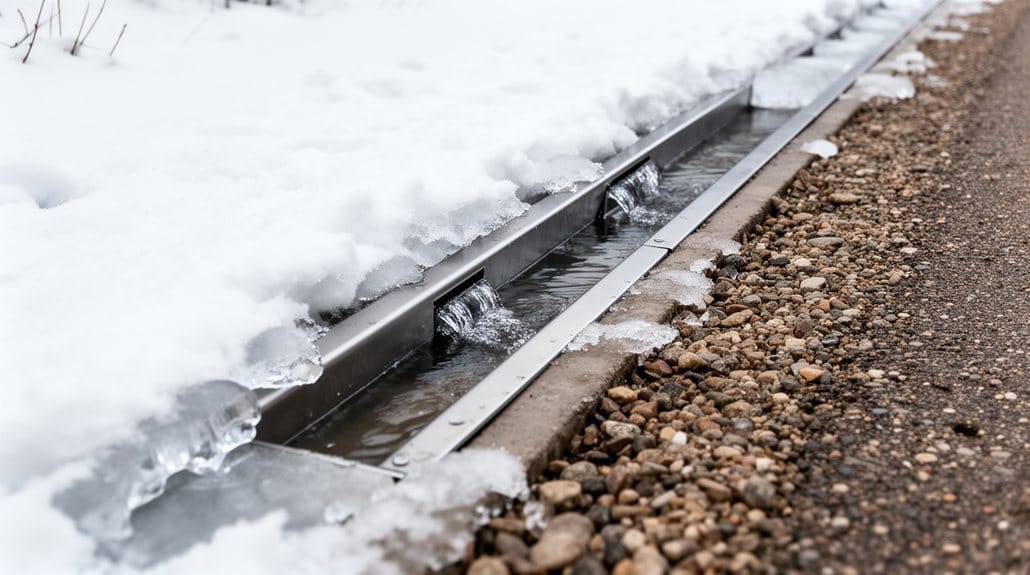
Channel drains’ll convert how water leaves your driveway. These linear systems stop pooling and prevent snow and ice buildup during winter months. You’ll install them at your driveway’s lowest point with proper slope.
Your installation steps:
1. Excavate a trench with 50 mm compacted sand base
2. Set drain with 5 mm fall per 1 meter toward outlet
3. Pour 100 mm concrete surround around the channel
4. Connect outlet pipework to storm drain or soakaway system
For a new driveway, position the grate roughly 2 mm above concrete finish. Use B125-rated polypropylene channels—they handle 12.5 tonnes safely. Also, consider obtaining a fast, free quote to assess your project needs accurately.
Wait 72 hours before heavy vehicle loading. Route water away from your property. Storm drains prevent downstream flooding.
You’ll eliminate winter drainage headaches completely!
Selecting the Right Drainage Infrastructure
| Driveway Type | Channel Rating | Weight Capacity | Best For |
|---|---|---|---|
| Domestic | B125 Polypropylene | 12.5 tonnes | Standard homes |
| Commercial | Heavy-duty classes | 25+ tonnes | Business areas |
| High-traffic | Reinforced units | 40+ tonnes | Busy zones |
| Seasonal freeze | Premium rated | All conditions | Winter regions |
Critical Winter Planning
Your channel drains must pipe to a soakaway or storm connection—never surface termination! Freezing temperatures demand proper outlet planning. Peak runoff sizing prevents catastrophic backups during thaw cycles. Don’t skimp here—it’s your foundation’s lifeline! Additionally, proper ground preparation is essential to ensure the durability and longevity of your drainage system.
Preventative Maintenance Before Winter Arrives
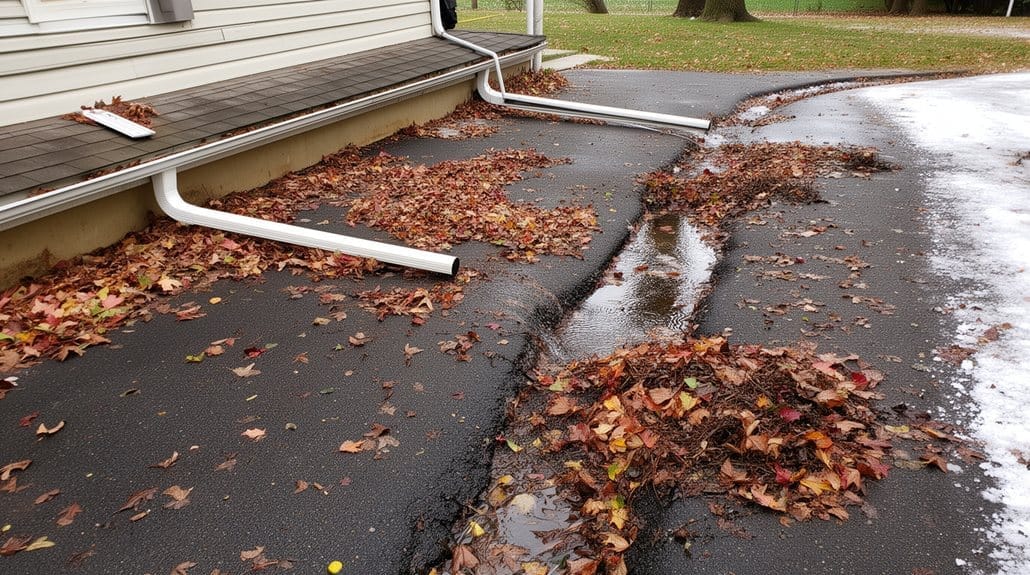
5. Regular maintenance, such as sealing cracks and drainage inspections, can significantly extend your driveway’s lifespan and prevent costly repairs.
Don’t skip these steps! Frozen blockages cause dangerous pooling. Cracked pavement gets worse fast. Professional inspections reveal frost heave risks you’d miss alone.
Your driveway’s winter survival depends on action taken *right now*. You’ve got this!
Professional Solutions for Persistent Drainage Issues
When your driveway’s still pooling water despite your best efforts, it’s time to call in the experts!
Install a Linear Channel Drain
A linear channel drain is your drainage breakthrough. Professionals install B125-rated polypropylene channels at your driveway’s lowest point. They’ll connect it to a soakaway or storm system. This captures runoff reliably and prevents pooling.
Grade Your Driveway Right
Experts recommend a 5 mm fall per meter toward the drain. They’ll excavate down to a 50 mm compacted sand base.
Then they’ll add approximately 100 mm concrete around the channel.
Upgrade Your Foundation
Replace moisture-prone soil with engineered roadbase. Add geotextile membrane for stability.
This tackles frost heave and groundwater issues permanently.
Prevent Frozen Pipes
Install heat trace on drainpipes and downspouts. Heated gutter systems stop ice dams.
Your drainage stays flowing all winter long! Additionally, ensuring strong foundation during the groundwork phase is essential for achieving long-lasting results.
Conclusion
You’re probably thinking drainage fixes cost a fortune. Here’s the truth: you’ll spend way more fixing frozen pipes and foundation cracks later. Investing now in proper grading or channel drains saves you thousands down the road. Winter’s coming fast. You can’t afford to ignore pooling water on your driveway. Take action today and protect your property. Your future self will thank you big time!