
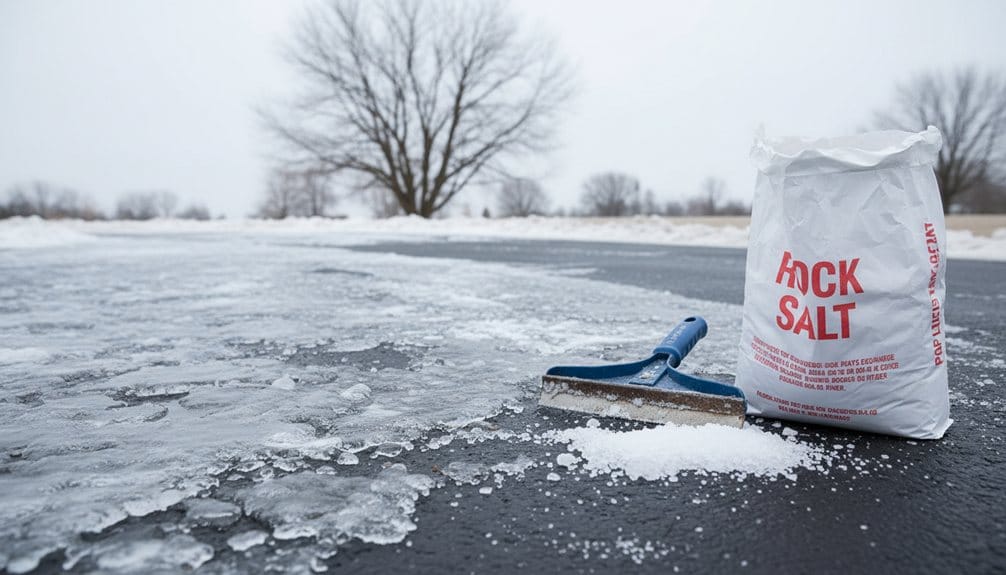
De-ice strategically or face thousands in repairs. Pre-treat with liquid brine 12–24 hours before storms hit—cuts salt usage by 30–50%. Use rock salt for mild temps or calcium chloride below 15°F. Break thick ice first for faster melting. Sweep granules immediately after thawing to prevent drain clogs and environmental damage. Seal hairline cracks each spring to stop freeze-thaw expansion. Stick around to uncover exactly how each technique protects your investment.
Key Takeaways
- Pre-treat driveways with liquid brine 12–24 hours before snow to prevent ice bonding and reduce salt needs by 30–50%.
- Choose de-icers based on temperature: rock salt for moderate cold, calcium chloride for extreme cold below 15°F.
- Break thick ice before applying de-icer products to improve effectiveness and reduce the amount of material needed.
- Use sand or gravel near plants; reserve chemical de-icers for high-traffic zones to minimize environmental and landscaping damage.
- Sweep granules immediately after thawing to prevent drain clogs, runoff pollution, and protect concrete from salt corrosion.
Understanding Ice Formation and Its Dangers
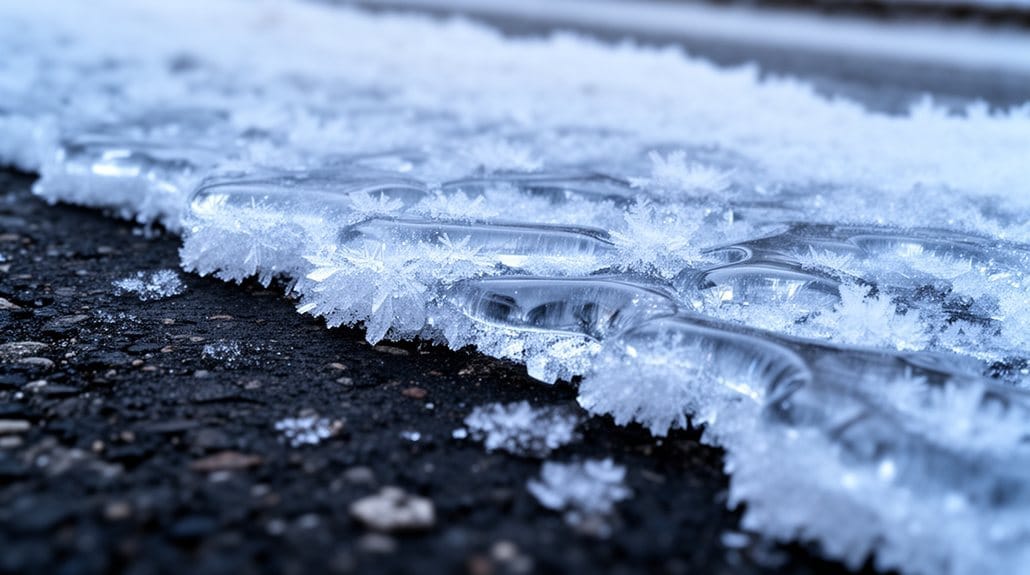
Repeated freeze–thaw cycles force water deeper into pavement cracks.
That expansion? It creates potholes and spalling that demand expensive repairs.
You’re looking at serious structural damage without intervention.
Black Ice: The Silent Threat
Black ice forms when surface temps hover just below freezing.
This transparent glaze is nearly invisible.
You won’t see it coming.
Slip risk skyrockets instantly.
One misstep means trauma and injury liability for you as a homeowner.
Your Defense Strategy
Pre-treat surfaces 12–24 hours before storms hit.
Prevent ice from bonding using de-icer or salt.
Break thick ice before applying product.
Less de-icer needed.
Better results guaranteed.
Act now—don’t wait for disaster! Regular maintenance can extend driveway lifespan and help you avoid costly repairs.
Chemical De-Icers vs. Non-Chemical Alternatives
Sand or gravel provides instant traction without chemicals. You’ll need cleanup later though.
The Difference-Maker
Eco-friendly options like beet-juice blends lower freeze points with minimal environmental damage. Perfect pre-treatment solutions! Additionally, consider the benefits of parking lot sealing to protect your pavement investment during winter months.
Your choice depends on temperature needs, budget, and environmental responsibility. Mix strategies for maximum winter driveway domination!
Pre-Treatment Strategies Before Winter Storms
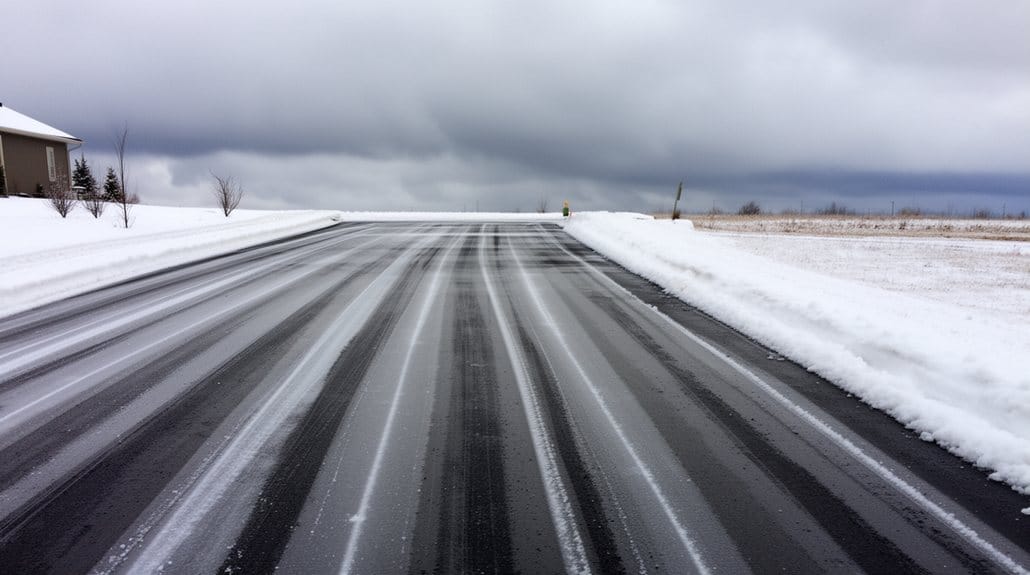
Before that snowstorm hits your driveway, you’ve got a game-changing move: liquid pre-treatment.
Apply an anti-icer like salt brine 12–24 hours before snow arrives. This stops ice from bonding to pavement. Here’s your winning game plan:
- Spray a thin, even brine coat using a pump sprayer
- Focus on high-traffic zones—walkways, steps, and tire tracks
- Use calcium chloride for extreme cold below 15°F
- Reapply if more than 24 hours pass before the storm
You’ll dramatically reduce the amount of granular salt needed later—cutting usage by 30–50%!
This means faster snow removal and lower environmental impact.
Pro tip: Always clear loose snow before applying granular treatment.
Your pre-treat investment pays off immediately with easier cleanup and safer surfaces. Additionally, using high-quality materials for your driveway can enhance its durability and longevity against winter conditions.
Proper Application Techniques for De-Icing Materials
Finally, sweep it up.**** Remove excess granular materials after thawing.
You’ll prevent drain runoff and protect your driveway long-term. Regular sealcoating services can further enhance the durability of your asphalt.
Environmental and Safety Considerations
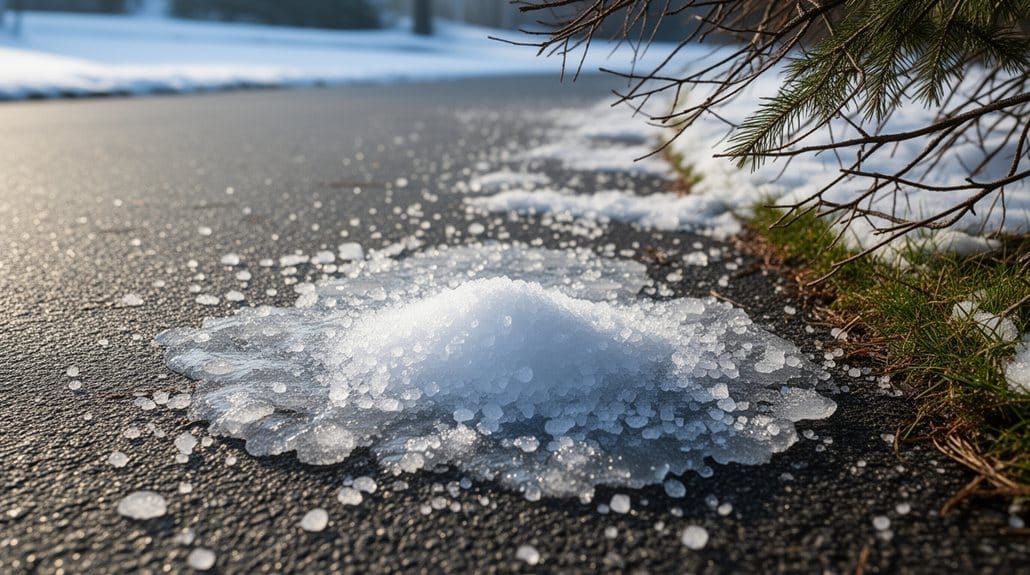
While de-icers work hard to keep your driveway safe, they’re quietly affecting your environment. Rock salt and calcium chloride raise soil salinity. They harm plants. They corrode concrete. They pollute freshwater sources where ducks and wildlife depend on clean water.
Protect what matters:
- Avoid using excessive salt near planting beds and water features
- Choose generally safer for plants options like sand or gravel instead
- Sweep up granules after thaw to prevent drainage pollution
- Select eco-friendly ice melts with beet-juice or acetate blends
The freezing point of water demands ice melts. But you control the environmental impact through smart choices. Regular asphalt maintenance can also help mitigate the effects of de-icers on your driveway’s longevity.
Non-chemical traction materials give grip without saltwater runoff. Eco-friendly alternatives cost more upfront yet protect tomorrow’s terrain. Your driveway doesn’t have to sacrifice nature’s health.
Post-Storm Maintenance and Long-Term Driveway Protection
The storm’s over, but your driveway’s battle with winter damage is just starting.
Immediate Action Steps
Sweep away loose de-icer granules and sand immediately. These trafficked materials clog drains and wash into storm drains, harming soil and waterfowl. Don’t skip this step!
Spring Inspection Critical
Inspect concrete for small cracks. Freeze–thaw expansion worsens damage fast. Seal hairline cracks now using concrete patch or sealant. This saves serious money later.
Rinse Salt Away
Rinse salt from patios and steps with fresh water. This protects landscaping and reduces corrosion on metal fixtures.
Long-Term Protection
Reapply a protective driveway sealant every 2–3 years. This limits water infiltration and slows deterioration from repeated freeze–thaw cycles. Consider hiring a trusted asphalt paving service to ensure high-quality application of sealants.
Your driveway’ll thank you!
Conclusion
Now you’re ready to tackle any winter storm confidently. Your driveway stays safe. Your family stays protected. You’ve got this handled completely!