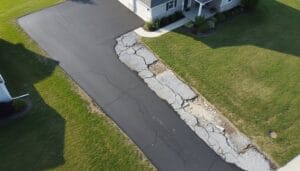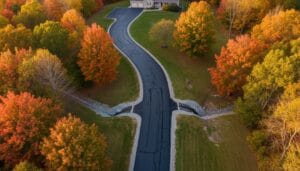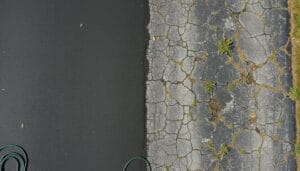
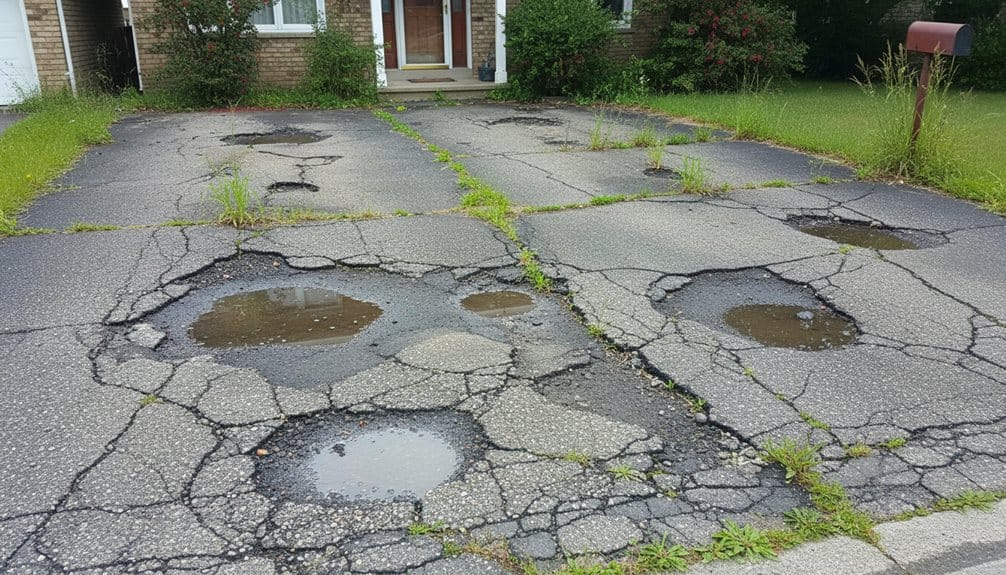
You’re throwing money away on endless patches. Alligator cracking, sinking sections, and persistent water pooling scream replacement time. When cracks exceed 1/4 inch or repairs cost 40–50% of replacement, full reconstruction wins. Crumbling edges, base erosion, and recurring failures in the same spots prove patching fails. Your driveway’s structural integrity is compromised. Professional assessment reveals whether you’re stuck in a costly repair cycle or ready for lasting solutions. The seven signs that demand action are detailed below.
Key Takeaways
- Alligator cracking and cracks wider than 1/4 inch indicate structural failure requiring full replacement instead of patching.
- Sections sinking more than 1 inch or heaving signal serious base failure that repairs cannot resolve long-term.
- Standing water pooling for hours weakens subgrade; proper drainage requires full replacement with regrading.
- Repair costs reaching 40–50% of replacement cost make new construction the more economical choice.
- Spalling, crumbling edges, and deterioration deeper than 2–3 inches make patching only a temporary solution.
Alligator Cracking: When Surface Repairs Won’t Work
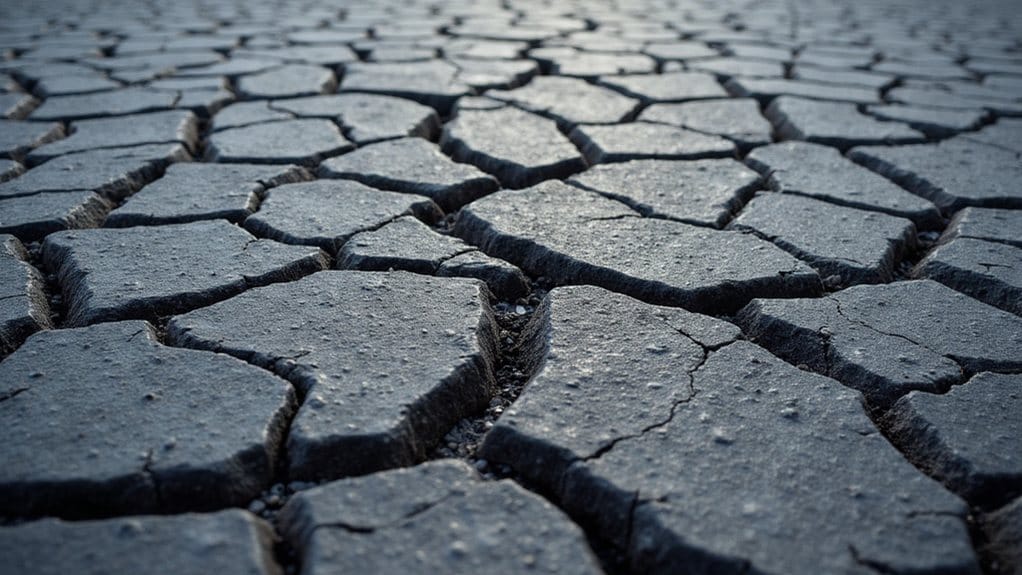
Here’s the reality: those cracks wider than 1/4 inch aren’t just surface problems. Water infiltration happens fast. It seeps through to your base layer and subgrade, causing serious damage underneath.
Why patching won’t cut it:
Simple repairs fail because the real problem lives below the surface. Poor base preparation or freeze-thaw cycles created this mess. Recurring repairs keep happening in the same spots—that’s your sign that replacement beats repeated fixes.
When structural integrity’s compromised, full replacement becomes your best investment. Don’t throw good money after bad. Call Nathan’s Paving for honest assessment today. We offer free quotes and professional assessments to help you decide the best course of action.
Sinking or Heaving Sections Indicate Base Failure
When your driveway starts settling unevenly, you’re not looking at a cosmetic problem—you’re witnessing base failure in action. Sections that sink more than 1 inch below the surrounding surface signal serious trouble underneath. Heaving creates dangerous waves and gaps. Here’s what’s actually happening:
- Subgrade erosion washing away your foundation
- Expansive clay soils pushing sections upward
- Tree root damage destabilizing everything below
- Standing water pooling and destroying your base
If you’re seeing settling or heaving recur after previous repairs, the underlying drainage issues remain unresolved. Multiple sinking areas spread across your driveway point to systemic subbase failure. Surface patching can’t fix this. You need full reconstruction with proper base preparation. Nathan’s Paving often replaces old surfaces with high-quality asphalt and ensures the driveway is properly graded for optimal drainage and durability, providing a long-lasting solution with asphalt paving.
Water Pooling and Drainage Failure Signals Structural Damage
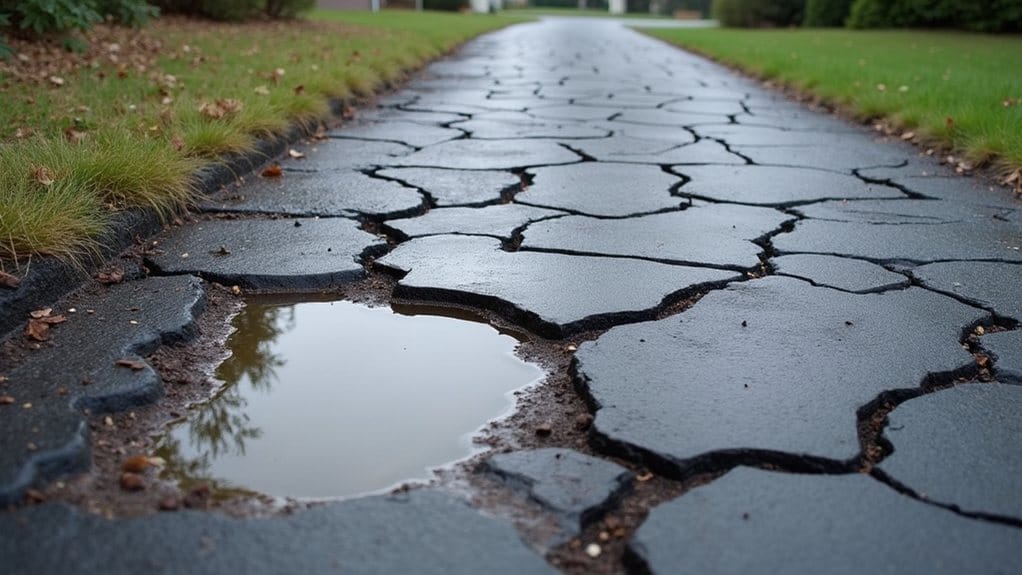
Because water’s unceasing, pooling on your driveway isn’t just unsightly—it’s a structural emergency waiting to happen.
Standing Water Destroys Everything Underneath
When water pools for hours after rain, your subgrade is getting soaked.
That moisture weakens the foundation layers.
Freeze–thaw cycles make it worse—water freezes, expands, and shatters pavement from below.
Edge Erosion Creates Collapse Zones
Pooling near edges causes serious edge erosion.
Water concentrates there, undermining your base.
Eventually sections sink or fail completely.
Poor Drainage Threatens Your Home
Here’s the scary part: if water drains *toward* your foundation instead of the street, you’re risking foundation damage.
That’s expensive!
Multiple Problem Zones = Full Replacement
Widespread standing water combined with cracking signals subgrade compromise.
Patching won’t fix systemic drainage failure.
You need complete driveway replacement with proper regrading and drainage planning.
Regular maintenance and professional assessment in Central PA can prevent small problems from becoming catastrophic.
Don’t ignore pooling. Call Nathan’s Paving at (717) 648-5030 today!
Spalling and Crumbling Edges That Spread
While pooling water attacks from underneath, spalling quietly destroys your driveway from the surface down.
You’ll spot small chips and flaking that expose aggregate. What seems minor today becomes a major problem tomorrow.
Watch for these alarming signs:
- Surface pitting spreads several inches inward within one to three seasons
- Crumbling edges produce loose debris when you probe them
- Exposed reinforcement and wide cracks signal structural failure
- Undermined edges reveal soil beneath the slab
Freeze–thaw cycles and deicing salts accelerate edge spalling fast.
Once concrete deterioration reaches 2–3 inches deep, patching becomes temporary at best.
Here’s the reality: Repeated localized repairs near damaged zones waste your money.
When repair costs hit 30–50% of replacement, full slab replacement and base repair deliver better long-term value.
Your structural support is compromised.
Don’t delay—replacement protects your home’s foundation.
Consider professional services like driveway sealing to protect remaining paved areas and extend overall pavement life.
Repairs Keep Failing: A Cycle of Temporary Fixes
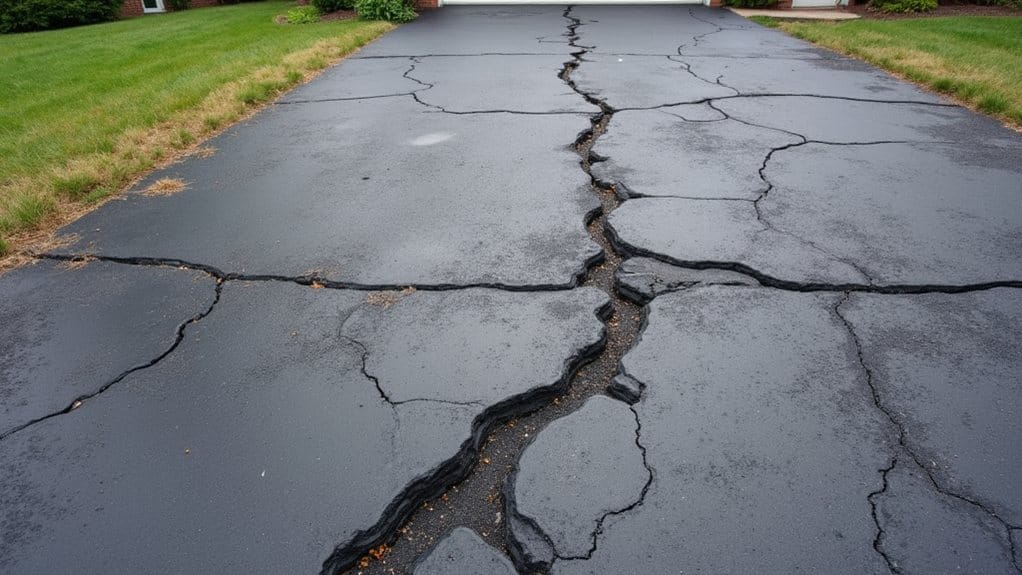
You’re caught in a trap.
Your driveway keeps breaking. You patch it. It breaks again. Sound familiar?
The Problem Gets Worse
Recurring repairs signal base failure underneath. That patched pothole? It’s back in six months. Your new crack spreads into alligator cracking. Water keeps pooling despite fixes. Edge erosion creeps along the sides.
The Reality Check
When you’re patching the same spot multiple times yearly, temporary fixes won’t work anymore. Your subgrade deterioration runs deep—literally. Sinking/sinkholes return because the foundation’s compromised.
Do the Math
Here’s the kicker: when cumulative repair costs hit 40–50% of replacement pricing, you’re likely throwing money away. Replacement may be the best option. Your driveway’s likely experiencing structural failure.
Stop the cycle. Call Nathan’s Paving at (717) 648-5030 for a free consultation today!
Nathan’s Paving provides professional replacement services to ensure lasting durability and peace of mind.
Base Erosion: Why Loose Gravel Means Full Replacement
- Your base layer is eroding and losing structural integrity
- Subgrade erosion means the foundation support is compromised
- Water’s washing away the washed-out base layer
- Aggregate migration collects in gutters after rain
When gravel migrates from edges or low spots, your underlying support is gone.
Repeated repairs on raveled areas fail within months because the structural problem persists.
If your driveway needs frequent re-grading, you’ve likely lost 25–30% of structural integrity.
Full excavation and replacement beats endless repairs.
It’s the smarter investment.
Consider a full replacement handled by experienced professionals who use top-grade materials to restore long-term durability and performance.
When Total Replacement Costs Less Than Repeated Repairs
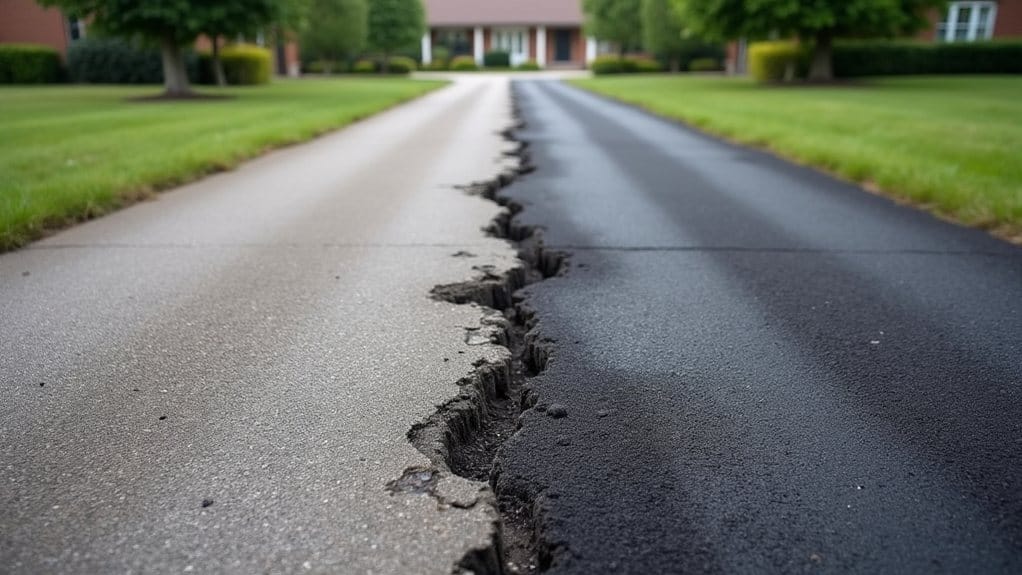
If you’ve patched the same pothole three times this year, listen up.
The Math That Changes Everything
Repeated patching signals deeper structural failure. Your asphalt driveway’s foundation is crumbling underneath. Each repair costs money. Each repair lasts shorter. Eventually? You’ll spend more fixing than replacing.
| Scenario | Total Cost Over 5 Years |
|---|---|
| Keep patching recurring water damage | $3,500–$5,000 |
| Full replacement with drainage correction | $4,000–$6,500 |
| Ignore it completely | $8,000+ (emergency replacement) |
When Replacement Wins
Your driveway’s service life matters. Well-maintained asphalt driveways often perform well for many years. Once you’re hitting an advanced age *and* experiencing frequent repairs? Replacement becomes cost-effective fast.
Recurring water damage proves it. Standing water means grading failure. Repeated edge erosion means base collapse. Patching won’t fix these structural issues.
The Real Talk
Stop throwing money at temporary fixes. Professional drainage and full replacement solve problems permanently. That’s smart money. Our experienced team offers free estimates to help you decide whether to repair or replace.
Frequently Asked Questions
When Should a Driveway Be Replaced?
Major red flags:
- Alligator crack patterns covering large areas
- Drainage issues causing water pooling for hours
- Settling signs or frost heave creating dangerous bumps
- Edge deterioration exposing crumbling edges
- Root intrusion buckling the surface
- Subgrade failure making everything sink
The bottom line? If your driveway is showing accelerating deterioration and has been in service for a long time, replacement may beat endless repairs. Call Nathan’s today!
What’s the Average Cost to Redo a Driveway?
Your actual price depends on:
- Material costs (asphalt vs. concrete)
- Labor estimates from contractors
- Driveway size (bigger = higher total)
- Demolition expenses (removing old surface)
- Regional variation (Central PA pricing differs nationwide)
Pro tip: Get multiple contractor quotes.
You’ll find great value!
What Is the Life Expectancy of a Driveway?
- Maintenance frequency (sealcoating every 2–3 years) extends life dramatically
- Climate impact and freeze-thaw cycles shorten durability
- Drainage effects prevent costly water damage
- Usage patterns and load tolerance affect wear
Your driveway’s actual lifespan depends on base quality, local soil conditions, and consistent sealant benefits.
Call Nathan’s today for a free consultation!
How Do I Know Whether to Repair Concrete or Replace It?
Look for:
- Load capacity loss
- Joint failure
- Settlement over 1 inch
Modern sealcoat benefits and proper base drainage prevent future headaches. We’ll assess your driveway’s condition and recommend the smartest solution!
Conclusion
Stop throwing money at a sinking ship. When you see alligator cracks spreading like spider webs across your driveway, that’s your pavement screaming for help. Your driveway won’t magically heal itself. You can patch it today and watch it crumble tomorrow. Or you can invest once in replacement and enjoy a smooth, reliable driveway for years. The choice is yours. Choose smart. Choose replacement.