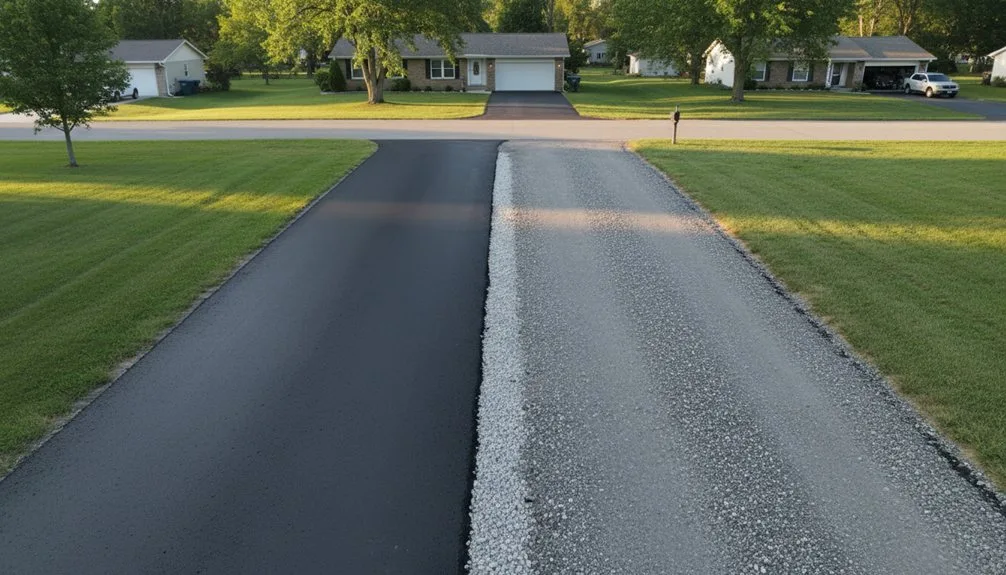
RAP saves you 20–50% upfront on driveway costs. You’re reusing crushed old asphalt with aged binder—cheaper than virgin materials. The catch? RAP lasts 8–15 years max versus 15–25+ years for new asphalt. You’ll need early maintenance: regrading, compaction, pothole patching during year one. Best for residential driveways and rural roads with light traffic. Skip it if you want pristine appearance or maximum durability. Bottom line: RAP works if you’re budget-conscious and willing to maintain it—stick around for what separates smart choices from costly mistakes.
Key Takeaways
- RAP costs 20–50% less than virgin asphalt while delivering comparable durability when properly blended and installed.
- RAP driveways last 8–15 years versus 15–25+ years for new asphalt, requiring more early maintenance.
- RAP reuses existing materials, reducing disposal costs and material expenses through asphalt pavement recycling.
- Best for budget-conscious homeowners with light-to-moderate traffic; avoid RAP for heavy commercial use or pristine appearance needs.
- Success depends on contractor quality, proper compaction, base preparation, and willingness to perform annual regrading during first 3 years.
What Is RAP (and Why Should You Care)?
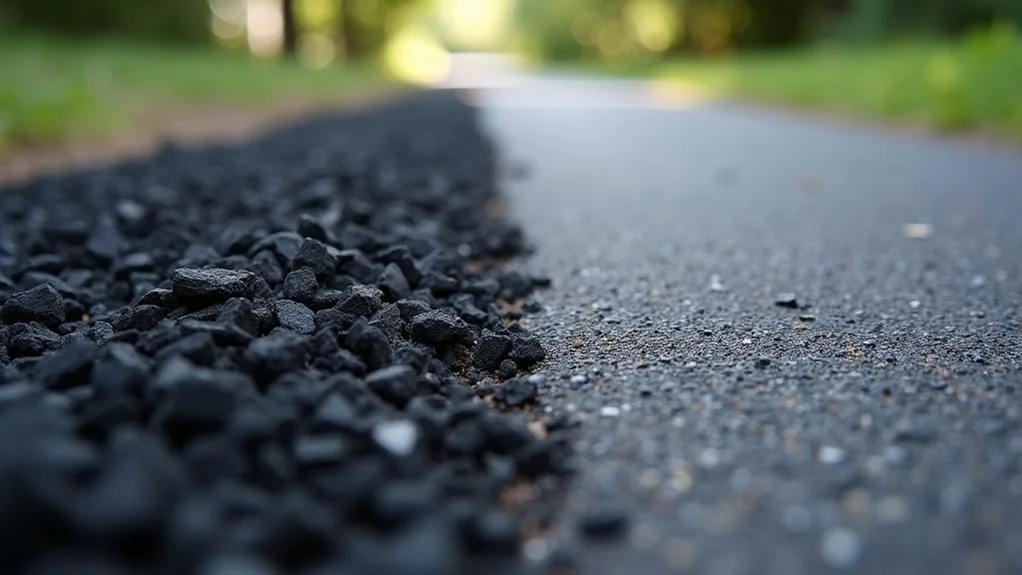
When your old asphalt driveway gets torn up, here’s what happens next: that material doesn’t just disappear.
Instead, contractors crush and screen it into reclaimed asphalt pavement (RAP). This recycled asphalt contains both aggregate stones and aged asphalt binder—the sticky stuff holding everything together.
Why this matters to you:
You’re looking at serious cost savings. RAP typically cuts driveway base expenses by 20–50% compared to virgin aggregates and new asphalt binder.
The aged binder actually *improves* things. It promotes bonding and stiffness, enhances durability and performance.
You get better cracking resistance and less rutting.
Here’s the catch: Processing quality makes all the difference. Poor crushing and screening cause problems.
When blended into hot-mix asphalt properly, RAP delivers genuine value. Your driveway gets stronger without emptying your wallet.
Our Central PA crews use advanced paving technology and best practices to ensure RAP is processed and applied correctly.
RAP vs. New Asphalt: Which Lasts Longer?
new asphalt wins the longevity battle.
New hot-mix asphalt lasts 15–25+ years.
Recycled asphalt driveways? You’re looking at 8–15 years maximum. That’s a significant difference!
Why the gap exists:
Virgin asphalt contains fresh bitumen and uniform aggregates.
This creates fewer air voids and stronger initial strength.
RAP, by contrast, starts with recycled materials that need time settling in.
The durability and maintenance reality:
Recycled asphalt driveways demand more attention early on.
You’ll handle regrading, compaction, and spot repairs during year one through three.
New asphalt? It’s more stable immediately.
Here’s the smart move:
Consider blended RAP mixes instead.
Mixing 10–30% recycled content into new hot-mix asphalt approaches virgin durability while cutting costs.
Your contractor quality, base preparation, and climate conditions dramatically impact driveway lifespan too.
Nathan’s Paving is fully insured and offers free quotes to help you evaluate options, including blended RAP mixes that balance cost and durability.
Cost Savings: What You’ll Actually Save With Recycled Asphalt
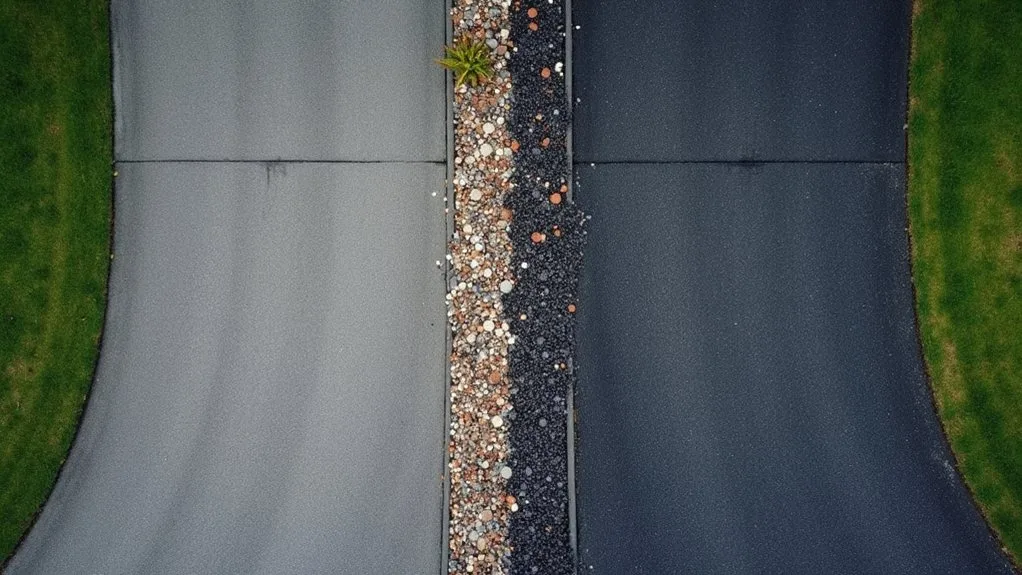
your wallet.
Upfront Savings That Hit Different
You’ll spend 20–50% less on recycled asphalt versus virgin material. That’s huge!
RAP reuses existing aggregate and binder. No expensive new production needed.
Hidden Money-Savers
Blending RAP into fresh mixes? *Chef’s kiss.*
You capture major cost benefits while enhancing durability. Transportation and disposal costs drop dramatically since old pavement skips the landfill.
On-site processing? Even better—hauling fees vanish.
The Real Advantage
Oil-price spikes won’t wreck your budget.
Your recycled asphalt driveway uses aged binder. Costs stay stable while virgin asphalt prices swing wildly.
Factor in Maintenance
Yes, life-cycle costs matter!
Your recycled asphalt pavement might need occasional regrading in years 1–3. Budget modest upkeep. Blending RAP? Often delivers the *lowest* whole-life cost overall.
Our team brings over a decade of experience and uses top-grade materials to ensure durable, long-lasting results.
Is RAP Really Better for the Environment?
Because RAP reuses existing pavement material, it reduces the need for new aggregate mining and can lower material costs compared to virgin asphalt production.
| Environmental Benefit | Impact | Your Role |
|---|---|---|
| Material reuse rate | Reduced markedly | Choose RAP |
| Cost reduction potential | Old pavement stays out | Support recycling |
| New material needed | Decreases substantially | Lower carbon footprint |
The Real Story
Recycled asphalt conserves natural resources you’d otherwise extract. You’re diverts tons from landfills yearly. Plus, you reduce transportation and disposal costs simultaneously.
Performance Matters
Here’s the truth: properly processed RAP matches virgin asphalt durability. Your pavement lifecycle remains strong. Environmental benefits persist when maintenance stays consistent.
Bottom Line
The material costs drop noticeably. You’re making a practical choice for your driveway and your budget. A trustworthy local provider can ensure proper installation and long-term performance by following industry best practices.
Where Recycled Asphalt Works Best
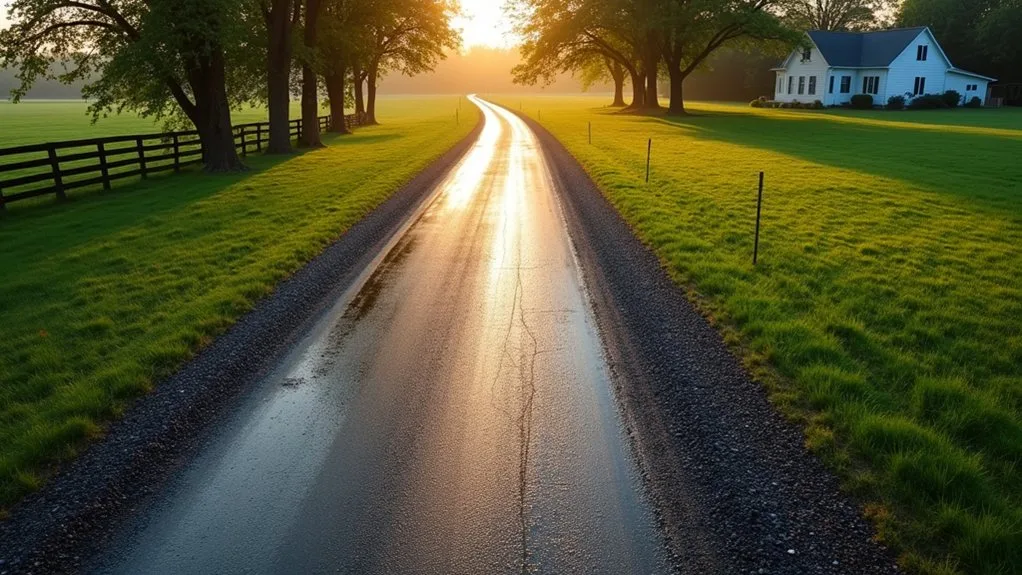
RAP shines brightest in specific situations where it delivers real value.
Your residential driveway? Perfect RAP territory! You’ll save 20–50% compared to hot-mix asphalt. The rustic look works great for private homes.
Long rural driveways and farm roads are RAP champions. Here’s why: excellent drainage prevents pooling and water damage. Your property stays protected year-round.
Commercial parking lots benefit too—especially low- to moderate-traffic areas. Properly compacted RAP creates a strong base layer. It resists cracking and rutting impressively.
Speed matters? Recycled asphalt hardens fast with traffic and heat. You’ll use your driveway sooner than with new pavement.
The catch: RAP needs good drainage control and routine maintenance like regrading and compaction. Skip maintenance? Your investment suffers. High-traffic zones or fancy appearances? Stick with virgin asphalt instead.
Our team’s experience with seal coating and routine maintenance helps extend RAP lifespan.
Keeping RAP Driveways in Shape: Maintenance Checklist
Maintaining your RAP driveway isn’t complicated—but it won’t maintain itself!
First 12 Months: Critical Compaction****
Roll or compact your recycled asphalt pavement (RAP) surface twice during warm, dry days. This locks particles together and reduces loose material fast.
Ongoing Annual Tasks
- Regrade and add fresh RAP to low spots
- Fill ruts after freeze-thaw cycles
- Prevent water pooling (it accelerates deterioration!)
- Install compacted borders for edge stabilization
- Clear vegetation monthly
Quarterly Inspections Matter
Spot potholes early. Patch immediately with screened RAP mix to prevent water infiltration and bigger failures.
After 6–12 Months
Consider applying a tack coat for dust reduction and improved cohesion. Your maintenance checklist guarantees your investment stays solid for years! Regular maintenance also helps extend driveway lifespan and prevent costly repairs.
RAP’s Drawbacks and When to Avoid It
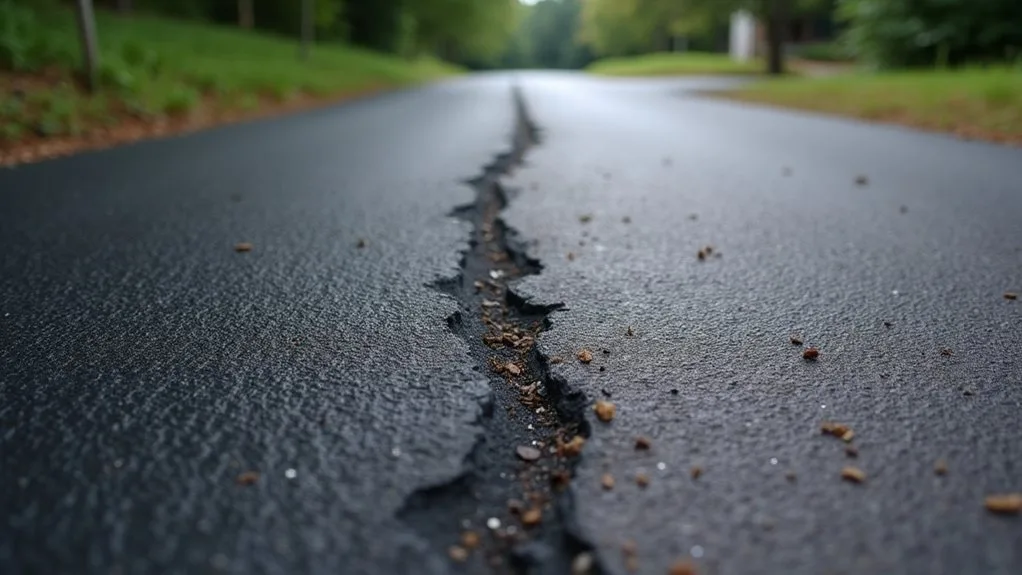
While RAP saves you money upfront, it’s not the right choice for every driveway.
The Appearance Problem
Recycled asphalt lacks that sleek, deep-black finish. You’ll see a gravelly, dusty surface instead.
If curb appeal matters to you, RAP disappoints fast.
Porosity Creates Headaches
RAP’s loose structure means trouble. High porosity causes material to shift during your first 12–18 months.
You’ll need constant regrading and compaction. That’s extra maintenance expenses!
When to Skip RAP Entirely
✗ Heavy traffic zones – Virgin asphalt crushes RAP here
✗ Poor drainage areas – Edge degradation happens quickly
✗ Steep slopes – Erosion becomes your nightmare
✗ Front-facing driveways – Aesthetics suffer badly
Sealcoating Struggles
Reclaimed asphalt pavement won’t accept sealcoating reliably. Waterproofing fails.
Long-term protection? Forget it.
Choose new asphalt when durability matters most. Top-grade materials are a better choice when longevity and performance are priorities.
Is RAP Right for Your Driveway?
- You’re budget-conscious and need major savings
- Drainage problems plague your current driveway
- You want to reduce material costs and support local recycling
- You’ll perform periodic regrading willingly
- Your driveway handles light-to-moderate traffic
Skip RAP if:
- Heavy commercial vehicles will use it regularly
- You demand a pristine, deep-black appearance
- You hate maintenance responsibilities
The bottom line? Reclaimed asphalt pavement delivers excellent cost-effective alternative benefits and reduced landfill waste.
Yes, longevity and maintenance require attention during those first 6–12 months.
But budget-conscious homeowners gain serious drainage benefits and sustainability wins.
Your driveway project succeeds when expectations match reality!
Local experts often recommend thorough surface preparation and occasional sealcoating for the best results, including proper ground preparation to ensure longevity.
Choosing a Contractor Who Specializes in RAP
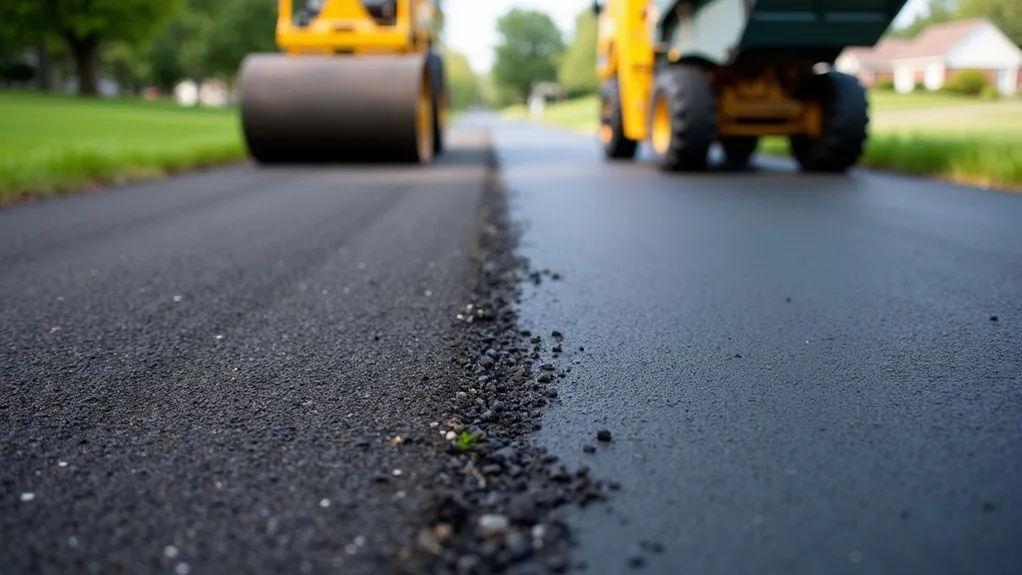
You can’t just hand your driveway over to any asphalt crew. Finding a contractor with proven reclaimed asphalt pavement (RAP) experience matters tremendously. You’ll want someone operating in-house crushing equipment—this control guarantees quality and consistent gradation every single time.
| What to Verify | Why It Matters | Red Flags |
|---|---|---|
| Local references (3+) | Proves track record | Vague answers or none |
| RAP content percentage | Determines performance | Unspecified source |
| Compaction specifications | Guarantees durability | Skipped step |
| Written workmanship warranty | Protects your investment | Verbal promises only |
Request photos of completed projects spanning 2–5+ years. Ask detailed questions about base preparation and installation plans. Confirm proper maintenance recommendations. Verify licensing, insurance, and that they specify whether they’re using clean millings or mixed demolition material. This contractor becomes your driveway’s success partner! Nathan’s Paving & Seal Coating brings over a decade of local experience and serves Central PA communities, giving you access to trusted local expertise for your project.
Frequently Asked Questions
Is a Recycled Asphalt Driveway Worth It?
Bottom line: Choose RAP for budget projects. Pick new asphalt for premium durability.
What Are the Disadvantages of Recycled Asphalt?
- Limited aesthetics—it’ll never match new asphalt’s sleek black finish
- Compaction challenges—settling happens fast; you need regrading within months
- Edge erosion—borders crumble under vehicle stress
- Drainage issues—porosity creates pooling problems
- Soft spots—binder variability causes unpredictable weak zones
- Temperature sensitivity—summer heat softens; winter cracks it
- Maintenance frequency—you’re repairing constantly, not relaxing
Bottom line? RAP demands serious upkeep commitment.
How Long Will a Recycled Asphalt Driveway Last?
Pro move: Combat binder aging and pothole resistance through frequent sealant applications. Solid investment!
Can I Use Recycled Asphalt for a Driveway?
It’s totally doable!
Conclusion
You’ve got the roadmap now. RAP isn’t a magic bullet. It’s a smart financial move when conditions align. You’ll save money and help the planet. But you’ll need the right contractor. You’ll need proper maintenance. Think of RAP like a refurbished phone—excellent value if you know what you’re getting. Choose wisely and you’ll drive on savings for years.