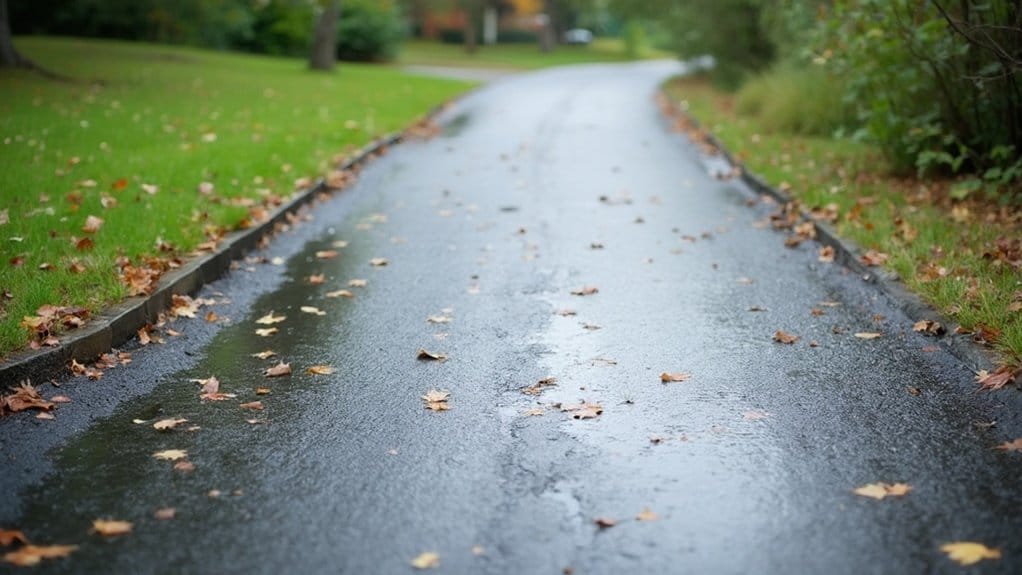
Protect your pavement from spring showers with smart preventive action! Start by sweeping away winter debris and checking for new cracks that need sealing. Install proper drainage solutions like catch basins and French drains to manage water flow effectively. You’ll want to apply surface sealant every 2-3 years when temperatures exceed 50°F. Don’t forget to maintain a 2% slope away from structures. These proven strategies will keep your pavement strong. There’s even more you can uncover about maximizing its lifespan.
Key Takeaways
- Install proper drainage systems with catch basins and French drains to prevent water accumulation during spring rains.
- Apply penetrating sealer and surface sealants before spring to create an effective moisture barrier against rainfall.
- Maintain a 2% slope away from structures to ensure water naturally flows away from the pavement surface.
- Fill and seal existing cracks immediately to stop water infiltration that could lead to further pavement damage.
- Remove winter debris and clear drainage pathways to prevent water blockage and ensure proper flow during spring showers.
Understanding Spring’s Impact on Pavement Durability

Spring brings serious challenges to your pavement’s long-term health and durability. Your pavement materials face constant stress from unpredictable weather patterns during this volatile season.
You’ll notice significant changes as temperatures fluctuate between freezing nights and warm days.
Watch out for these major spring impacts:
- Freeze-thaw cycles that create cracks
- Heavy rainfall penetrating vulnerable spots
- Rising groundwater pushing against surfaces
- Temperature swings expanding and contracting materials
Your pavement’s strength will be tested! During spring, water becomes your biggest enemy. It seeps into tiny spaces and wreaks havoc on your investment.
Different pavement materials react uniquely to these challenges. Asphalt becomes more flexible while concrete may develop stress points. Regular maintenance and asphalt patching can significantly extend the lifespan of your pavement.
Don’t wait for problems to appear! Understanding these seasonal effects helps you take proactive steps to protect your pavement.
Essential Drainage Solutions for Wet Weather
When heavy rains strike, proper drainage becomes your pavement’s best defense!
You’ll need strategic drainage systems to protect your investment and prevent costly water damage.
Key Drainage Solutions:
- Install catch basins at low points to collect excess water
- Create a 2% slope away from buildings and structures
- Add French drains along pavement edges
- Use permeable pavers in high-water areas
Your drainage systems should direct water flow away from vulnerable spots.
Think of it like giving your pavement an umbrella and rain boots!
Proper grading guarantees water moves efficiently toward designated collection points.
Watch For These Signs:
- Standing water after rain
- Eroded pavement edges
- Cracks near drainage areas
- Discolored concrete patches
Don’t wait for puddles to form!
Regular inspection of your drainage solutions will keep your pavement strong and lasting, as regular maintenance services can prevent costly future repairs.
Preventive Sealing and Coating Techniques
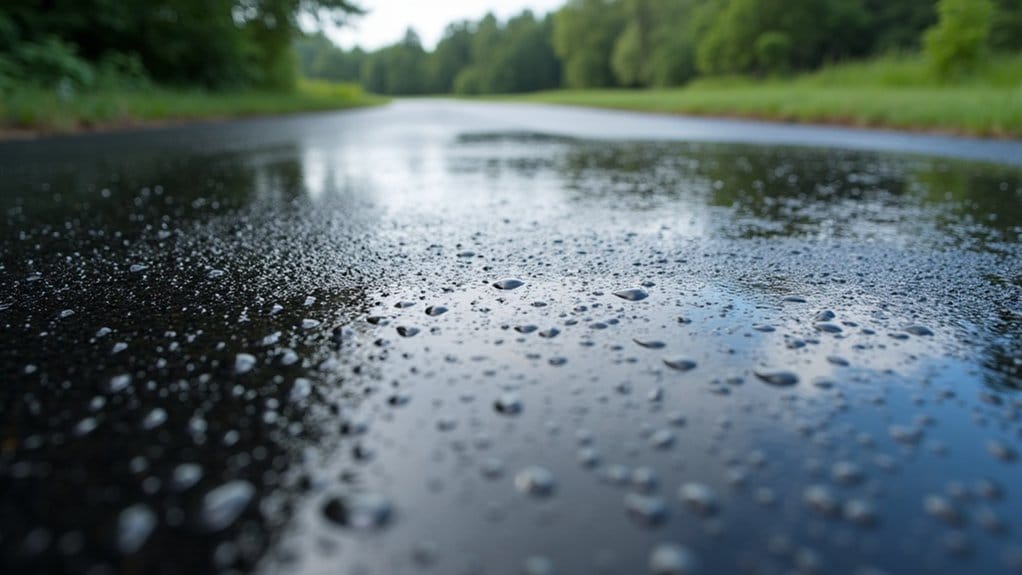
Three essential sealing techniques can shield your pavement from damage!
First up is penetrating sealer! This powerful coating material soaks deep into your pavement’s surface. You’ll love how it blocks moisture while letting your pavement breathe.
Next comes surface sealant. Your pavement’s protective shield! This durable coating creates a water-resistant barrier that stops rain and snow from seeping in.
Apply it every 2-3 years for best results.
Finally, don’t skip the crack sealant! It’s your first line of defense against water invasion. Fill those cracks before they become bigger problems.
You’ll prevent costly repairs down the road.
Pro tip: Schedule your pavement sealing during dry weather. The temperature should be at least 50°F for ideal results.
Additionally, regular sealcoating can help extend asphalt life compared to unsealed surfaces.
Your investment in preventive sealing will pay off with years of protected pavement!
Regular Maintenance Practices for Spring Season
Your maintenance routine kicks into high gear as winter thaws into spring.
Now’s the perfect time to inspect your pavement materials for any damage caused by winter’s harsh conditions.
Start with these essential tasks:
- Sweep away winter debris and salt residue
- Check for new cracks and potholes
- Clear drainage systems of blockages
- Document any surface deterioration
Schedule your seasonal inspections early!
You’ll want to address issues before spring rains can make them worse.
Look closely at:
- Edge crumbling
- Surface texture changes
- Water pooling areas
- Joint separations
Pro Tip: Take photos of problem areas to track changes over time.
Don’t forget to test your drainage by running water over suspicious spots.
Your quick action now prevents costly repairs later! Additionally, regular maintenance extends driveway lifespan and helps avoid expensive fixes down the road.
Remember: Spring maintenance isn’t just about repairs. It’s about protecting your investment!
Identifying and Addressing Early Signs of Water Damage
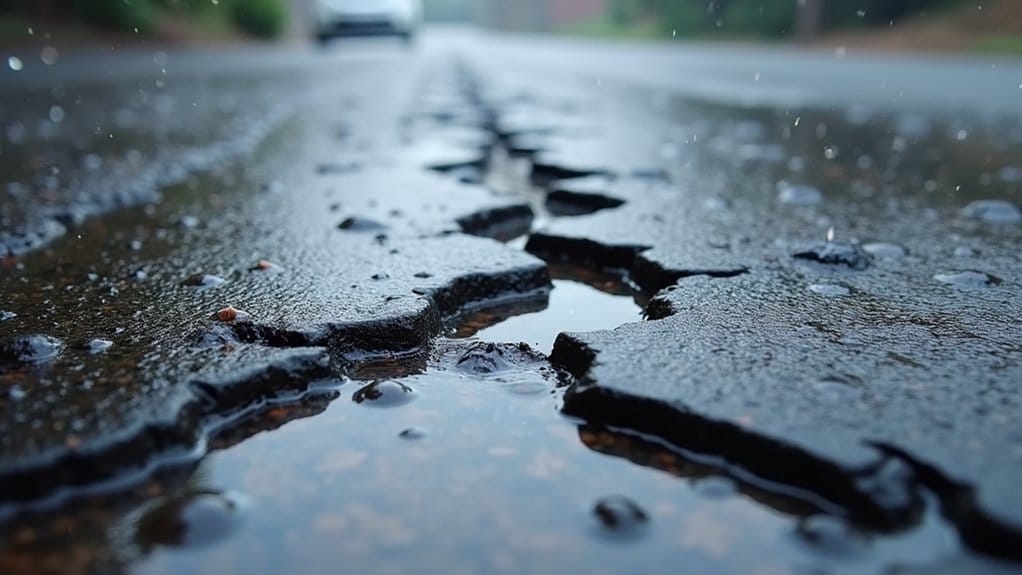
Speaking of spring inspections, water damage is the sneaky destroyer of pavement.
You’ll need to act fast when you spot early warning signs. Watch for water pooling after rain. It’s a major red flag! Surface cracks starting to form? Don’t wait to address them.
| Warning Sign | Impact Level | Required Action |
|---|---|---|
| Water pooling | High | Install drainage |
| Surface cracks | Medium | Fill and seal |
| Discoloration | Low | Monitor closely |
| Edge erosion | High | Add border support |
| Sunken areas | Critical | Professional repair |
Your quick response can save thousands in repairs! Grab your smartphone and document these issues with photos. Create a damage map of your pavement. This visual record helps track problem areas and their progression over time. Remember: Early detection equals easier fixes! Additionally, addressing these issues promptly can help protect your investment in commercial parking lot sealing.
Conclusion
Don’t let spring showers turn your pavement into Swiss cheese! You’ve now got the tools to protect your investment like a medieval knight guards their castle. Start with proper drainage and regular maintenance checks. Apply sealants before the rain hits. Watch for early warning signs of water damage. By following these pavement protection strategies, you’ll keep your surface strong and smooth for years to come. Take action today!