You’ve got four seasons of parking lot work ahead—don’t skip it. Weekly: sweep debris and inspect for cracks wider than a pencil. Spring: document winter damage and seal active cracks. Summer: apply sealcoat every 2–3 years when temps exceed 50°F. Fall: clear drains before freeze-thaw hits. Winter: plow carefully, use liquid anti-icing, and avoid salt overapplication. Handle inspections and crack sealing yourself. Call pros for structural damage and alligator cracking. Preventative maintenance extends pavement life by several years and saves thousands in emergency repairs. Stick with this plan and you’ll uncover exactly which tasks protect your bottom line most.
Key Takeaways
- Spring inspections – Walk entire lot after snowmelt, photograph cracks wider than 1/8 inch, and document winter damage for repairs.
- Drainage maintenance – Clear catch basins and storm drains in fall; keep leaf piles and snow away from inlets.
- Crack and pothole repairs – Seal active cracks annually; use hot-mix patching for potholes; call professionals for structural damage.
- Sealcoating schedule – Apply sealcoat every 2–3 years after crack sealing to slow oxidation and extend pavement life.
- Winter snow and ice control – Plow before deicing with rubber-edged blades; use liquid anti-icing before storms to reduce salt application.
Weekly Parking Lot Maintenance Tasks to Prevent Damage
Spot Problem Areas
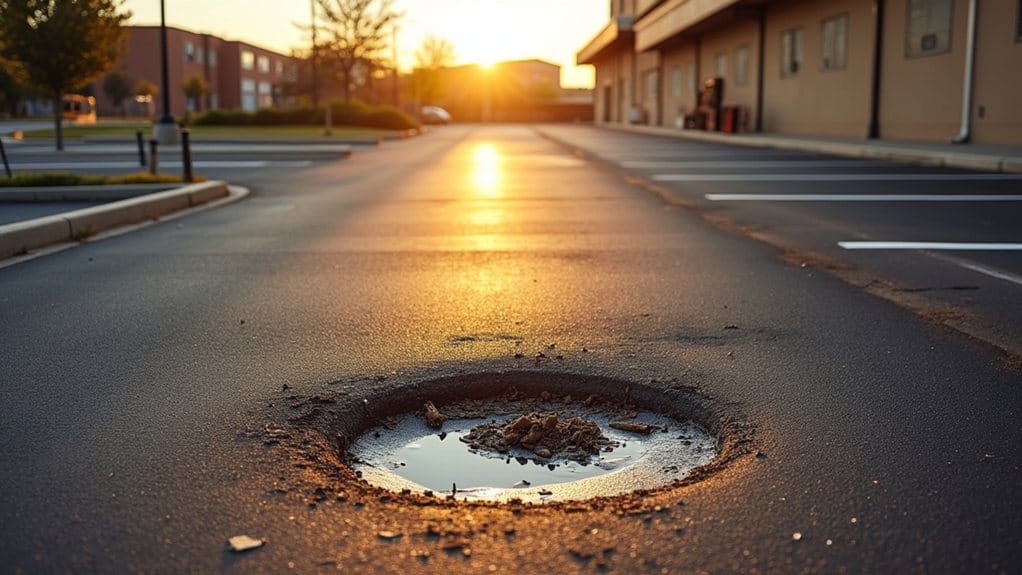
Look for cracks wider than a pencil. Photograph potholes and pooled water. Document everything you find immediately.
Remove Debris & Sweep
Clear surfaces weekly. Sand and grit accelerate raveling fast. Keep drains and catch basins clear. Clogged drains cause major headaches.
Check Drainage
After rain or thaw, mark pooling spots. Water sitting a day later? That’s trouble. Flag these areas for grading or repairs.
Kill Weed Growth
Weeds in cracks? Pull them weekly or spray targeted herbicide. Roots widen cracks and undermine pavement.
Verify Line Striping
Check ADA markings and line visibility. Faded lines lose contrast fast. Schedule repainting when needed for compliance and safety.
Nathan’s Paving & Sealcoating can provide a free quote to help prioritize repairs.
Is Your Lot in Crisis? How to Spot Repairs You Can’t Ignore
Weekly sweeping and drain checks won’t save you if your lot’s already falling apart. Some damage demands immediate action—no waiting allowed!
| Warning Sign | What It Means | Action Required | Cost Impact |
|---|---|---|---|
| Alligator cracking | Base failure spreading | Mill-and-overlay needed | Very expensive |
| Potholes in drive lanes | Safety liability risk | Professional hot-mix patching | Moderate-to-high |
| Standing water after rain | Drainage failure | Fix drainage system | High if delayed |
| Cracks wider than pencil | Water penetrating base | Crack filling this season | Low if quick |
Don’t ignore these red flags. Alligator cracking across multiple bays signals catastrophic base failure. Potholes in entries create liability nightmares. Standing water accelerates deterioration fast. Wide cracks allow freeze-thaw damage. Address crack filling immediately and schedule sealcoating every 2-3 years to prevent escalation. Ignoring these issues converts affordable fixes into expensive reconstruction projects. We completed a full repaving and line striping upgrade for a local NAPA Auto Parts in Hummelstown to restore durability and curb appeal.
Spring Parking Lot Inspection: Assess Winter Damage and Seal Cracks
As soon as the snow melts and temps climb above freezing, you’ve got a narrow window to catch winter’s damage before it gets worse.
Walk Your Entire Lot
Document every crack wider than a pencil (1/8 inch). Photograph potholes and alligator cracking. This spring parking lot inspection identifies repairs you can’t delay.
Check Drainage First
Clear catch basins and storm drains of winter debris. Watch for pooling lasting 24+ hours—that’s a red flag for drainage problems needing immediate fixes.
Seal Active Cracks Now
Hot-mix patching is generally more durable than temporary cold patches. Seal active cracks before freeze-thaw cycles return and multiply damage.
Don’t Forget Markings
Inspect line striping and ADA markings. Plan repainting while conditions cooperate this spring.
Consider scheduling a professional inspection to get a free quote and prioritize repairs based on severity.
Summer: Stop UV Damage Before Peak Heat Season
UV damage doesn’t wait—it’ll wreck your asphalt all summer long.
Act Fast This Season
Your asphalt parking lot faces serious heat stress now. UV rays break down binder materials. Heat accelerates oxidation. You’ll see cracking and fading fast.
Sealcoating Is Your Shield
Apply sealcoating in late spring or early summer. Do this every 2–3 years. It protects against UV oxidation and heat-related breakdown before peak temperatures hit.
Get the Timing Right
Schedule sealcoating when temps stay above 50°F. Make certain no rain for 24–48 hours after application. This helps ensure proper cure and adhesion.
Prep Your Surface
Clean thoroughly. Remove debris and oil stains. Complete crack sealing first. Your sealcoat bonds better to dry surfaces—and lasts longer!
Protect Your Investment
Keep traffic off for 24–72 hours. Plan work during low-use periods. Restripe with UV-resistant paint afterward. Your lot stays protected and visible all summer! Consider contacting a local, experienced contractor for a free consultation to ensure proper materials and application.
Fall: Clear Drains and Prepare for Winter Stress
Before winter arrives, your parking lot’s drainage system needs serious attention.
Why Fall Drain Work Matters
Clogged drains cause frozen puddles. Frozen puddles become liability hazards. You’ve got this!
Your Action Plan
Clear catch basins and storm drains early. Remove leaves and sediment thoroughly. Don’t skip gutter grates—they trap debris fast.
After Fall Storms
Inspect low spots immediately. Standing water lasting one day signals drainage problems. Fix these NOW before freeze–thaw cycles arrive.
Pre-Winter Priorities
Pressure wash near drain inlets. Remove salt buildup and organic material. Mark depressed areas with photos. Document separated joints and clogged catch basins.
Smart Storage
Keep leaf piles downhill. Position snow stockpiles away from drains. This prevents sediment contamination during spring melts.
Your winter won’t hurt!
Our recent work on the Commercial Plaza parking lot in Mechanicsburg shows that paying attention to drains and markings improves longevity and customer satisfaction, so schedule a professional inspection with a local business to protect your investment.
Winter: Prevent Salt Damage and Plowing Mistakes
You’re constantly fighting salt damage during winter months. Here’s how to win that battle!
Plow Smart, First
Plow before you apply anything. Lift blades slightly to avoid gouging asphalt. Use rubber-edged blades and mark curbs and drains carefully.
This prevents surface damage and keeps drainage flowing.
Apply Deicers Strategically
Use liquid anti-icing agents before storms—just one-quarter the typical salt amount. Train crews with calibrated equipment to apply deicers precisely.
Below 15°F? Switch to non-chloride alternatives. Rock-salt works best above 15°F only.
Protect Your Water
Store salt uphill and under cover. Never pile snow over salt or near drains.
Smart winter maintenance saves money and protects your property long-term. We also recommend routine maintenance and timely asphalt repairs to extend pavement life and prevent costly replacements, including sealcoating to protect surfaces.
Sealcoating Every 2–3 Years vs. Full Resurfacing: Which Saves Money?
When your asphalt starts showing wear, you’ve got two choices.
The Smart Move: Preventive Maintenance
Sealcoating every 2–3 years protects your investment dramatically. Here’s why:
- Sealcoating costs only 5–15% of full resurfacing—that’s serious savings!
- Crack sealing prevents water damage before it reaches the base layer
- Freeze–thaw cycles destroy neglected lots faster—especially in Central Pennsylvania climates
The Expensive Reality
Full resurfacing runs 4–6 times higher per square foot. You’ll need it when surface damage exceeds 25–30% of your lot.
Your Winning Strategy
Schedule sealcoating now. Add prompt pothole patching and crack sealing.
This pushes resurfacing several years away. Your wallet wins. Your lot wins. Everyone’s happy!
Nathan’s Paving & Seal Coating’s top-grade materials and experienced crew help ensure durable, long-lasting results.
What You Can Handle Yourself: and When to Call a Pro
Not every parking lot problem demands a contractor’s truck. You’ve got serious power to protect your asphalt yourself—and knowing where that power ends is equally essential.
| Task | You Can Handle | Call a Pro |
|---|---|---|
| Weekly inspections | Walk lot, photograph cracks | Assess structural damage |
| Crack sealing | Active cracks ≥1/8″ | Alligator cracking patterns |
| Pothole repairs | Mark location clearly | Hot-mix patching work |
| Snow and ice | Apply liquid anti-icing | Professional plowing/removal |
Your DIY Parking Lot Maintenance Checklist:
- Walk weekly. Spot trouble early.
- Sweep monthly. Pull weeds aggressively.
- Seal small cracks yourself.
- Document everything with photos.
When You Must Call a Pro:
Base failures demand immediate contractor attention. Standing water won’t vanish alone. Potholes in travel lanes? Professional hot-mix patching. Over 25% deterioration signals major resurfacing needed. Sealcoating every 2–3 years requires licensed crews.
Regular maintenance, such as parking lot sealing, can extend pavement life and prevent costly repairs.
Your power stops at know-how and equipment. Respect that boundary. Your asphalt’s future depends on it.
Why Professional Contractors Extend Your Lot’s Lifespan
Professional contractors don’t just fix problems—they stop them before they spiral. You’re investing in prevention, not just repairs.
Here’s what happens when you partner with pros:
- Sealcoating every 2–3 years slows binder oxidation and adds years to your pavement’s life
- Full-depth patching fixes potholes structurally, preventing those recurring failures cold patches create
- Annual crack sealing and drainage clearing catch issues early before they become expensive disasters
You’ll get documented condition reports with photos and prioritized repair plans. That’s data-driven maintenance that actually works.
Consistent preventive maintenance defers repaving for several years. That’s real money saved. That’s smart business.
Our teams service Central Pennsylvania, bringing experience and responsiveness to every job.
Frequently Asked Questions
How Can Proper Drainage Maintenance Prevent Costly Foundation and Asphalt Damage Long-Term?
You’ve got to manage water smartly. Here’s why:
The Drainage Game-changer:
Poor drainage destroys everything underneath. Water pools. Asphalt cracks. Foundations fail.
Your Protection Plan:
- Slope grading directs water away from structures
- Catch basins trap debris before clogs happen
- French drains redirect underground water safely
- Permeable paving lets water filter naturally
- Control surface runoff strategically
You prevent foundation settling. You extend asphalt life by years. Smart drainage beats expensive repairs every single time!
Conclusion
Think of your lot like a shield. You’ve got to maintain it constantly or it crumbles. Weekly tasks? They’re your armor against damage. Seasonal checks? Your early warning system. Professional contractors? They’re your backup squad. You’re not just protecting asphalt. You’re protecting your reputation and your wallet. Stay on top of it now. Your future self will thank you hard.