
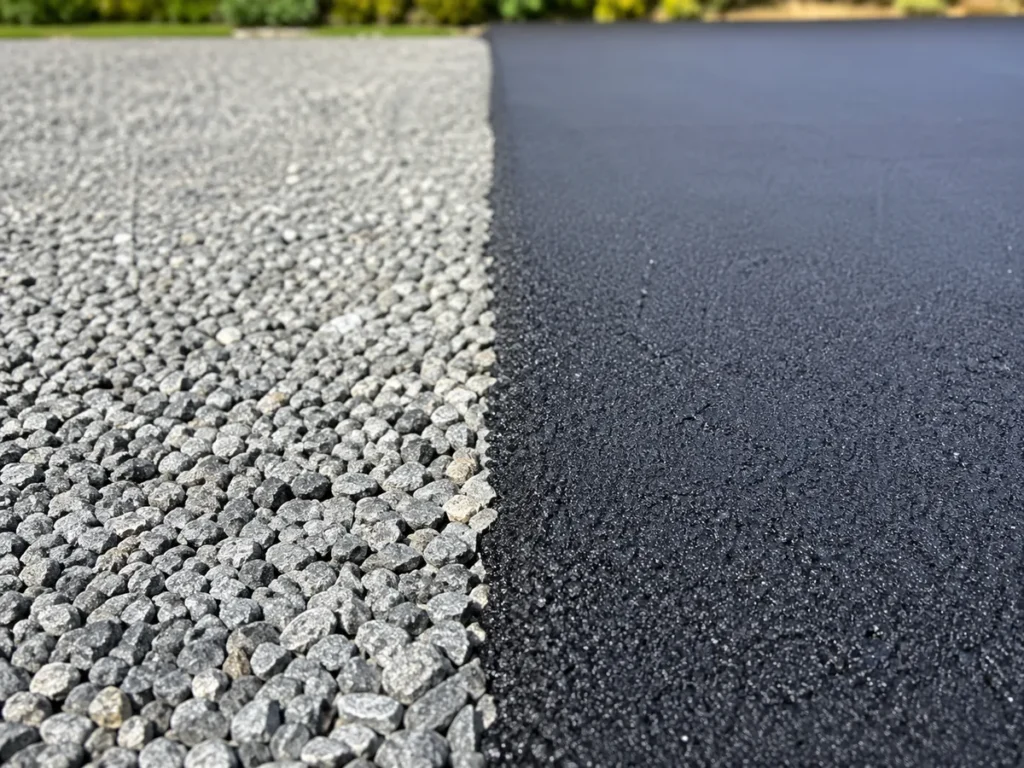
Gravel vs. Asphalt: Which Wins? Gravel costs way less upfront: $1,200–$1,800 versus asphalt’s $2,300–$10,000. But here’s the catch: you’ll replenish gravel every 1–3 years (~$100–$300 annually). Asphalt can last many years with proper sealcoating. Cold climates? Gravel handles freeze-thaw better. Heavy traffic? Asphalt dominates. Your climate, budget, and maintenance willingness determine the real winner, and the details matter more than you’d think.
Key Takeaways
- Gravel costs $1–$3/sq ft upfront; asphalt costs $7–$13/sq ft but requires less frequent maintenance labor.
- Gravel needs replenishment every 1–3 years (~$100–$300 annually); asphalt requires sealcoating every 2–5 years and resurfacing around year 10.
- Asphalt can last many years with proper care; gravel remains functional for decades with regular regrading and replenishment.
- Gravel suits cold climates and poor drainage; asphalt better handles heavy traffic, snow plows, and requires planned drainage systems.
- Asphalt offers sleek, modern aesthetics when maintained; gravel provides diverse color options but requires regular upkeep to prevent unevenness.
What’s the Real Cost: Upfront vs. Long-Term?
A gravel driveway costs just $1–$3 per square foot ($1,200–$1,800 total). Your asphalt driveway? That’s $7–$13 per square foot ($2,300–$10,000 total). Gravel wins immediately.
But Wait. There’s More
That budget-friendly option demands constant attention. You’ll need replenishment every 1–3 years ($0.25–$1 per sq ft annually). Asphalt requires sealing every 2–5 years and periodic resurfacing.
The Real Scenario
Gravel’s lower upfront cost gets eaten by frequent maintenance costs. Asphalt costs more initially but needs less routine work.
Your lifespan differs too: gravel lasts decades with care; asphalt can last many years.
The Winner?
Calculate your total long-term cost before deciding. Traffic load and climate dramatically impact your budget. Nathan’s Paving recommends getting a free quote to evaluate which option best fits your property and usage.
How Long Do They Actually Last: and What’s Maintenance Really Cost?
You’ve seen the upfront numbers. Now let’s talk reality. How long your driveway actually lasts matters.
Gravel Driveway Lifespan & Costs
Your gravel driveway stays functional for decades with smart maintenance.
You’ll add crushed stone every 1–3 years and handle regrading regularly.
Annual maintenance costs you roughly $100–$300 yearly or $0.25–$1 per square foot.
Major repairs are incredibly affordable. Bulk gravel runs $10–$60 per ton.
Asphalt Driveway Lifespan & Costs
Asphalt can last many years with proper care.
You’ll need sealcoating every 2–5 years and resurfacing around year 10.
Maintenance costs vary but hit harder upfront.
Full replacement or resurfacing? That’s $7–$13 per square foot.
Freeze–thaw cycles crack asphalt quickly without timely sealing.
The Real Winner
- Gravel: lower maintenance costs, flexible durability
- Asphalt: longer initial lifespan, higher replacement bills
- Gravel: suits cold climates excellently
- Asphalt: needs serious climate protection
Getting a free, tailored quote for your driveway project is easy. Contact Nathan’s Paving for a free quote today.
Making the Call: Climate, Usage, and Your Driveway Needs
Cold Climates? Choose Gravel.
Freeze–thaw cycles crack asphalt persistently. Gravel flexes and handles shifting beautifully. You’ll spend less on repairs overall.
Rural, Low-Traffic Roads? Go Gravel.
Low-traffic rural driveways cost just $1–$3 per square foot installed. Maintenance? Simple regrading every 1–3 years keeps it solid for decades.
Heavy Traffic or Urban Areas? Pick Asphalt.
Asphalt driveways cost $7–$13 per square foot but handle constant use. Sealcoating every 2–5 years protects your investment. Asphalt can last many years with smart maintenance.
Poor Drainage Issues?
Gravel’s permeability wins. Asphalt pooling causes damage.
Winter Snow Removal Matters?
Asphalt stays stable under plows. Gravel shifts constantly, which gets frustrating.
Match your climate and needs to your surface. Simple as that.
Our Central PA paving team uses quality materials and proven techniques to ensure durable, long-lasting driveways.
Curb Appeal: Gravel vs. Asphalt Aesthetics
Your driveway is real estate’s first impression. Here’s what you’re working with:
- Asphalt delivers a sleek, uniform, modern appearance that screams contemporary style
- Gravel offers endless colors and textures (limestone, granite, sandstone, pea gravel) for rustic customization
- Blended gravel creates stunning contrast. Blue stone mixed with white limestone chips converts your driveway into terrain art.
- Maintenance reality hits different: asphalt needs sealcoating every 2–5 years; gravel requires grading every 1–3 years
Freshly paved asphalt? Crisp. Sleek. High-contrast. Perfect for urban homes craving that polished vibe.
But here’s the catch: gravel looks uneven without regular maintenance. Ruts appear. Stones scatter everywhere.
Your perceived curb appeal depends on what you’re willing to maintain consistently.
We recently completed a new asphalt driveway project for the Fuller household after complete removal of the old surface, emphasizing ground preparation to ensure durability and longevity.
Scenario-Based Picks: Which Material Wins for Your Situation?
Budget-Conscious Homeowners?
Gravel dominates at $1–$3 per square foot. You’ll spend $1,200–$1,500 total. Asphalt costs $7–$13 per square foot. The upfront cost difference? Massive.
Heavy Traffic or Commercial?
Asphalt wins decisively. It can last many years versus gravel‘s constant regrading needs. You’ll reseal asphalt every 2–5 years, far easier than maintaining gravel.
Rainy Climate?
Choose gravel. Its drainage excellence prevents pooling. Asphalt requires planned drainage systems.
Snowy Winters?
Asphalt crushes gravel here. Snow removal works smoothly. Gravel shifts and ruts badly.
DIY Flexibility?
Gravel offers cheaper repairs and widening. Asphalt’s sleek durability requires professional help.
Match your priorities to your situation. Your perfect driveway exists! A professional, fully licensed and insured contractor with over 20 years of experience can help you pick and install the best option for your property.
Frequently Asked Questions
How Much Does a 20 Ft Gravel Driveway Cost?
Here’s what you’re paying for:
- Gravel materials: $1,000–$3,000
- Labor & excavation: Included above
- Base compaction: Essential for durability
- Drainage planning: Prevents costly damage
- Edge restraints: Keeps gravel contained
Pro tip: Budget $250–$1,000 yearly for gravel maintenance and seasonal repair.
Add $500–$1,000 for weed control, better base prep, and lighting placement.
Your driveway width and grading slope affect final pricing too!
Which Is Cheaper, Asphalt or Gravel Driveway?
Gravel wins initially! You’ll spend $1,200–$1,800 versus asphalt’s $2,300–$10,000.
BUT here’s the catch:
Gravel needs constant gravel maintenance every 1–3 years ($0.25–$1/sq ft). Asphalt? Less frequent repairs.
Consider these factors:
- DIY feasibility: Gravel’s easier and cheaper to install yourself
- Installation timeline: Gravel’s faster; asphalt needs professionals
- Winter performance: Asphalt handles snow better long-term
- Drainage solutions: Both need proper driveway grading
Bottom line: Gravel’s cheaper initially. Asphalt wins over the long term despite higher costs.
What Are the Cons of a Gravel Driveway?
Constant Upkeep Required
- Rut formation happens fast under traffic
- Washboarding creates rough, bumpy sections
- Rock migration spreads stones everywhere
- Dust generation coats your house constantly
Weather Woes
- Poor drainage causes mud tracking indoors
- Frost heaving buckles surfaces in winter
- Weed growth invades between stones persistently
Daily Annoyances
- Noise issues from gravel crunching
- High maintenance frequency drains your wallet
You’re basically regrading every 1–3 years!
What Is the Cost of a 1500 Square Ft Driveway if Asphalt?
Like watching your savings account drain, that price tag stings. Here’s the reality.
You’ll pay $10,500–$19,500 for your complete asphalt driveway.
That breaks down roughly $7–$13 per square foot.
Your actual cost depends on:
- Regional variations (labor differs everywhere)
- Seasonal discounts (winter = cheaper!)
- Material breakdown (quality asphalt varies)
- Labor estimates (complex sites cost more)
- Permits needed (add a few hundred)
- Drainage planning (slopes matter!)
- Edge treatments (finishing details)
- Installation timeline (rush fees apply)
Conclusion
You’ve got the intel. You’re ready to choose wisely.
Gravel’s like a sprint. Quick wins upfront. Asphalt’s the marathon. You’re building something that lasts.
Your climate whispers the answer. Your budget demands respect. Your lifestyle reveals the truth.
Pick the material that matches YOUR real life. Not some neighbor’s choice. Not what looks prettiest online.
You’ve got this. Make the call that wins for you.