Most of the driveway damage we repair in spring started as something small that nobody dealt with in the fall.
This is the short list of what actually protects a driveway through a Central PA winter. None of it is complicated. It is mostly a matter of doing it before the first hard freeze rather than after.
Why Fall Prep Matters Here
Winter damage in Central PA is mostly one process repeating.
Water finds an opening in your driveway. It freezes and expands, making that opening bigger. It thaws, more water gets in, and it freezes again. Each cycle widens the gap a little more.
We get many of these cycles in a season, not just a few. That is what makes this climate hard on asphalt.
The important detail is where the water goes. Water on the surface is a nuisance. Water that reaches the base, the crushed stone layer underneath that carries the weight, is what causes real structural failure. Once the base is compromised, you are not looking at a repair anymore.
Everything below is about keeping water out of the base.
1. Walk It and Write Down What You See
Ten minutes, before it gets cold. Look for:
- Cracks, and roughly how wide they are
- Potholes or spots where the surface has broken through
- Areas that have sunk or settled
- Crumbling or soft edges
- Spots where water sits after rain
- Anything growing up through the asphalt
Take photos. Next spring you will want to know what changed over the winter.
2. Fill the Cracks
This is the highest-value item on the list. If you only do one thing, do this.
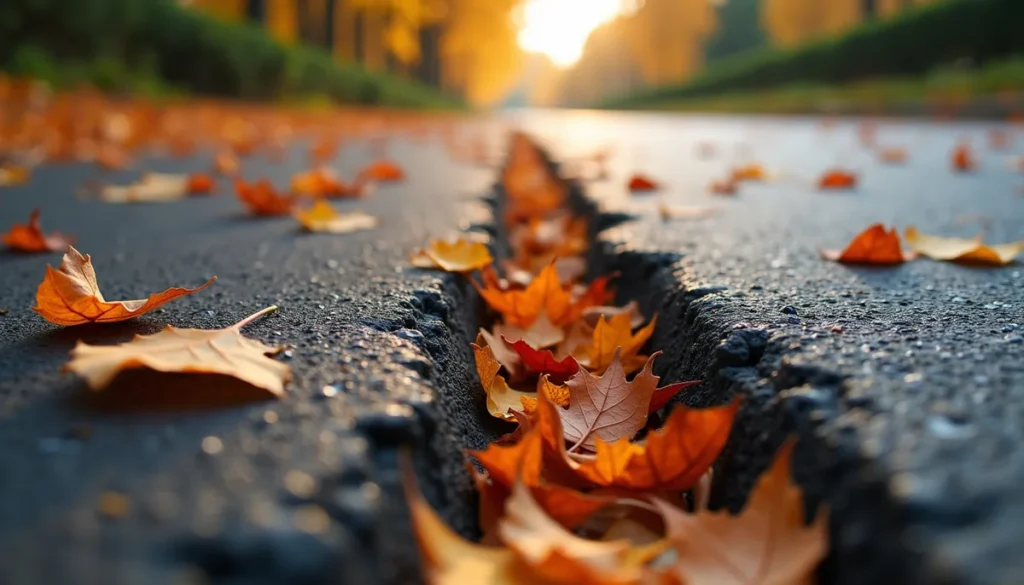
Every open crack is a direct path for water into the base. Filling them is inexpensive. Letting water into the base over a full winter is not.
A rough guide on what you are looking at:
- Hairline cracks. Low urgency, but worth sealing if you are already doing the work.
- Pencil-width or wider. Fill these. This is where water gets in.
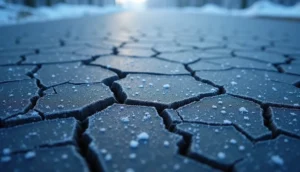
- Cracks in a pattern like alligator skin. This is not a crack-filling problem. That pattern usually means the base has already failed underneath, and filling the surface will not fix it. Get it looked at.
Crack filling can be done later in the season than paving or sealcoating, which makes it the practical choice once you are past those windows.
3. Deal With Potholes
A pothole does not stay the same size over winter. Water collects in it, freezes, and pushes the edges apart. What is fist-sized in November is considerably larger by March.
Cold patch material handles this. It is not a permanent repair, but it stops the hole from growing and keeps someone from turning an ankle. Driveway patching is normal late-season work.
4. Fix Where Water Sits
Standing water is the most underrated driveway problem in this region.
Look for puddles that are still there hours after rain. Look for water running toward your garage instead of away from it. Look at whether the edges let water off or trap it.
Some of this you can improve yourself. Clear leaves and debris out of the path water needs to take. Clean out any existing drain. Cut back sod that has grown up along the edge and is damming water on the surface.
Some of it is a grading or drainage problem that needs real work, and that is worth knowing about now rather than discovering in April. If water consistently pools in the same place, a driveway drain may be the actual fix rather than repeatedly patching the damage it causes.
5. Clear the Edges
Driveway edges fail first because they have no support on one side.
- Cut back grass and sod that has crept over the asphalt
- Pull weeds growing through cracks, roots and all
- Trim branches that will dump leaves or hold snow over the driveway
- Note any edges that are already crumbling so you do not plow into them
6. Sweep It
Simple and easy to skip. Leaves left on asphalt hold moisture against the surface all winter and stain it. Wet leaf mats also hide ice.
Sweep or blow the surface clear, and clear the edges where debris collects.
7. Plan Your Snow Removal Before It Snows
How you clear snow decides how much damage winter does.
Mark the edges. Driveway markers or stakes along both sides. A plow blade that catches a soft edge will tear a chunk out of it. This is the most common plow damage we see.
Talk to your plow service. Tell them where the edges are, where any low spots are, and to keep the blade off bare asphalt where possible.
Use a plastic shovel blade, not metal, on asphalt.
Never use a metal chisel or pick to break up ice. It gouges the surface.
8. Choose Your De-Icer Carefully
Salt is hard on asphalt. It accelerates surface deterioration, and on a driveway that already has cracks or a worn surface it makes things worse faster.
- Sand gives traction without chemical damage. On a compromised driveway it is the better choice.
- Use less salt than feels necessary. More does not melt faster past a point.
- Do not pile salt in one spot to sit. Concentrated salt does concentrated damage.
- Be extra careful on a driveway paved this year. New asphalt is more vulnerable.
9. Know What Not to Do
Do not sealcoat too late. Sealcoat needs 55°F and rising, and it must stay above 50°F for 48 hours after. A warm November afternoon is not enough. If overnight lows hit the 30s the coat can fail outright.
Do not pave in the cold. Asphalt needs 50°F and rising for both air and ground. Cold ground prevents proper compaction.
Do not ignore an alligator-cracked area. Surface fixes will not solve a failed base, and another winter will make it considerably worse.
Frequently Asked Questions
What is the single most important fall task? Filling cracks. It keeps water out of the base, and base damage is the expensive kind.
Can I fill cracks myself? Homeowner-grade crack filler works for small cracks if the crack is clean and dry first. Wider cracks, or a lot of them, are worth having done properly.
Is salt or sand better for my driveway? Sand is gentler on asphalt. Salt melts ice but accelerates surface deterioration, especially on newer or already-worn driveways.
How late can I have repair work done? Crack filling and patching can be done considerably later than paving or sealcoating. If the season for paving has closed, protective repair work usually has not.
My driveway held water all last winter. What now? That is a grading or drainage issue and it will keep causing damage until it is corrected. Worth getting assessed now so it can be fixed properly rather than patched again.
Need Help Before Winter?
Nathan’s Paving & Seal Coating has worked in Central PA for over 20 years. Late-season crack filling, patching, and drainage work are all things we handle, including asphalt repairs in Mechanicsburg.
We hold a 4.8 star rating across 55 Google reviews. Estimates are free and we offer senior citizen discounts.
Call (717) 648-5030 or email nathanpaving@gmail.com. If your driveway just needs crack work to get through winter, we will tell you that rather than sell you something bigger.