Winter doesn’t destroy asphalt—neglect does. You’ve got to act now. Inspect cracks in early fall. Seal hairline fractures before freezing hits. Clear drains weekly so meltwater doesn’t infiltrate your base.
Apply sealcoat when temps hit 50–60°F. Avoid heavy loads on frozen pavement; use load mats instead. Remove snow within 24 hours with plastic tools, not metal. Skip rock salt; use calcium magnesium acetate. One year of prevention saves thousands in repairs. Keep going—there’s a complete strategy ahead.
Key Takeaways
- Avoid heavy loads during winter when frozen asphalt becomes brittle; schedule trucks for fall or late spring instead.
- Use plastic shovels and raise plow blades slightly to prevent scratching, chipping, and edge gouging during snow removal.
- Clear catch basins and drains weekly to stop water infiltration that causes freeze-thaw microfractures and sub-base damage.
- Apply sealcoat every 2–4 years before winter to block moisture and UV, extending pavement life by 2–5 years.
- Fill cracks with appropriate sealant in fall before freezing; repairs fail if applied below 41°F due to poor bonding.
Inspect and Repair Cracks Before Winter Arrives
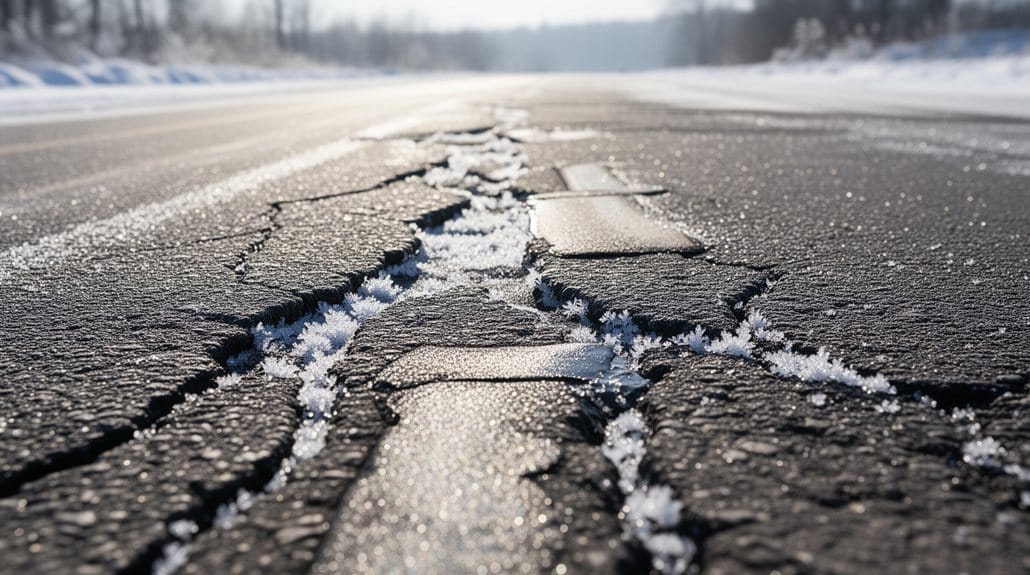
You’ve got a small problem today. Tomorrow? A massive one.
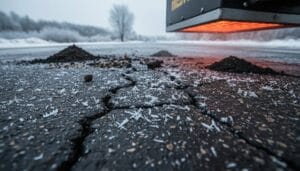
Water enters cracks as small as 1/16“. Then freeze-thaw cycles expand that moisture. Your pavement shatters.
Your Action Plan
Inspect pavement in early fall. Mark hairline to 1/4″ cracks immediately.
Crack Filling Strategy
- Hot-pour rubberized sealant for 1/4″ to 1″ gaps
- Cold pour sealant for hairline cracks
- Only apply when temps hit 41°F+ consistently
Priority Zones
Target drainage issues first. Repair cracks near catch basins and low spots.
These concentrate meltwater and accelerate sub-base damage fast.
Final Step
Sweep debris from cracks before winter hits. Re-inspect spring repairs. Regular maintenance can extend driveway lifespan and greatly prevent costly repairs and extend asphalt life greatly!
Prevent Water Infiltration to the Sub-Base
Beyond those surface cracks you’ve sealed, water’s still hunting for weaknesses. Your sub-base is vulnerable. Meltwater infiltration destroys everything beneath the surface.
Your Defense Plan
| Threat | Your Action |
|---|---|
| Edge failures | Seal pavement edges immediately |
| Ponding water | Create 1–2% cross slope |
| Clogged drains | Clear catch basins weekly |
| Snow melt | Store snow on high ground |
Stop Water Before It Wins
Apply sealcoat every 2–4 years. This reduces surface permeability markedly. But here’s the catch: repair larger cracks first! Otherwise, sealcoating fails. Regular sealcoating ensures that your asphalt remains protected against the elements.
Drain meltwater away from pavement. Route it to storm sewers. Keep unobstructed drains clear. Store plowed snow on well-drained areas.
The freeze-thaw cycle destroys unprepared pavement. Water infiltrates. It saturates the subgrade. Disaster follows.
You’ve got this. Prevent water. Extend your asphalt’s life markedly.
Apply Sealcoating for Enhanced Protection
Think of sealcoating as armor for your pavement.
This thin bituminous barrier blocks moisture and UV rays. You’ll extend asphalt life by 2–5 years with proper application every 3–5 years.
Timing matters big time. Apply sealcoating before temperatures regularly drop below 50°F. Daytime highs should hit 50–60°F so it cures before freeze-thaw cycles damage everything.
Why it works: Sealcoating fills hairline surface voids and stops water infiltration. Trapped moisture won’t freeze and expand into costly potholes.
Application essentials:
- Use coal-tar or asphalt-based sealers rated for cold climates
- Follow manufacturer rates: 0.10–0.18 gallons per square yard
- Combine with prior crackfilling and edge sealing
Sealcoating alone won’t stop larger cracks. Pair it with thorough asphalt maintenance to prevent costly repairs and maximize pavement durability. Additionally, high-quality materials used during the sealcoating process can significantly improve the longevity and effectiveness of your driveway.
Keep Asphalt Surfaces Clean and Debris-Free
Regularly clearing debris off your pavement is honestly one of the easiest wins you’ll get. You’re preventing major damage with minimal effort!
Your winter maintenance checklist:
- Sweep or blow leaves weekly in fall—organic matter traps moisture and accelerates freeze-thaw damage.
- Remove standing water and clear drains after storms—pooled water penetrates cracks, causing potholes when frozen.
- Keep gutters and downspouts trimmed—prevents soil and sediment from blocking drainage paths.
Don’t overlook salt, oil, and chemical residues. Wash away these agents before they penetrate your pavement—they speed oxidation and weaken your asphalt’s binding.
Schedule professional power-washing annually in fall. This inspection catches hairline cracks and surface raveling early. Repair them now before winter arrives and multiplies the damage exponentially! Additionally, consider commercial parking lot sealing to protect your asphalt surfaces and extend their lifespan.
Address Drainage Issues Proactively
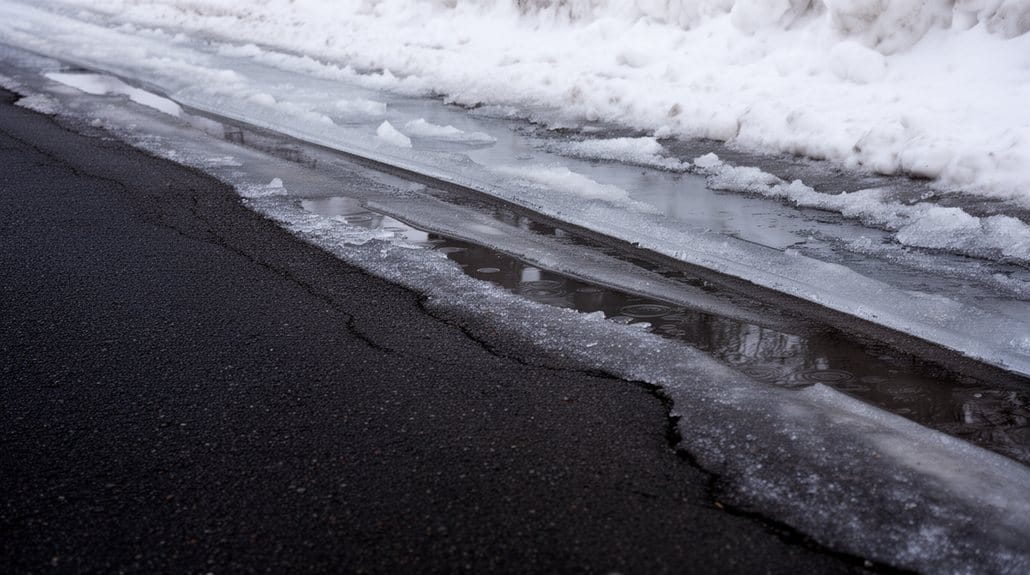
Water’s your asphalt’s worst enemy—it’ll destroy everything underneath if you let it pool. Standing water accelerates deterioration through freeze-thaw cycles that weaken your sub-base. You’ll prevent costly repairs by fixing drainage problems now. Properly maintaining your asphalt through routine maintenance can greatly extend its lifespan.
Clear Your Drainage System
Water seeps into cracks when gutters, downspouts, and catch basins get clogged. Clean them before winter hits hard. Poor drainage leaves pools that penetrate deep.
| Problem | Solution | Benefit |
|---|---|---|
| Pooling water | Restore 1/4″ slope per foot | Prevents sub-base damage |
| Clogged drains | Clear debris regularly | Stops infiltration |
| Sealed edges | Hot-pour sealant | Protects your investment |
Fix Low Spots Fast
Identify rutted areas collecting water. Reseal pavement joints immediately. Store plowed snow away from edges. Protect your investment through proactive action!
Choose Strategic Snow Storage Areas
Strategic snow storage prevents devastating freeze-thaw damage to your asphalt. You’ll want to place piles on high, well-drained areas. Keep them at least 10–15 feet from pavement edges.
Three Critical Rules
- Store snow over gravel or permeable surfaces
- Maintain 3–5 foot buffers around drainage inlets
- Make pile bases as wide as their height
Why This Works
Poor placement causes melting runoff to infiltrate your asphalt sub-base. This leads to subgrade saturation and cracking. Regular seal coating and crack filling can also help extend the life of your pavement.
By choosing smart locations, you’re directing meltwater away from pavement.
Bottom Line
Avoid low-lying spots and curb areas completely.
Clear nearby drainage inlets before winter hits hard.
These moves protect your investment big time!
Remove Snow and Ice With Care
Now here’s where most people mess up big time.
Use the Right Tools
You’ll want plastic shovels or snowblowers. Metal tools? They’re asphalt assassins. Sharp edges scratch and chip your pavement surface.
Timing Is Everything
Shovel or plow promptly within 24 hours after snow falls. This prevents compaction and ice formation that traps meltwater in cracks.
That trapped water causes freeze-thaw damage—your pavement’s worst enemy.
De-Icer Strategy
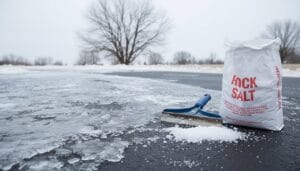
Skip the rock salt! Instead, use asphalt-safe de-icers like calcium magnesium acetate. Apply sparingly. Heavy salt accelerates binder deterioration and creates potholes.
Blade Technique
Keep plow blades raised slightly. Maintain 2–3 inch buffers from vulnerable edges. This prevents edge gouging and breakage.
One careful decision saves thousands in repairs! Additionally, regular maintenance services ensure longevity of installations, helping to extend your asphalt’s life even further.
Avoid Heavy Loads on Vulnerable Surfaces
Your asphalt’s strength drops dramatically when temperatures plunge and moisture seeps in.
Why Winter Makes Pavement Fragile****
Heavy trucks concentrate destructive forces on small areas. Winter weakness multiplies the damage risk considerably. You’ve got a real problem on your hands!
Three Critical Actions
- Avoid heavy loads on soft spots and depressions
- Schedule heavy trucks during fall or late spring
- Use load-spreading mats for unavoidable winter deliveries
Protect Your Investment
Freeze-thaw cycles create microfractures that crack under pressure. Winter’s frozen-but-brittle surfaces shatter easily under wheels. Regular asphalt maintenance can significantly extend the life of your pavement.
Post maximum weight signage at commercial lots immediately.
Don’t stage loads over patches or edges. Temporary mats reduce point pressure considerably. Distribute weight strategically. Your pavement will thank you!
Schedule Repairs at Appropriate Temperatures
You can’t repair cracks effectively below 41°F. Cold temperatures prevent sealants from bonding properly.
Your asphalt pavement needs warmth to cure correctly. Proper maintenance is crucial for extending the lifespan of your asphalt.
The Right Timing
Plan repairs in fall before freezing temperatures arrive. Spring works too—after thaw stabilizes pavement conditions.
Schedule an annual assessment in late summer to identify needed work.
What Goes Wrong
Repairs done in cold fail fast. You’ll see raveling, open seams, and moisture damage.
Winter freeze–thaw cycles destroy premature work.
Action Steps
- Complete crack filling when highs exceed 41°F
- Prevent winter failures through fall repairs
- Allow proper curing time before cold hits
Don’t rush repairs in wrong conditions. You’ll waste money fast.
Monitor Pavement Condition With Annual Assessments
Your annual pavement assessment is your early-warning system. You’ll spot hairline cracks and drainage issues before winter destroys them.
Here’s what you track:
- Measure crack lengths and widths
- Locate low spots and standing water
- Record inspection photos and PCI scores
Document everything. Photograph problem areas. Map those cracks. Why? Because freeze–thaw damage explodes fast when water infiltrates your sub-base.
Compare year-to-year records. Watch your pavement’s health decline or stabilize. When your condition score drops below 60%, it’s time for cracksealing or targeted repairs.
This data justifies your maintenance budget. You’ll prove that preventative work saves thousands versus full replacement. Reliable asphalt paving services can help ensure your pavement remains in optimal condition. That’s powerful stuff.
Conclusion
You can ignore winter threats or dominate them. Cracks left unfixed become expensive disasters. But you? You’re sealing, draining, and inspecting like a pro. That’s the difference between watching your pavement crumble and keeping it strong for years. Winter tests your commitment. You’ve got the roadmap now. Your asphalt’s longevity depends on the action you take today—not tomorrow. Make it happen!