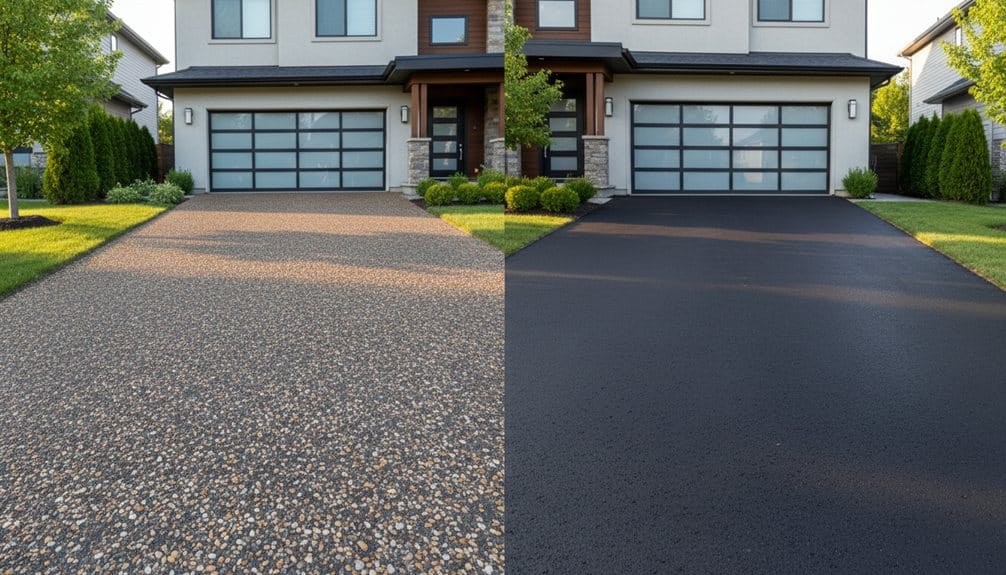
Pick chip seal if you’re budget-conscious and don’t mind maintenance. You’ll spend $1.50–$3.00 per sq ft upfront—way cheaper! But here’s the catch: it lasts only 7–10 years and needs constant sweeping plus reapplication. Go asphalt for long-term wins. Sure, you’ll pay $3.00–$7.00 per sq ft initially, but you’re getting 15–20+ years of smooth, quiet performance with just sealcoating every 3–5 years. High-traffic driveways? Asphalt dominates. Rural roads? Chip seal makes sense. Your actual choice depends on traffic volume, climate, and whether you value upfront savings or years of worry-free driving. Find which option truly matches your driveway’s future inside.
Key Takeaways
- Chip seal costs $1.50–$3.00/sq ft upfront; asphalt costs $3.00–$7.00/sq ft but lasts 15–20+ years versus 7–10 years.
- Chip seal offers quick installation (one day) and rustic texture; asphalt provides smooth appearance and quiet ride with better curb appeal.
- High-traffic residential driveways favor asphalt for durability and reduced maintenance; low-traffic rural roads suit chip seal for cost savings.
- Chip seal requires frequent sweeping and reapplication every 7–10 years; asphalt needs sealcoating every 3–5 years for longevity.
- Choose based on traffic level, climate conditions (freeze–thaw cycles), upfront budget, and whether long-term value or initial savings matters most.
What’s the Real Difference Between Chip Seal and Asphalt?
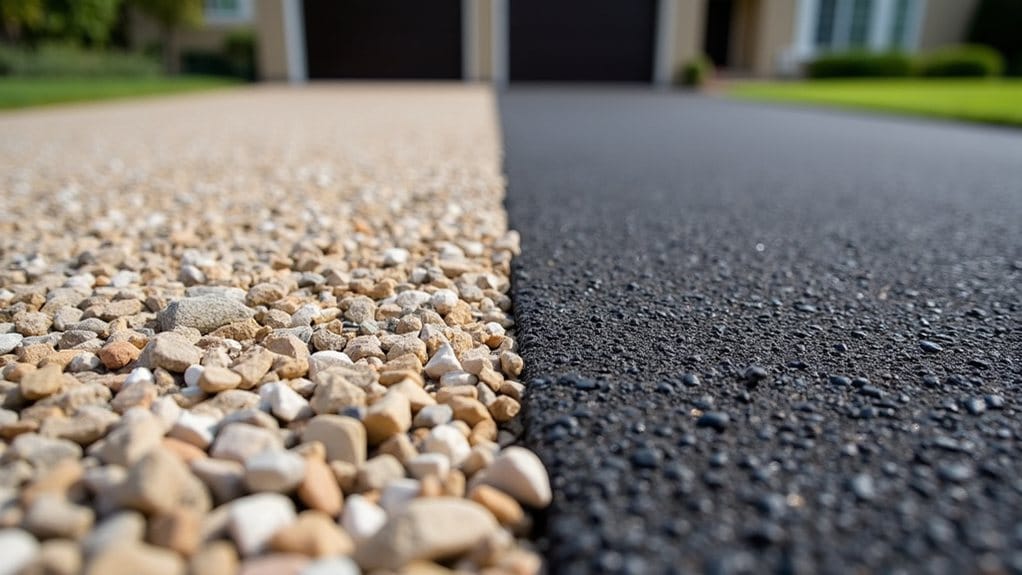
Asphalt driveways work differently. They combine heated asphalt with graded aggregates in thick, compacted lifts. This creates a structural foundation built for heavy traffic loads.
The surface texture tells the story. Chip seal gives you that rustic, bumpy feel with serious skid resistance. Asphalt delivers smooth, quiet blacktop that enhances curb appeal dramatically.
Installation cost separates them too. Chip seal runs $1.50–$3.00 per square foot. Asphalt costs $3.00–$7.00 per square foot.
Lifespan matters: chip seal lasts 7–10 years while asphalt reaches 15–20+ years with proper maintenance. Nathan’s Paving brings local expertise and proven results to every project.
Upfront Cost Comparison: Which Option Fits Your Budget?
Now let’s talk money.
The Price Tag Reality
Chip seal costs just $1.50–$3.00 per square foot. Asphalt runs $3.00–$7.00 per square foot. That’s a huge difference upfront! Chip seal wins the initial investment battle hands down.
But Wait—There’s More
Your driveway budget must include site preparation and drainage work. These hidden costs affect both options markedly. Don’t get blindsided!
The Long Game
Here’s where things flip. Chip seal lasts 7–10 years. Asphalt lasts 15–20+ years with maintenance. You’ll reapply chip seal sooner, adding installation costs repeatedly.
Smart Thinking
High-traffic driveways? Asphalt delivers better long-term value despite higher upfront spending. Lower-traffic surfaces? Chip seal saves serious cash initially. Know your driveway’s traffic level first!
Get a fast, free quote today to assess your project needs and get a detailed estimate with no obligation.
How Long Will It Last? Durability and Lifespan Explained
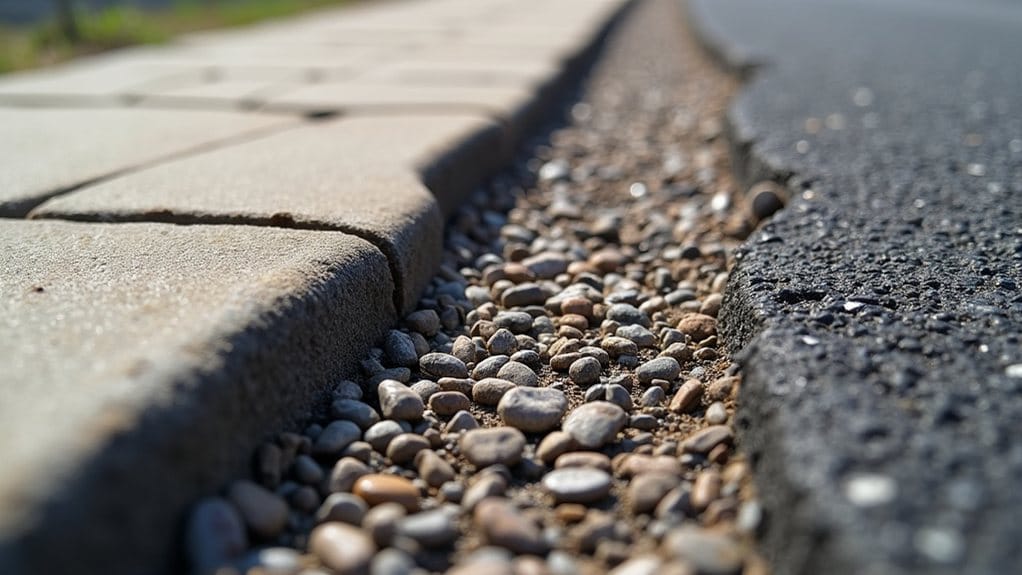
When you’re choosing between chip seal and asphalt, lifespan is everything.
Chip Seal Lifespan
Chip seal driveways last 7–10 years typically. In low-traffic, dry climates? You’ll stretch that to 15 years. But here’s the catch: stone loss happens fast. Freeze–thaw cycles and heavy traffic volume destroy it quicker.
Asphalt Driveway Longevity
Asphalt wins the durability comparison hands down. You’re looking at 15–20+ years with solid base preparation. The thicker structural layers resist heavy loads beautifully.
What Actually Matters
Your climate effects, sealcoating frequency, and maintenance schedule determine everything. Asphalt needs sealcoating every 3–5 years and overlays every 10–12 years. That’s the real investment.
Bottom line? Asphalt outlasts chip seal markedly—if you maintain it properly. Nathan’s Paving offers commercial and residential asphalt paving services backed by experienced crews.
Visual Finish and Surface Feel: Smooth vs. Rustic
| Feature | Asphalt | Chip Seal |
|---|---|---|
| Visual Finish | Sleek black, modern | Rustic textured, natural |
| Surface Feel | Smooth, quiet ride | Coarse, slightly rough |
| Color Customization | Limited options | Multiple stone colors |
Choose asphalt for polish. Choose chip seal for character. Nathan’s Paving & Seal Coating brings local expertise, demonstrating proven experience in both finishes.
Installation Speed: How Quickly Can You Use Your Driveway?
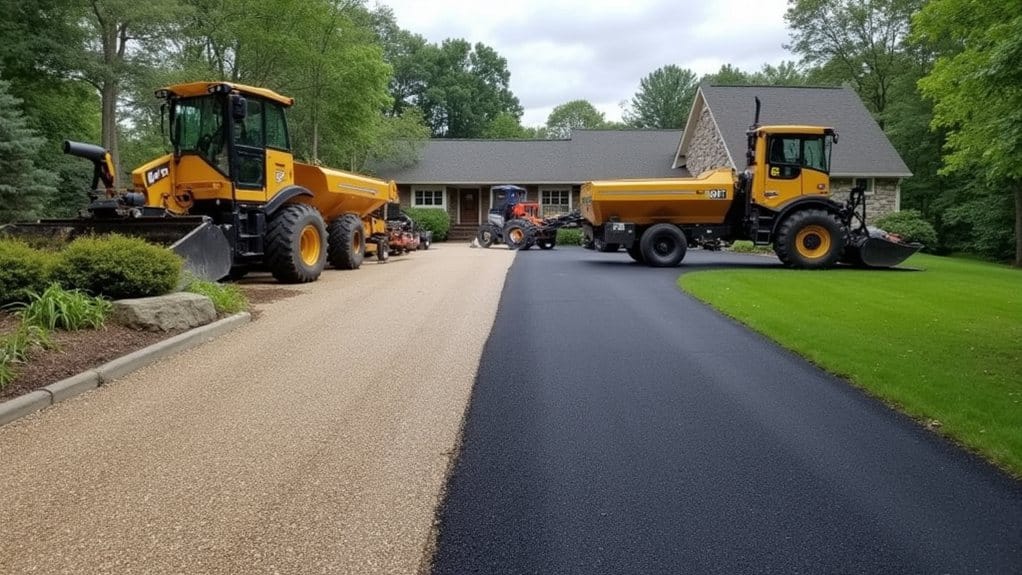
Want to drive on your new driveway tomorrow?
Chip Seal Wins the Speed Race
Chip seal projects finish in ONE DAY. You’ll drive on it within hours! Loose chips get swept away. The binder sets fast. Your driveway’s ready.
Asphalt Takes Its Time
Hot-mix asphalt demands patience. Expect 24–72 hours of curing time before full driveway use. Light driving after 24 hours? Maybe. Heavy trucks? Wait the full 72 hours. Rutting and damage happen when you rush.
Weather Changes Everything
Hot, dry conditions speed up both installation speed and curing. Cool or wet weather? Both treatments need extra time.
The Real Talk
Need minimal downtime? Chip seal delivers quick turnaround. Can you wait? Asphalt offers superior durability. Nathan’s Paving & Seal Coating serves Central PA communities and can advise on the best option.
Maintenance Demands: Sealcoating vs. Sweeping
Your driveway’s ready to drive on. Now comes the real work: maintenance!
Chip Seal Demands
You’ll sweep loose stones regularly after installation. This keeps your surface clean and prevents tracking. Every 7–10 years you’ll handle chip seal reapplication—it’s quick and affordable!
Asphalt’s Schedule
Sealcoating every 3–5 years protects your asphalt from UV damage. You’ll also tackle crack filling to prevent potholes. Every 10–12 years you’ll need overlays for long-term durability.
The Real Difference
Chip seal means more sweeping but simpler spot repairs. Asphalt needs professional sealcoating and longer curing time (24–72 hours). Your maintenance schedule determines your total costs and hassle levels.
Bottom Line
Want quick fixes? Choose chip seal. Prefer fewer surprises? Go asphalt. Both demand attention—just differently!
Nathan’s Paving offers professional sealcoating and tailored maintenance plans across Central PA to help keep your driveway in top condition.
Which Surface Wins for Your Situation? Use Cases by Traffic and Setting
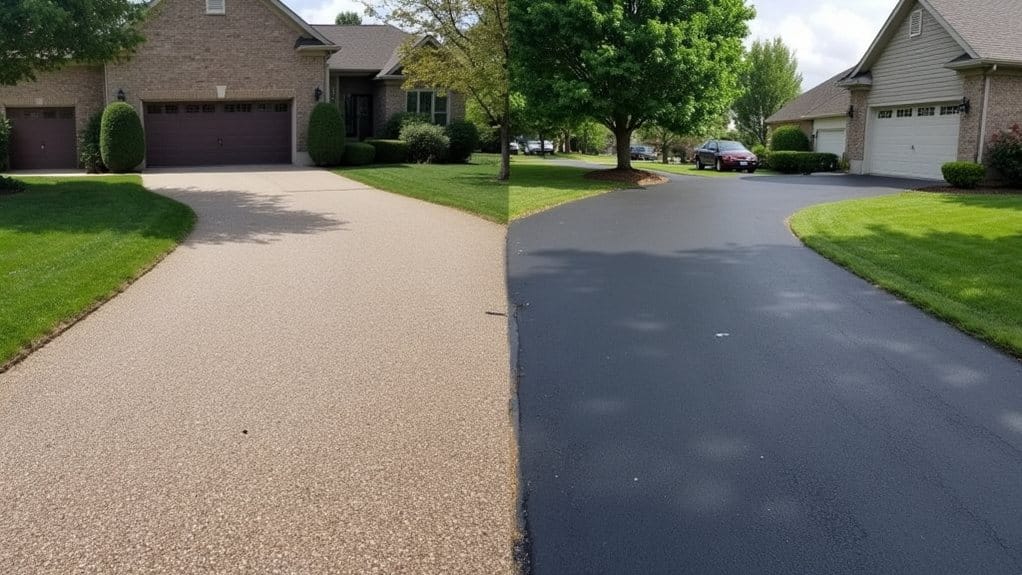
Because every driveway faces different demands, one choice isn’t universal.
Low-Traffic Rural Roads?
Chip seal wins here! You’ll save 25–40% on costs. Installation finishes in one day. Perfect for properties where budget matters most.
Daily-Use Residential Driveways?
Asphalt dominates this space. It lasts 15–20+ years versus chip seal’s 7–10. You’ll enjoy smooth, quiet surfaces. Yes, sealcoating every 3–5 years is required. But heavy vehicles won’t tear it apart.
High-Traffic Commercial Areas?
Asphalt handles the workload. Its durability justifies upfront investment. Chip seal would shed stones constantly. That’s not professional.
The Real Question
Does your driveway need long-term durability or short-term savings? Calculate lifecycle ROI.
Rural properties favor chip seal’s quick installation and cost-effectiveness. Busy driveways demand asphalt’s reliability.
Nathan’s Paving offers full-service paving and free consultations to help you decide.
How to Decide: Your Quick Evaluation Checklist
Making the right call between chip seal and asphalt doesn’t require a construction degree. You’ve got this!
Ask yourself these powerful questions:
- What’s your traffic reality? Light rural use screams chip seal. Daily driving demands asphalt’s durability.
- What’s your budget today? Chip seal costs 25–40% less upfront. Asphalt wins long-term over 15–20+ years.
- What’s your climate like? Freeze-thaw cycles favor asphalt. Extreme heat loves chip seal’s resistance.
The maintenance truth: Chip seal needs reapplication every 7–10 years. Asphalt requires sealcoating every 3–5 years instead.
Your appearance priority matters too. Want sleek, quiet blacktop? Choose asphalt. Prefer rustic charm? Chip seal delivers!
Bottom line: Match your driveway’s actual needs to these factors. Your perfect surface is waiting. Also consider that regular maintenance can prevent costly repairs and extend lifespan, which is why regular maintenance matters.
Frequently Asked Questions
Is Chip and Seal Driveway Better Than Asphalt?
Your winner depends on priorities:
- Want slip resistance and budget savings? Chip seal wins.
- Need curb appeal and durability? Asphalt dominates.
- Low-traffic rural driveway? Chip seal’s your answer.
- Heavy-use area? Asphalt’s smarter long-term.
Choose wisely!
What Are the Disadvantages of Chip Sealing?
Chip seal’s a house of cards—stunning initially but fragile underneath.
You’ll face:
- Loose stones everywhere after installation (sweeping required!)
- Surface roughness creates discomfort and noise increase that’s genuinely annoying
- Maintenance frequency hits every 5–10 years—your wallet notices
- Thermal cracking worsens in freeze-thaw climates dramatically
- Edge deterioration spreads faster than asphalt ever would
- Seal coat odor lingers unpleasantly
- Repair difficulty makes fixes costly and complicated
You’re basically committing to constant upkeep.
It’s exhausting!
How Long Will a Chip Seal Driveway Last?
The Big Factors:
- Climate impact matters hugely—freeze-thaw cycles kill longevity
- Traffic load determines everything—heavy trucks? Plan for 5–7 years
- Installation technique sets the foundation—quality work wins
- Maintenance schedule extends life dramatically—sweep those loose chips regularly!
You’ll need seal coat refreshes every 5–7 years under heavy use. UV degradation and soil drainage accelerate wear.
Stay ahead with repair frequency and aggregate quality choices!
Is a Chip Seal Driveway Worth It?
But consider this honestly:
- Maintenance frequency hits every 7–10 years
- Noise level runs louder than asphalt
- Curb appeal looks rustic, not polished
- Resale impact may disappoint buyers wanting smooth driveways
- Traction safety excels in wet conditions
- Weather resistance needs monitoring
Worth it? Yes—if budget wins your priorities!
Conclusion
You’ve got the intel now! Chip seal wins if you’re budget-conscious and don’t mind rustic charm. Asphalt dominates when you need durability and smooth rides. Check your traffic levels. Consider your maintenance bandwidth. Pick what matches your wallet and lifestyle. Like choosing between a telegraph and a smartphone, you’re picking the right tool for your needs. Trust your gut. You’ll make the smart call!