Stop black ice before it strikes your asphalt! Pre-treat with brine or PlaySAFE Ice Blocker at 0.02–0.05 gallons per square yard before storms hit. Use rock salt when temps stay above 15–20°F, then switch to calcium chloride when colder. Reapply thin doses every 4–6 hours during precipitation. Boost drainage too: grade your driveway at 1–2% slope, install gutters extending 5–10 feet out, and seal cracks immediately. You’ve also got non-chemical options like sand or heated systems. The right combo keeps you safe all winter long—and there’s much more to uncover about protecting your pavement.
Key Takeaways
- Apply chemical pre-treatment like brine or ice blocker at 0.02–0.05 gallons per square yard before precipitation.
- Grade driveways at 1–2% slope and install gutters extending 5–10 feet to establish positive drainage away from asphalt.
- Repair and seal cracks promptly using hot-pour sealant to prevent water infiltration and freeze-thaw damage.
- Use rock salt above 15–20°F or calcium chloride below for continued melting during freezing conditions.
- Install heated driveway systems to eliminate black ice formation completely without chemicals or maintenance requirements.
Understanding Black Ice Formation on Asphalt
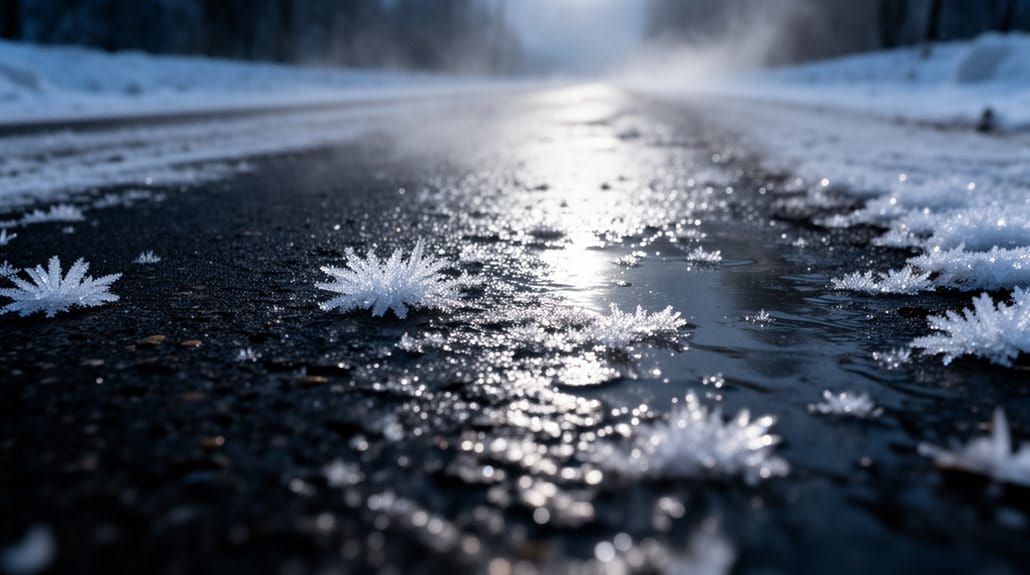
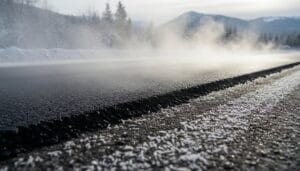
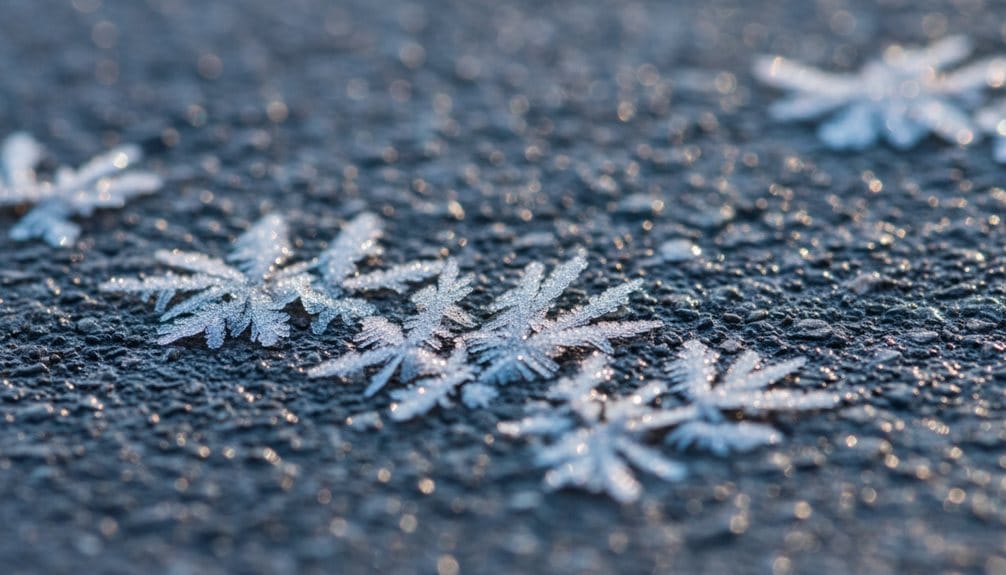
Black ice forms when liquid—rain, meltwater, or brine—sits on pavement at or below 32°F (0°C). The asphalt freezes this moisture into a thin, transparent layer. You won’t see it coming!
Why asphalt matters:
Asphalt cools faster than concrete or air. This means black ice forms even when temperatures read above freezing. Tricky, right?
Danger zones you must know:
- Poor drainage areas
- Shaded zones
- Depressions collecting water
- Downhill runoff spots
- Bridges and overpasses
The brine problem:
Salt initially prevents freezing. But diluted brine refreezes into patchy black ice. Bridges lose heat on both sides—they’re extra vulnerable!
Stay alert. Stay safe. Additionally, ensuring proper asphalt maintenance can help mitigate the risks associated with black ice formation on your driveway.
Pre-Treatment Strategies With De-Icing Agents
Spray brine or products like PlaySAFE Ice Blocker at 0.02–0.05 gallons per square yard. Apply this before precipitation starts. You’re creating a slick barrier that prevents black ice from bonding.
Choose Your Chemical Wisely
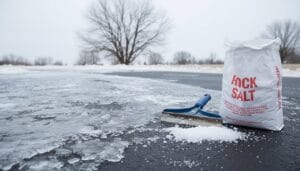
When temperatures stay above 15–20°F, rock salt works great at 10–20 g/yd². But here’s the catch—when it drops below that, switch to calcium chloride. It keeps melting when rock salt quits.
Reapply Strategically
Don’t dump everything at once! Instead, apply thin doses every 4–6 hours during storms. You’ll maintain that wet, non-bonding surface longer. Smart frequency beats heavy applications every single time. Additionally, consider high-quality materials for your de-icing strategies to ensure effectiveness and safety.
Chemical vs. Non-Chemical Prevention Methods
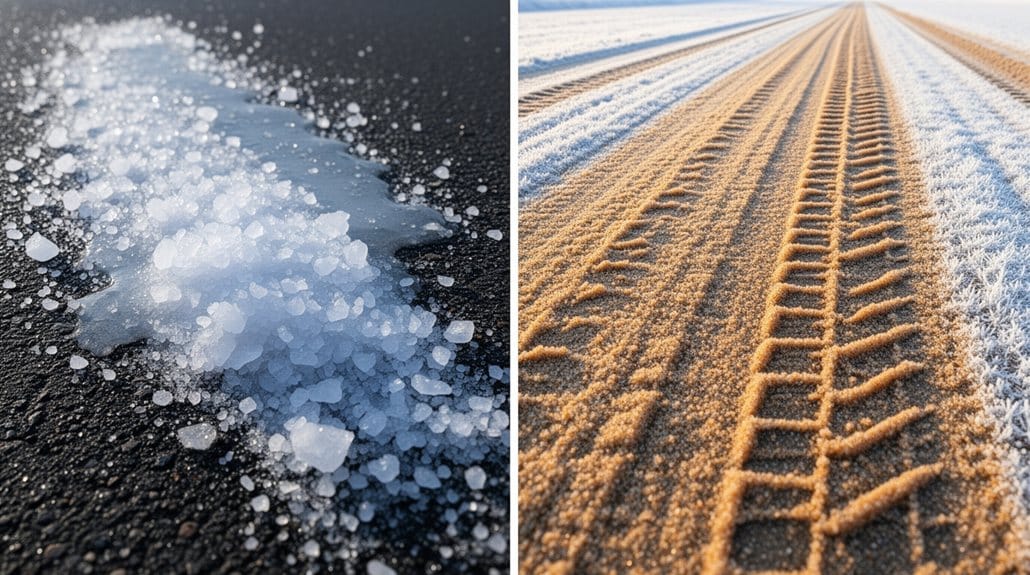
While pre-treating with chemicals cuts your black ice risk dramatically, you’ve got another powerful option: ditching chemicals altogether.
The Non-Chemical Route
Sand, kitty litter, and wood ash work instantly. They don’t melt ice—they grip it. You skip corrosion damage and environmental runoff entirely.
The Trade-Off
You’ll need cleanup afterward. These materials clog drains if ignored.
The Premium Solution
Heated driveway systems eliminate black ice completely. No chemicals. No spreading. Just consistent warmth preventing ice formation.
Real Talk
Chemical de-icers remain fastest and cheapest. But non-chemical methods protect your asphalt and wallet long-term. Commercial parking lot sealing is essential for maintaining the investment in commercial properties.
Your Move
Match your method to your climate and budget. Prevent black ice intelligently!
Drainage and Surface Maintenance Techniques
You control whether meltwater pools on your pavement. Here’s your action plan:
- Grade driveways at 1–2% slope to channel water away fast.
- Install gutters and downspouts extending 5–10 feet from asphalt edges.
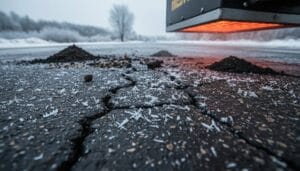
- Repair and seal cracks immediately using hot-pour sealant or patches.
- Clear storm drains before winter arrives to keep drainage flowing.
Water infiltration fuels freeze–thaw cycles that create dangerous thin ice layers. You’ll prevent black ice by establishing positive drainage with edge drains or shallow swales.
Keep nearby grass graded lower than asphalt. Remove debris blocking surface channels. This keeps meltwater moving fast—preventing it from refreezing overnight. Incorporating high-quality materials during pavement repair can significantly enhance overall durability and performance.
Your maintenance effort directly prevents accidents. Act now before winter arrives!
Professional and DIY Application Approaches
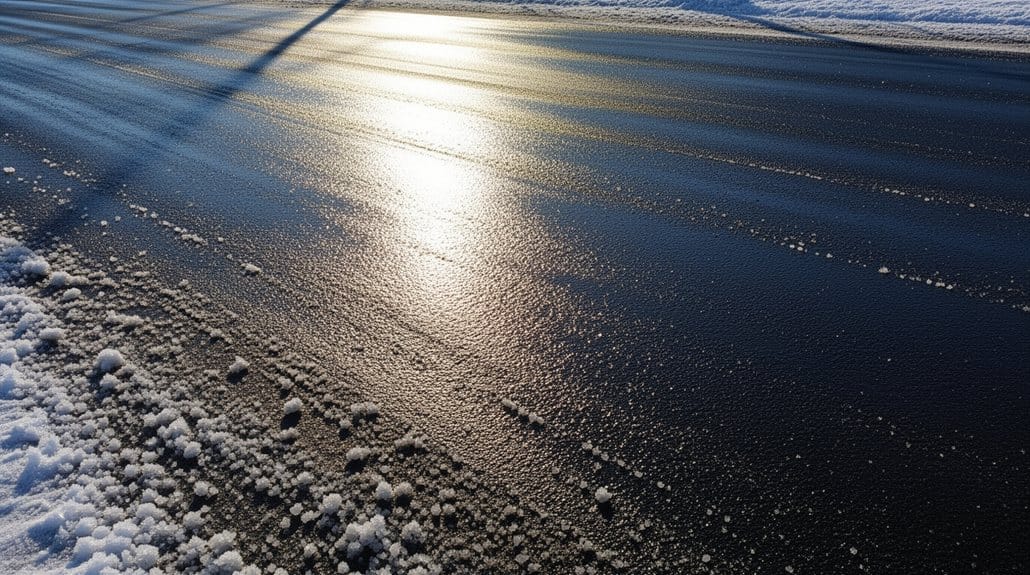
Experts pre-treat your driveway with salt or brine before storms hit. They apply calcium chloride for faster melting at −25°F.
Professionals install heated mats or full heated driveway systems to prevent black ice completely. These options cost more upfront but deliver guaranteed results.
DIY Quick Fixes
You can tackle immediate safety fast!
Chip loose ice with a plastic scraper. Spread sand or mineral traction agent for instant grip. Apply pet-safe de-icer following manufacturer rates.
These steps work now—not tomorrow.
The Smart Move
Combine both approaches! Professionals handle prevention.
You manage daily maintenance.
Incorporating regular seal coating as part of your routine will help extend the life of your pavement and prevent future issues.
Together, you’ll prevent dangerous black ice all season long.
Conclusion
You’ve got this! Black ice prevention isn’t rocket science. Start with pre-treatment and keep your surfaces drained. Here’s the kicker: roads treated with de-icing agents see 46% fewer winter accidents****. That’s huge! Whether you’re going professional or DIY, consistency wins. Stay proactive. Stay safe. Your asphalt—and your wallet—will thank you this winter season!