
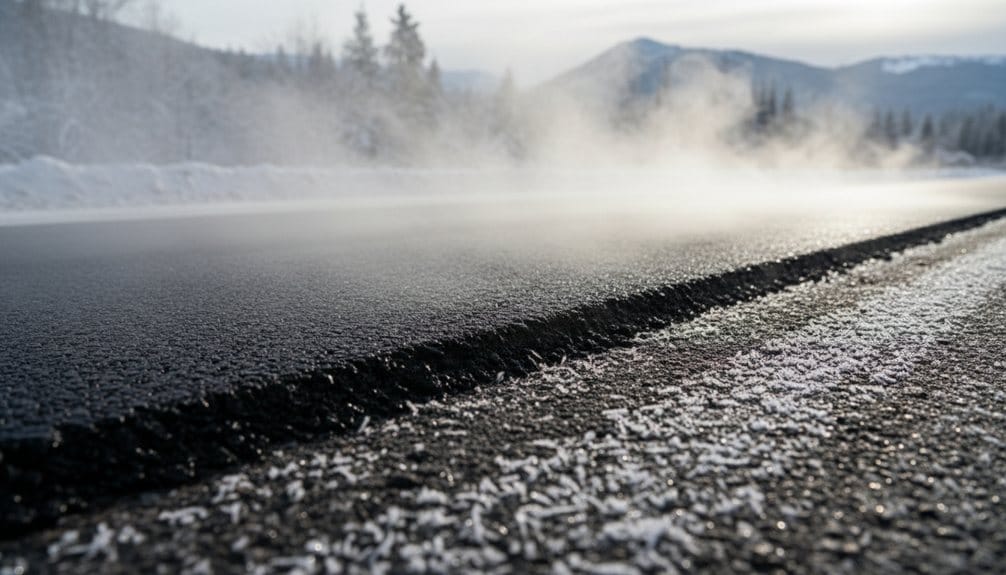
Cold Weather Asphalt Resurfacing Demands Precision You can’t wing it in winter—temperature controls everything. Keep your mix between 275–300°F from plant to paving. Ambient temps need to stay above 50°F; below that, compaction fails and bonding crumbles. Monitor surface temps obsessively. Use insulated trucks. Compact immediately while the mat hits 175–200°F. Increase roller passes by 25–50% compared to summer work. One mistake? You’re looking at cracks, poor density, and premature failure. The specifics below reveal how professionals nail it every time.
Key Takeaways
- Maintain asphalt placement temperatures between 275–300°F and mat temperatures above 175°F during compaction to ensure workability and density.
- Ambient temperatures should ideally exceed 50°F; avoid paving when surface temperatures drop below 40°F to prevent bonding failure and thermal cracking.
- Use insulated trucks, tarps, and heated transfer devices to retain mix heat during transport and minimize time between plant and placement.
- Increase compaction roller passes by 25–50% compared to warm weather and perform compaction while mat temperature remains between 175–200°F.
- Schedule paving during the warmest part of the day, shorten paving lengths to manage surface temperature uniformity, and restrict traffic for 24–48 hours.
The Challenges of Cold Weather Resurfacing
Once ambient or surface temperatures drop below roughly 50°F (10°C), compaction becomes your nightmare. You’ll struggle to achieve proper density. Air voids increase dramatically—and that’s bad news.
Why Cold Temperatures Wreck Your Project:
Cold temperatures cause asphalt mix to cool rapidly.
You’ve got a tight window—roughly 275–300°F (135–150°C)—to place and work the material before it hardens.
The Real Problems You’ll Face:
- Frozen ground and surface temps under 40°F destroy bonding
- Thermal cracking develops fast
- Moisture infiltration becomes inevitable
- Poor adhesion ruins overlays
Rapid cooling accelerates when wind picks up and humidity drops.
Thermal segregation creates weak spots.
Your Fighting Chance:
You’ll need warm-mix asphalt, preheating the surface, and extra compaction passes. Routine maintenance is also essential to ensure the longevity of your asphalt surfaces.
Work during the warmest part of the day.
Don’t skip these countermeasures—your pavement’s longevity depends on it.
Optimal Temperature Requirements for Asphalt Mix
Hot-mix asphalt demands placement between 275–300°F for proper workability and compaction. That’s your sweet spot!
If temperatures drop below 175°F during placement, the mix stiffens prematurely and compacts poorly. Disaster strikes fast.
What About Cold Weather Paving?
Ambient temperatures should stay above 50°F ideally.
You can push down to 40°F for limited work, but results suffer.
Keep your mix temperature raised throughout delivery using insulated trucks and heated transfer devices.
The Revolution: Warm Mix Asphalt****
Warm mix asphalt (WMA) technology slashes production and placement temperatures by 20–40°F.
This extended workability window means you’re placing quality asphalt even when conditions tighten.
Your compaction improves dramatically.
Cold weather paving becomes manageable—and your projects succeed! Furthermore, regular seal coating is recommended every 2-3 years for maintaining asphalt integrity.
Selecting the Right Asphalt Mix Design
You’ll place material at lower temperatures while keeping workability intact. Game-changer for cold climates!
Tweak Your Aggregate Gradation
Increase fines slightly to enhance compactability. Balance matters here—too stiff causes cracking.
Defense Against Moisture
Add anti-stripping agents. These protect binder-aggregate adhesion when ice attacks.
Temperature Control Is Everything
Target plant discharge temperature around 275–300°F. Use insulated transport to retain heat during hauls. Monitor ruthlessly! Nathans Paving emphasizes the importance of high-grade materials to ensure durability in cold weather applications.
Your mix design isn’t generic. Cold climates demand precision and intentional choices throughout production.
Temperature Monitoring and Verification Methods
An infrared thermometer gives you surface temperature instantly. You need that pavement above 50°F for winning adhesion. Your probe thermometer checks mix temperature at the plant and arrival—keep it between 275–300°F. Below 175°F? Stop work immediately.
Environmental Reality Check
Grab your handheld weather meter. Wind speed matters enormously. High winds? They’ll cool your asphalt fast. You might need speedier placement or postponement.
Document Everything
Log each truck load’s asphalt temperature and surface temperature. Record every compaction pass. Time it. Temperature it. This log proves compliance and guides your next moves—reheating, extra rolling, or shutdown calls. Additionally, consider fast, free quotes to better prepare for potential project adjustments and costs.
Scheduling and Timing Your Resurfacing Project
Here’s the truth: Mother Nature controls your window.
You’ll want to schedule asphalt paving when temperatures stay above 50°F consistently. Plan work during late spring through early fall. This seasonal timing maximizes your hot-mix workability and compaction success.
Nail the timing details:
- Dispatch trucks so hot-mix arrives within 30–60 minutes of production
- Keep mix temperatures between 275–300°F using insulated beds or tarps
- Schedule work during early afternoon for warmest conditions
- Avoid strong winds and sudden temperature drops
Lock in your crew early. Book equipment and crews before peak season (March–September) hits hard. Plant availability shrinks fast during winter closures. Secure your plant spot now—don’t wait! Additionally, consider hiring a fully licensed and insured paving service to ensure quality and reliability in your project.
Transport and Heat Retention Strategies
On arrival, act immediately. Monitor mix temperature with infrared thermometers. Reject loads below 175–200°F. Cover newly laid mat edges with insulated blankets instantly. Deploy mobile heaters when necessary to slow heat loss before compaction begins. These steps protect your investment and guarantee better results every single time. Additionally, proper asphalt repair techniques can further enhance the longevity of your resurfaced pavement.
Compaction Techniques for Cold Conditions
Start compaction while your asphalt temperature stays between 175–200°F. Don’t wait! Every second counts before mat cooling ruins your workability.
Roller Strategy
Use vibratory rollers first for aggressive compaction. Follow with a pneumatic roller for kneading action. Increase your roller passes by 25–50% compared to warm-weather paving.
Stay Sharp
Keep roller drums moist. Monitor temperatures constantly with an infrared thermometer. Additionally, ensure that you’re familiar with driveway maintenance practices to prolong the lifespan of your asphalt.
Stop work if asphalt temperature drops below 175°F. Maintain continuous rolling without breaks—complete each pass system before cooling accelerates.
Post-Placement Protection and Curing
Once you’ve finished rolling and compacted that asphalt, your real work isn’t done—it’s just shifting gears!
Your fresh pavement needs serious protection. Keep traffic completely off for 24–48 hours minimum. Cold weather demands even longer waiting periods. Here’s what you absolutely must do:
- Restrict all access until uniform cooling happens and target density sets properly
- Use insulating blankets when temperatures drop below 32°F to maintain workable surface conditions
- Avoid water contact in cold conditions—it’ll freeze and wreck your curing process
Skip the fog spray in freezing weather. Use heated shelters instead for proper binder curing.
Your patience pays off huge! Wait 6–12 months before sealcoating. This timing guarantees incredible adhesion and longevity. Trust the process. Your asphalt’s future depends on it! Regular maintenance services help prevent future pothole formation, ensuring your pavement stays in optimal condition.
Common Cold Weather Issues and Solutions
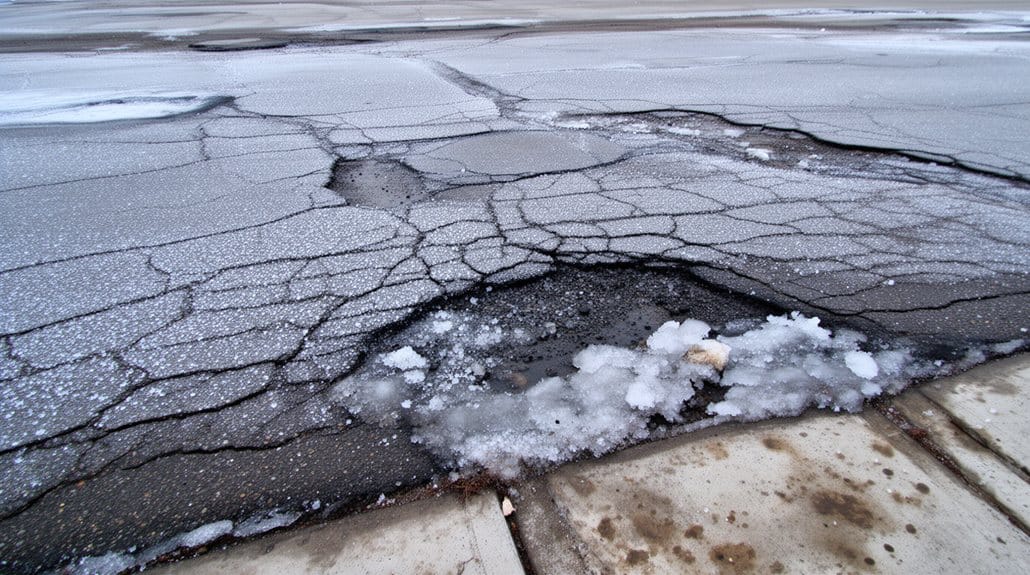
You’ve locked down the protection phase—great work!
The Big Challenges You’ll Face
Thermal segregation happens when cold chunks sabotage your work. Unheated truck beds create weak spots fast. Solution? Preheat and insulate truck boxes before loading.
The compaction window shrinks dramatically. Wind and low surface temperatures accelerate cooling. You must act immediately with steel or vibratory rollers while the mat stays above 175°F.
Your Action Plan
Keep the asphalt paving in cold weather between 275–300°F from plant to lay. Immediate compaction prevents high air voids. Seal cracks before temperatures drop below 30–40°F to eliminate freeze–thaw risk.
Pro tip: Schedule work during the warmest part of the day. Shorten paving lengths. Preheat existing surfaces. These moves maintain uniform temperature and assure success. Additionally, consider reaching out to trusted asphalt paving services in your area for expert assistance during challenging weather conditions.
Conclusion
You’ve got the guts to get it done in the cold! Proper planning prevents poor pavement performance. You’ll want to watch your temperatures, time your project perfectly, and protect your product persistently. You’re now steering the nitty-gritty subtleties of cold-weather construction. You’ve learned the lessons. You’ll crush these cold-weather challenges. Stay strong, stay sharp, and seriously succeed with your resurfacing results!