Choose overlay if your base is solid—it costs 30–50% less and takes days, not weeks. You’re looking at 8–15 years of extra life for surface-level damage like hairline cracks and minor potholes. Go full replacement if you’ve got alligator cracking, rutting over 1 inch, or recurring potholes—that’s base failure talking, and overlays will just crack again. Traffic matters too: heavy trucks demand full replacement’s thicker foundation. A free evaluation reveals which path saves you money long-term.
Key Takeaways
- Overlay costs 30–50% less upfront but suits only surface-level damage with sound base layers.
- Full replacement costs more but delivers 20–30 years of service versus overlay’s 8–15 years.
- Choose overlay for young pavement with hairline cracks; choose replacement for alligator cracking or rutting.
- Heavy truck traffic requires full replacement with thicker bases; overlays crack quickly under heavy loads.
- Professional core sampling and drainage evaluation determine whether your pavement qualifies for overlay or needs replacement.
What’s the Difference Between Asphalt Overlay and Full Replacement?
When your asphalt’s looking rough, you’ve got a critical decision ahead.
The Overlay Option
An asphalt overlay adds a fresh 1.5–3 inch layer directly over existing pavement. You’re fundamentally giving your driveway a facelift! This approach extends surface life by 8–15 years and costs 30–50% less upfront.
Full Replacement Reality
Full replacement removes everything. Your contractor rebuilds the base, subbase, and surface from scratch. You’re investing in a pavement that lasts 20–30 years with proper drainage installed.
When Each Works Best
Choose overlay for minor cracking and small potholes. Pick full replacement when you face alligator cracking, sinking areas, or recurring problems indicating base/subgrade failure.
Professional Evaluation Matters
Don’t guess! Professional evaluation through core sampling and drainage analysis prevents costly mistakes. Overlays can fail fast if underlying issues remain hidden.
We recommend getting a free quote to assess your project and the best repair approach for your specific situation.
Does Your Driveway Qualify for an Overlay?
So you’ve weighed the overlay against full replacement. Now comes the critical question: does your driveway actually qualify?
Your driveway’s a good candidate if:
- Surface-level damage dominates (hairline cracks, oxidation, minor potholes)
- The base subgrade remains structurally sound
- No widespread alligator cracking exists
- Drainage issues are absent or minimal
Red flags demanding full replacement:
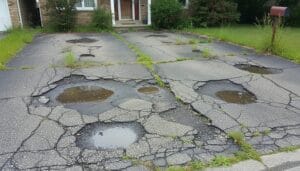
- Interconnected alligator cracking across surfaces
- Sinking or settlement problems
- Recurring potholes appearing repeatedly
- Standing water pooling on pavement
Get professional evaluation done. Core samples and visual inspections reveal hidden damage. This step determines whether you’ll gain 8–15 years lifespan extension or face premature failure.
Overlays save 30–50% upfront costs. But hidden base problems eliminate those savings fast. Smart move? Invest in professional assessment today! Professional evaluations often include initial assessment to identify the extent of damage and the best repair approach.
When Do You Need Full Replacement Instead?
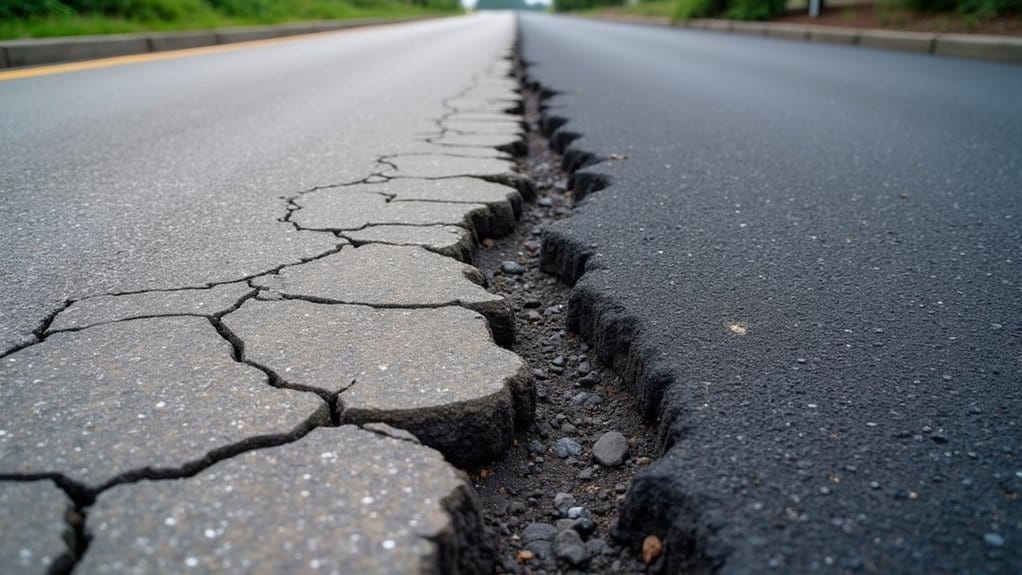
Here’s when you should go all-in:
- Widespread alligator cracking covering large areas signals base layer reconstruction is necessary—not just surface trouble
- Recurrent potholes and sinkage deeper than 0.5–1.0 inches indicate subgrade failure requiring complete removal
- Geotechnical testing revealing saturated or weak base layers demands full rebuilding for structural stability
- Persistent drainage problems that’ve saturated your base necessitate removing everything and starting fresh
Heavy traffic loads and end-of-life pavement also favor replacement. Yes, it costs more upfront. But full replacement gives you 15–30+ years of service! Compare that life-cycle cost to repeated overlay repairs. You’ll save money and headaches long-term.
Nathan’s Paving & Seal Coating evaluates every project carefully. Call (717) 648-5030 for your free consultation today!
Regular maintenance like seal coating and crack filling can extend pavement life and help you decide between overlay and replacement.
How Do You Assess Your Driveway’s Structural Condition?
Before you decide between an overlay and full replacement, you’ve got to know what you’re actually dealing with.
Look for these warning signs:
Alligator cracking reveals base failure. If you see networked cracks across large areas, that’s trouble. Rutting and vertical displacement over 0.5–1 inch indicate structural weakness. Potholes that keep returning after patching? They’re penetrating the base layer.
Check your drainage. Standing water and poor slope cause subgrade saturation. Freeze–thaw cycles worsen everything.
Get a core test done. This reveals your layer thickness and base condition. If asphalt is under 2 inches over contaminated aggregate, replacement beats overlay.
Trust the data. Your driveway’s foundation tells the real story. Nathan’s Paving professionals can inspect yours thoroughly and recommend the right solution!
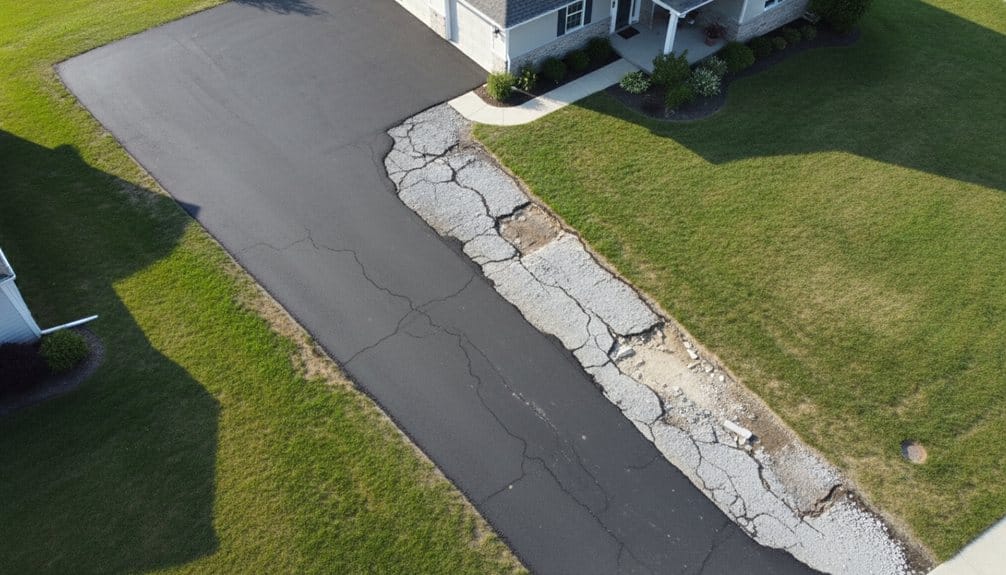
Recent driveway projects, like a driveway extension completed in Carlisle, PA using high-quality asphalt, show how proper grading and sealing improve longevity.
How Much Will You Save With an Overlay vs. Replacement?
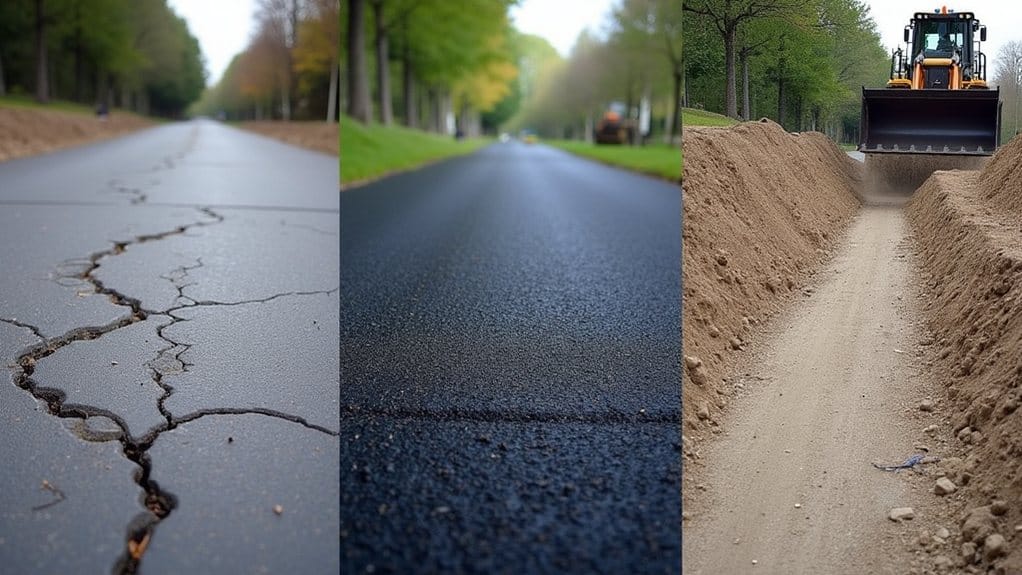
When you’re evaluating overlay versus full replacement, your wallet’s gonna feel the difference right away.
An asphalt overlay costs 30–50% less upfront than full replacement. That’s immediate savings! Here’s what you need to know:
- Overlay thickness (1.5–2 inches) reduces labor and material costs appreciably.
- Installation time shrinks from weeks to just hours or days.
- Full replacement lasts 20–30 years versus overlay’s 8–15 year lifespan.
- Reclaimed asphalt pavement (RAP) in either option lowers costs further.
But here’s the catch: if your base/subgrade condition is poor, overlay savings vanish fast. Reflective cracking means expensive repairs soon.
Real talk? Calculate lifecycle cost, not just upfront price. Quality maintenance frequency matters too. Nathan’s Paving helps you choose what actually saves money long-term! They also offer free quotes to get your project started.
How Long Will Each Solution Last?
The lifespan difference between overlay and full replacement is DRAMATIC.
Asphalt Overlay Lifespan
You’re looking at 8–15 years typically. Sometimes just a decade if conditions are perfect. But here’s the catch: overlays fail FAST if your underlying base is weak. Poor drainage? Reflective cracking shows up within 12 months. That’s frustrating!
Full-Depth Replacement Lifespan
This is the long game. You’ll get 15–30 years easily. Heavy-use areas? Push toward 30 years with proper drainage and base construction.
Here’s the Real Talk
Your underlying base condition matters TREMENDOUSLY. Reflective cracking ruins overlays quickly. Smart maintenance practices—annual crack sealing and sealcoating every 3–5 years—extend overlay life substantially. Proper drainage and stormwater management? They’re transformative for both solutions!
Traffic intensity and load demands affect everything too. Nathan’s Paving’s experienced team uses high-grade materials and best practices to maximize pavement life.
Can Drainage Problems Be Fixed With an Overlay?
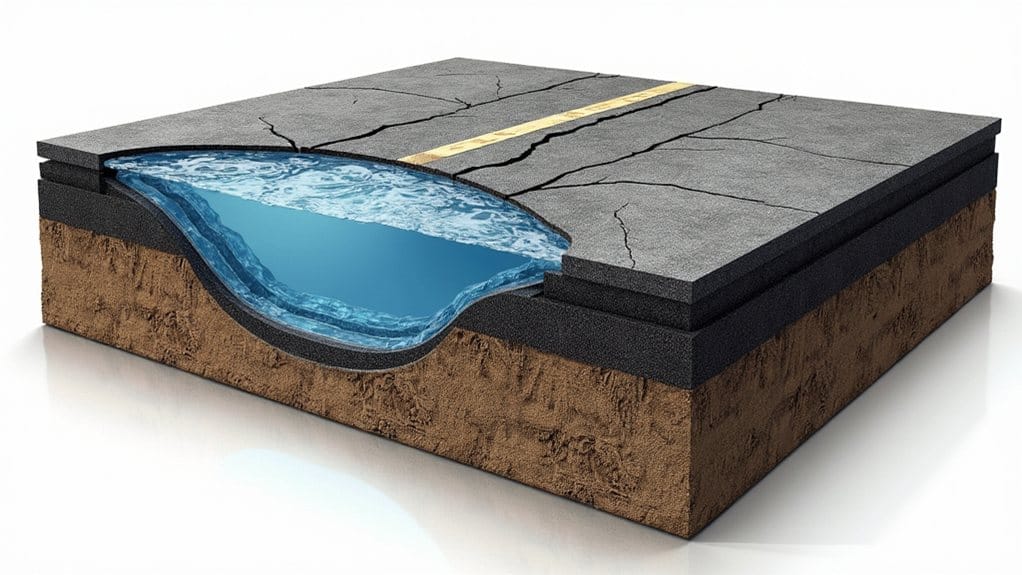
Here’s why overlays fail at solving drainage problems:
- They only add 1.5–3 inches of surface material without changing underlying grades or subgrade permeability
- Ponding worsens because overlays reduce curb reveal and create new water pooling areas
- Core sampling and elevation checks are essential before any work to verify existing drainage problems
- Full-depth replacement or corrective work (regrading, improved base material, French drains, edge drains) is required for real fixes
Limited solutions like milling low spots or installing edge drains might help temporarily. But here’s the truth: choosing overlay solely to save money when drainage is compromised results in reflective cracking and accelerated failure within years.
Professional assessment of your subgrade and drainage system isn’t optional—it’s essential before proceeding! Nathan’s Paving’s decade of experience ensures accurate drainage evaluations and proper corrective work.
Does Pavement Age or Traffic Volume Change Your Choice?
| Factor | Light Traffic | Medium Traffic | Heavy Truck Loads |
|---|---|---|---|
| Young Pavement (0–8 years) | Overlay works great | Overlay likely fine | Consider full replacement |
| Middle-Aged (8–15 years) | Overlay extends 8–15 years | Overlay + monitoring | Full replacement recommended |
| Older (15+ years) | Full replacement needed | Full replacement needed | Full replacement essential |
Here’s why it matters:
Younger pavements handle overlays beautifully. But older pavements? They’re tired and need full-depth replacement for a strong 20–30 year lifespan.
Heavy traffic changes everything. Trucks demand thicker bases and rebuilt subgrades. Overlays alone won’t cut it—they’ll crack and fail fast.
Check your maintenance history. Frequent potholes and reflective cracking signal structural damage. That’s your sign: full replacement beats overlay every time.
Contact Nathan’s Paving at (717) 648-5030 for a free consultation!
With over 10 years of experience, Nathan’s Paving focuses on professionalism, quality work, and timely project completion; learn more about their services.
What Maintenance Does Each Option Require?
Once you’ve picked your path—overlay or full replacement—the real work begins.
Overlay Maintenance is More Demanding
Your asphalt overlay needs serious attention! Here’s what you’re committing to:
- Annual crack sealing to prevent water infiltration and base deterioration
- Sealcoating every 3–5 years to protect that thin 1.5–2 inch surface
- Spot patching within a few years if reflective cracks appear
- Frequent surface repairs as underlying issues cause recurring damage
Full Replacement Plays the Long Game
Full-depth replacement demands *less* frequent intervention. You’ll focus on preventive maintenance instead: routine inspections, proper drainage management, and prompt crack sealing. That’s it!
The Real Cost Story
Here’s the truth: overlays cost less upfront but demand constant attention. Full replacements support a powerful 15–30 year lifespan with minimal structural intervention.
Your lifecycle costs often favor replacement in high-traffic areas. Don’t just chase cheap today—invest in tomorrow!
Nathan’s Paving is a full-service paving company with over a decade of local experience.
Ready to Choose? Get a Free Evaluation From Nathan’s Paving
After evaluating overlay costs against full replacement lifespans, you’re ready to make the smart move.
Here’s what happens next:
Nathan’s Paving delivers a free on-site evaluation customized to your specific situation. Their technicians inspect surface distress, perform core sampling if needed, and conduct drainage checks.
They’ll assess overlay thickness requirements (typically 1.5–2 inches) and identify base failure issues.
You’ll receive a written proposal including:
- Cost comparison showing overlays run 30–50% cheaper upfront
- Projected lifespan estimates (overlay: 8–15 years; full replacement: 20–30 years)
- Material specs with recycled RAP options
- Maintenance schedules and sealcoating intervals
Nathan’s Paving provides fast, free quotes and a written estimate with no obligation.
Ready to start? Contact Nathan’s Paving at (717) 648-5030 or nathanpaving@gmail.com to schedule your no-obligation evaluation. They’ll recommend the perfect solution for your traffic load and budget!
Frequently Asked Questions
What Are the Disadvantages of Asphalt Overlay?
You’re facing some real challenges with overlays. Reflective cracking happens fast—sometimes within months!
Your existing cracks push right through that thin 1.5–2 inch layer. Drainage issues get worse because improper installation changes water flow patterns.
You’ll deal with load restrictions and thermal expansion problems. Plus, overlays only last 8–15 years versus much longer with full replacement.
You’re paying less upfront but spending more long-term on repeated maintenance. That’s frustrating!
Is Asphalt Overlay Worth It?
Choose quality materials. Pick the right contractor. Maintain consistently.
That’s your winning formula!
Is It Better to Resurface or Replace an Asphalt Driveway?
Key factors matter:
- Sound base = resurface (costs 30-50% less!)
- Damaged base = replace (lasts 15-30 years)
Get a pro evaluation first. Nathan’s inspects everything—grading issues, load capacity, edge deterioration. Smart driveway maintenance beats costly surprises!
How Long Will an Asphalt Overlay Last?
Here’s what you control:
- Base condition = Everything. Strong foundation? You’ll hit 12–15 years easily.
- Maintenance schedule = Critical! Sealant every 3–5 years extends life by 30–40%.
- Drainage issues = Your enemy. Poor drainage destroys overlays fast.
- Traffic impact & climate influence matter big-time too.
Bottom line: You’ll maximize coat longevity through smart maintenance and quality materials. Call Nathan’s at (717) 648-5030 for a professional assessment!
Conclusion
Your driveway’s future depends on one decision today. You can’t afford to guess—professional assessment changes everything. Nathan’s Paving delivers honest answers about overlay versus replacement. You’ll learn which option protects your investment and your wallet. Don’t let another season of damage pile up. Your free consultation awaits. Sometimes the smallest decision today prevents the biggest headache tomorrow.