You’ll need to reseal your asphalt driveway every 3-5 years to keep it in top shape. Your local climate plays a big role – hot, sunny regions require resealing every 2-3 years while moderate climates can stretch to 4-5 years. Watch for key signs like fading from black to gray, small cracks appearing, or water pooling after rain. Regular maintenance can extend your driveway’s life by up to 50%. Let’s investigate the specific timeline for your situation.
Key Takeaways
- Asphalt driveways typically need resealing every 3-5 years under normal conditions to maintain their protective coating and appearance.
- Hot, sunny regions require more frequent resealing every 2-3 years due to increased UV damage and heat exposure.
- Cold climates with freeze-thaw cycles should reseal every 3-4 years to prevent weather-related damage and deterioration.
- When signs like fading, small cracks, or water pooling appear, it’s time to consider resealing regardless of timeframe.
- Regular resealing can extend your asphalt driveway’s lifespan by 30-50% when properly maintained and sealed on schedule.
Determining the Right Time for Asphalt Resealing
When should you reseal your asphalt driveway? The timing of this vital maintenance task depends on several key factors.
Look for these clear warning signs:
- Fading from deep black to gray
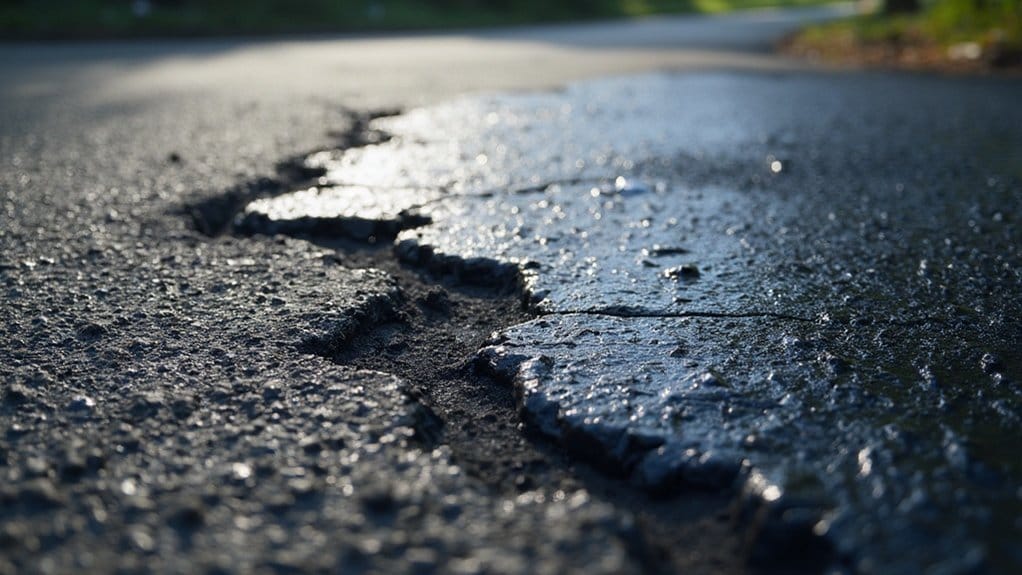
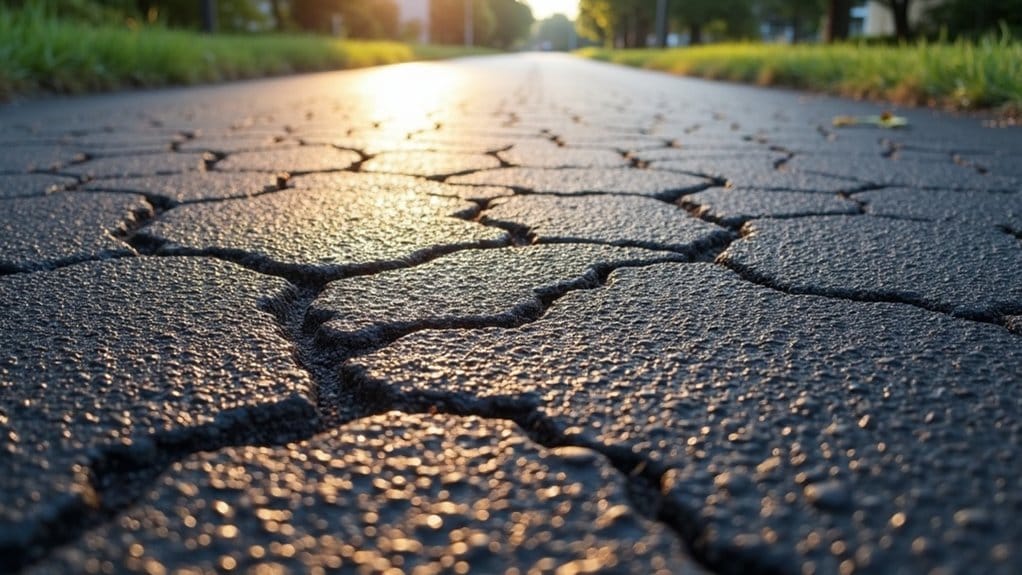
- Small cracks appearing on the surface
- Water pooling after rain
- Rough or brittle texture
The resealing benefits are tremendous for asphalt longevity! Most experts recommend resealing every 3-5 years. However, it’s important to remember that regular sealcoating can extend your asphalt life by 30-50%.
But your climate matters big time. Hot, sunny regions may need more frequent resealing. Cold areas with harsh winters too.
Don’t wait until your driveway shows major damage. That’s like waiting for your engine to fail before changing the oil!
Check your driveway’s condition each spring and fall. You’ll save money by catching problems early.
Remember – prevention beats expensive repairs every time.
Signs Your Driveway Needs a Fresh Seal Coat
Spotting the right signs can save you thousands in driveway repairs!
Your asphalt driveway speaks to you through visible warning signs. Keep an eye out for these key indicators:
- Crack formation in multiple areas
- Surface discoloration that looks faded or gray
- Small potholes starting to appear
- Water pooling after rain
- Rough, brittle texture when you walk on it
Don’t wait until these issues become major problems! Early detection means easier fixes. When you notice more than two of these signs, it’s time to act.
Pro tip: Take photos of your driveway every six months. Compare them to track changes! You’ll be amazed at how quickly small issues can develop.
Remember: A well-maintained driveway enhances your property value and prevents costly repairs down the road. Additionally, seal coating your driveway is crucial as it protects against harsh weather conditions and extends the lifespan of your asphalt surfaces.
Climate Impact on Resealing Frequency
Your local climate plays a massive role in your driveway’s maintenance needs! Extreme climate conditions can really put your asphalt through the test.
Temperature fluctuations affect how often you’ll need to reseal your driveway to keep it protected.
Your resealing frequency depends on your region’s weather patterns:
- Hot, sunny climates require resealing every 2-3 years due to UV damage
- Cold regions with freeze-thaw cycles need resealing every 3-4 years
- Moderate climates can extend sealing intervals to 4-5 years
- Areas with heavy rainfall should reseal every 2-3 years
- Desert climates may need resealing every 2 years due to intense heat
Watch your local weather patterns! They’ll dictate your maintenance schedule.
Harsh weather means more frequent resealing. Moderate climates allow longer intervals between treatments. Additionally, regular maintenance services from qualified contractors can help ensure the longevity of your asphalt installations and repairs.
Best Practices for Regular Driveway Maintenance
Regular maintenance will dramatically extend your asphalt driveway’s lifespan!
Start with thorough driveway cleaning every 3-4 months. Remove debris, dirt, and oil stains using a strong degreaser and pressure washer. Don’t let those stains set in!
Watch for cracks – they’re your driveway’s worst enemy! Tackle crack filling as soon as you spot any openings larger than 1/4 inch. Use a high-quality filler designed specifically for asphalt.
Quick Maintenance Checklist:
- Sweep weekly to prevent debris buildup
- Remove oil spots immediately
- Fill cracks during dry weather
- Clear drainage areas monthly
- Trim grass along edges
Bonus tip: Keep heavy vehicles away from the driveway edges. The outer 6-12 inches are most vulnerable to crumbling.
Incorporating regular maintenance will help prevent costly repairs and replacements, ensuring your driveway remains safe and functional.
Your driveway will thank you with years of reliable service!
Professional vs. DIY Resealing Timelines
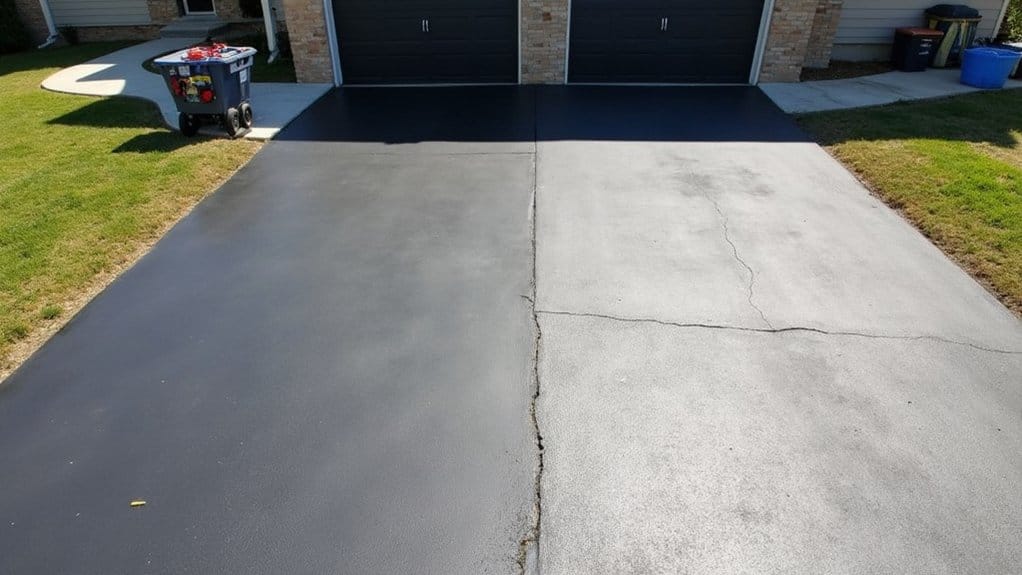
When deciding between professional and DIY resealing, timing is everything! Professional equipment and skill allow contractors to work efficiently in various conditions.
You’ll want to compare timelines carefully before choosing your approach.
Consider these key timeline differences:
- Professional crews complete most driveways in 4-6 hours
- DIY projects typically take 8-12 hours for beginners
- Professionals can work in temperatures between 50-90°F
- DIY work requires perfect weather conditions (65-85°F)
- Cost comparison: Pro speed saves time but costs 2-3x more
The faster timeline of professional services means less disruption to your daily routine. Additionally, hiring a fully licensed and insured paving service like Nathan’s Paving ensures peace of mind during the process.
However, if you’re patient and want to save money, DIY resealing can be rewarding!
Just remember that professional equipment and experience lead to quicker completion times and more flexible scheduling options.
Conclusion
Your asphalt driveway’s longevity depends on consistent resealing every 3-5 years. Don’t ghost your maintenance schedule – treat your driveway like you’d treat your favorite leather jacket! Watch for warning signs like fading and cracking. You’ll save big bucks by staying on top of regular care. Whether you DIY or hire pros, make resealing a priority. Your driveway will thank you with years of reliable service.