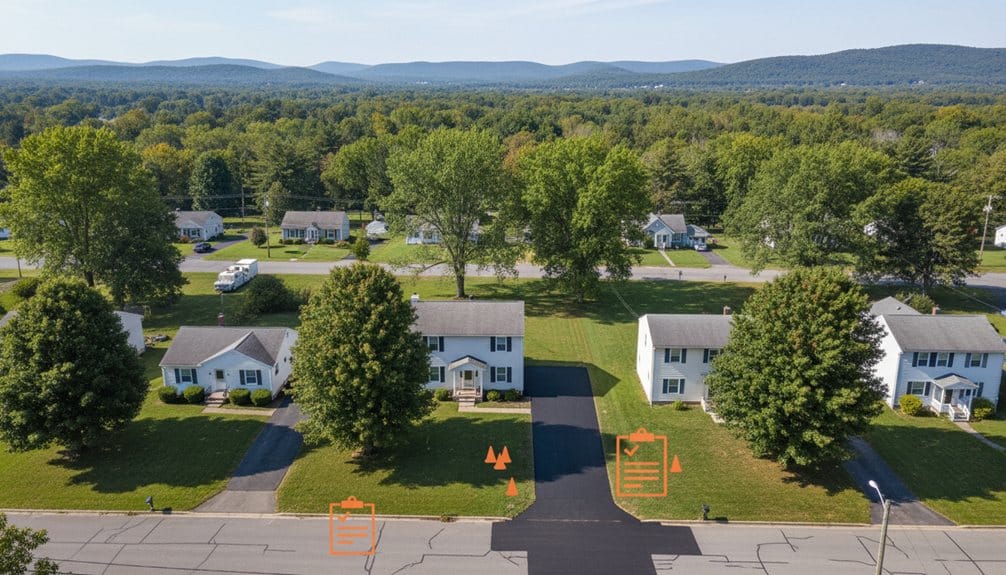
Yes, you need an asphalt paving permit in Central PA. Submit your application at least 30 days before work starts using PennDOT’s ePermitting system or Form M-950A/M-945A—the residential fee is just $25. Your township might require additional permits too, especially for stormwater control. Skip the permit? You’re facing $100+ fines, court costs, and required driveway removal or relocation. Professional contractors handle all this paperwork for you, plus coordinate inspections. Keep reading to learn exactly what your specific township requires and how to avoid expensive mistakes.
Key Takeaways
- PennDOT driveway permits are required for residential asphalt work; submit applications at least 30 days before construction begins.
- Municipal rules vary across Central PA townships; some require permits for any asphalt addition while others exempt resurfacing.
- Zoning permits may be required in addition to PennDOT permits depending on your specific municipality’s regulations.
- Unpermitted work carries minimum $100 fines plus court costs and may result in mandatory driveway removal or relocation.
- If your driveway touches a state highway, you need both a PennDOT Highway Occupancy Permit and municipal permits.
Do You Need an Asphalt Paving Permit in Central PA?
- Submit your driveway permit application at least 30 days before work starts
- The application fee is just $25 for residential driveways
- Use PennDOT’s ePermitting system or paper forms (M-950A or M-945A)
- Send everything to your local district office
Here’s why this matters: Skipping this step costs you big.
You’ll face a minimum $100 fine plus court costs and corrective actions at your expense. Don’t risk it!
Fast, free quotes are available for paving and seal coating projects — get expert advice and a custom estimate to plan your project.
Your Municipality’s Rules: Why Requirements Vary Across Townships
Because Central PA’s townships don’t all play by the same rules, you’ve got to check locally. What flies in one municipality might require a zoning permit in another!
Here’s why your township matters:
- Impervious surface rules differ dramatically — some townships demand permits for any asphalt addition, while others skip permits for simple resurfacing projects.
- Stormwater controls vary by location — your municipality might require site plans showing lot coverage, setbacks, and drainage calculations before you pour asphalt.
- State connections complicate things — if your driveway touches a state highway, you’ll need a PennDOT Highway Occupancy Permit alongside your municipal driveway permit.
Permit fees range $50–$300 depending on township requirements. Your best move? Call your local zoning office immediately. Early coordination prevents expensive redesigns and guarantees complete compliance!
We serve neighborhoods across Central PA, including Hanover, Etters, Dillsburg, Gettysburg, and other nearby towns, so contact us to confirm local requirements and get a free quote, or check our interactive map for service area verification.
Asphalt Paving Costs and Permit Timelines in Central PA
Now that you’ve nailed down your township’s specific permit rules, it’s time to talk money and timing.
The Budget Reality
Your PennDOT driveway permit fee? Just $25. That’s incredibly affordable insurance!
However, skipping a required Highway Occupancy Permit (HOP) costs you a minimum $100 fine plus court costs. Ouch.
Timeline Strategy
Submit your HOP application at least 30 days before work begins.
Use PennDOT’s convenient ePermitting system or grab paper forms (M-950A or M-945A).
The Smart Move
Don’t rush! PennDOT’s review checks sight distance and drainage thoroughly.
Schedule your final inspection immediately when driveway construction finishes. This prevents expensive corrections later.
Simple math: Spend $25 now, avoid $100+ penalties later!
Nathan’s Paving in Etters offers free estimates and professional scheduling to help you plan permits and timelines for residential or commercial projects, so consider getting a free estimate to align your project with permitting requirements.
How to Apply for Your Asphalt Permit
You’re ready to pave—so let’s get that Highway Occupancy Permit (HOP) locked in!
Here’s your action plan:
- Choose your application method. Use PennDOT’s ePermitting system online or submit Form M-950A (minimal use) or Form M-945A (higher traffic) to your PennDOT district office.
- Submit everything at least 30 days early. Include your completed application and site plan. The residential driveway fee is just $25. PennDOT reviews sight distance, drainage, and driveway design thoroughly.
- Schedule your final inspection. After paving finishes, notify PennDOT to verify your work matches the permit exactly.
Need help? Call your local PennDOT district office. They’ll schedule appointments and provide correct forms. Getting ahead saves headaches and keeps you compliant! We also offer free estimates and professional project management to help ensure ground preparation meets PennDOT standards.
Skip Your Permit? Here’s What Happens
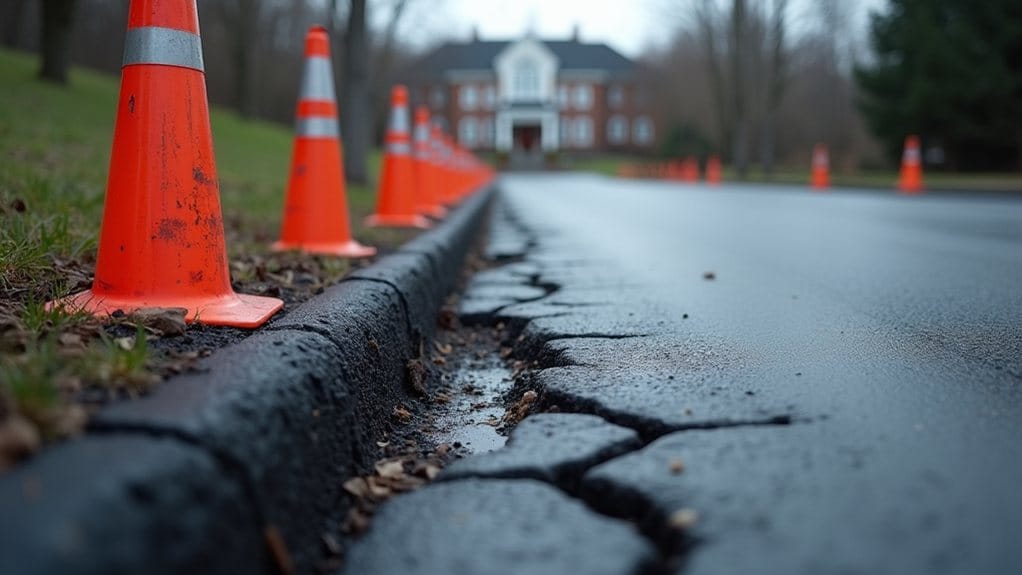
Skipping that Highway Occupancy Permit can cost you big time. You’re breaking Section 420 of Title 36. That means minimum $100 fines plus court costs. PennDOT won’t ignore it either.
| Consequence | What It Means | Your Cost |
|---|---|---|
| Fines & Court Costs | Legal penalties for unpermitted work | $100+ minimum |
| Corrective Work | PennDOT forces you to fix drainage issues | You pay for fixes |
| Final Inspection Failure | Missing inspection triggers enforcement action | Additional penalties |
Here’s the real damage: PennDOT may require you to relocate or modify your driveway. Drainage problems? You’re liable. Bad sight distance? Same problem.
The smart move? Contact your district office first. Submit your HOP application 30 days ahead. Use ePermitting for faster processing. Schedule that final inspection immediately after completion.
Avoid costly headaches. Get permitted now!
Ground preparation is essential for paving durability, and professional paving services can ensure proper grading and drainage for long-lasting results — consider ground preparation when planning your project.
Contractors Handle Asphalt Permits: You Focus on the Rest
Here’s what they’ll manage:
- Complete your paperwork. They’ll fill out Form M-950A or M-945A and submit everything via ePermitting or your district office.
- Collect the fee. Expect to pay the $25 residential application fee upfront.
- Schedule inspection. They’ll coordinate with PennDOT to arrange your required final inspection after paving.
You sit back and relax. Smart contractors apply at least 30 days before work starts. They’ll even verify whether your driveway alteration actually needs a permit.
Better yet? They’ll document everything in writing. That HOP becomes your legal proof of compliance. No surprises. No fines. Just peace of mind!
Nathan’s Paving’s commercial concrete paving experience means they can handle projects of all sizes and keep your permit process smooth.
Frequently Asked Questions
Do I Need a Permit to Put in an Asphalt Driveway?
You’ll need PennDOT’s Highway Occupancy Permit (HOP). Here’s what matters:
- Form required: M-950A (≤25 vehicles/day) or M-945A (higher traffic)
- Cost: $25 application/inspection fee
- Timeline: Submit 30 days before starting work
- Why it matters: PennDOT reviews sight distance and drainage solutions
Skip the permit? You’re facing $100+ fines plus corrective costs. Contact PennDOT early—seriously!
Do You Need a Permit for a Driveway in PA?
Key considerations:
- Curb cut requirements vary by township
- Stormwater management impacts approval
- Inspection timelines matter—plan ahead!
Permit exemptions exist for minor driveway resurfacing, but confirm first. Check local codes before starting work!
Are Permits Required for Pavers?
Your local zoning restrictions typically require permits. Pavers count as impervious surface and impact drainage considerations. You’ll need zoning approval and possibly building permits for raised patios.
Your contractor should handle utility clearances before installation. Setback requirements vary by municipality. Some areas demand environmental regulations compliance and inspection schedules.
Bottom line: Check with your local code office first!
Do You Have to Go Through the Township for a Paver Patio in PA?
You can’t skip the township. They’ll review your setbacks and lot coverage.
Even though pavers seem simple, you’re still adding impervious surface. You’ll need permits before starting work on base preparation, edge restraints, and drainage solutions.
Contact your local zoning office first. They’ll tell you exactly what approvals you need for your paver project!
Conclusion
You’re standing at a crossroads. Do you call your municipality today? Or risk hefty fines tomorrow? The permit game isn’t complicated. But it demands action. Your contractor can guide you through it. Don’t leave this to chance. One phone call changes everything. Your driveway’s future depends on what you do right now. Will you take it?