Lebanon winters are hard on pavement. Water gets in, freezes, and pushes the surface apart. A small problem in the fall can turn into a big one by spring.
This guide is for homeowners and business owners in Lebanon. It explains what common damage means, what to fix first, and what to do before freezing weather arrives.
Why Does Asphalt Break Down in Winter?
Asphalt is tough, but it is not waterproof once it cracks. Water slips into small openings. When the temperature drops, that water freezes and takes up more room. It pushes the pavement up and apart.
Then the ice melts. The water drains away and leaves a bigger gap. The next freeze does the same thing again. After a few rounds, a thin crack becomes a pothole.
For more on this cycle, read about the impact of freeze-thaw cycles on asphalt.
What Do Different Kinds of Damage Mean?
Each type of damage tells you something. Here is a quick guide.
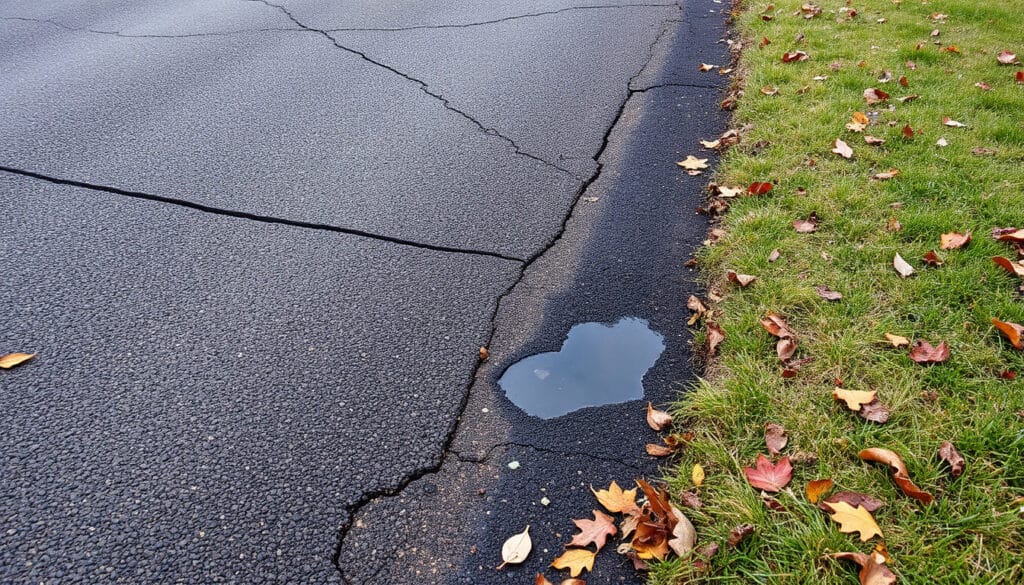
- Narrow cracks. These are an early warning. Water can get in, but the base may still be fine.
- Wide or long cracks. Water is already reaching the base. These need prompt care.
- Web-like cracks. The base may be weak. A simple patch may not hold.
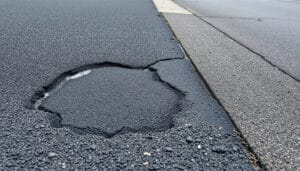
- Potholes. The surface has broken and pieces have come loose.
- Crumbling edges. The pavement has lost support at the side, often from water or heavy wheels.
- Sunken spots. The base underneath may have shifted or washed out.
To learn why cracks form, see why asphalt cracks.
What Should You Fix First?
Start with anything that is unsafe or lets water in. A simple order looks like this:
- Potholes. They can trip people and damage cars.
- Wide cracks. They let in the most water.
- Broken edges. They can spread fast.
- Sunken spots. They hold water, which makes ice.
- Narrow cracks. These are easy to fill and stop the next problem.
If you have a long list, tell the crew what worries you most. They can help you set the order.
How Does a Crew Fix Each Problem?
The method depends on the damage.
For cracks, the crew cleans out dirt and loose bits, then fills the crack with sealant. This keeps water out. A clean crack gives the filler something to hold.
For potholes, the crew cuts out the broken area and removes loose material. Then they fill the hole with new asphalt and pack it down.
For crumbling edges, the crew trims the broken part and rebuilds the edge. Good support at the side helps it hold.
For sunken spots, the crew checks why the area dropped. They may need to fix the base before they patch the surface. A sunken spot is often a sign that water has washed out the base.
What Can You Do Before Freezing Weather?
A short walk in the fall can save you trouble. Try these steps:
- Walk the pavement on a dry day and look for cracks and holes.
- Mark the spots with chalk or take photos.
- Clear leaves and dirt from cracks and drains.
- Check that water flows away from the pavement.
- Call early for an estimate on anything that looks serious.
Dirt and leaves hold moisture against the pavement. Clearing them helps. Do not try to fix large holes yourself in cold weather. Fillers do not stick well when it is cold and wet.
Can Repairs Be Done in Cold Weather?
Sometimes. Crews can do temporary patches in winter to keep a hole from growing. These are meant to hold until warmer weather.
Permanent repairs usually work well in warm, dry weather. Hot asphalt needs warmth to pack tight and bond. If a repair is done in the cold, the crew may come back in spring to finish it.
Read the winter asphalt patching guide for how temporary fixes work. If a hole is a safety risk, call and ask what can be done now.
How Do Homes and Businesses Differ?
The damage is the same, but the stakes can be different.
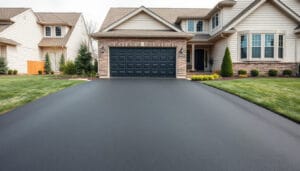
Homeowners. A driveway is used every day. Cracks and holes can damage tires and make winter shoveling harder. Fixing edges and cracks early also keeps the driveway looking neat.
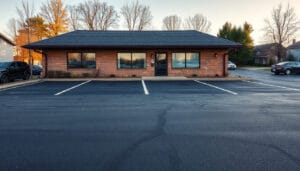
Businesses. A lot has more traffic and more people on foot. A pothole can be a safety risk. A business owner may also want the work done in sections so customers can still park. Ask about phasing the work so part of the lot stays open.
When Is Repair Not Enough?
Repair works when the damage is limited. Sometimes it is not enough. Watch for these signs:
- Cracks in a web pattern across a large area.
- Holes that keep coming back.
- Large sunken areas.
- A surface that is worn all over.
In these cases, a crew may suggest resurfacing or replacing a section. Our guide on asphalt overlay vs full replacement can help you think it through.
What Should You Ask a Lebanon Repair Crew?
Good questions give you a clear picture:
- What caused this damage?
- What will you do about the base?
- Is this a temporary fix or a lasting one?
- How soon can you do the work?
- What happens if it rains or freezes?
- What should I watch for after the repair?
A crew that explains the cause, not just the fix, is showing you the whole picture.
How Do You Keep Repairs Lasting?
Once repairs are done, a few habits help:
- Fill new cracks as soon as they appear.
- Keep drains and gutters clear so water moves away.
- Avoid piling snow in one spot that melts onto the pavement.
- Use care when you plow or shovel near edges.
- Walk the area each fall and spring.
After repairs, sealcoating can add a protective layer. Protecting the edges helps the whole surface stay together.
What Is Different About Repairs on a Slope?
Many Lebanon properties sit on a grade. On a slope, water runs fast and can wash out the edges of pavement. It can also carry away the stone base under cracks.
If your driveway or lot slopes, tell the crew where the water goes. They may adjust how they shape a patch or rebuild an edge so water moves away. A repair that ignores drainage tends to fail in the same spot.
What Should You Do After a Big Freeze or Thaw?
Check the pavement as soon as you can after a hard freeze and a thaw. New cracks and holes often show up fast.
Walk the area and take photos. Mark any spot that holds water. Call for help on anything that looks like it is growing. Early notes also help you compare from one season to the next.
Frequently Asked Questions
How fast should I fix a crack?
As soon as you can, before the next freeze. Small cracks are easy to fill. Big ones cost more time to fix.
Can I fix a pothole myself?
A small temporary patch might hold for a short time. A crew can make a repair that bonds better and lasts longer.
Do I need to repair before sealcoating?
Yes. Sealcoat is a thin layer and does not fix cracks or holes. Repairs come first.
What if I see damage after a thaw?
Take photos and call for an estimate. Early repair stops the damage from growing.
More Paving Guides
Get a Free Estimate
Nathan’s Paving & Seal Coating has worked in Central PA for over 20 years. We handle paving and repair in Lebanon, PA for homes and businesses.
Estimates are free, and we offer senior citizen discounts. Call (717) 648-5030 or email nathanpaving@gmail.com. We will look at the damage and tell you what it needs.