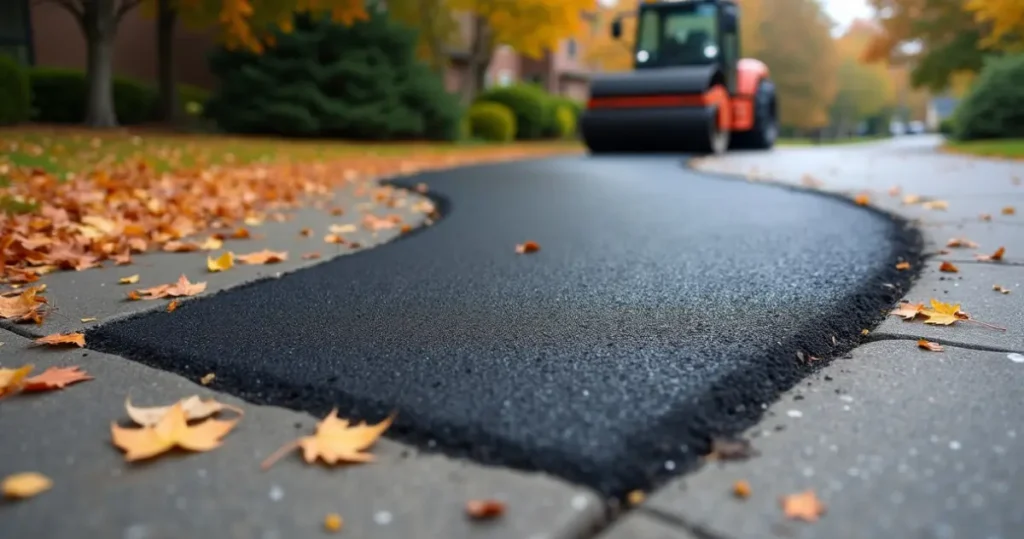
Fall is the last good chance for asphalt repair in York, PA before winter hits. Small problems you ignore now will not stay small. Freezing water, snowplows, and road salt all make them worse.
This guide covers what to fix before the cold sets in. It also explains how to choose between patching, resurfacing, and an overlay. That way you know what you are paying for.
Why Does Asphalt Damage Get Worse in Winter?
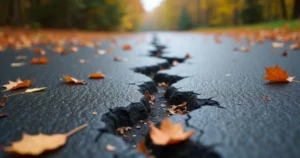
It comes down to water. Water finds its way into cracks and weak spots. When the temperature drops, that water freezes and expands. It pushes the crack wider. Then it thaws, more water gets in, and it happens again.
That is the freeze-thaw cycle. York County goes through it over and over each winter. A hairline crack in October can be an open crack by March.
Water also soaks down into the base. The base is the layer of crushed stone under the asphalt that carries the weight. When the base gets soft, the surface above it sinks and breaks. That is how potholes start.
Add snowplow blades scraping the surface and salt eating at the binder, and winter is rough on pavement.
What Should You Repair Before Winter?
Walk your driveway or lot this fall and look for these four things.
1. Cracks
Cracks are the front door for water. Filling or sealing them in the fall is the cheapest repair you can make. It keeps water from reaching the base all winter.
2. Potholes and soft spots
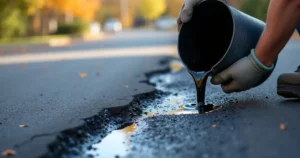
A pothole already has water under it. Winter will make it bigger and deeper. A soft spot that gives a little when you step on it is a pothole in the making. Both should be patched while the weather still allows it.
3. Crumbling edges
Edges have no support on the outside. They break off first, especially where tires ride close to the grass. Plows catch loose edges and rip them away. Fixing them now keeps the damage from spreading inward.
4. Drainage problems
Look for puddles that sit for a day after rain. Standing water turns into ice. Ice turns into damage. Low spots and water that runs toward your garage are worth fixing before the snow comes.
Should You Patch, Resurface, or Overlay?
This is the big question. The answer depends on how much of the surface is damaged and how healthy the base is.
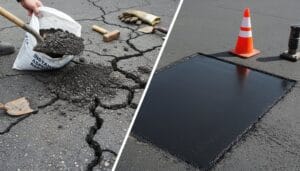
Patching fixes one spot. We cut out the bad section, fix what is under it, and fill it with new asphalt. It makes sense when the damage is limited to a few areas and the rest of the surface is solid.
Resurfacing puts a new top layer across the whole surface. It makes sense when the surface is worn and cracked all over, but the base underneath is still sound. You get a fresh surface without tearing everything out. Learn more about asphalt resurfacing in York.
An overlay is a new layer of asphalt placed over the old one after repairs are made. It is a good middle path when the old pavement is tired but not failing. See our page on asphalt overlay in York, PA.
Full replacement is for pavement where the base has failed. If large areas are sinking or broken into small pieces, a new top layer will not hold. The base has to be rebuilt. One of our customers had a 45 year old driveway that was past saving. We removed it, regraded it, brought in three truckloads of stone, and let it cure three days before the top layer went on.
We will tell you which of these you actually need. Sometimes a patch is the right answer, and that is what we will recommend.
What Happens If You Wait Until Spring?
Waiting feels cheaper today. It usually costs more by spring.
A crack you could fill in October has a whole winter to grow. Water freezes in it dozens of times. By March, it may have spread into a web of cracks or opened into a pothole.
Potholes grow faster once they start. Every car that hits one knocks more loose. Plows catch the broken edges and pull out more.
The repair list gets longer, and so does the bill. A small crack fill can turn into a patch. A patch can turn into resurfacing. Fixing things in the fall keeps a small job small.
How Late in the Year Can Asphalt Be Repaired?
Hot asphalt needs warm ground and warm air to bond and pack down well. As fall goes on, the working window gets shorter each week. That is why early fall is the time to book.
Once it gets truly cold, crews switch to cold patch for emergencies. Cold patch is a temporary fill that can go into a pothole in winter. It keeps a hole from getting worse until spring. It is not a permanent repair.
Crack filling and sealcoating have their own weather rules too. Sealcoat needs at least 55°F and rising, and temperatures must not drop below 50°F for 48 hours afterward. If your driveway needs both repairs and a seal, the repairs come first.
What Can You Do Yourself Before Winter?
Some upkeep is easy for a homeowner or property manager:
- Clear leaves and debris so water can drain
- Point downspouts away from the pavement
- Mark the edges with stakes so plows can see them
- Use a plastic shovel blade to avoid gouging the surface
- Go easy on rock salt and sweep up extra after storms
Leave cutting, patching, and resurfacing to a crew with the right equipment. A bad patch can trap water and make things worse.
Asphalt Repair FAQ
Is it worth fixing cracks right before winter?
Yes. Fall is the key time. Filled cracks keep water out of the base during the freeze-thaw season, which is when most damage happens.
Can potholes be fixed in winter?
Only with a temporary cold patch. It holds the hole until spring. A permanent hot mix repair needs warmer weather.
How do I know if I need resurfacing instead of patching?
If the damage is spread across most of the surface, patching every spot stops making sense. If the base is still solid, resurfacing or an overlay is usually the better value.
Do you repair both driveways and parking lots?
Yes. We handle residential driveways and commercial lots, including pothole repair, patching, and resurfacing.
More York Paving Guides
Get a Free Estimate in York
Nathan’s Paving & Seal Coating has worked in Central PA for over 20 years. We handle asphalt repair, patching, and resurfacing for homes and businesses, plus every other kind of paving work in York, PA.
We hold a 4.8 star rating across 55 Google reviews. Estimates are free, and we offer senior citizen discounts.
Call (717) 648-5030 or email nathanpaving@gmail.com. Book early in the fall so we can get your repairs done before the cold shuts the season down.