Paving an occupied apartment complex is less about asphalt and more about logistics. The work itself is routine. Moving 200 residents’ cars around for a week is the hard part.
This guide covers the parts that actually cause problems.
Your Drive Lanes Are the Real Issue
Apartment lots do not wear evenly, and understanding the pattern saves money.
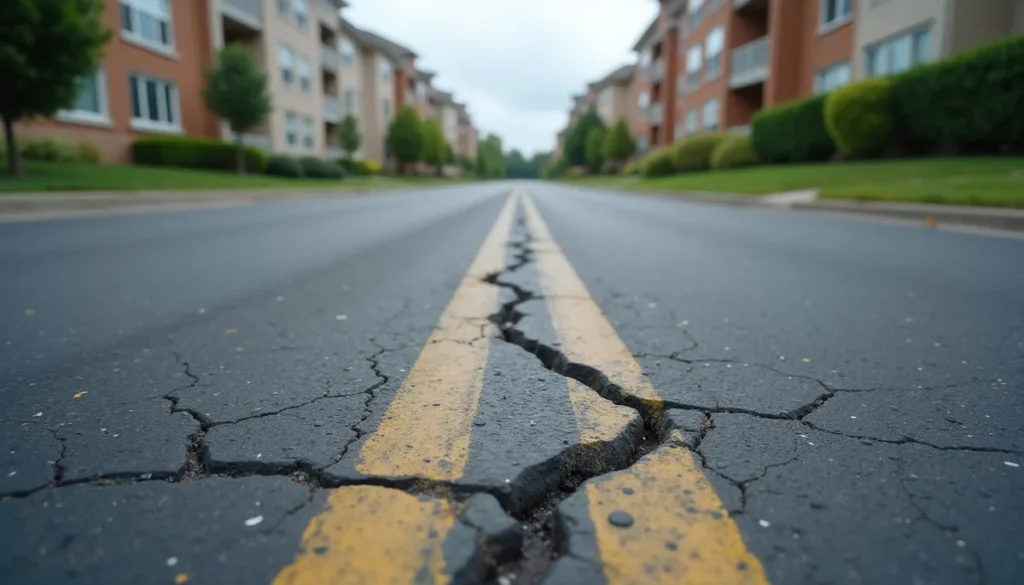
Drive lanes carry everything. Every resident, every delivery, every trash truck uses the same paths. That is where the load concentrates and where failure starts.
Dumpster pads take the worst of it. A loaded trash truck is one of the heaviest vehicles on your property, and it stops, lifts, and turns in the same spot every week. Dumpster approaches fail before anything else. If yours is broken up, that is normal, and patching the surface will not fix it if the base underneath is gone.
Parking stalls last much longer. Cars sit there. Very little stress.
Turning areas and speed bumps show wear early. Anywhere vehicles turn tightly or brake, the surface takes more punishment.
The practical implication: you probably do not need to repave the whole property. You likely need structural work on lanes and dumpster pads, and surface protection on the stalls. Those are very different costs. Insist on a section-by-section assessment rather than one number for the whole lot.
Resident Logistics Is the Whole Job
This is where these projects succeed or fail.
Give real notice. Two weeks minimum, with reminders. Post at every entrance, every building, and by mailboxes. Email and text if you have those lists. Then post again the day before, on the affected spaces themselves.
Notice has to say where to park instead. “Lot closed Tuesday” generates fifty phone calls. “Lot closed Tuesday, park in the north lot or on Maple Street” does not.
Phase small. Do not close a third of the property at once. Work in sections small enough that displaced residents have somewhere realistic to go. It takes longer on the calendar and generates far fewer complaints.
Plan for the cars that will not move. Every complex has them. Owners out of town, a vehicle that does not run, someone who ignored every notice. Decide in advance with your contractor and your towing service how that gets handled, and make sure your notice language covers it.
Keep emergency access open at all times. Fire lanes cannot be blocked at any point in the sequence. Confirm the phasing plan with this in mind before work starts.
Protect accessible spaces and access. Residents who need accessible parking need it during the work, not just after. Build that into each phase.
Tell residents about the cure time. Fresh asphalt needs to stay clear for a few days. If they think it is done because it looks done, they will drive on it. Barricades plus clear signage.
Warn about tracking. Asphalt sealer and fresh material can track onto shoes, carpets, and tires. One line in the notice prevents a lot of complaints.
ADA Requirements
Repaving or restriping means accessible parking has to meet current standards. Under the 2010 ADA Standards:
| Total spaces | Accessible required | Van-accessible |
|---|---|---|
| 1 to 25 | 1 | 1 |
| 26 to 50 | 2 | 1 |
| 51 to 75 | 3 | 1 |
| 201 to 300 | 7 | 2 |
| 301 to 400 | 8 | 2 |
One in every six accessible spaces must be van-accessible. Regular accessible spaces are at least 8 feet wide, van-accessible at least 11 feet wide, with access aisles of at least 60 inches or 96 inches for van spaces. Signage and slope requirements apply as well.
Older complexes striped before 2010 are frequently short on van-accessible spaces. Since you are redrawing the lines anyway, this is the moment to correct it rather than restriping twice.
Budgeting Without a Surprise
Lot work is one of the larger predictable capital items on a multifamily property, and it is easier to plan than most.
Get one assessment, then stage it. A written section-by-section evaluation tells you what is failing now versus what is merely worn. Those go in different budget years.
Do the structural work first. Drive lanes and dumpster pads. Deferring these is what turns resurfacing into replacement.
Then protect the rest. Sealcoating and striping on sound sections costs a fraction of structural work and buys years.
Build crack filling into your annual operating budget, not capital. It is small, recurring, and it is the single item that prevents the expensive problems. Every open crack is a path for water into the base.
Get asphalt thickness in writing. Drive lanes and dumpster approaches need more than parking stalls. A bid that specifies one thickness for the whole property is not accounting for how your lot is actually used.
A Maintenance Rhythm That Works
- Every spring: walk the property and document what changed over winter. Photos help with budget requests.
- As they appear: fill cracks. Do not batch this annually if you can help it.
- Watch the dumpster pads. They tell you first when something structural is developing.
- Fix standing water when you find it. Water that sits is water getting into the base.
- Restripe when lines fade. Faded lines cost you usable spaces and create liability.
- Sealcoat on a rhythm to keep water and sun off sound surfaces.
Ongoing parking lot maintenance is considerably cheaper than the replacement cycle that follows neglect.
Frequently Asked Questions
How much notice should we give residents? Two weeks minimum, with reminders and day-before signage on the affected spaces. Always include where to park instead.
What do we do about cars that do not move? Decide the process with your contractor and towing service before work starts, and make sure your notice language supports it. Every complex has a few.
Do we have to repave the whole property? Usually no. Drive lanes and dumpster pads typically need structural work while stalls need only surface protection. Get a section-by-section assessment.
Why does our dumpster area keep breaking up? Loaded trash trucks are extremely heavy and they stop, lift, and turn in the same place repeatedly. If the base was not built for that, surface patching will not hold. It needs a proper rebuild.
How many accessible spaces do we need? Based on total spaces. A 100-space property needs 4 accessible with at least 1 van-accessible. Count what you have, especially van-accessible.
Can this be done in phases? Yes, and it should be. Smaller phases mean fewer displaced residents and far fewer complaints.
Get a Section-by-Section Assessment
Nathan’s Paving & Seal Coating has worked in Central PA for over 20 years. We work with property managers on multifamily lots, from pothole repair through full resurfacing and striping.
We hold a 4.8 star rating across 55 Google reviews. Estimates are free.
Call (717) 648-5030 or email nathanpaving@gmail.com. We will walk the property, tell you which sections need what, and build a phasing plan your residents can live with.