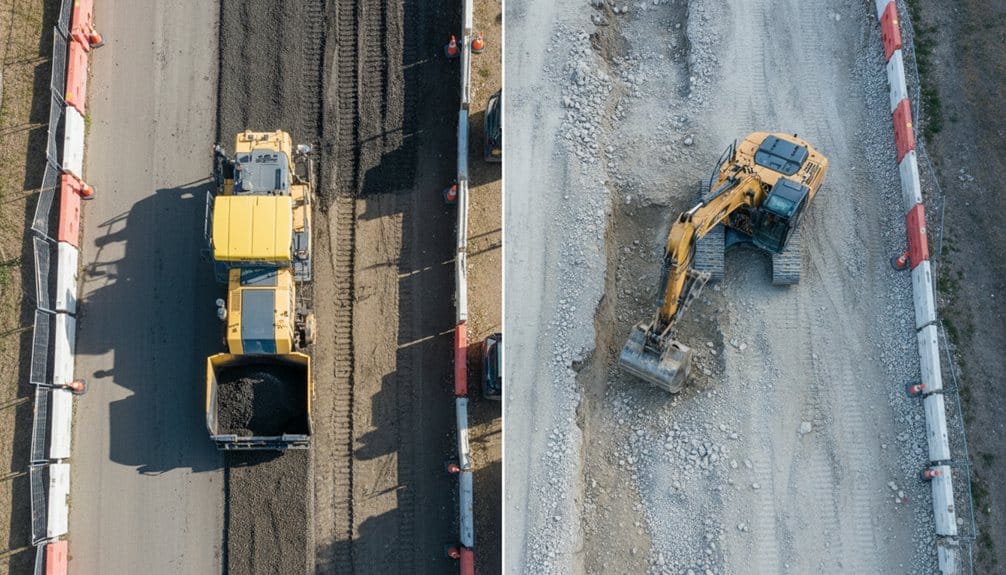
Choose milling if damage stays surface-level. You’re looking at shallow cracks, minor rutting, or small potholes under 4 inches. Milling removes just 1–2 inches, costs roughly $10–$20 per ton, and extends pavement life 8–15 years. Go full removal when structural failure hits. Deep alligator cracking, severe rutting over 1.5 inches, or base layer breakdown demand complete reconstruction. Full removal runs $100–$200 per ton but prevents costly repeat repairs. The real difference? Surface issues respond to milling. Structural problems need the full rebuild. Get core samples tested—then you’ll know exactly which path saves you money.
Key Takeaways
- Milling suits surface damage: Choose milling when damage is limited to the top 1–2 inches with an intact base layer.
- Full removal for structural failure: Deep alligator cracking, severe rutting, or potholes reaching the base require complete reconstruction.
- Significant cost difference: Milling costs roughly $10–$20 per ton; full removal runs $100–$200 per ton.
- Timeline and downtime matter: Milling completes in days with minimal disruption; full removal requires weeks of project duration.
- Get professional evaluation first: Core samples and pavement assessment reveal subgrade integrity, guiding the most cost-effective long-term choice.
How Asphalt Milling Works?
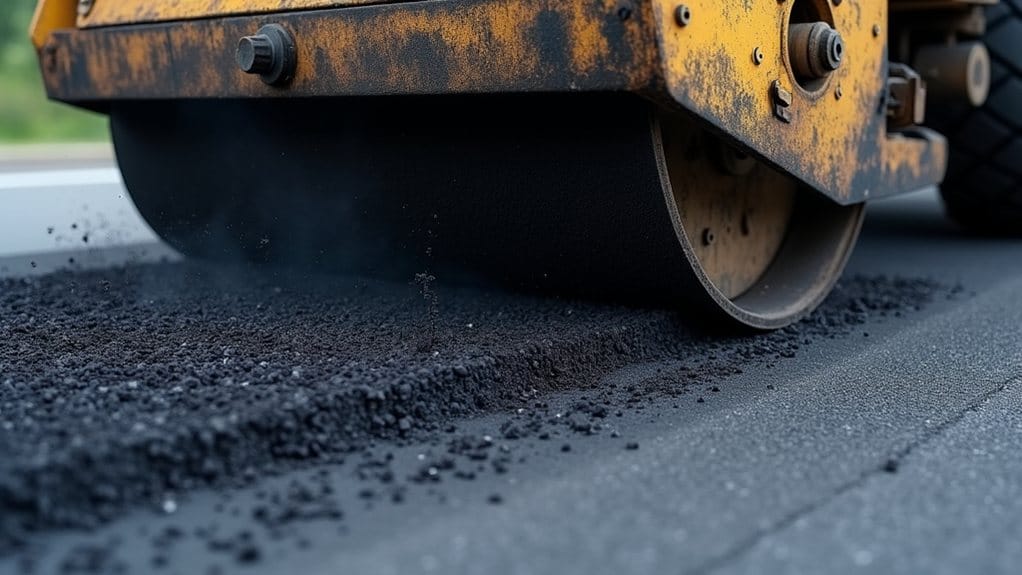
The grinding produces crushed millings called reclaimed asphalt pavement (RAP). You’ve got options: collect it on-site for recycled millings or haul it away. Either way, nothing goes to waste.
Ready for New Pavement
After surface removal, cleanup, and tack application, your overlay preparation is complete. Your newly milled surface accepts fresh asphalt immediately. Your sub-base preservation means longer pavement life—roughly 8 to 15 years! Our team’s use of top-grade materials ensures durability and adherence to local paving standards.
When You Need Complete Asphalt Removal
While milling works great for surface problems, sometimes you’ve got bigger issues brewing underneath. You need complete removal when structural failure runs deep. Alligator cracking, severe rutting, and deep potholes signal trouble. Your base layer is compromised. Full-depth reconstruction tackles everything by excavating down to subgrade. You’ll remediate drainage problems and stabilize weak soil. Then you install fresh base and asphalt layers. Yes, it costs more upfront ($100–$200 per ton versus $10–$20 for milling). But here’s the deal: end-of-life pavement demands this approach. Increased loads? Complete removal handles it. Life-cycle costs actually drop long-term because you’re solving root problems, not masking symptoms. We serve communities across Central PA, so reach out for a free consultation to see if full removal is right for your project.
| Warning Sign | What It Means |
|---|---|
| Alligator cracking | Base failure present |
| Deep potholes | Subgrade erosion happening |
| Severe rutting | Structural breakdown |
| Standing water | Drainage failure |
| Multiple repairs | End-of-life reached |
Surface Damage vs. Structural Failure: Know the Difference
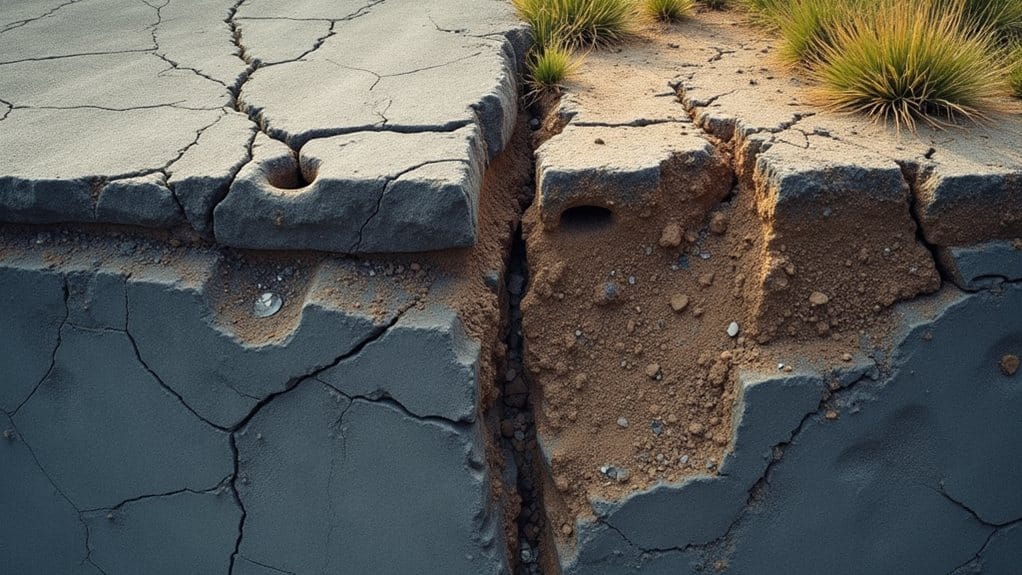
Before you decide between milling and total removal, you’ve got to spot the real problem.
The Quick Tell
Surface damage stays shallow. Hairline cracks, minor rutting, and small potholes (1–4 inches deep) live in the top layer only.
Your underlying base? Still solid. Milling and overlay fixes this beautifully—and costs roughly 10% of full repaving!
Structural failure runs deep. Alligator cracking, deep potholes hitting the base, and progressive rutting scream trouble.
Your base lost integrity. Full-depth replacement becomes necessary.
The Field Test That Matters
Here’s the pivotal point: If defects return within seasons after milling, structural issues lurk underneath.
That’s your signal—stop wasting money on overlays. You need total removal and recycled asphalt reconstruction to extend pavement life properly.
Nathan’s Paving & Seal Coating brings over 20 years of experience and uses top-grade materials to ensure long-lasting results.
Diagnose Your Pavement: 6 Signs You Need More Than Milling
You’ve learned the warning signs—defects returning fast mean trouble underneath.
Watch for these red flags:
Widespread alligator cracking covering 25–30% or more signals structural failure. Milling won’t save it. You need full-depth reclamation instead.
Deep recurring potholes that penetrate through asphalt into the base? That’s your subgrade instability screaming for help. Patching fails repeatedly because the underlying base compromise runs deep.
Persistent drainage problems like ponding water and trapped moisture weaken everything below. Full reconstruction becomes your only real solution here.
Severe rutting exceeding 1–1.5 inches means repeated heavy loads destroyed your base’s structural capacity. Total removal is necessary.
Subgrade instability—soft spots, washouts, severe settlement—demands complete rebuilding from ground up. Milling simply won’t work.
Don’t gamble with these conditions. Full replacement protects your investment long-term.
Consider scheduling a professional inspection to assess the extent of damage and get a free estimate so you can choose the right remedy.
Cost Breakdown: Upfront Expenses and Long-Term Savings
Asphalt milling costs roughly 10% of full-depth removal. You’re looking at $10–$20 per ton versus $100–$200 per ton for new material. That’s massive savings upfront!
| Expense Category | Milling | Full-Depth Removal |
|---|---|---|
| Material Costs | $10–$20/ton | $100–$200/ton |
| Labor & Equipment | Lower | Higher |
| Project Timeline | Shorter | Longer |
Why milling wins early.
Milling removes only 1–2 inches of surface layer. You skip demolition, excavation, and hauling fees. Your business experiences minimal downtime. The project finishes faster too.
The long-term plot twist.
Full-depth removal raises short-term costs dramatically. But here’s the kicker: it slashes maintenance frequency and lifecycle cost appreciably. Structurally sound pavements benefit from milling’s lower upfront investment. However, failing bases demand full replacement for genuine long-term savings.
Recycled asphalt advantage.
Full-depth reclamation reuses pulverized pavement in place. This reduces material costs and transport expenses. You’re maximizing value every single way. Fast, free quotes are available to help plan your project with detailed estimates.
How Deep Should Milling Go for Your Overlay?
For weathered surfaces? You’ll typically mill 1–2 inches.
Minor rutting or elevation fixes? Go 2–4 inches instead.
When to Go Deeper
Here’s the critical part: if deteriorated surface layers exceed 30% of your pavement thickness or show alligator cracking, shallow milling won’t cut it.
You’ll need deeper removal or full-depth reclamation instead.
The Perfect Match
Smart engineers match milling depth to overlay thickness.
Two inches milled plus two inches of new asphalt keeps your curb drainage and driveway elevations intact—no surprises!
Your Limit
Cold-planing equipment handles up to full asphalt thickness (3–6 inches typically).
Beyond that? Structural failure demands complete removal and subgrade work.
We recently applied these principles when completing a full removal and replacement for a residential project in Carlisle, ensuring a durable foundation for their new asphalt installation.
Why Milling Wins on Environmental Impact
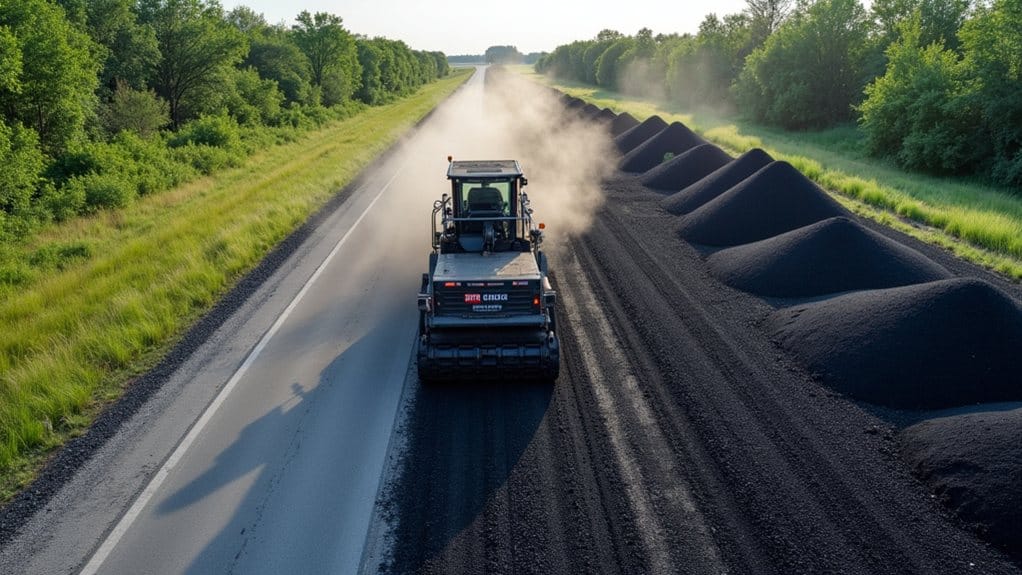
When you break down the numbers, milling crushes total removal on sustainability.
Recycling Beats Waste
You’re reusing Reclaimed Asphalt Pavement (RAP) instead of hauling materials to landfills. That’s massive landfill reduction right there. Your project avoids transportation emissions and disposal costs entirely.
Real Energy Savings
Full-depth removal demands virgin materials shipped long distances. That’s serious embodied carbon. Milling? You’re keeping existing pavement intact. Less equipment running. Lower fuel consumption. Shorter construction time means fewer site emissions.
Material Conservation Matters
You’re not replacing your entire base layer unnecessarily. In-place recycling techniques stabilize materials without hauling them away. Your haul and disposal emissions drop dramatically.
The verdict? Milling delivers environmental wins across the board. Your project becomes genuinely sustainable. Nathan’s Paving & Sealcoating maintains a proven project track record, demonstrating real-world scalability of these sustainable practices.
Milling + Resurfacing: Extend Your Pavement’s Life by Years
You’ve seen how milling crushes it on sustainability. Now let’s talk real results.
Asphalt milling removes just 1–4 inches of damaged surface. Your preserve base layer stays intact. Then resurfacing adds fresh material on top. Boom—you’ve extended pavement life by 8–15 years!
This cost-effective solution fixes surface defects fast. Shallow cracks? Gone. Minor potholes? Handled. Plus drainage restoration happens automatically.
| Benefit | Impact |
|---|---|
| Extend pavement life | 8–15 years |
| Cost savings vs. removal | ~90% cheaper |
| Minimize downtime | Days, not weeks |
| Recycle asphalt (RAP) | Zero waste |
| Restore drainage | Immediate |
Here’s the sweet spot: choose milling when damage stays surface-level. Your base is healthy. Underlying structure is solid.
Result? You recycle asphalt. Save massive money. Keep traffic moving.
Nathan’s Paving is a trusted local provider offering free quotes and transparent pricing to help you choose the best option.
Your Decision Checklist: Choosing the Right Method for Your Site
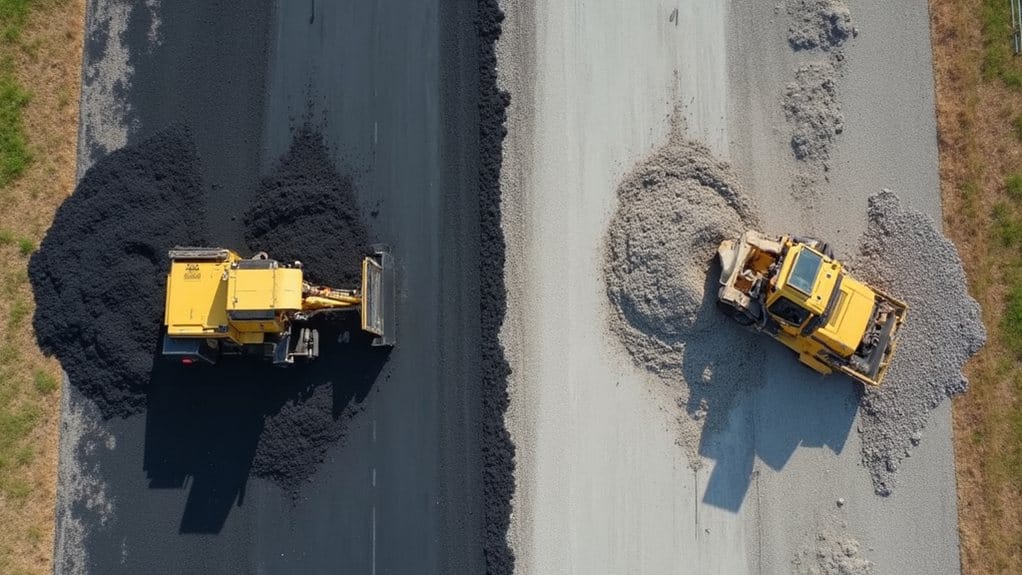
Now that you’ve seen milling’s power, it’s time to pick your move.
Ask yourself these critical questions:
- Is your surface distress limited to the top 1–2 inches?
- Does your underlying base feel structurally sound?
- Can you see widespread alligator cracking or deep potholes?
The cost comparison is striking. Asphalt milling runs roughly 10% of full-depth removal upfront. But here’s the twist: if your base needs major reconstruction, total removal saves money long-term.
Don’t guess! Get a professional pavement evaluation done. Core samples reveal everything about your subgrade integrity and expected long-term lifespan.
Consider sustainability too. Milling recovers recycled RAP for reuse. Full-depth removal enables in-place reclamation, slashing haul costs dramatically.
Choose wisely. Your budget and timeline depend on it! Nathan’s Paving & Seal Coating serves Central PA communities and offers free, no-obligation quotes to get your project started.
Frequently Asked Questions
Can Milled Asphalt Be Reused, and Where Does Recycled Material Typically Go?
Where it goes:
- Hot mix asphalt plants use it for new pavement
- Recycled base layers strengthen roads underneath
- Construction sites need fill material
The payoff: You’re opening environmental benefits through pavement recycling. Material testing guarantees quality. This crushed RAP saves you money while reducing waste. It’s smart, sustainable business!
How Long Does Asphalt Milling Take Compared to Complete Removal and Replacement?
- Milling: 1-3 days for most jobs
- Complete removal: 3-7 days minimum
What affects your job timeline:
- Equipment speed – Modern mills crush asphalt fast
- Crew size – Larger teams accelerate work
- Site access – Tight spaces slow operations
- Weather impact – Rain halts both methods
- Traffic control – Permits extend timelines
- Curing time – Milling needs minimal wait
You’ll finish faster. Your budget wins too!
Will Milling Create Dust or Noise Issues Affecting Neighboring Properties During Work?
What you’re dealing with:
- Dust clouds spread 100+ feet away
- Equipment noise reaches 80-90 decibels
- Vibration rattles nearby windows
Your smart moves:
- Notify neighbors *before* work starts
- Use water spraying for dust mitigation
- Implement site containment with temporary barriers
- Schedule work during reasonable hours
- Monitor air quality consistently
- Watch for community complaints
- Track traffic disruption patterns
Bottom line: Plan ahead or face angry neighbors!
What Permits or Regulations Govern Asphalt Milling Versus Total Removal in My Area?
You’ll need local ordinances approval first.
Check your city’s environmental permits requirements.
Stormwater regulations often demand erosion controls.
Get utility clearances to avoid underground hazards.
Some areas enforce heritage restrictions on older sites.
Plan traffic management routes.
Monitor air quality and noise bylaws compliance.
Confirm waste disposal procedures.
Verify your contractor licensing is current.
Contact your local public works department today!
Can I Apply New Asphalt Immediately After Milling, or Is Waiting Necessary?
Here’s the timeline:
- Surface profiling: inspect the milled layer thoroughly
- Curing time: typically 24-48 hours minimum
- Weather check: temperature effects matter hugely
- Adhesion testing: verify the base is ready
- Compaction requirements: make certain proper density first
Then you’re golden for overlay application! Traffic reopening comes after your new asphalt fully cures. Binder compatibility between layers? Critical. Sealcoat timing follows completion. Drainage considerations prevent future headaches.
Bottom line: patience pays dividends.
Conclusion
Trust your gut. Trust the data. You’ve got this. Your pavement’s future depends on the choice you make right now.