Here’s your quick answer: Less than 25% damage with shallow cracks? Resurface! You’ll pay $3–$7 per square foot and extend service life significantly. More than 30% damage, alligator cracking, or deep structural issues? Replace it. Yes, it costs ~$15 per square foot, but you’re getting decades of reliable service (asphalt) or extended durability (concrete). Your driveway’s age matters too—if it’s already 20+ years old, replacement usually beats repeated repairs. Get written quotes with matching specs to compare true costs and find your best move.
Key Takeaways
- Resurfacing suits driveways with less than 25–30% damage; replacement needed for extensive damage or structural failure.
- Resurfacing costs $3–$7 per square foot; replacement averages $15 per square foot but provides a long-term service life.
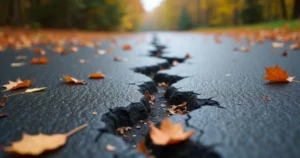
- Cracks wider than 1/4 inch or alligator cracking indicate replacement; shallow cracks under 1/4 inch allow resurfacing.
- Resurfacing completes in one day; full replacement requires 3–7 days plus the necessary curing time for concrete.
- Get written bids with identical scope, material specs, base prep details, and per-square-foot costs before deciding.
How Old Is Your Driveway, and How Bad Is the Damage?
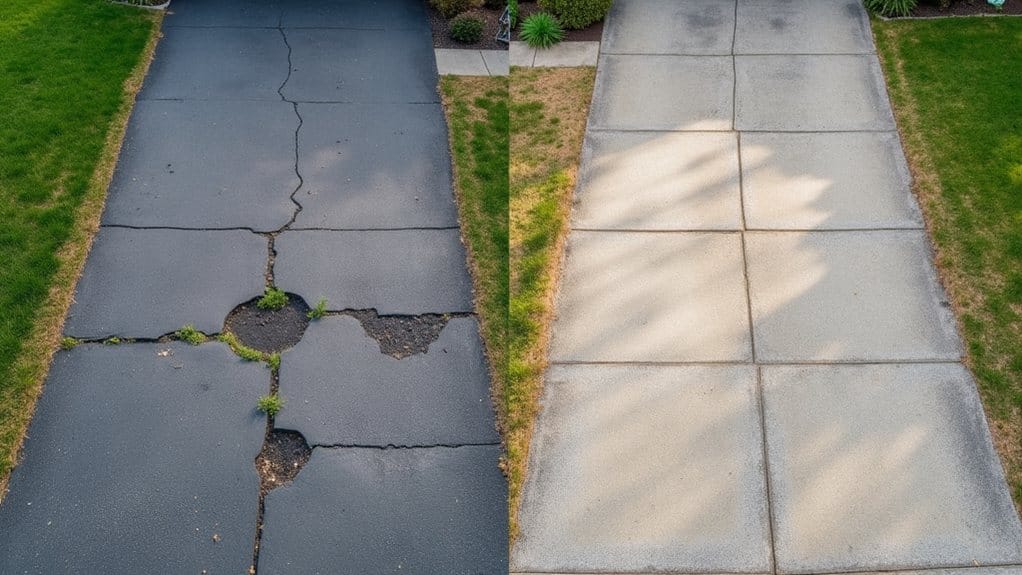
Beyond that? Replacement usually beats repeated repairs.
Concrete lasts a long time—often decades—but the same rule applies.
Check the damage level next.
Look at your driveway honestly.
Does damage cover more than 25–30% of the surface? That’s replacement territory.
See widespread alligator cracking? Deep cracks wider than 1/4 inch? Sinking slabs underneath? These signal serious sub-base failure.
Light damage means resurfacing works.
Less than 25% affected? Shallow cracks under 1/4 inch? Your base is solid? Resurfacing asphalt is your smart move.
You’ll manage costs effectively and get years more life.
Small problems need patching.
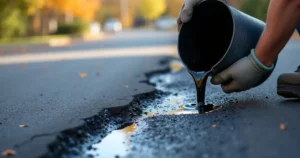
Got a few narrow cracks or small potholes? Patch them now.
This delays driveway replacement for several seasons.
It’s temporary but effective.
We use top-grade materials and offer seal coating to extend pavement life and protect against weathering, which can help postpone major work—consider seal coating as part of your maintenance plan.
Cost Comparison: Resurfacing vs. Replacement
Before you decide, you’ve got to know the numbers.
The Real Price Tags
Resurfacing costs just $3–$7 per square foot. Replacement runs $15 per square foot. That’s a significant difference! But here’s the catch: resurfacing extends lifespan significantly. Replacement gives you reliable long-term service and peace of mind.
When to Resurface or Replace
- Resurfacing works if damage covers under 25–30% of surface
- Replacement wins when damage exceeds 30% or base is shot
- Multiple repairs stack up fast and get expensive
- New asphalt driveways provide a long-lasting solution
- Repeated fixes often cost more than a professional replacement
The Bottom Line
Upfront costs favor resurfacing. Long-term value? Replacement dominates.
Run the numbers on YOUR driveway’s condition and age. Smart money players choose replacement when damage runs deep. We recommend a professional assessment to ensure proper ground preparation and a durable final result.
Resurfacing: Best for Surface Cracks and Moderate Wear
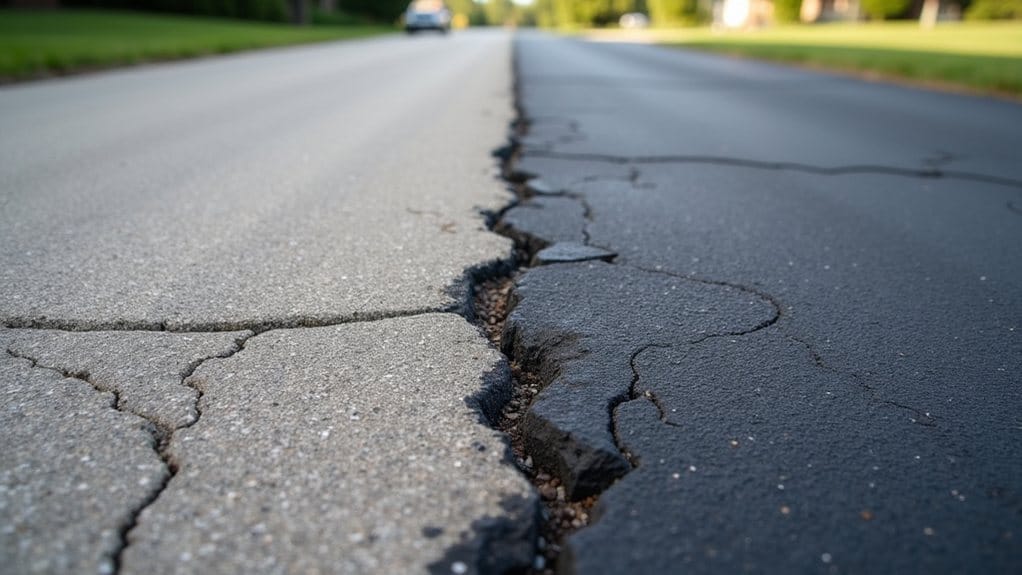
If your driveway’s showing its age but the bones are still solid, resurfacing might be your answer!
What Resurfacing Actually Fixes
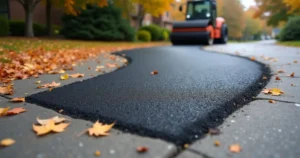
Resurfacing tackles surface damage effectively. Minor cracks under 1/4 inch? Gone. Small raveling and shallow divots? Handled. You’re adding a fresh protective layer over existing pavement.
The Sweet Spot for Resurfacing
Your driveway qualifies when surface damage affects less than 25–30% of the pavement. The underlying base must be structurally sound. This works best for asphalt that is still in its primary service window.
Making It Last Longer
Contractors must repair potholes and significant cracks first. The new layer only performs as well as what’s beneath it.
Done right, resurfacing extends your driveway’s life significantly.
Resurface your driveway today and enjoy extended protection! Nathan’s Paving & Seal Coating serves Central Pennsylvania with high-quality materials and experienced crews.
Replacement: When Your Foundation Is Failing
When your driveway’s base starts crumbling, resurfacing won’t save you—full replacement becomes your real solution.
Your foundation failing means serious trouble underneath. You’re dealing with structural damage that new surface coatings can’t hide or fix.
Deep potholes, alligator cracking, and sinking sections indicate replacement is needed.
Signs you must replace the driveway:
- Cracks wider than 1/4 inch and several inches deep
- More than 25–50% of pavement showing structural damage
- Asphalt with a degraded base
- Concrete with foundation issues
- Water pooling or severe sub-base failure
Yes, replacement costs roughly $15/ft²—your biggest investment.
But you’ll get reliable performance for many years. Skipping this now means endless repair cycles later. Smart money replaces it once, properly.
We also recommend consulting a local paving pro with experienced technicians to confirm whether replacement is necessary and to get a free, tailored quote.
How Long Will This Take, and How Disruptive Will It Be?
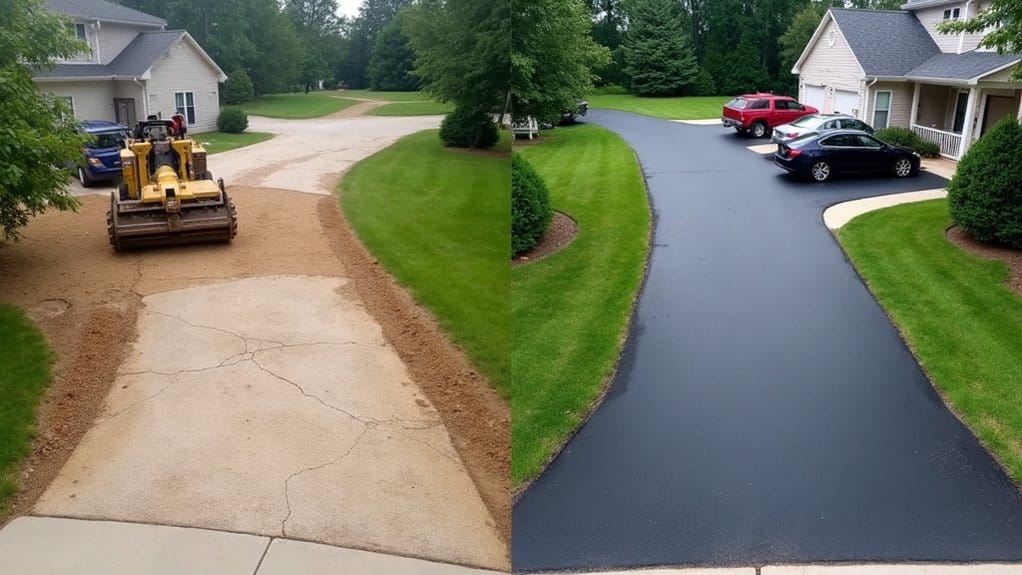
You’ve decided replacement is the right call—now comes the reality check.
Timeline Reality
Full replacement takes 3–7 days for the actual work.
But here’s the tough part: concrete needs adequate time for curing before your driveway handles normal traffic. Resurfacing? Just 1 day, with light use possible in 24–48 hours.
Disruption Level
Replacement is disruptive.
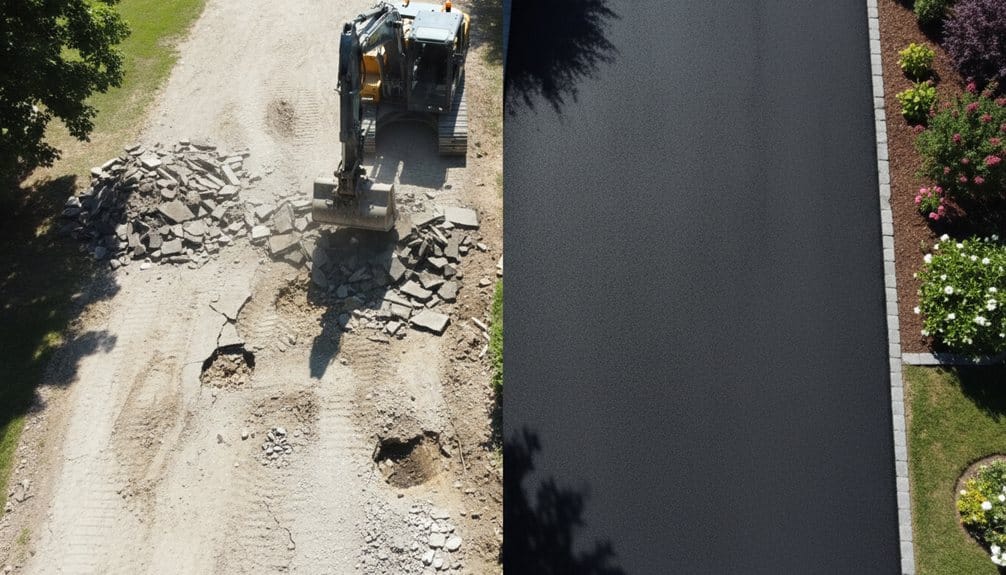
Expect demolition crews, hauling away old material, and potential regrading. Your garage access disappears for several days.
Resurfacing keeps things smoother—no excavation, existing drainage stays intact, minimal mess.
Weather Matters
Cold temperatures and rain delay both projects.
Asphalt needs 50°F+ and dry conditions. Concrete requires controlled curing conditions.
Preparatory Repairs
Fixing potholes or drainage issues adds time before work even starts.
Nathan’s Paving serves Central Pennsylvania and brings extensive regional experience, so scheduling and local weather considerations are part of their planning process.
How Your Driveway Material Affects Your Options
Your driveway’s material is basically your decision roadmap. What you’ve got determines what fixes work best for you!
Material-Specific Choices:
- Asphalt: Resurface when damage hits under 25–30%. Full replacement needed after significant age or deep cracks appear.
- Concrete: Small chips? Repair them! Resurface works for hairline cracks. Replace if severely cracked, heaved, or aged.
- Gravel: Can’t resurface traditionally. Regrading plus fresh stone refreshes weather-worn areas instead.
- Lifespan Reality: Resurfacing buys extra years of service. Replacement resets you with long-term reliability.
- Budget Impact: Patching is the most affordable. Resurfacing is a mid-range cost. Full replacement is a significant investment.
Nathan’s Paving in Etters has built a strong reputation over 20 years for professionalism and timely project completion, making them a reliable choice for driveway work with free estimates.
What to Ask Contractors Before You Decide
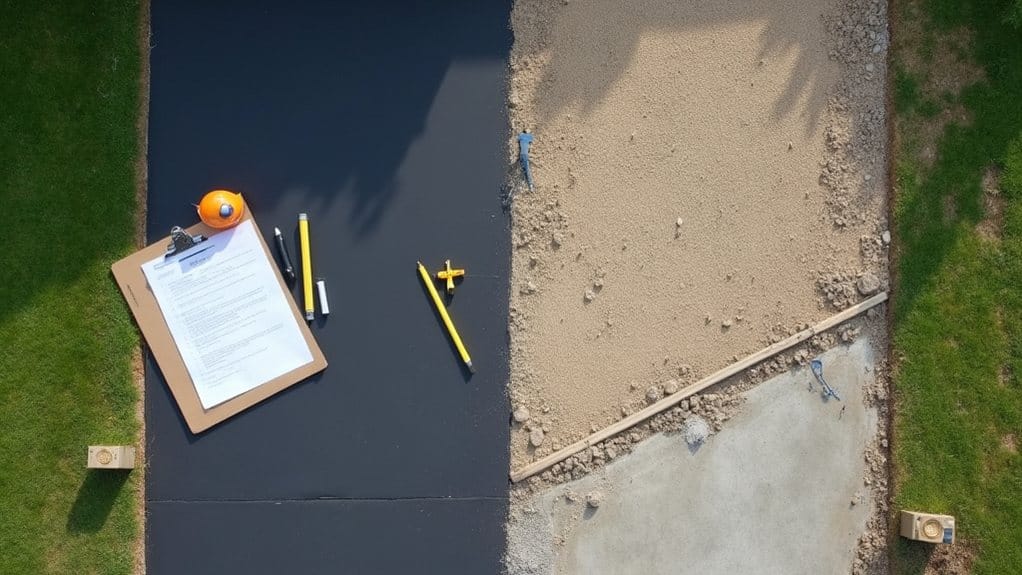
Request written costs per square foot for your specific project needs.
- Patching: Affordable per-foot costs
- Resurfacing: Value-driven pricing
- Replacement: Full-scale investment
Know what’s included versus extra charges upfront.
Demand Measurable Criteria
Your contractor should justify their solution with specific damage percentages.
Cracks wider than ¼”? That’s replacement territory.
Less than 25–30% damage? Resurfacing works.
Verify Credentials
Check licensing, insurance, references, and warranty details.
Ask about drainage handling and timeline expectations.
A trustworthy contractor answers everything clearly.
We serve Central Pennsylvania to ensure timely, local service.
Get Multiple Quotes and Compare Apples to Apples
Make sure every bid includes identical scope. Request line-item breakdowns showing demolition, base prep, materials, and labor separately. This reveals where prices truly differ.
Provide contractors the same site intel. Share your driveway’s age, damage percentage, and drainage issues. They’ll base honest bids on matching conditions.
Here’s what to standardize across all quotes:
- Identical scope (tear-out versus overlay approach)
- Material types and thickness specifications
- Base preparation details and grading work
- Warranty coverage for materials and labor
- Compare unit costs per square foot
Remember: resurfacing is only appropriate when <25–30% of the surface needs repair. Get everything in writing before anyone touches your driveway! Prompt action and professional groundwork ensure long-lasting results.
Frequently Asked Questions
Is It Better to Resurface or Replace a Driveway?
Choose Resurfacing When:
- Surface cracks only (under 1/4 inch wide)
- Less than 25–30% damaged
- Sound foundation underneath
Cost comparison: Resurfacing is significantly more affordable upfront compared to a full replacement.
Choose Replacement When:
- Alligator cracking or deep damage
- Failing base or drainage issues
- Driveway is aged and degraded
The Real Talk: Resurfacing enhances curb appeal faster and costs less upfront.
But replacement addresses underlying issues thoroughly and provides a longer service life.
Get a pro inspection first! Your foundation determines everything here.
Is Resurfacing an Asphalt Driveway Worth It?
Here’s the catch: resurfacing only works if damage stays under 25–30%.
Deep cracks? Potholes? You’re replacing instead.
Smart maintenance schedule? Periodic resurfacing can help maximize the value of your pavement.
You’ll love the results.
What Is the Difference Between Resurfacing and Replacing?
Here’s the deal: Resurfacing wins on upfront cost and speed of completion. Replacing wins on longevity and long-term durability. Choose based on your driveway’s actual condition—not just your wallet!
How Long Does a Resurfaced Driveway Last?
Maintenance is key:
- Seal coating periodically extends longevity
- Regular maintenance helps prevent cracking
- Quick repairs stop small problems from escalating
Your foundation matters most. Poor drainage or hidden damage can impact the lifespan.
Smart maintenance pays dividends!
Conclusion
You’re basically choosing between a proactive repair and a full restoration. You can’t just paint over foundation failure. Get those contractor quotes today. Compare real numbers side-by-side. Your driveway’s condition tells the story. Don’t delay—small cracks can lead to more extensive repairs. You’ve got this!