
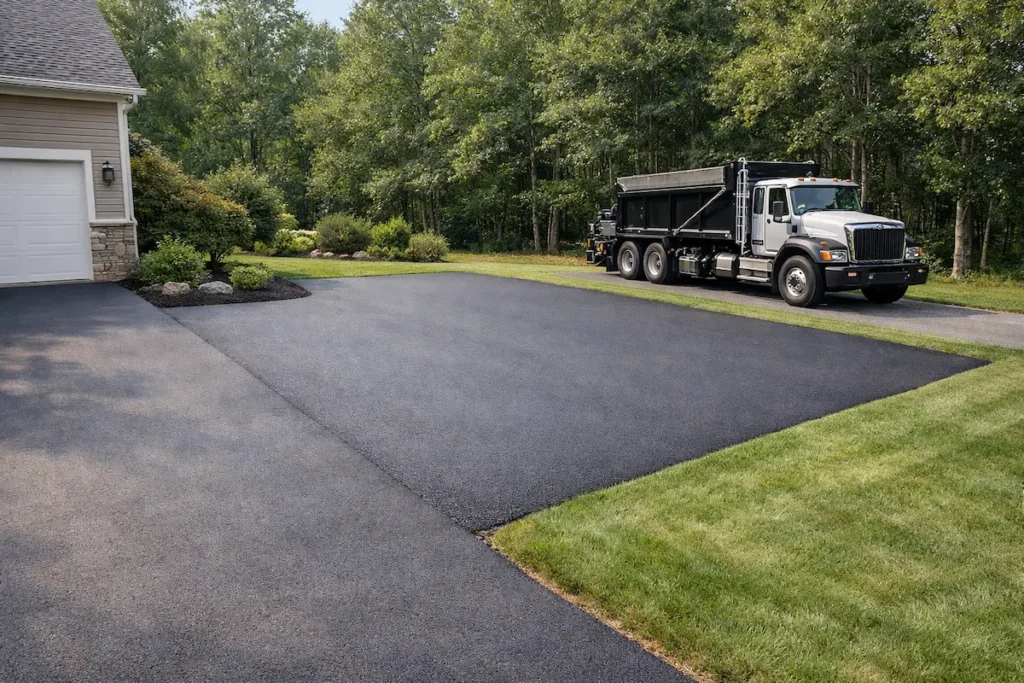
You can add parking space for significantly less than full replacement! A simple side pad (10×20 ft) costs way less than replacing everything. Gravel installs quickly. Asphalt is mid-range. Concrete costs more upfront. Get permits first—seriously. Match your slope, drainage, and edges so it can blend seamlessly. Local pros can guide your lot’s layout and zoning rules. Stick around to find out exactly which design fits your space best.
Key Takeaways
- Parking pads can cost significantly less than full driveway replacement and can use affordable gravel installed quickly.
- Simple side pads (10×20 ft or 12×24 ft) add single parking spaces without extensive site preparation or demolition.
- Proper tie-in strategy with edge preparation, compaction, and tack coat helps ensure seamless blending between new and existing pavement.
- Municipal permits, utility locates via PA One Call/811, and setback zoning verification prevent costly fines and future complications.
- Match grade slope (1/4 inch per foot minimum), base depth, and surface appearance to existing driveway for durability.
When Driveway Extensions Cost Less Than Replacing
The math is simple: extending often beats replacing.
You’ll spend significantly less by adding a parking pad instead of redoing everything. A 10×20-foot addition? Way cheaper than full replacement.
Your Material Choices Matter
Gravel extensions are your budget champion—DIY-friendly and installable quickly. Asphalt sits mid-range for cost. Concrete? Most expensive per square foot.
Seamless Tie-In Strategy
If your current asphalt driveway is structurally sound, you’re golden. Proper edge prep and compaction let you widen your driveway without starting from scratch.
Minimize unnecessary demolition and potential wasted expenses.
Don’t Skip This Critical Step
Address drainage and grading upfront! Skipping this forces expensive full replacement later. Hire an excavator.
Do base prep right. Your wallet will thank you.
Nathan’s Paving serves Central PA, offering expert workmanship and full licensing for residential and commercial driveway projects, so consider contacting them for a free estimate and local guidance on site preparation.
Asphalt and Concrete Costs for Extensions
Consider proper drainage too. You’ll pay 10–30% more upfront.
However, you’ll reduce stormwater runoff and potentially meet local requirements. Smart thinking for long-term savings.
Nathan’s Paving serves Central PA and can provide guidance on whether drainage options meet local standards.
Six Extension Designs for Different Situations
Once you’ve picked your materials, it’s time to pick your layout!
The Simple Side Parking Pad
You can add a side parking pad fast. A 10×20 or 12×24 ft space works great. Gravel is cheapest. Asphalt lasts longer.
Widen It Straight
Widening the driveway by 10–12 feet creates instant extra parking. You’ll tie into existing pavement smartly. This costs way less than replacing everything.
Go U-Shaped
A U-shaped driveway? Game-changing! Drive-through access flows beautifully. Your curb appeal skyrockets.
You’ll need solid frontage though.
The Turnaround Pad
Need safety? Install a 12–16 ft turnaround pad. No more dangerous backing onto busy streets. You’ll gain occasional parking too!
Smart Drainage
All designs need proper drainage. Add professional drainage systems. Prevent water pooling. Protect your investment long-term!
Nathan’s Paving emphasizes meticulous groundwork and quality materials to ensure durable results and proper drainage with every project, so consider their ground preparation practices when planning your extension.
Making Your New Driveway Extension Blend With the Old
If you’ve just installed a shiny new extension, you’ll want it to look like it belongs!
A seamless driveway extension requires attention to detail. Your new pavement must blend seamlessly with the existing surface. Here’s how to make it happen:
- Match the grade and slope within 1/4 inch per foot. This prevents water pooling and supports proper drainage where sections meet.
- Create a proper base by extending crushed stone at the same 4–8 inch depth. Compact it to match existing density so you’ll avoid settling issues later.
- Install a proper edge using sawcuts or keyed edges. Apply polymer-modified sealant to block water and weeds from infiltrating.
Don’t forget the tack coat—it bonds new asphalt to old material.
Finally, match your surface appearance through aggregate selection or sealcoating. Weathering naturally blends them over months. You’ve got this!
Nathan’s Paving recommends thorough ground preparation and quality finishing to ensure long-term durability and a flawless look — learn more about their driveway extension approach.
Drainage and Permits: Planning Your Extension
You’ve nailed the blend—now comes the part that’ll save you headaches later.
Get Those Permits First
Your municipality requires permits for driveway expansions. Skip this step? You’ll face fines or demolition orders. Call your local building department today.
Handle Drainage Like a Pro
Every 100 sq ft of new pavement generates runoff—about 0.6 inches per square foot during rain. That’s massive!
You’ll need stormwater controls to prevent flooding.
Smart Solutions
Install specialized drainage layers or a crushed-stone infiltration bed. Plan proper grading (2% slope minimum) away from your house. This protects your foundation.
Check Before Digging
Call PA One Call/811 for utility locates. Verify easements won’t block your project. Coordination prevents costly mistakes and dangerous surprises underground.
Get a fast, free quote today by providing your contact and address details to start the process and receive a detailed estimate within 48 hours free quote.
Room to Expand? Is a Driveway Extension Right for Your Lot?
Before you break ground, you’ll need to answer one critical question: do you actually have the space?
Your lot’s constraints will make or break this project. Check these essentials:
- Setback zoning rules — Most municipalities demand 3–5 ft side setbacks. Verify local codes and HOA restrictions before sketching plans.
- Drainage grade requirements — Poor drainage ruins everything. Plan a 1–2% slope away from structures to prevent runoff damage.
- Material match standards — Matching existing thickness prevents settling issues and helps ensure durability for your driveway extension.
Space Reality Check
A single extra parking spot needs roughly 10×20 ft minimum. Want comfort? Plan 12×24 ft instead.
Turnarounds demand 18–24 ft of clear width.
Budget-Friendly Options
Can’t afford full repaving? Gravel delivers immediate parking solutions for just hundreds of dollars.
That’s smart thinking!
We recently completed a new asphalt driveway for the Fuller household, demonstrating our commitment to a quality finish and customer satisfaction.
Frequently Asked Questions
How to Add Parking Space to Driveway?
You’ve got solid options here!
Quick Wins:
- Gravel pad: Spread 4–6 inches over geotextile fabric with gravel edging. Cheap. Drains great. Done in days.
- Widen existing drive: Add crushed stone base plus fresh asphalt. Match grades carefully—no pooling!
Pro tip: Check property lines first. Drainage matters. You’ve got this!
What Is the Cheapest Way to Extend a Driveway?
Pro tip: Keep it small—a 10×20 parking bay maximizes savings while solving your space problem instantly!
What Happens if You Extend Your Driveway Without a Permit?
Immediate Trouble:
- Stop-work orders arrive fast
- Fines hit $100–$1,000+ per violation
- Enforcement actions escalate quickly
Bigger Problems:
- Code violations pile up
- Neighbor disputes erupt over drainage issues
- Insurance implications complicate claims
- Property resale becomes nightmare—lenders demand retroactive permits
The Reality:
You’ll spend significantly fixing unpermitted work. Get the permit first!
Can I Increase the Size of My Driveway?
You absolutely can increase driveway size by adding new sections. Here’s what you need:
Before You Start:
- Check boundary markers and property lines
- Get utility checks done (hidden pipes!)
- Confirm local permit requirements
The Smart Approach:
- Plan soil compaction properly
- Install drainage swales for water flow
- Consider curb realignment if needed
- Add landscaping buffer for appeal
- Design access ramping for safety
Pro tip: A contractor assesses grading. You’ll need 4–8 inches of crushed stone base. Extensions typically run 12×24 feet for standard cars.
Ready to expand?
Conclusion
You’ve got the knowledge now. You understand costs, designs, and permits. Here’s the truth: extending often beats replacing. You’ll save on your project costs. You’ll gain parking space today. You’ll improve your property’s appeal tomorrow. Don’t let a cramped driveway limit you. Your lot’s potential? It’s literally paved with opportunity. Take action now. Your future self will thank you.