
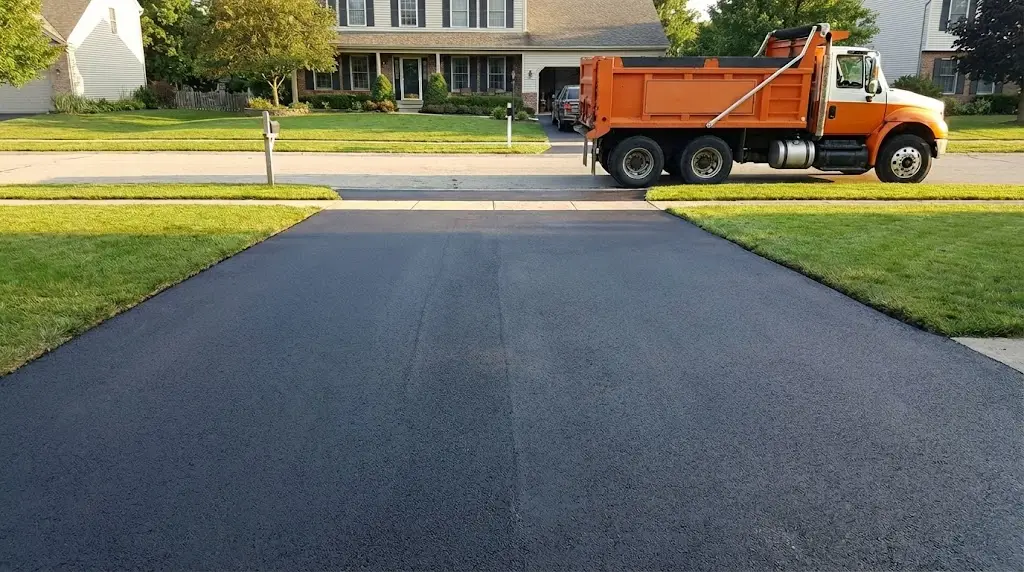
Residential driveways need 2–3 inches of compacted asphalt. Standard passenger vehicles? Two inches works fine. Heavy trucks and RVs regularly parking there? Bump it to 3 inches. Commercial spaces demand 4–7 inches depending on traffic volume and load intensity. Loading docks and truck routes? You’re looking at the upper range. Here’s the catch: thickness alone won’t save you. Your foundation matters most. A solid granular base (6–12 inches depending on soil type) helps prevent cracking, water damage, and costly failures. Skip the base work, and even thick asphalt fails fast. Want to know why some driveways last decades while others crack in years?
Key Takeaways
- Residential driveways require 2 inches of compacted asphalt for standard vehicles; increase to 3 inches for heavy vehicles or cold climates.
- Commercial driveways demand 3–4 inches minimum, with heavy-duty zones requiring 4–7 inches to resist rutting and repeated truck traffic.
- A solid granular base of 6–12 inches is essential; weak bases concentrate stress and cause premature fatigue cracking and failure.
- Proper drainage through the base layer helps prevent water infiltration, freeze–thaw damage, and settlement that weakens pavement structure over time.
- Alternative paving systems can offer strong durability with improved load distribution and drainage performance.
Residential Driveways: Stick With 2 to 3 Inches
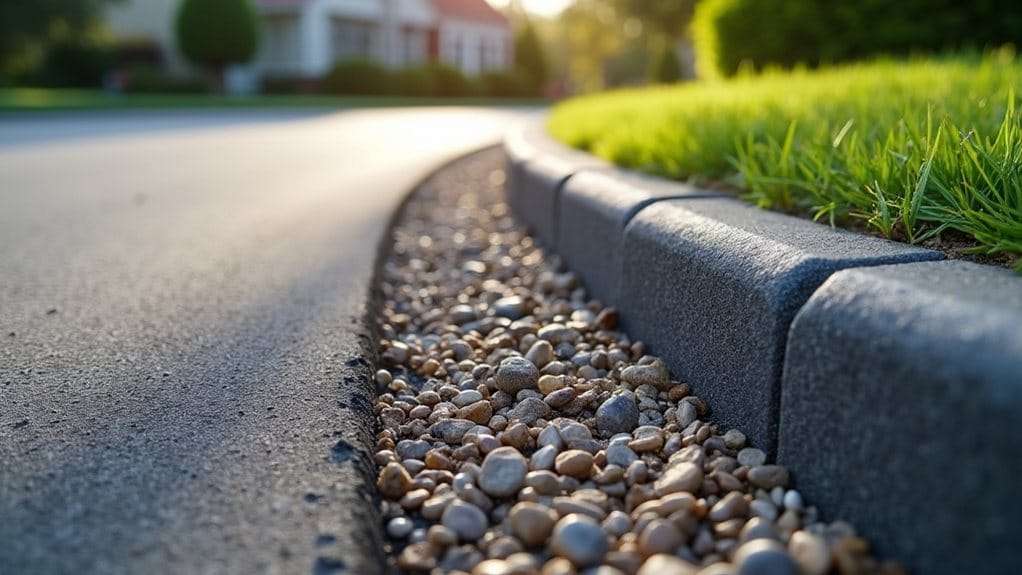
When you’re building a driveway that’ll last, thickness matters—a lot.
The Standard Rule
For most residential driveways, 2 inches of compacted hot-mix asphalt works perfectly for standard passenger vehicles. That’s your baseline!
Go Thicker When You Need To
Choose 3 inches if you park heavy vehicles regularly. Think RVs and pickup trucks.
This extra layer prevents rutting and fatigue cracks.
Don’t Forget the Foundation
You’ll also need a 6–8 inch compacted granular base underneath everything.
This critical layer supports proper drainage and helps prevent premature cracking.
Climate Counts
Live somewhere cold? Your soil’s clay or loamy? You’ll want that thicker 3-inch asphalt. Freeze–thaw cycles demand extra protection!
Thin layers crack faster.
Water infiltrates easier.
Your investment deserves better.
We recommend scheduling a no-cost quote to assess your driveway and recommend the best thickness based on site conditions.
Commercial Driveways: Minimum 3 to 4 Inches for Heavy Traffic
- Minimum 3 to 4 inches of asphalt for standard commercial traffic
- 4 to 7 inches for heavy-duty commercial operations with repeated truck traffic
- A sturdy granular base of at least 8 inches underneath
The heavy-hitters:
Heavy-duty designs typically feature 6 inches of asphalt over a 3-inch aggregate base.
This combo handles those crushing axle loads beautifully.
Your binder layer plus finish layer work together.
They distribute weight intelligently across your granular base.
Skip proper thickness?
You’ll face fatigue cracking fast.
Match your asphalt thickness to your actual truck traffic.
That’s the winning formula!
We also recommend working with experienced local contractors to ensure proper installation and long-term performance, such as those with over 20 years of experience.
Heavy-Duty Zones: Why You Need 4 to 7 Inches of Asphalt
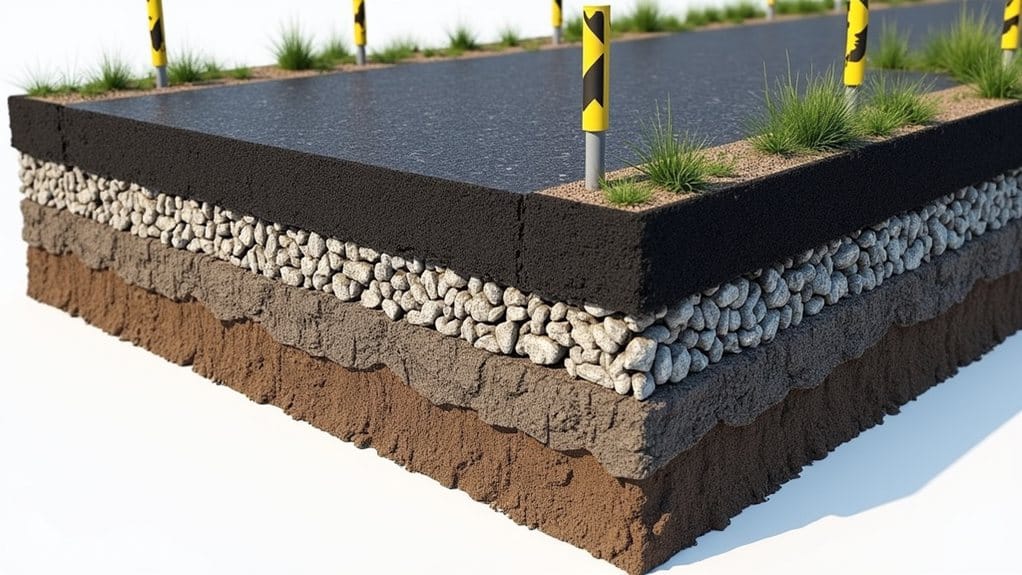
Because your loading docks and truck routes take a serious pounding, you’ve got to build them thicker.
Heavy-duty zones demand 4–7 inches of asphalt. Here’s why that thickness matters:
- Resists rutting and fatigue cracking from constant truck traffic
- Distributes concentrated axle loads across wider areas
- Prevents water infiltration that destroys subgrades
- Can extend pavement life
You’ll typically layer this system smart.
Start with a minimum 3-inch compacted aggregate base (8+ inches for weak soil). Then stack 2–4 inches of binder course over a 1–2 inch finish layer.
Skip this thickness? You’re inviting permanent deformation and early failure.
Your loading docks and truck aprons deserve the upper range. Design toward 6–7 inches when traffic’s intense and frequent.
Your pavement’s longevity depends on getting this right from day one. Regular maintenance and timely repairs, such as pothole repair, help preserve pavement life and protect your investment.
Start With the Foundation: Why Base Depth Matters More Than Asphalt Thickness
Your granular base layer provides the real structural strength. Skip this and you’re asking for trouble. A weak base concentrates stress directly on your asphalt. Result? Fatigue cracking. Premature failure. Big repair bills.
| Soil Type | Base Depth | Why It Matters |
|---|---|---|
| Sand/Gravel | 6–8 inches | Drains well naturally |
| Clay/Loam | 10–12 inches | Poor drainage requires deeper base |
| Commercial Areas | 10+ inches | Heavy loads demand reinforcement |
Proper drainage through your granular base helps prevent water infiltration. Water under your asphalt causes settlement and buckling.
The truth? A solid base reduces your total thickness of an asphalt needed. You’ll spend less upfront. Your driveway lasts longer. Maintenance costs plummet.
Build the foundation right. Everything else follows naturally. Our team uses top-grade materials and proven techniques to ensure long-lasting results.
Adjust for Your Conditions: Soil, Climate, and Vehicle Load
A killer base layer only works if you’ve matched it to what’s actually underneath and above it. Your soil type, local weather, and expected traffic dramatically reshape thickness requirements.
Three critical factors reshape your asphalt driveway specs:
- Poor-draining soils (clay/loam) demand excavation and engineered fill or deeper aggregate base to prevent frost heave
- Freeze–thaw cycles require thicker asphalt (3″ residential, 4–6″+ commercial) with rock-solid base compaction
- Heavy vehicle load needs 4–7″ asphalt for commercial lots versus 2–3″ for passenger cars only
- Sandy/rocky ground works with standard 2–3″ residential specs; add 0.5″ if trucks park frequently
Think strategically. Cold climates punish thin pavement. Commercial lots serving heavy trucks demand sturdy thickness throughout. Match your aggregate base depth and asphalt thickness to what you’re actually dealing with. Success depends on this alignment! We also recommend consulting our seal coating services to protect and extend the life of your pavement.
How Thin Asphalt Fails: Cracks, Water Damage, and Potholes
When you skimp on thickness, your driveway’s days are numbered.
The Crack Problem
Thin asphalt layers can’t spread tire loads evenly. Stress concentrates.
Your surface fatigues fast. Fatigue cracks form and spread aggressively across the pavement.
Water Becomes Your Enemy
Once cracks appear, water infiltration starts immediately. It seeps into your asphalt layer and granular base aggregate underneath.
In freeze–thaw climates, this spells disaster. Water expands when frozen. Your cracks widen. Your base weakens.
Potholes appear.
The Foundation Failure
Thin asphalt over inadequate bases fails fastest. Your driveways need solid support.
Without 6–8” of proper aggregate, rutting and deformation accelerate dramatically.
The Cost Reality
You’ll patch constantly. Repairs multiply.
Costs skyrocket. Proper thickness upfront saves thousands later. Nathan’s Paving offers new driveway installation with experienced crews and quality materials to each job.
Is Thicker Always Better? When Excess Asphalt Becomes a Problem
Beyond the 3–4 inch sweet spot, you’re entering dangerous territory. More asphalt doesn’t automatically mean better durability or performance.
In fact, overbuilding creates serious problems that cost you money and headaches.
The Hidden Dangers of Too Much Asphalt:
- Compaction issues prevent proper settling and create weak spots between layers
- Drainage problems trap moisture underneath, accelerating deterioration and potholes
- Uneven settling leads to cracking and delamination across your surface
- Wasted investment raises costs without matching your actual vehicle loads
Here’s the truth: thicker asphalt only works when paired with quality base preparation and proper compaction.
Heavy commercial pavements need 4–7 inches, but only with upgraded aggregate bases.
Residential driveways need just 2–3 inches over solid foundations.
Skip the base preparation? Your thick asphalt will fail faster than thin asphalt on proper foundations.
Nathan’s Paving has over 20 years of experience ensuring proper base work and timely project completion.
Asphalt vs. Alternative Surfaces: Which Lasts Longer?
So you’ve learned that thick asphalt isn’t always your answer.
Now consider this: some alternative surface options can outlast traditional asphalt with the right design and upkeep.
The Lifespan Showdown
Traditional asphalt? 20–30 years maximum. Some alternative surface systems? Can last longer. That’s a big durability difference!
Why Alternatives Win
Your asphalt cracks from freeze-thaw cycles and water infiltration.
Some alternative surface systems reduce this risk through improved drainage. Water flows through more efficiently instead of pooling underneath.
Load Performance
Heavy loads destroy inadequate asphalt thickness.
Some alternative systems distribute weight through engineered cells. You need thinner overall sections while gaining superior strength.
Maintenance Reality
Asphalt demands sealcoating every 2–3 years plus constant repairs.
Some alternative surface systems need only occasional releveling and gravel replenishment.
Nathan’s Paving & Seal Coating emphasizes the use of durable, top-grade materials to extend pavement life, which can complement alternative solutions when appropriate and provides reputable and professional service recognized by clients.
The verdict? Lower maintenance plus extended driveway lifespan can make some alternative surface options a strong long-term choice.
Extend Your Driveway’s Life: Sealcoating and Repairs
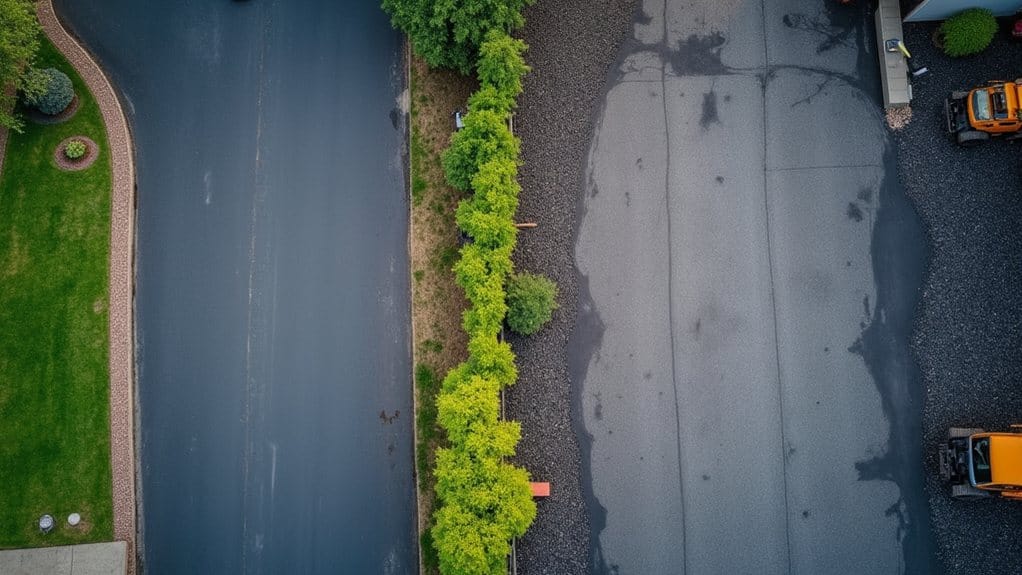
Your driveway’s thickness matters. But maintenance? That’s everything.
Your winning game plan:
- Sealcoat every 2–3 years to shield against UV damage and water intrusion
- Fill cracks promptly (hairline to 1/2″) before freeze–thaw damage hits your base layers
- Schedule routine inspections annually to catch oxidation and drainage issues early
- Repair potholes immediately to prevent structural failure in asphalt layers beneath
Timing is critical. Apply sealant between 50–85°F when pavement’s completely dry.
Use high-quality coal-tar or asphalt emulsion for best adhesion and longevity.
When widespread cracking appears? Add 1–2″ of hot-mix asphalt over your sound base.
You’re not just fixing problems—you’re extending your driveway’s lifespan dramatically. Smart maintenance beats expensive replacements every single time.
Nathan’s Paving brings over 20 years of experience and uses top-grade materials to ensure durable, weather-resistant results.
Frequently Asked Questions
What Is the Best Thickness for an Asphalt Driveway?
Critical Factors:
- Base preparation matters hugely—you need 6–8 inches of compacted granular base
- Load capacity determines thickness (trucks? Go 3 inches!)
- Climate effects impact durability notably
- Drainage design prevents water damage underneath
- Compaction methods support longevity
- Edge stabilization stops crumbling
Pro tip: Thicker asphalt = fewer cracks and longer life. You’re investing in durability!
How Much Does a 20X20 Asphalt Driveway Cost?
Material costs run $2–$8 per square foot. Labor estimates vary by region. You’ll need proper grading requirements and drainage solutions beforehand.
Add $400–$1,200 for crushed stone base. Edge preparation and permit fees add extra. Don’t forget sealcoating frequency—every 2–3 years costs $0.25–$0.50 per square foot. Site conditions dramatically impact your final price!
What Happens if Asphalt Is Too Thick?
Your driveway then suffers excessive cracking, excessive rutting, and drainage blockage.
Plus, thick asphalt experiences overheating aggregate, making it brittle in freeze-thaw climates.
Bottom line: More asphalt doesn’t mean better durability. Stick to recommended thicknesses instead!
Does Thicker Asphalt Last Longer?
Thicker asphalt definitely lasts longer when you’ve got proper pavement compaction underneath. Here’s why: your thicker layer distributes loads better across the base.
This reduces freeze-thaw damage and edge deterioration markedly.
The Real Magic? Pairing thickness with solid drainage design and maintenance intervals. Without proper binder content and base support, you’re wasting material.
Thickness wins when everything works together!
Conclusion
You’ve got the blueprint now. Don’t cheap out on thickness—it’s your foundation’s best friend. Think of proper asphalt depth as insurance against potholes and cracks. Your 2-3 inches residential or 4-7 inches heavy-duty investment pays dividends for years. Sealcoat regularly. Repair early. You’ll dodge costly replacements and keep your driveway standing strong against time and traffic.