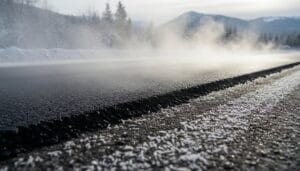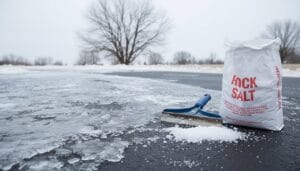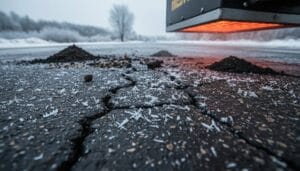

Freeze-thaw cycles create ice lenses beneath your pavement. Water infiltrates through cracks and poor drainage. As temperatures drop, that moisture expands roughly 10%—lifting asphalt upward. You’ll spot bumps, ridges, and alligator cracking suddenly appearing. Silt and clay soils trap water like sponges, making heaving worse. Drainage failures near joints guarantee saturation and frost damage. Without fixing underground moisture first, you’re fighting a losing battle. The real solutions involve drainage control and soil replacement. Stick around to uncover exactly how to prevent this costly cycle.
Key Takeaways
- Ice lenses beneath pavement expand roughly 10% during freezing, causing uplift, settlement, and surface buckling.
- Standing water and poor drainage saturate soil and base layers, accelerating frost heave damage cycles.
- Silt and clay soils retain moisture longer than sandy fill, making them highly frost-susceptible.
- Localized bumps, transverse cracking, and undulating waves suddenly appear after cold snaps near joints.
- Install drain tiles, seal cracks regularly, and replace frost-susceptible soils to prevent heave recurrence.
How Freeze-Thaw Cycles Create Ice Lenses Beneath Asphalt
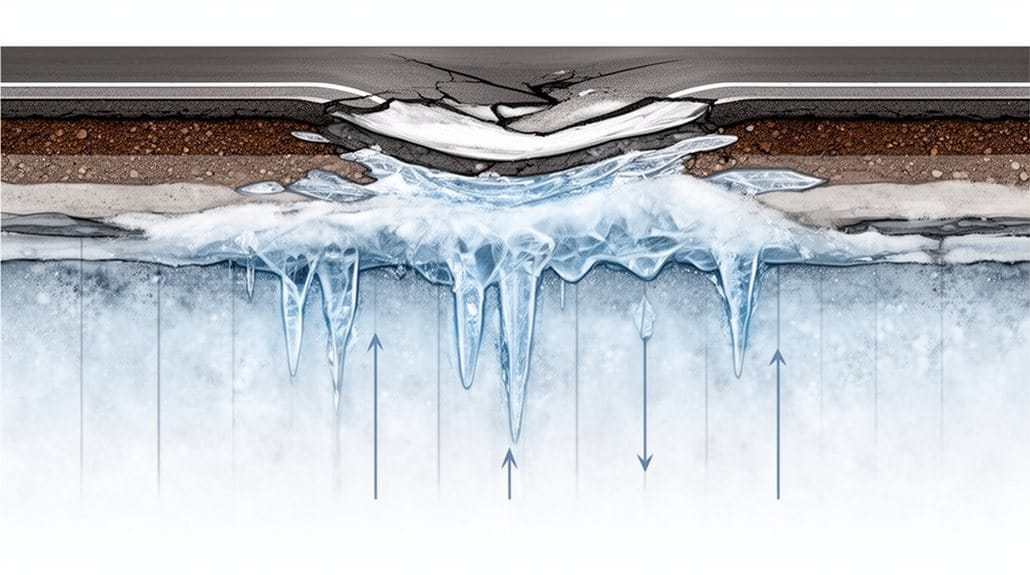
Repeated freezing and thawing cycles crack your asphalt.
Settlement follows uplift.
Bonds break.
Alligator cracking appears.
Your Solution
Control subgrade drainage immediately.
Install drain tiles.
Improve slope grading.
Use compacted, non-frost-susceptible fill materials.
Stop water supply before freezing starts.
Prevention beats repairs every time! Additionally, regular routine maintenance can significantly extend the lifespan of your pavement and reduce the risk of damage from freeze-thaw cycles.
Moisture Infiltration and Poor Drainage as Primary Risk Factors
Standing water feeds frost heave like nothing else. Even shallow puddles infiltrate deep into your pavement layers.
Once water reaches the base and subgrade, ice lenses expand roughly 10% in volume during freezing. That’s serious uplift damage!
Your drainage weaknesses:
- Ponding or low-slope surfaces trap runoff water
- Faulty or missing drain-tile piping clogs subsurface flow
- Silt and clay soils retain moisture far longer than sandy fill
- Inadequate compaction allows water penetration deeper
The fix? Seal cracks every two years religiously. Make certain proper slope for runoff conveyance. Install working subsurface drainage systems.
By addressing these issues early, you can prevent costly repairs and replacements that may arise from extensive damage.
You’ll dramatically cut frost heave risk and extend pavement life considerably.
Soil Composition and Base Layer Vulnerabilities
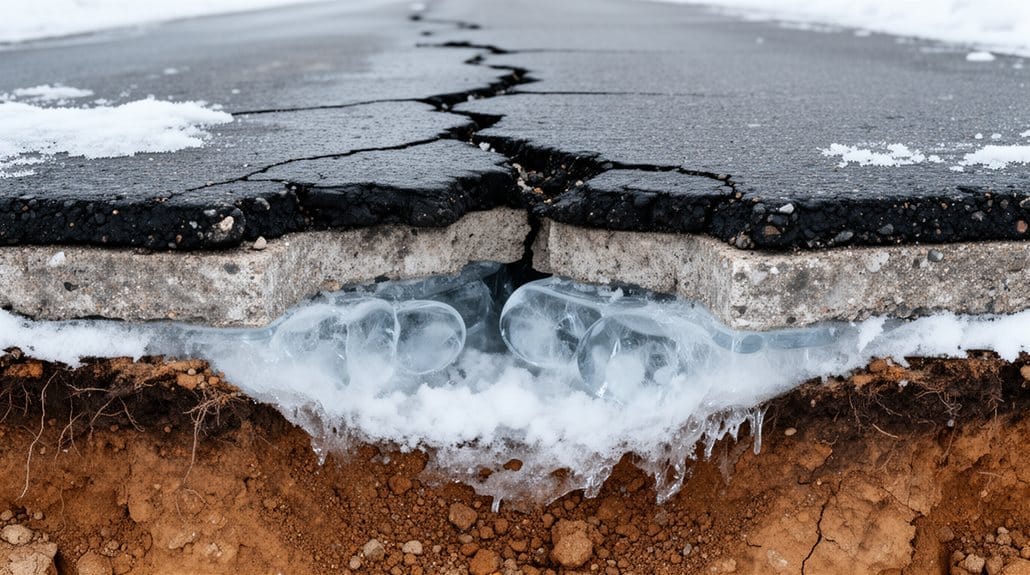
Silt or clay soils are your enemy in winter. They trap moisture like a sponge. That water feeds ice lens growth beneath your pavement. Ice lenses expand dramatically. Your asphalt buckles upward.
Base and Subbase Issues
Thin base layers can’t buffer temperature swings. Poorly compacted material creates voids everywhere. Water pools in those gaps. Uneven heaving follows—sometimes several inches!
Your Drainage System
Without proper drainage systems, saturation is guaranteed. Capped slopes and drain tile prevent disasters. A high water table keeps everything frozen solid. Repeated freeze-thaw cycles destroy weak foundations.
The Solution
Replace frost-susceptible soils with well-draining granular fill. Compact everything properly. Install real drainage infrastructure. Paving for local businesses will ensure your pavement will thank you!
Identifying Frost Heave Damage: Bumps, Cracks, and Uneven Surfaces
Once moisture freezes beneath your pavement, you’ve got a serious problem.
Frost heave lifts your asphalt surface dramatically—sometimes 2–4 inches! You’ll spot these telltale warning signs:
- Localized bumps and ridges that appear suddenly after cold snaps
- Hairline or transverse cracking spreading across the surface
- Undulating waves making your pavement look wavy and unstable
- Areas near joints where drainage pools and freezes underground
Here’s the tough part: partial thawing creates dangerous voids underneath. Your asphalt looks better temporarily but remains vulnerable.
Inspect immediately after thawing. Persistent heaves scream drainage issues.
Repeated freeze–thaw cycles alter small bumps into devastating alligator cracking and potholes fast. Proper groundwork preparation ensures that your asphalt withstands these harsh conditions.
Your drainage solution? Sub-base repair work stops future frost heave damage dead.
Preventive Maintenance Strategies to Stop Winter Heaving
You’ve seen the damage frost heave causes—now let’s stop it before it starts.
Three Power Moves
Drainage is Everything. Inspect and maintain surface and subsurface drainage annually. Clear catch basins. Install drain-tile pipe where needed. Standing water feeds frost heave—eliminate it completely.
Seal Those Cracks. Perform crack sealing every 1–2 years using hot-pour sealants. Even hairline cracks let meltwater penetrate the base and subgrade. Water reaching frozen layers = ice lens growth = heaving.
Build It Right. Make certain your pavement has adequate base and subbase materials. Use properly compacted, coarse-grained material with sufficient thickness for your climate. Thin or poorly compacted bases fail fast.
Winter Prep. Remove standing water before freeze-up. Use professional snow removal with rubber edges kept ½” off the surface. Regular maintenance services help prevent future pothole formation and protect your investment.
Start now. Protect your investment.
Repair and Restoration Options for Heaved and Buckled Pavement
When frost heave lifts your asphalt 2–4 inches at joints and edges, you’ve got a problem—but here’s the good news: you’ve got *options*.
Your repair strategy depends on damage severity:
- Minor heave with solid subbase: Use infrared patching or mill-and-overlay for same-day fixes
- Subsurface ice pockets present: Sawcut and remove the damaged section completely
- Sinking or voids detected: Excavate to stable subgrade and replace base aggregate
- Emergency safety needs: Apply cold patch temporarily until permanent work begins
The real solution? Fix your drainage and subgrade issues first. Otherwise, frost heave returns next winter.
Full-depth repairs require removing compromised material, correcting water infiltration, and rebuilding properly. It’s worth noting that a seal coat can significantly extend the lifespan of your asphalt surfaces.
It’s not glamorous work—but it’s *permanent* work.
Conclusion
You’ve got this! Think of your pavement like a sponge left outside in January. Water seeps in. Ice expands. Boom—heaving happens. But you’re armed now. Seal those cracks. Fix drainage issues. Your proactive maintenance today saves thousands tomorrow. One parking lot owner in Minnesota saved $47,000 by preventing frost heave damage. Don’t let winter win. Attack it first!