Your parking lot’s freeze-thaw enemy strikes hard. Water trapped in cracks expands and destroys pavement fast. You’ll want to seal cracks before winter hits. Stock 30-60 days of ice melt and shovels now. Clear drains so water doesn’t pool and freeze. Patch potholes at least 48-72 hours before freezing temperatures arrive. Remove de-icing salt promptly after winter ends. Inspect drainage within 2-4 weeks post-thaw for pooling exceeding half an inch—it signals base failure. Strategic preparation saves thousands in spring repairs.
Key Takeaways
- Inspect and seal cracks wider than 1/8 inch and patch potholes before freeze-thaw cycles enlarge damage.
- Stock 30–60 days of ice melt, salt, shovels, and snow blowers; secure snow removal vendor contracts early.
- Clear drains and remove standing water to prevent freezing expansion that damages pavement and foundations.
- Apply sealcoat as watertight barrier above 50°F and pre-treat with liquid brine before snow arrives.
- Inspect and repair winter damage within 48–72 hours post-thaw; monitor drainage for pooling exceeding 1/2 inch.
Understanding the Importance of Winter Preparation
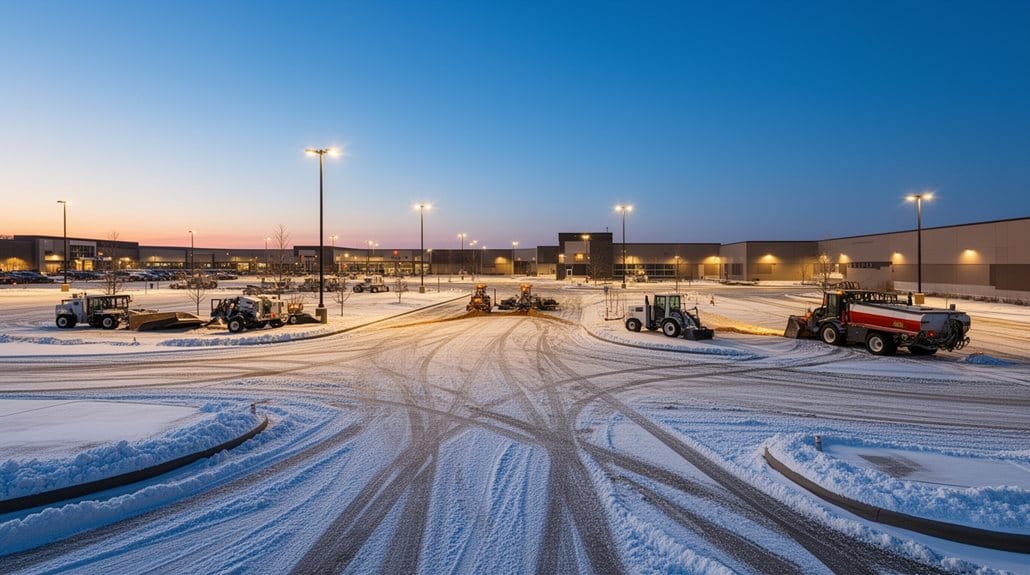
Because winter won’t wait for you, you’ve got to prepare your parking lot now.
Why This Matters
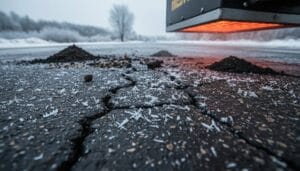
Freeze-thaw cycles wreak havoc on asphalt fast. Water trapped in cracks expands and destroys. Within just a few cycles, small cracks become massive potholes. You’ll face expensive repairs if you don’t act.
Your Action Plan
Complete pre-winter inspections this fall immediately. Seal cracks before temperatures drop below freezing. Fill existing potholes to prevent expansion damage.
Clean drainage systems thoroughly. Remove debris and leaves blocking catch basins. Standing water turns to hazardous ice overnight.
Stock de-icing agents, shovels, and safety gear now. Plan your snow removal strategy with contractors ahead.
The Real Deal
Acting before winter prevents ice. You’ll spend less money. Your lot stays safer. Your liability drops markedly. Regular maintenance services help prevent future pothole formation, ensuring your parking lot remains in top condition throughout the winter.
That’s smart business.
Conducting a Thorough Fall Inspection
You’ve got your game plan. Now execute it! Walking the entire lot requires documenting every crack wider than 1/8 inch and potholes deeper than 1 inch. This prevents expensive freeze-thaw cycle damage later. Clear storm drains and catch basins of leaves and debris immediately. Standing water freezes overnight and creates hazardous conditions. It’s also wise to consider the importance of a strong foundation for your paving projects to ensure long-lasting results.
| Inspection Task | Priority Level |
|---|---|
| Measure and photograph rutting areas | High |
| Check pavement markings visibility | Medium |
| Document GPS coordinates of failures | High |
| Inspect surface channels for debris | Critical |
Repaint faded handicap spaces, fire lanes, and directional arrows before winter arrives. Verify your winter supplies inventory now. Confirm snow-removal vendor contracts and response schedules. Knowing the warning signs your parking lot needs maintenance helps you catch issues during this inspection before winter makes them worse. You’re preventing disaster by acting today!
Prioritizing Repairs Before Freezing Weather
Why Rush?
You’ve inspected and documented cracks and standing water. Now act fast. Water expands when frozen. It destroys your pavement foundation rapidly.
Your Action Plan
Seal cracks immediately. Use hot-pour or quality cold-applied fillers. Don’t delay.
Patch potholes next. Apply compacted asphalt mix at least 48–72 hours before freezing hits. This prevents freeze-thaw damage completely.
Fix base instability first. Pools of standing water signal subgrade saturation. Frozen ground heaves. Expensive repairs follow.
Tackle high-traffic zones urgently. Entrances, drive aisles, and ADA stalls deteriorate fastest. Liability risks skyrocket here.
Schedule sealcoating strategically. Work during daytime temperatures above 50°F consistently for 24–48 hours. Full curing happens before cold snaps arrive. The benefits of asphalt repair include increased lifespan and reduced costs, making timely action essential.
Your budget and contractors? Deploy them smartly. Protect your lot now.
Applying Protective Sealcoating
Your repairs are done. Now it’s time to protect them!
Why Sealcoating Matters
Sealcoating your parking lot is your best defense against winter damage. This coal-tar or asphalt emulsion creates a watertight barrier. It stops water penetration and prevents standing water from pooling. You’ll reduce the risk of freeze-thaw damage markedly. Regular sealcoating can extend asphalt life by 30-50% compared to unsealed surfaces.
Timing Is Everything
Fall is perfect for seal coating. Apply it when temperatures stay between 50°F and 85°F. Your coating needs 24–48 hours to cure properly. Skip spring applications—they won’t harden before summer heat arrives.
Smart Application
Use one to two coats at 0.10–0.15 gallons per square yard. This parking lot maintenance strategy can triple your pavement’s lifespan!
Before you prepare your parking lot, clean it thoroughly. Remove all dirt, oil, and debris first. Your protective sealcoating won’t stick to dirty surfaces.
Maintaining Drainage Systems
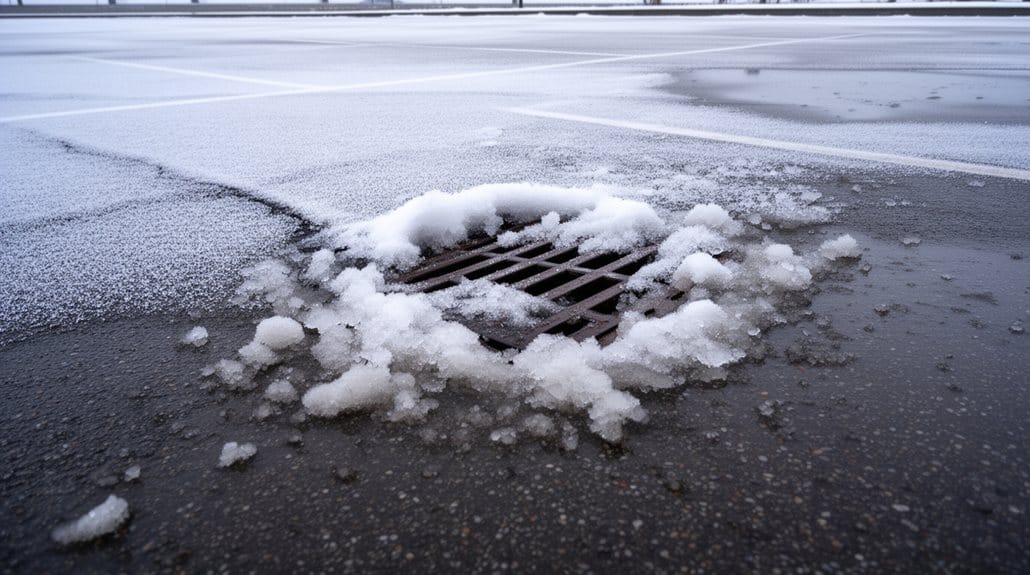
You’ve got to clean catch basins twice in fall. Clogged drains cut flow capacity by half! Remove leaves and sediment before winter hits hard.
Check Your Slopes
Your surface needs minimum 1% slope away from curbs. This prevents water pooling in low spots. Freeze–thaw cycles destroy pavement where water sits.
Inspect Everything
Repair drain inlet grates and pipe joints now. Small failures let water seep underground. That causes potholes after freezing and thawing. Professional driveway drain installation ensures that your drainage systems function effectively throughout winter.
Stay Ready
Keep drain-clearing tools accessible and ready. Document drain locations in your maintenance log. After heavy rains, recheck flow rates immediately. Catching blockages early saves you thousands in repairs!
Establishing a Snow and Ice Removal Plan
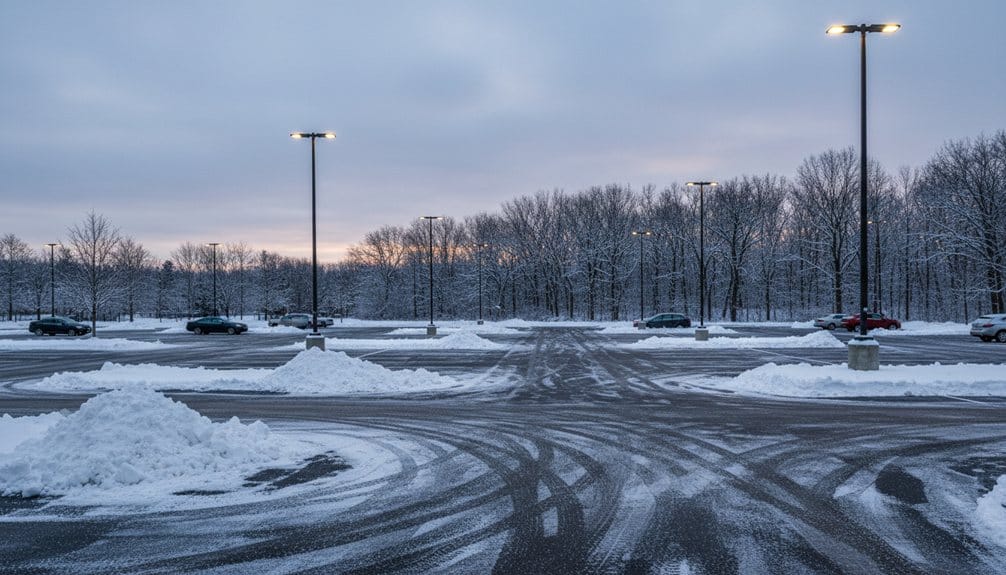
You’ll want a snow removal vendor locked in before winter hits. Find one guaranteeing quick response times—ideally within 1–2 hours of snowfall starting.
Prioritize Smart Clearing
Identify your priority zones first: entrances, ADA spaces, and fire lanes.
Create a clearing sequence that opens 90% of customer access within one hour. Position snow markers to guide the contractor’s work.
Stock Smart Supplies
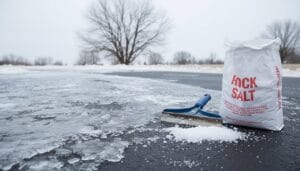
Keep 2–4 weeks of salt and ice melt on-site. Your de-icing product types matter too.
Pre-treat with liquid brine at 20–30 gallons per acre. Apply granular salt at 100–200 pounds per 1,000 square feet.
Verify Everything Works
Document all work with photos and time-stamped logs. This protects your warranty claims and catches pavement damage early. Regular maintenance, including commercial parking lot sealing, is essential to ensure the longevity of your surfaces during winter months.
Stocking Essential Maintenance Supplies
Keep at least a 30–60 day on-site supply of ice melt. You’ll need roughly 50–100 lbs per 1,000 sq ft for frequent storms. Stock multiple heavy‑duty push shovels and two commercial-grade snow blowers—one backup matters!
Safety & Visibility
Maintain high-visibility safety vests and traffic cones for your entire crew plus 10% extra. Battery-powered LED work lights keep operations running safely.
Pavement Repairs
A basic pavement repair kit saves you money. Include cold patch asphalt and crack filler for thaw-cycle damage, as these products help in extending the lifespan of your asphalt surfaces.
Smart Storage
Store supplies in a dry raised labeled shelter with temperature control. Rotate stock seasonally to prevent ice melt clumping and chemical degradation. Your preparation prevents costly emergency repairs!
Monitoring and Addressing Winter Damage
3. Act fast on fresh damage—repair potholes and cracks within 48–72 hours before water freezes and expands the damage.
4. Check drainage points within 2–4 weeks after thawing; pooling exceeding 1/2 inch signals base failure requiring immediate attention. Regular maintenance extends driveway lifespan, preventing expensive sealcoating and resurfacing repairs later.
Your parking lot’s survival depends on catching winter damage early!
Spring Assessment and Post-Winter Recovery
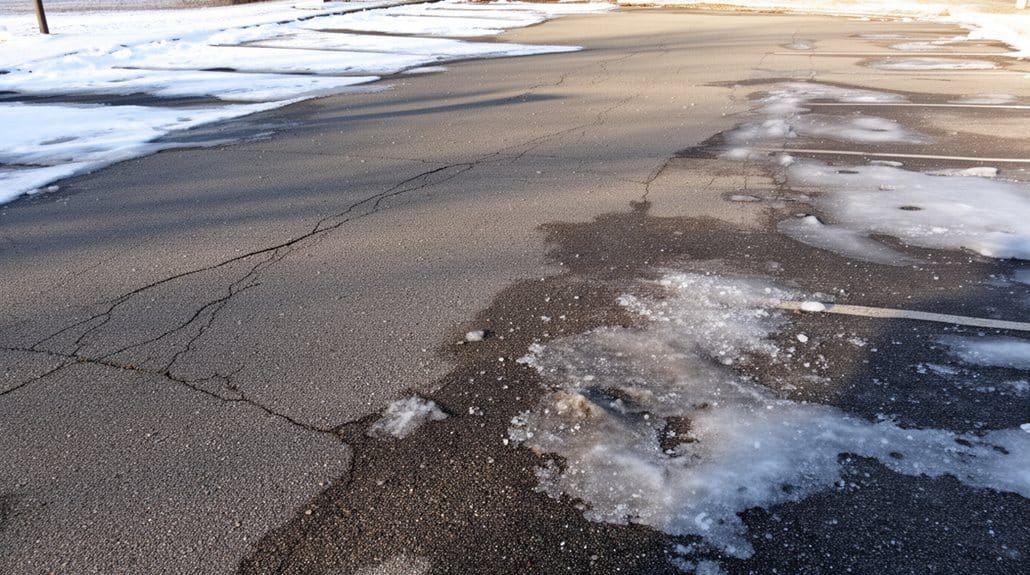
Clear de-icing salts, sand, and debris thoroughly. These materials accelerate asphalt damage. Restore proper drainage immediately to prevent water pooling.
Execute Targeted Repairs
Schedule pothole patching and crack sealing before spring rains arrive. Water infiltration enlarges defects rapidly. Then repaint faded striping when temperatures exceed 50°F. Your lot’ll look fantastic and stay safe! Additionally, consider regular maintenance services to ensure the longevity of your asphalt installations.
Conclusion
You’ve got this! Here’s the reality: 80% of parking lot damage happens in winter months. That’s huge! Your preparation directly protects your investment. You’re not just maintaining asphalt. You’re preventing costly repairs. You’re keeping customers safe. You’re showing professionalism. Don’t skip these steps. Winter maintenance isn’t optional—it’s essential. Start now. Your spring self will thank you!