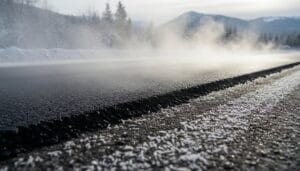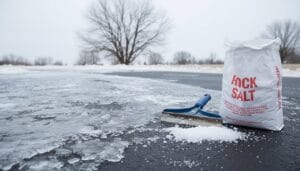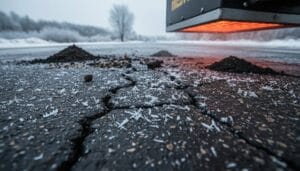
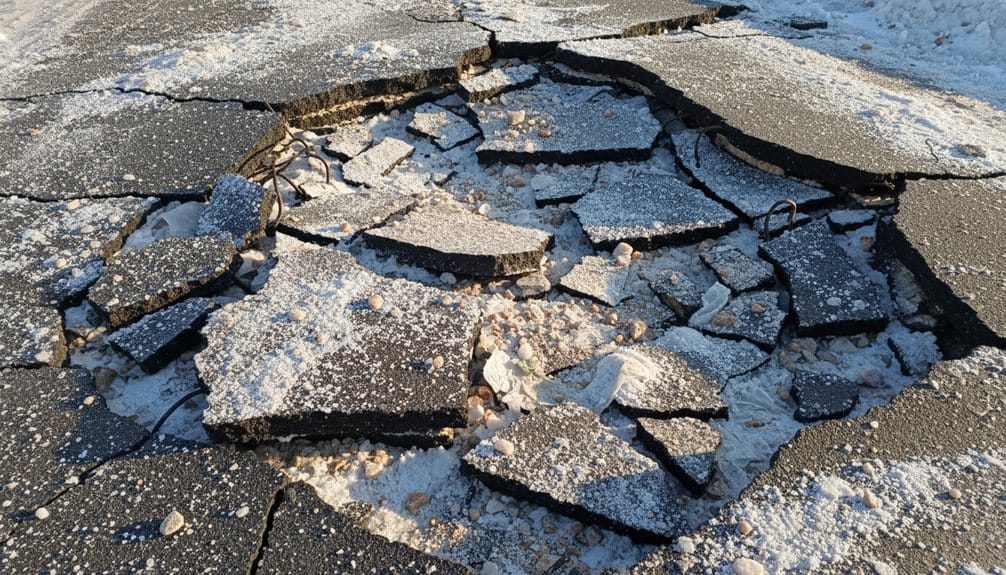
Your plow blade‘s concentrated weight creates extreme pressure on pavement. Metal edges gouge and scrape away surface layers—especially when set too low. Hairline cracks let water in. Freeze-thaw cycles expand that water, weakening your road from inside. Salt chemicals strip protective binders. Repeated passes over weak spots pry chunks loose fast. One winter season converts tiny defects into deep potholes. Softer blade edges and proper ½-inch clearance reduce damage markedly. Keep reading to uncover exactly how you can prevent costly destruction.
Key Takeaways
- Metal plow blades set too low create concentrated pressure that gouges, scrapes, and lifts asphalt chunks from pavement surfaces.
- Repeated blade contact over cracks initiates hairline fractures that allow water infiltration, triggering freeze–thaw damage and pothole formation.
- Plow blades catch and rip out fresh asphalt patches and repairs before curing, reopening damage instead of smoothing over it.
- Deicing salts penetrate cracks, strip protective asphalt binders, and accelerate surface deterioration and freeze–thaw vulnerability significantly.
- Polyurethane blade edges and proper ½-inch blade height dramatically reduce gouging, scraping damage, and long-term pavement deterioration.
The Weight and Pressure of Plow Blades
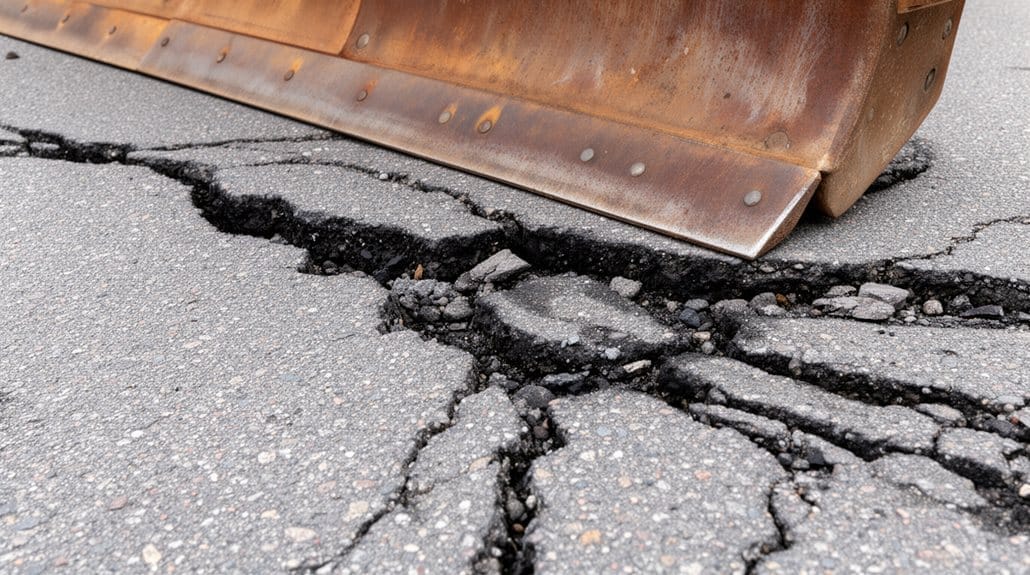
Snow plows concentrate massive weight onto a narrow cutting edge. This creates incredibly high contact pressure.
That pressure? It’s powerful enough to shear loose asphalt layers right off the pavement.
Metal vs. Softer Materials
A metal blade causes way more damage than rubber or polyurethane edges. Metal edges transfer the plow’s full force directly into your road.
Softer materials distribute that load differently. They flex. They reduce gouging.
Blade Height Matters
Setting your blade too low? Terrible idea.
You’re scraping pavement directly. A simple 1/2-inch clearance? Transformative. It dramatically lowers destructive contact pressure. Your roads stay safer. Your maintenance costs drop. Additionally, proper asphalt maintenance techniques can prolong the life of your pavement and reduce the need for costly repairs.
Direct Scraping and Surface Abrasion
You can lose several millimeters per season in damaged areas. That’s significant! Plow blades set too low cause the worst destruction. Bare metal cutting edges? They’re raveling nightmares.
Here’s the crushing part: existing defects make everything worse. When your blade catches cracks or potholes, it doesn’t slide smoothly. Instead, it pries out chunks like a crowbar.
Deicing chemicals and freeze-thaw cycles make asphalt brittle. The same scraping force produces larger surface loss. Seal-coated pavement? It fights back better. Damaged asphalt? It surrenders. Regular pothole repair services can help mitigate these issues, extending the life of your pavement.
Freeze-Thaw Cycle Vulnerability

When temperatures drop, that water freezes and expands 9%. This expansion forces cracks wider and pries aggregate loose. You’re basically letting nature do demolition work!
Repeated Attacks Stack Up
Temperate climates experience dozens of freeze-thaw cycles per winter. Each cycle weakens your pavement more. Melted water lubricates particles during thaw periods. Particles shift and displace. Small cracks become potholes fast.
Where Snow Pools = Maximum Damage
Poor drainage zones suffer worst damage. Standing snow melt increases freeze depth dramatically. More water penetrates deeper into pavement voids. More damage compounds faster.
Prevention Wins
Sealcoat every 3–5 years. Seal cracks immediately. Block water entry completely. You’ll cut freeze-thaw cycles markedly and save thousands in repairs! Using high-quality materials for seal coating driveways ensures long-lasting protection against these harsh conditions.
Water Infiltration Through Cracks
Those tiny hairline cracks? They’re actually dangerous doorways for water damage!
The Infiltration Problem
Water trapped in cracks becomes your pavement’s worst enemy.
Here’s exactly what happens:
- Water seeps into hairline cracks during rain or snowmelt
- Deicing salts and heavy metals accelerate binder breakdown inside
- Standing water strips asphalt binder from aggregates progressively
- Structural support weakens as permeability increases markedly
Your Best Defense
You’ve got serious power here.
Crack sealing every few years reduces water infiltration by over 80%! This single step appreciably slows progression from cracks to devastating potholes.
The Reality
Unsealed cracks invite continuous water penetration.
That water freezes and expands.
Your pavement breaks apart.
Skip crack sealing? You’re basically inviting expensive repairs!
Salt and Chemical Deicer Deterioration
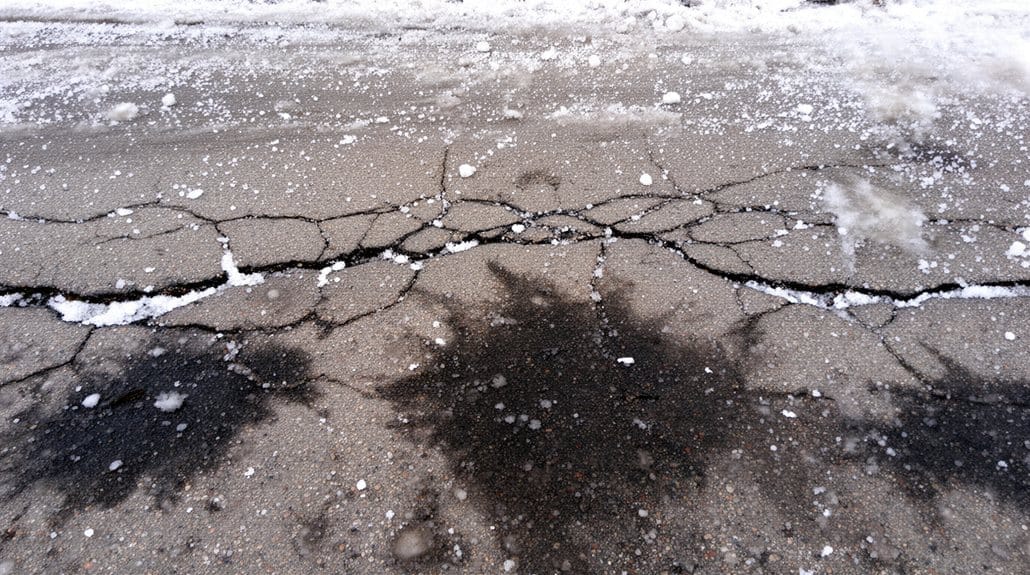
Chloride deicers penetrate cracks and strip away protective binders.
Freeze-thaw cycles then shatter weakened surfaces.
Within years, you’re facing expensive pothole repairs.
The Real Cost
Studies show heavily salted areas need repairs 3-5 years sooner than untreated zones.
That’s serious money.
Smart Solutions
- Use minimum effective deicer rates
- Prefer calcium chloride for rapid melting
- Schedule spring cleanup immediately
- Apply sealcoating annually
Stop letting chemicals wreck your investment. Regular sealcoating is vital as it extends asphalt life by 30-50% compared to unsealed surfaces.
Strategic application saves thousands long-term.
Damage to Existing Repairs and Patches
You’ve spent good money patching potholes and filling cracks. Snow plowing can wreck all that investment fast!
Your patches face serious threats during winter operations:
- Fresh asphalt needs time to cure completely—plows rip out patches that haven’t hardened yet.
- Metal cutting edges cause maximum damage—rubber or polyurethane blades protect repairs better.
- Blade height matters tremendously—setting plows below ½ inch tears patches apart.
- Freeze-thaw cycles weaken patch seams—winter conditions make repairs extra vulnerable.
Uneven surfaces create another nightmare. When plows catch recessed patches at odd angles, they lever out chunks and reopen repaired areas completely. Regular maintenance extends driveway lifespan, ensuring your asphalt survives snow plowing by coordinating with contractors. Time repairs for warmer months when possible. Communicate blade height requirements to your plow operators. Protect your pavement investment!
Impact on Uneven and Poorly Maintained Surfaces

When your pavement’s got rough patches and uneven spots, snowplows become your worst enemy!
High and low spots spell trouble. Uneven driveways force plow blades to work harder. They dig deeper into low spots. This dramatically increases gouge damage and blade wear.
Your solution? Set blades about ½ inch above the surface. This simple adjustment reduces scraping markedly.
Neglected surfaces invite disaster. Poorly compacted patches and loose aggregate crumble easily. Plows dislodge this weak material instantly. Small defects evolve into massive potholes fast.
What you should avoid: Direct blade contact with deteriorated asphalt. Uneven surfaces guarantee repeated damage cycles. Regular maintenance can significantly prolong the life of driveways.
Keep your pavement smooth and well-maintained. You’ll minimize plow damage dramatically!
Repeated Passes Over Weak Spots
You’re concentrating all that blade pressure on identical locations. Here’s what actually occurs during multiple snowplow passes over weak spots:
- Repeated contact pries loose asphalt fragments exponentially faster than single passes
- Freeze-thaw cycles weaken surrounding pavement between each plowing event
- Edge breaks develop when plows hit high spots repeatedly
- Structural discontinuities get exploited at cracks and patched areas
Your road deteriorates fastest where problems already exist. A heavily plowed stretch loses dramatically more aggregate material than lightly plowed sections.
That’s because successive passes systematically attack the same vulnerable areas.
The blade scrapes. The vehicle’s weight flexes the pavement. Cracks propagate. Small defects transform into potholes rapidly.
You’re effectively hammering your own infrastructure into submission! Additionally, the use of top-grade materials in paving can help mitigate damage from snowplows and extend the lifespan of your asphalt.
Curb and Edge Damage From Plow Contact
Snowplow blades tear into curbs and pavement edges like nothing else. When operators set blades too low—below roughly half an inch—disaster strikes. You’re looking at scraped asphalt and lifted pavement chunks.
Why edges suffer most:
- Metal cutting edges gouge concrete and asphalt severely
- Rubber or polyurethane edges reduce damage dramatically
- Poor visibility in storms causes frequent curb strikes
The cascading problem:
Even brief blade contact causes even more damage over time. Repeated snow removal passes strip away sealant protection.
Once exposed, freeze-thaw cycles infiltrate cracks with moisture. Pavement weakens. Potholes form.
Your solution: Use polyurethane edges. Install curb marker flags. Train operators on blade height. These preventative steps protect your pavement from accelerated deterioration and expensive repairs down the road. Additionally, regular sealing can help maintain the integrity of your asphalt, as sealant protection is crucial in extending the lifespan of your driveway.
Progressive Pothole Formation
Here’s how your pavement alters from minor crack to major problem:
- Hairline cracks appear from blade impact and shear forces
- Water infiltrates when plows repeatedly scrape over those cracks
- Freezing expands trapped water and widens microcracks into voids
- Traffic collapses the weakened cavity into a pothole
Once snow melts and salt water seeps in, the cycle accelerates dramatically. One freeze–thaw season converts a hairline defect into a pothole several inches deep. Meltwater and wheel loads rapidly enlarge that cavity.
To combat this, regular asphalt sealcoating protects against weather damage and prevents further deterioration.
Make sure your asphalt receives prompt sealing. Unsealed patches fail fast. Blade height matters tremendously—riding ½ inch above pavement prevents catastrophic patch destruction.
You’re either preventing potholes now or funding expensive repairs later.
Conclusion
You’re basically watching your asphalt get chipped away like an old statue. One Minnesota city spent $2.3 million fixing plow damage annually. That’s money you’d rather spend elsewhere. Your roads aren’t just surfaces—they’re investments. Snowplows do necessary work, but the damage compounds yearly. You’ve got to budget for it. Plan ahead. Maintain proactively. Your wallet will thank you.