
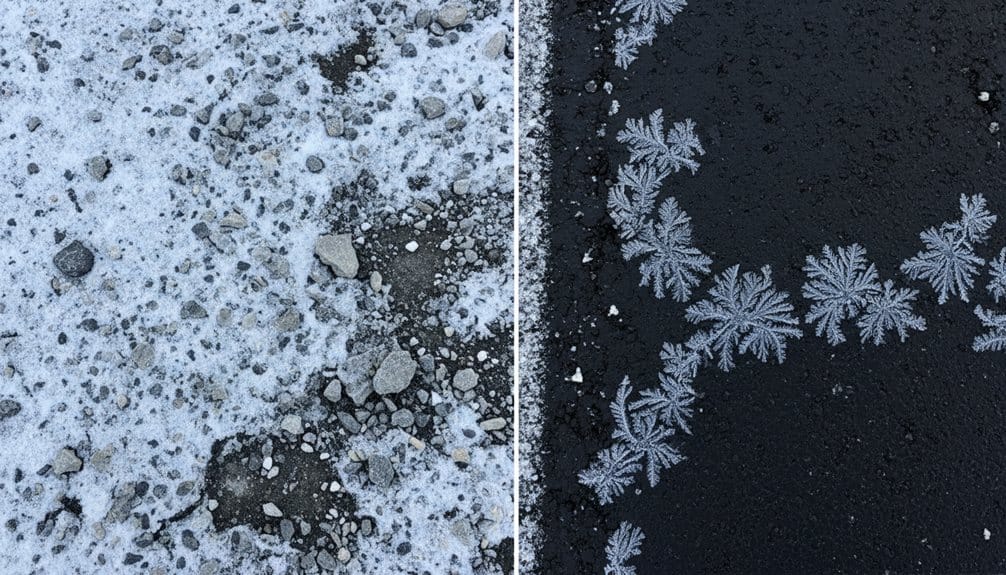
Cold patch wins for winter emergencies. You can apply it in freezing, wet conditions without heating equipment—perfect for quick pothole fixes on light-traffic roads. Hot mix demands warmth. It needs 40°F+ temperatures and stays workable at 300-500°F, making winter application risky and costly. Cold patch buys you time until spring permanent repairs. Choose cold patch for urgent winter damage; save hot mix for high-traffic areas needing durability. Stick around to uncover exactly which option saves you thousands.
Key Takeaways
- Cold patch requires no heating and works in freezing conditions, while hot mix needs temperatures above 40°F for proper application.
- Cold patch provides temporary, one-season repairs suitable for emergency pothole fixes; hot mix offers long-term durability for high-traffic areas.
- Cold patch requires only a shovel and tamper; hot mix demands mechanical compaction equipment and specialized application machinery.
- Hot mix plants typically shut down in winter, making cold patch the practical solution for off-season emergency road maintenance.
- Plan cold patch as a winter stopgap measure, then schedule permanent hot mix resurfacing in spring for lasting structural integrity.
Key Differences Between Cold Patch and Hot Mix Asphalt
You need zero heating. Just grab it and apply it. Works in freezing temps. Works in wet conditions. Perfect for emergencies. This makes it suitable for comprehensive pothole repair services that need quick attention.
Hot Mix Asphalt: The Permanent Solution
This stuff requires serious heat—around 300°F at the plant.
You apply it hot.
It bonds completely with existing pavement.
You get durability that lasts.
The Real Difference
Cold patch holds temporary repairs through one season under light traffic.
Hot mix asphalt delivers permanent pavement repair suited for heavy traffic.
Your choice depends on urgency, weather, and how long you need the fix lasting.
When Cold Patch Makes Sense for Winter Repairs
Now that you understand the core differences, let’s talk strategy.
Cold patch shines in specific situations. You’ll want cold patch when you’re tackling emergency potholes during winter. Hot mix plants shut down. You can’t wait. Cold patch fixes this problem instantly.
Perfect scenarios for cold patch:
- Single potholes on light-traffic roads
- Remote locations far from hot mix suppliers
- Emergency repairs preventing further damage
- Budget-conscious municipal projects
- Off-season maintenance work
Here’s the honest truth: Cold patch buys you time. You’re not solving permanently. You’re preventing disaster until spring arrives.
One worker fills a pothole in minutes. No heating required. No special equipment needed. Just grab a shovel and tamper.
Think of cold patch as your winter warrior. It’s temporary. It’s practical. It’s exactly what you need when hot mix simply isn’t available. Additionally, the use of environmentally friendly practices in cold patch applications can help minimize the impact on local ecosystems.
When Hot Mix Asphalt Is the Better Choice

You need hot mix when durability matters most. Applied at 300–500°F, it bonds deeply with existing pavement. That means lasting results, not temporary band-aids.
High-Traffic Areas Demand Hot Mix
Highways, busy parking lots, and main roads? Hot mix is non-negotiable. Its strong aggregate binding resists rutting under heavy loads. Cold patch simply can’t compete here.
The Structural Advantage
Full-depth patches and resurfacing require hot mix’s layering capability. You’re restoring actual load-bearing capacity. Mechanical compaction creates strength cold patch never achieves. Additionally, Nathans Paving offers expert services to ensure optimal application and longevity.
Bottom Line
Plan seasonal repairs in warm, dry conditions above 40°F. You’ll get seamless blending, uniform appearance, and genuine longevity. Hot mix delivers the permanent solution you actually want.
Weather Impact on Performance and Application
You can apply it in freezing and wet weather because it’s pre-mixed and needs no heating. Your hot plants? Closed. Your repair options? Limited.
Hot Mix Needs Warmth
Hot mix demands ambient temperatures above 40°F minimum.
Material must stay between 300–500°F during placement. Cold weather destroys this. Poor compaction follows. Early failure happens fast.
The Real Challenge
Weather conditions directly control your success rate.
Winter temperatures mean cold patch becomes your temporary hero—holding through light traffic for months. Additionally, regular maintenance can extend your driveway’s lifespan and prevent larger repairs in the future. Spring arrives and you’ll re-repair with hot mix permanently.
Plan accordingly. Temperature control changes everything.
How to Choose the Right Option for Your Winter Project
Is this a quick fix or permanent solution?
Do you have compaction equipment available?
Can you wait until spring?
Cold patch shines when:
- You need emergency repairs NOW
- Winter weather won’t cooperate
- Budget’s tight and time’s short
Hot mix dominates when:
- Temperatures stay above 40°F
- You want long-term durability
- Heavy traffic demands structural integrity
The smart move? Use cold patching temporarily this winter on your asphalt pavement.
Then schedule proper hot mix resurfacing once spring arrives.
You’ll maximize performance while protecting your investment strategically! Fast, free quotes can help you plan your spring projects effectively.
Conclusion
You’ve got this! Cold patch is your speed bump—quick fixes when temperatures drop below freezing. Hot mix asphalt? That’s your championship-level solution for permanent victories. You’ll crush winter repairs by matching the right tool to your situation. Don’t let confusion freeze your progress. Pick cold patch for emergencies or hot mix for lasting results. You’re ready to dominate your project!