Spring driveway maintenance saves you big bucks! You’ll want to inspect for winter damage, clear debris, and tackle cracks immediately. Power wash the surface and remove salt residue. Fill small cracks with professional-grade materials and apply a quality sealant. Check your drainage and ensure proper water flow away from the driveway. Catch minor issues now. Trust me, your wallet will thank you later. Want the full expert breakdown?
Key Takeaways
- Conduct a thorough visual and tactile inspection for winter damage like scaling, cracks, and surface disruptions using bright daylight and methodical examination.
- Clear winter debris using power washing, sweeping, and blowing techniques to remove gravel, leaves, branches, and rock salt residue from the driveway surface.
- Repair small cracks and potholes immediately using professional-grade repair materials to prevent further deterioration and costly future reconstruction.
- Apply a high-quality sealant in thin, even layers during dry weather conditions to protect the driveway surface and extend its longevity.
- Evaluate and manage drainage by checking surface slope, installing water channels, and repositioning downspouts to prevent water pooling and potential damage.
Inspect for Winter Damage
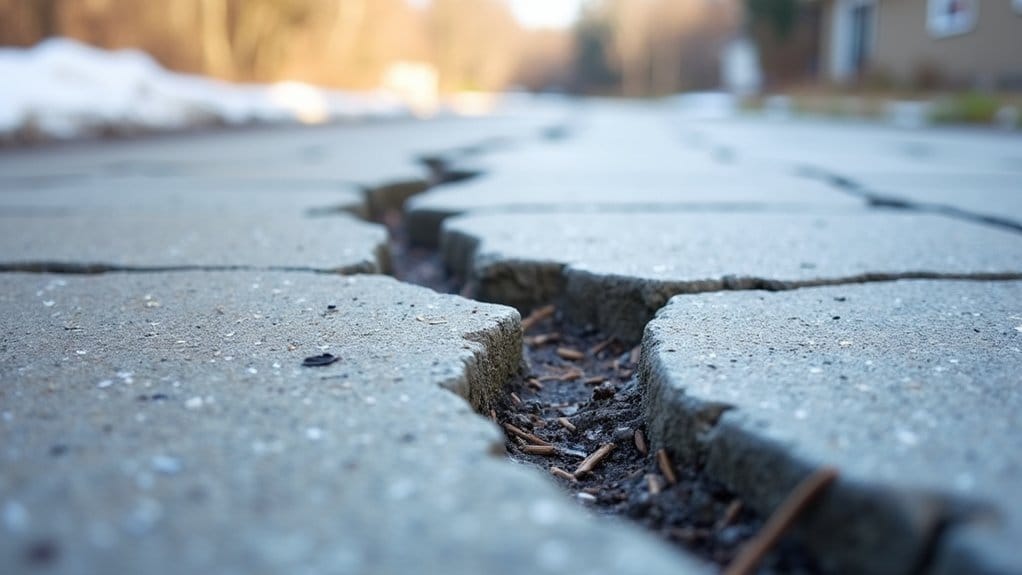
Snow removal techniques and heavy equipment can accelerate surface deterioration. Check for:
- Scaling (flaking concrete)
- Deep fissures
- Edge crumbling
- Significant surface disruptions
Proactive inspection prevents costly repairs!
Walk your entire driveway methodically. Use bright daylight to spot subtle damage. Run your hand along surfaces to feel irregularities. Take close-up photos for documentation.
Professional tip: Address minor issues immediately before they become expensive maintenance nightmares. Small cracks today mean big savings tomorrow! Additionally, regular maintenance can extend driveway lifespan and prevent more severe damage down the line.
Clean and Clear Surface Debris
After winter’s harsh treatment, your driveway needs a serious cleanup! Surface debris can wreak havoc on your pavement’s integrity and appearance.
| Debris Type | Cleaning Technique |
|---|---|
| Leaves/Twigs | Power washing |
| Rock Salt | Sweeping/Scraping |
| Small Gravel | Blower/Rake |
Tackle those pesky debris types strategically! Start with a thorough visual inspection of your entire driveway surface. Look for winter-left remnants like scattered gravel, fallen branches, and compacted organic materials. Professional-grade cleaning tools make quick work of surface restoration.
Pro tip: Don’t just sweep. Blast away stubborn debris with precision! Power washers effectively remove embedded dirt and salt residue. Invest 30-45 minutes in extensive cleaning for maximum driveway health. Your pavement will thank you with improved durability and stunning curb appeal! Additionally, scheduling regular driveway maintenance can help extend the lifespan of your asphalt.
Address Cracks and Potholes
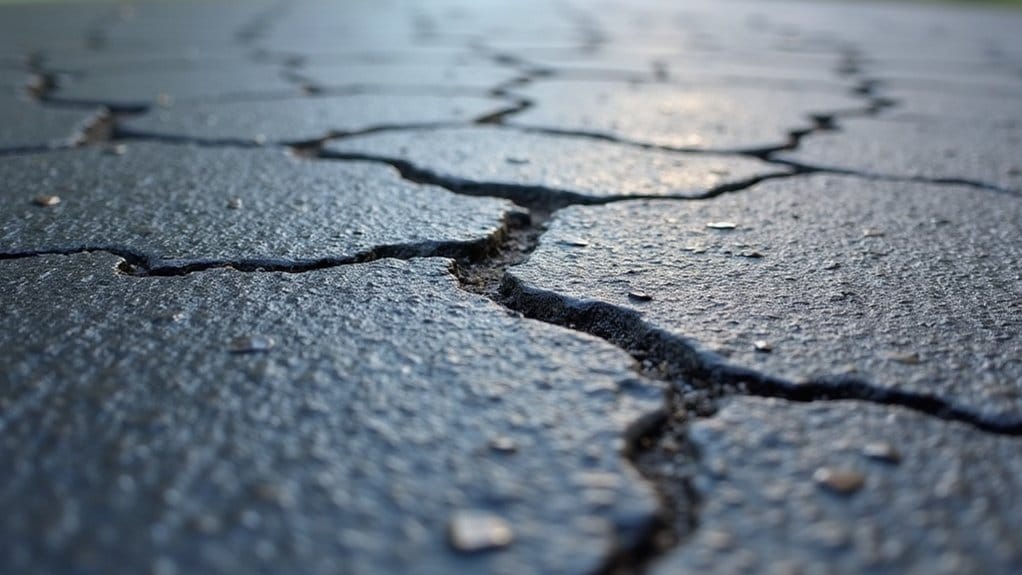
Winter’s harsh treatment doesn’t stop at surface debris! Cracks and potholes can devastate your driveway’s structural integrity. Act fast to prevent costly damage.
Quick Pothole Repair Strategies:
- Identify ALL surface imperfections
- Clean debris from damaged areas
- Select appropriate crack fillers
- Use professional-grade repair materials
Tackle small cracks immediately! Most homeowners ignore minor surface damage. Big mistake. These tiny problems evolve into massive infrastructure headaches.
Professional-grade crack fillers work wonders for preventing water infiltration and structural deterioration.
Pothole repair requires precision. Clean the damaged zone completely. Remove loose materials. Apply high-quality repair compounds. Compact the surface firmly. Smooth out repair areas for seamless integration.
Pro tip: Invest in quality materials now. Save thousands in future reconstruction costs! Additionally, regular maintenance services help prevent future pothole formation, ensuring the longevity of your driveway.
Apply Sealant Protection
Though cracks are patched, your driveway still needs ultimate protection!
Sealant is your driveway’s superhero shield against moisture and damage. You’ll want to choose between acrylic, coal tar, and epoxy sealant types. Each offers unique benefits for different surface conditions.
Application Techniques Matter:
- Clean surface thoroughly
- Repair ALL existing damage
- Use roller or squeegee
- Apply in thin, even layers
- Work during dry weather (50-80°F)
Professional-grade sealants provide maximum durability. Many homeowners see significant surface protection after proper application. Additionally, sealcoating provides important protection compared to unsealed surfaces.
Wait 24-48 hours before driving on newly sealed surfaces.
Pro tip: Invest in quality sealant and proper tools. Your driveway will thank you with extended lifespan and stunning appearance!
Don’t skimp on protection. It’s your property’s first defense against seasonal wear and tear.
Level and Resurface as Needed
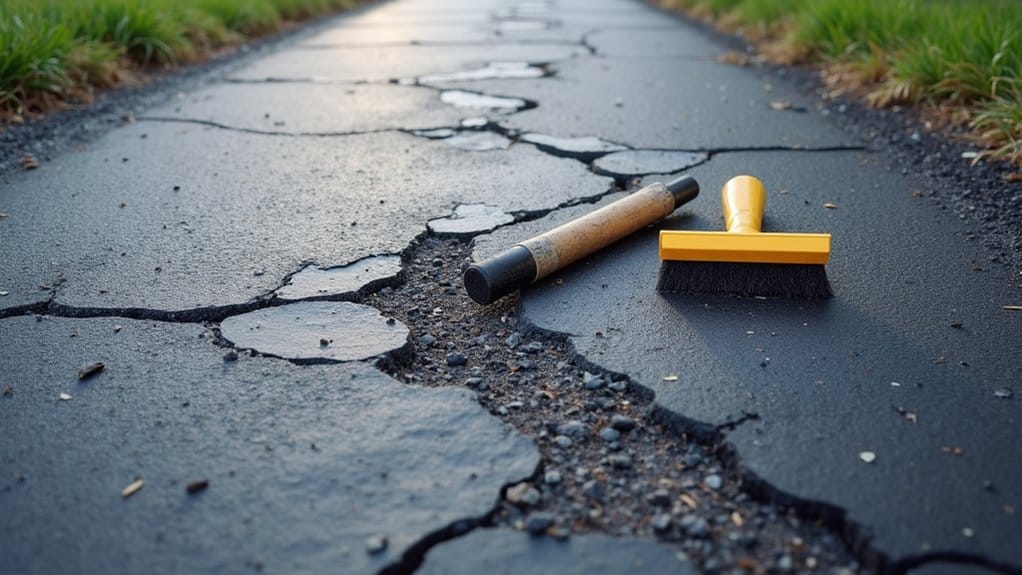
Professional-grade repairs might seem expensive but save massive long-term costs. You’ll want to address minor issues before they become major problems. Small hairline cracks can quickly evolve into significant structural damage if ignored.
Resurfacing Options:
- Concrete patch compounds
- Asphalt sealant
- Professional grinding services
DIY enthusiasts can handle minor repairs with basic tools. Serious damage requires expert intervention. Investing in quality materials and precise application techniques is essential, as regular maintenance significantly extends your driveway’s lifespan. Your driveway’s longevity depends on proactive maintenance!
Manage Drainage and Water Flow
Proper drainage can make or break your driveway’s long-term health!
Water flow management is critical for preventing costly damage. Poor drainage destroys driveways faster than you might imagine. Here’s your battle plan:
Drainage Solutions Quick Guide:
- Inspect slope and grade
- Create strategic water channels
- Install French drains if needed
- Check downspout positioning
Redirect water away from your driveway’s surface!
You’ll want to aim for a 2-3% grade that moves moisture efficiently. Pooling water is your enemy. It’ll crack and erode surfaces like a silent destroyer.
Pro tip: Watch how water moves during heavy spring rain. These observations help you design smarter drainage solutions. Professional installation of driveway drains is essential to ensure their proper functionality and effectiveness.
Catch potential problems early and save serious cash on future repairs.
Stay proactive. Your driveway will thank you!
Prevent Future Damage and Wear

Safeguarding your driveway against future damage starts right after managing water flow.
You’ll want to take proactive steps to protect your investment and prevent costly repairs.
Key strategies for preventing driveway wear include:
- Implement strategic driveway landscaping to redirect water runoff
- Schedule seasonal upgrades with professional maintenance inspections
- Use protective sealants and crack-filling techniques
Your driveway is more than just a path to your home.
It’s a critical surface that requires consistent care and attention.
By investing time in preventative maintenance, you’ll extend its lifespan and maintain its aesthetic appeal.
Professional-grade protection means staying ahead of potential issues, and utilizing qualified contractors can enhance the effectiveness of your maintenance efforts.
Regular assessments and timely interventions can save you thousands in potential repair costs.
Don’t wait for problems to emerge. Be proactive and strategic about your driveway’s long-term health.
Conclusion
Your Driveway’s Spring Makeover Starts Now!
By tackling these maintenance steps, you’ll change your driveway from winter-worn to summer-ready. Think of it as giving your property’s first impression a powerful upgrade. Smart homeowners protect their investment with proactive care. Your future self will thank you for the effort. Smoother surfaces, fewer repairs, and maximum curb appeal await. Get to work and make your driveway shine!